Salman rushdie

The Mozarts of ad music

From our UK edition

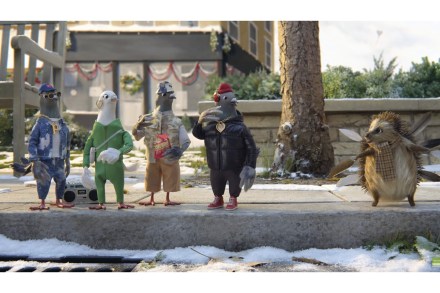
It’s Christmas 2020 and Kevin the Carrot is on a mission. Snow swirls, ice glistens and roast turkeys and cold cuts wait on the table, bathed in cosy firelight. The visual symbols of Christmas are all present and correct in the big Aldi seasonal advert, but what pulls them together is the music. A hint of John Williams on a solo horn, a burst of swashbuckling rhythm; symphonic strings as our vegetable hero makes it home. It’s all there, sumptuously scored and precisely gauged to make you feel that in 30 seconds, you’ve experienced an epic. And then, of course, to go out and buy parsnips. ‘I was lucky, because the mood had already been chosen,’ says Guy Farley, the composer who wrote that score.
The fatwa artists

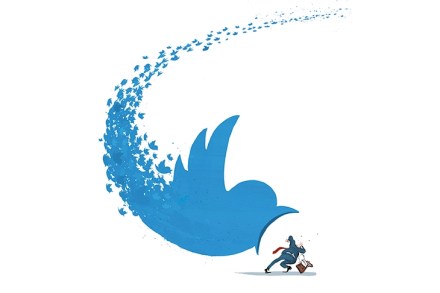
On June 3, the New York Times published a very bad op-ed. By itself, this is not breaking news. The Times opinion page has long been a kind of stagnant water cooler for conventional center-left opinion, a hospice care ward for America’s remaining pleats-panted, open-collar Blairites. Sure, they’ll occasionally publish something interesting — an essay by the deputy leader of the Taliban, for example, or an admission by David Brooks that he once tried the ganja. But generally the Gray Lady’s opiners tend to be tucked in bed by nine, dreaming of the things globalization might accomplish the next day.This piece was not that. It was, first of all, written by a Republican, Sen.

fatwa twitter

The wisdom of Salman

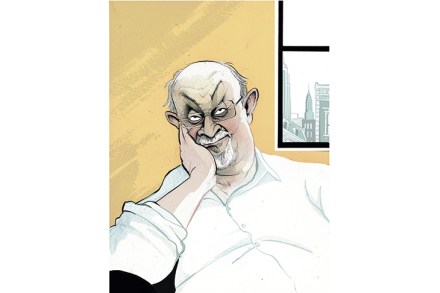
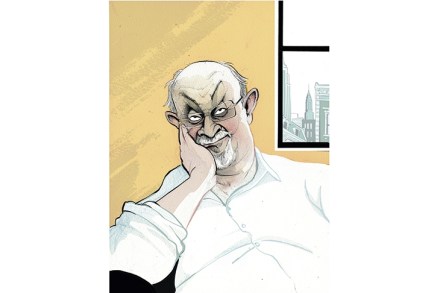
‘Things that would have seemed utterly improbable now happen on a daily basis,’ Sir Salman Rushdie tells me. ‘The implausible has now become everyday.’ Isn’t this a problem for a writer whose books derive from the fantastical traditions of magic realism and science fiction, where crazy stuff happening is what sets them apart? ‘It is.’ The active threat to Rushdie’s life from radical Islam is two decades behind him. His novels have a way of dealing in sour, sometimes apocalyptic ironies. His latest, the Booker-shortlisted Quichotte, is set in what it describes as ‘the Age of Anything-Can-Happen’.

salman rushdie

Salman Rushdie: ‘The implausible has become everyday’

From our UK edition

When I say goodbye to Sir Salman Rushdie in his offices at New York University in Lower Manhattan in early March, we bump elbows. Not that it’s much more than a gesture, by this stage: we shook hands unthinkingly on first meeting, and we’d just shaken hands again. It’s a novelty, still halfway to being a joke. As I descend in the lift to Cooper Square, it occurs to me that if I’ve given Rushdie coronavirus I will be halfway to achieving what the mullahs couldn’t. Halfway funny as a hypothetical; halfway not at this distance, writing the piece up three weeks later. As Alan Moore’s nihilistic Rorschach puts it: ‘Good joke. Everybody laugh. Roll on snare drum. Curtains.’ I don’t imagine Rushdie will take offence at this.