Russia

Will Biden’s Ukraine visit matter?

Kharkiv, Ukraine President Joe Biden on Monday showed the world that, as Volodymyr Zelensky said in his London speech two weeks ago, we do not need to be afraid of Moscow. Or maybe we don't need to be afraid so long as Biden is on Ukrainian soil. As I write this, Biden's train has likely crossed into Polish territory, and, on cue, the air-raid alarms are wailing across all of eastern Ukraine. No one I know in Ukraine, where I’ve been since the pandemic and throughout every minute of this war, thinks that Biden's visit accomplished something magical. But it did serve a crucial purpose: boosting the spirits here, amid a week full of warnings that Moscow will do something awful.

The real reason Zelensky wants the West’s jets

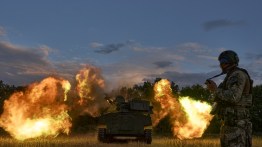
As the battlefront news for Ukraine turns grim, with even the New York Times conceding that “Ukrainians in [the] East” are “outnumbered and worn out,” the hope, as usual, is that a magic weapon will save the day. We have seen many such invocations in the last twelve months: Javelin anti-tank missiles, Stinger anti-aircraft missiles, M777 Howitzers, HIMARS long-range precision missile launchers, assorted Western tanks. All have been hailed in their time as potentially tipping the balance against Putin’s hordes. None have succeeded, or, in the case of as yet undelivered tanks, are likely to succeed, in altering the fundamental military balance in the war, though they contribute much to the balance sheets of the relevant Western arms corporations.

joe biden optimism jets

How Pink Floyd drama erupted over global politics

The author and lyricist Polly Samson did not mince her words earlier this month when she attacked the musician Roger Waters on Twitter. She described him as “anti-Semitic to your rotten core. Also a Putin apologist and a lying, thieving, hypocritical, tax-avoiding, lip-synching, misogynistic, sick-with-envy, megalomaniac.” She ended with “Enough of your nonsense.” Not only did her husband, Pink Floyd singer and guitarist David Gilmour, retweet her attack on his former bandmate, he added, “Every word demonstrably true.” Waters’s response was to tweet, with appropriate pomposity, “Roger Waters is aware of the incendiary and wildly inaccurate comments made about him on Twitter by Polly Samson which he rejects utterly.

Zelensky touches off a revolution in London

Kharkiv, Ukraine Wednesday, the morning after Russia sent six long-range missiles into the center of Ukraine’s second city, I went for a run in snow-covered Gorky Park listening to the music of the German band Scorpions: “Down to Gorky Park, listening to the wind of change.” Scorpions were singing about a park of the same name in Moscow but I wanted to hear that song here in Kharkiv. When that song was released in 1990, the Soviet Union was breaking up. There was so much hope. Ukraine and other nations that had lived under the Iron Curtain began the process of finding freedom, happiness, possibility. But Russia? Ah, I thought as I ran past the fresh crater of a Russian missile in Kharkiv’s Gorky Park, what happened to Russia? What happened to that “wind of change"?

Trump is wrong that the US should negotiate peace in Ukraine

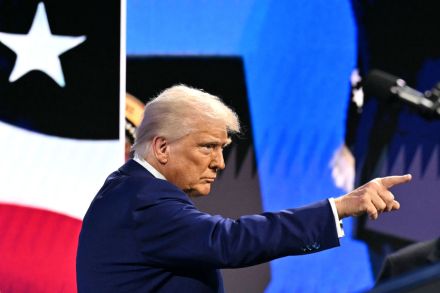
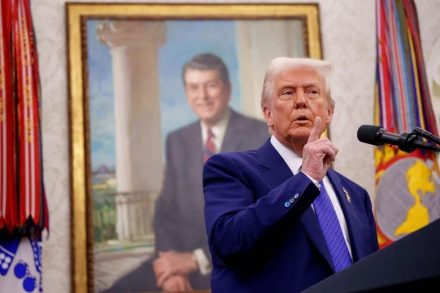
The GOP’s foreign policy doves and soft isolationists have grown stronger, with 40 percent of “Republican and Republican-leaning independents” saying the US is giving too much aid to Ukraine. Former president Donald Trump has now taken up the mantle of this movement, firmly anchoring himself to the anti-Ukraine aid faction of the party. Trump recently gave an interview to radio host Hugh Hewitt in which he made one thing clear: he’s no fan of aiding Ukraine. Asked about sending F-16s, Trump said, “I think the United States should negotiate peace between these two countries, and I don’t think they should be sending very much.” When Hewitt asked if the former president would cut aid to Kyiv, Trump responded, “we’ve got to make peace.

The balloon is a Chinese middle finger to the US

Military fighter jets have just shot down the Chinese Communist Party's gigantic spy balloon that had been hovering about 60,000 feet over the United States. The balloon was "taken care of," to quote President Biden, over the Atlantic Ocean, off the coast of South Carolina. Prior to the maneuver, the balloon drifted, unharmed, over our sensitive military sites and fellow citizens. It lingered there, doing what Chinese President Xi Jinping pleased, while rightfully indignant members of Congress representing those violated states took to press releases and cable TV to demand the federal government secure our sovereign airspace. All of this was no doubt churned back through the CCP's propaganda outlets, smearing America as divided, weak, and foolish.

The Baltic nations show the world how to defend freedom

It is not inevitable that the Baltic States of Estonia, Latvia, and Lithuania would be among freedom’s most potent defenders. Nestled between the Russian mainland and Moscow’s exclave of Kaliningrad, their only direct connection to their NATO allies is through the vulnerable Suwalki Gap. For its part, NATO only has small rotational forces stationed in the three countries. At first glance, one would expect these tiny nations (Lithuania is the largest at 2.8 million people) to prefer flying under the radar. Instead they have become some of the most vocal and powerful defenders of the Western way of life. Tiny though they may be, the Baltic countries have managed to stand up to the two greatest enemies of freedom at work today, Russia and China.

Germany’s broken promise to rebuild its military

Germany has a new defense minister. The funny thing is that nobody really knows who he is, what he stands for, and whether he’s capable of doing his job. Boris Pistorius will take over the ministry from Christine Lambrecht, whose one-year tenure was about as embarrassing and gaffe-prone as the Bundeswehr itself. There are too many blemishes on her record to examine in a single post — we would be here all day. But one of the more notable misfires was her tone-deaf New Year’s Eve video, where she reminded viewers that a war was going on in Europe as a fireworks display went off behind her. For many in the German defense establishment, Lambrecht’s departure can be summed up in two words: good riddance. Not much is known about her replacement.

Why Sweden and Finland still haven’t joined NATO

Sweden and Finland officially applied to join NATO last May, overturning their long-standing policies of neutrality. If their membership goes through, it will be one of the most consequential accessions in NATO history, bringing two technologically advanced militaries right on Russia’s doorstep into the fold. But as the eight-month mark approaches, neither nation has received the unanimous support from the other members that it needs. To date, twenty-eight members of the alliance have approved the Scandinavian nations’ memberships, with Hungary and Turkey as the two holdouts. Hungary has indicated it will vote to accept the accession in early 2023, which will leave NATO’s most undemocratic and troublesome member, Turkey, as the last hurdle.

How Republican chaos could threaten aid to Ukraine

As the House GOP continues to make a fool out of itself trying to elect a speaker, those watching might be wondering how all of this will impact the war in Ukraine. The group of around twenty Republican lawmakers who have opposed Kevin McCarthy in the (as of this writing) eight votes taken so far for the speakership include some of the most hardline anti-Ukraine-aid Republicans, like Lauren Boebert and Matt Gaetz. A group this small in the House should be nothing more than an annoyance, but the changes they are demanding — and even those McCarthy has conceded to — give them far more power. The most threatening among them is a provision to return to the system whereby one member of the House can launch a motion to vacate the chair, forcing an up or down vote on the speaker.

The rise of Sudden Oligarch Death Syndrome

Since Moscow launched the invasion of Ukraine in February, the deaths of Russian oligarchs seem to be constantly in the headlines. Despite the official causes of death given, Cockburn has a sneaking suspicion that Vladimir Putin might have something to do with it. Death by unusual, news-making circumstances is a hallmark of his regime. The Russian leader intends for such deaths to make the news and for the world to blame the Kremlin for them. It forms part of his strategy of intimidating potential opponents and dissidents. Enemies of Putin that have gone to the West have faced radiation poisoning and attacks with powerful nerve agents. Those who have countered Putin in Russian politics have been jailed or gunned down in the streets. Now, apparently, oligarchs are in the crosshairs.

sanctions putin russia davos oligarch

Putin mentions the war

So much for "don’t mention the war!" Russian president Vladimir Putin has called the conflict in Ukraine a war for the first time on Thursday. Cockburn is quite flummoxed — this is the same Putin who has made an industry out of locking people up who refused to call the war a “special military operation”. On December 22, while addressing the situation in Ukraine, Putin said, “Our goal is not to spin the flywheel of military conflict, but, on the contrary, to end this war.” The irony alone of this statement is too much to handle. The man who invaded his neighbor and disregarded the laws of war is now saying he does not want to “spin the flywheel of military conflict”?

nuclear tactical putin war

Could Joe Biden’s Ukraine support define his presidency?

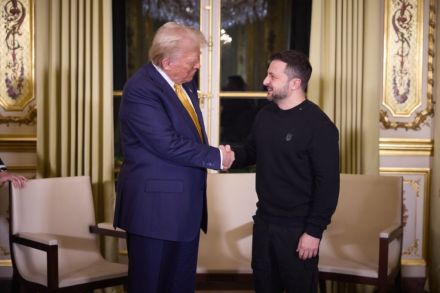
With his whirlwind visit to Washington, Volodymyr Zelensky cemented his bromance with Joe Biden. Even as MAGA Republicans have been sniping at Ukraine — Donald Trump, Jr. derided Zelensky on Wednesday as an “ungrateful welfare queen” — Biden declared that he will support Ukraine “as long as it takes.” Welcoming his Ukrainian counterpart to the White House, he went out of his way to depict support for Ukraine as bipartisan and unflinching. Like Herman Melville in his novel White-Jacket, Biden believes that “we bear the ark of the liberties of the world.” The Russian invasion and Ukrainian defiance are the making of Joe Biden’s presidency. Biden may well go down in history as the man who finally drove the stake through the heart of the Russian empire.

Biden and Zelensky
putin

Biden needs to stop ceding the initiative to Putin

Washington will provide Patriot missiles to Ukraine, bolstering Kyiv's air defenses in the new year. This is welcome news — but it should have happened a long time ago. One word best characterizes the Biden administration’s response to the war in Ukraine: reactive. The president’s lack of proactive measures both gives Putin an edge and prevents Ukraine from achieving a swift victory. US weapons began arriving in Ukraine in December 2021 from a $60 million package approved in August, with another package worth $200 million being approved in December and arriving in January. Both lacked the firepower needed to deter Moscow. The administration knew by October 2021 that Putin might invade — and that Russia had been building up forces around Ukraine since the spring.

‘Country collectors’ go to war over Ukraine

While most travelers compile bucket lists of dream destinations, some revel in the pursuit of everywhere. Self-styled “extreme travelers” are seduced by hard-to-reach islands like Norway’s Bouvet, South Africa’s Prince Edward Islands and hundreds of other geographic oddities, in the same way children are tantalized by Disney World. In this subculture, visits to forbidden destinations like Guantánamo Bay, the Gaza Strip and India’s Andaman Islands, where the missionary John Allen Chau was murdered by spear-brandishing natives in 2018, confer status. And so do visits to pariah states and conflict zones, at least until Russia invaded Ukraine. The close-knit, extreme-travel community, who you might think would be an anything-goes bunch, is divided over the war.

travelers

The US must punish Iran for aiding Russia

Russia’s brutal war in Ukraine has been disastrous for Vladimir Putin, but it has been a boon for the Islamic Republic of Iran. Western nations are increasingly concerned about Tehran’s profitable cooperation with Moscow, as Iran leverages Russian desperation to fuel its own ambitions. So far, Iran has sent hundreds of drones to Russia along with training personnel, and may soon send ballistic missiles. Tehran has continued its malign activities in the Middle East as well, attempting to steal American drones and blind American ships, attacking and endangering American forces and personnel, and supporting destabilizing groups such as the Houthis in Yemen. Iran has also ruthlessly repressed widespread protests at home.

The Brittney Griner swap was nothing out of the ordinary

Viewed from a coldly logical perspective, releasing Viktor Bout for Brittney Griner is a highly lopsided trade in favor of the Russians. The former was one of the world’s most prolific arms dealers on earth, a man responsible for sending weapons to some of Africa’s deadliest conflicts during the 1990s and early 2000s. The latter was a basketball player who was arrested for a smidgen of cannabis oil in her luggage. The two offenses are incomparable, which is one of the reasons why conservatives were so upset about President Biden green-lighting the swap. Donald Trump and John Bolton don’t agree on much, but both believe the decision was the epitome of feckless surrender (for Griner’s family, of course, it’s anything but).

griner

Don’t condemn Ukraine for its ‘illiberal’ measures against Russia

The war in Ukraine is being fought on two fronts: the battlefield and the information space. From the beginning of Russia’s interference in Ukraine in 2014, the information war has been a key factor in the Kremlin’s strategy for victory. Because of this, Ukraine has taken a series of wartime measures to stabilize and protect itself, from political restrictions to media regulations. Some in the West have used these measures to paint Kyiv as undemocratic, but such rhetoric rings hollow. What these criticisms miss is the fact that Ukraine, unlike other Western democracies, has been in a state of war for eight years.

The Europeans are complaining, again

All is not well in the transatlantic relationship. This might come as a surprise given that the United States and Europe have been remarkably unified on Europe’s most urgent security crisis in the post-Cold War era. Despite Russian President Vladimir Putin’s attempt to inject division into the pro-Ukraine coalition by throttling gas supplies to Europe, the West is sticking to its guns, maintaining sanctions on Moscow until either the war ends or Russian troops are forced to withdraw. This consensus, however, has masked disputes between Washington and its European allies that are becoming more difficult to manage.

The coming turbulent times in the oil market

When the Wall Street Journal reported on November 21 that OPEC, the oil cartel dominated by Saudi Arabia, was planning to increase production by 500,000 barrels per day in December, the crude market immediately reacted. Oil prices plunged by 6 percent, bringing the Brent benchmark close to $80 a barrel. Saudi energy minister Prince Abdulaziz bin Salman, the older brother of king-in-waiting Mohammed bin Salman, immediately went to work disputing the report. No decisions at OPEC had been made, he said, and it was possible the cartel could even proceed with further production cuts if needed to maintain balance in the market (for the Saudis, "balance" is usually defined as padding the kingdom’s balance sheet). Abdulaziz’s intervention helped make up most of those earlier losses.

oil