Russia

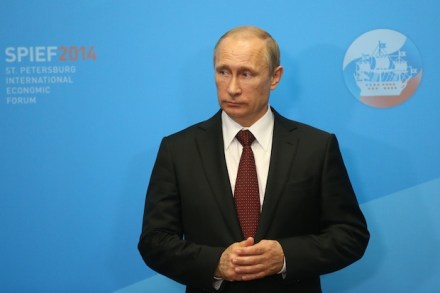
After the horrific tragedy of MH17, Europe must wake up to the threat posed by Vladimir Putin

From our UK edition

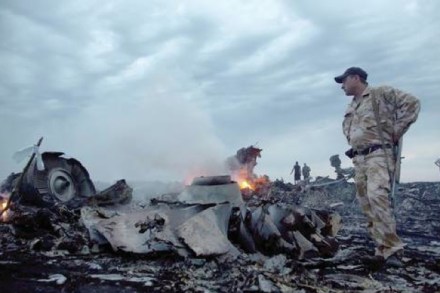
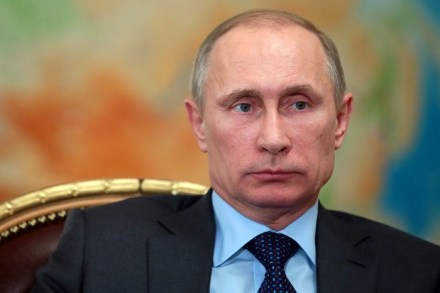
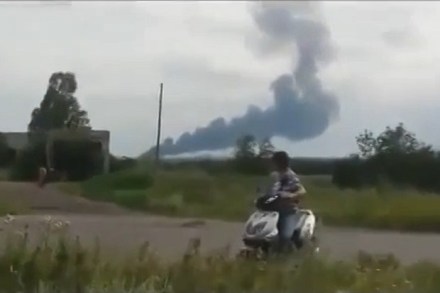
How many more civilian planes need to be shot down over European airspace before Europe’s leaders get serious about the threat posed by Vladimir Putin’s Russia? As the smoke clears from Thursday’s horrific downing of a Malaysian Airlines jet traveling from Amsterdam to Kuala Lumpur, many will try to deflect blame from landing squarely where it should: on Russian President Vladimir Putin. ‘Airliner tragedy in Ukraine shows US & EU erred by not pushing to keep Ukr[aine] as neutral buffer state, not potential EU/NATO member,’ tweeted Stephen Walt, a prominent voice of the ‘realist’ school of foreign policy and a leading apologist for the Russian government.

Will we ever find out what happened to flight MH17? It is getting less and less likely

From our UK edition

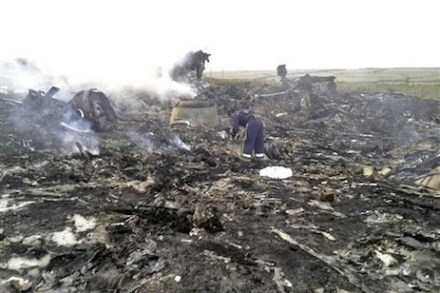
The Ukrainian government has failed to secure the crash site, as much as 25 square kilometres of territory, where debris from flight MH17 has fallen. The site is in rebel-held eastern Ukraine and the region's pro-Russian separatists have prevented international observers from the Organisation for Security and Co-operation in Europe from examining it. There are even reports that a drunk separatist gunman fired a warning shot to forestall investigators from conducting their examinations despite assurances from rebel commanders that observers would have safe access to the crash site.

The conflict in Crimea will be the downfall of Putin

From our UK edition

Earlier this year, Owen Matthews discussed in the Spectator how the conflict in Crimea will be the making of Ukraine and the end of Vladimir Putin: David Cameron says that Russia’s annexation of Crimea ‘will not be recognised’. Ukraine’s Prime Minister Arseniy Yatsenyuk promises that ‘we will take our territory back’. They are both misguided. Let Crimea go: it will be the making of Ukraine and the end of Vladimir Putin. Without Crimea, there will never again be a pro-Moscow government in Kiev. Ukraine will have a chance to become a governable country — a strongly pro-European one with a Russian minority of around 15 per cent. Putin will have gained Crimea but lost Ukraine for ever.

Who shot down Malaysian Airlines flight MH17?

From our UK edition

US Intelligence has confirmed that a surface-to-air missile shot down a Malaysian Airlines plane, flight MH17, en route from Amsterdam. Pictures of the wreckage have now appeared, yet no one has a clear idea of who fired the missile. Here are the three most prominent explanations: Pro-Russian Ukrainian separatists In the past month separatists have shot down a number of Ukrainian military aircraft. On Sunday, separatists used rocket launchers to bring down a Ukrainian Air Force Il-76MD military transport plane. But planes have all been flying lower than a commercial aircraft would have been - the range is about 10,000 feet, and the Malaysian aircraft was flying at about 30,000 feet.

BREAKING: Malaysia Airlines flight MH17 ‘shot down’ in Ukraine

From our UK edition

There are reports from Russian agency Interfax that a passenger airliner, believed to be Malaysia Airlines flight MH17, has been 'shot down' in eastern Ukraine by a ground-to-air missile, 50km away from Russian airspace. 295 passengers and crew are reported to have been killed. Malaysia Airlines confirms that it lost contact with flight MH17, from Amsterdam to Kuala Lumpur, in Ukrainian airspace. Reuters reports that burning wreckage and corpses have been found in eastern Ukraine. Russia Life news reports that Dutch and Malaysian passports have been found on the bodies of the dead. The Ukrainian Interior ministry says that the missile was fired by separatists, and deny categorically that government forces were involved.

Spectator letters: Islamophobia, breast-feeding and Bach

From our UK edition

Rational fear Sir: An interesting contrast between the articles by Douglas Murray and Innes Bowen on Islamic influence in the UK (‘Save the children’, 14 June), and the one by Matthew Parris. Mr Parris sees no essential difference between faith schools. But Christians do not on the whole advocate holy wars against non-Christians, or demand that adulterous women be stoned to death, or that anyone who insults their religion should be beheaded. True, there was a time when the Church might have done all these things, but that was hundreds of years in the past and we are now more enlightened. Recent events in Syria and Nigeria, and now in Iraq, do not inspire confidence in Islamic moderation. But any criticism is immediately seized on as Islamophobia.

London’s party-hungry Russians suffer Putin problem

From our UK edition

Word reaches Mr S of the plight of Mr Alexander Sucenko, organiser of next Saturday’s annual Russian Summer Ball. The ball is said to be in jeopardy because nobody wants to come. It seems that many regular attendees of this staple of the Russian expat social calendar have cried off this year because of the actions of a certain Russian President. It all strikes Mr S as a little ironic, bearing in mind that the Summer Ball is geared towards the exiled Czarist side of Russian culture. Her Highness Princess Olga of Russia and His Highness Prince Rostislav are set to be the guests of honour. Hasn’t the Russian royal family suffered enough at the hands of their successors?

Peter Mandelson’s diary: The accomplishments of George Osborne – and Vladimir Putin

From our UK edition

My trips to meet Russians in Russia these days are a little less controversial than my encounter with them in Corfu. The Corfu trip, though, did have the bonus of throwing me together with George Osborne, whom I had not known previously. Returning from St Petersburg I awoke on Saturday to his interview on the Today programme. If the Tories win the next election (unlikely in light of last week’s performance) it will be down to his political skill and determination. And his being joined at the hip to Cameron. If Blair and Brown had managed the same double act, Labour would still be in power today. The St Petersburg international economic forum was somewhat less international this year.

Sorry, Britain didn’t vote for the Austrian ‘Bearded Lady’

From our UK edition

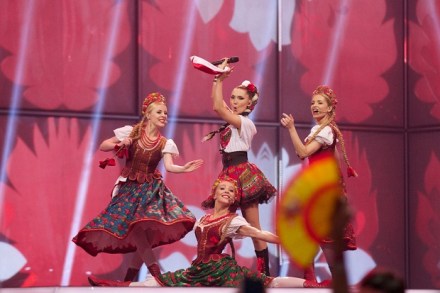
There has been plenty of progressive backslapping this morning because Britain was one of the many countries to award the full 12 points to the bearded Austrian drag act Conchita Wurst in Saturday night’s Eurovision Song Contest. We showed those bigots over in Eastern Europe and Russia a thing or two, the chatterati say. Mr S hates to be a party-pooper, but he has news for you. The British public actually voted for some Polish girls in milkmaid outfits, seductively churning butter and cleaning clothes. The Polish ladies were very self-confident, if a little old fashioned: ‘We’re Slavic girls We know how to use our charming beauty Now, shake what your mama gave ya!’ The blushes of our progressive elite were spared by the suspiciously complex voting system.

Eurovision 2014: the booing of Russia was a disgrace

From our UK edition

Yet again, the best Eurovision entries rose to the top on the night. Sweden, the Netherlands and Austria were the bookies' favourites before the betting started, and no amount of 'buddy voting' upended that. What did disappoint me was the booing of the teenaged girls representing Russia. I felt desperately sorry for the Tolmachevy twins, who had a decent song and pulled off an impressive stage performance. I can't remember the last time I heard a Eurovision audience boo anyone; during the Iraq war in 2003, no one booed Britain - we just came last with no votes from anyone. The acrimony should be in the voting: Poland didn't have to say 'nul points' to Russia, it just happened and everyone enjoyed it. So what explains the viciousness?

Eurovision: It was the beard wot won it

From our UK edition

I enjoyed Fraser’s preview of the Eurovision Song Contest; I had not known that he was such a fan. You work with someone for years, oblivious to their dark secrets, their strange peccadilloes. It was typically brave of him to come out, in public. I watched the thing, again. I thought the entry from The Netherlands was the best song I have ever heard at a Eurovision Song Contest, and by some margin. But that may be because Europop makes me feel ill, and their song definitely wasn’t Europop. It’s the first time I’ve heard a pedal steel in this competition. That being said, the Dutch have form as purveyors of catchy, country-lite, soft rock – anyone remember “Mississippi” by Pussycat?

We watched Eurovision – so you didn’t have to

From our UK edition

I like Europe, even if this may not be the place to admit it, and I like this moment, when our brothers are forced to make fools of themselves in a language none bar the Irish can speak convincingly. Sauf les Français, obviously. ‘Ukraine will win. Europe has solidarity. You’ll see,' says my European flatmate. But after the first batch of votes, it becomes clear that either Ukraine’s entry wasn’t very good, or Putin actually takes the competition seriously. Having missed both Maria Yaremchuk’s Tick-Tock and the inner machinations of the Kremlin’s ministry of culture, my guess is one or both of those things. Many horrors were committed in the process of the panels’ announcements. Azerbaijan begging approval from mother Russia.

Exclusive poll: Brits think we’re doomed in Eurovision (and blame the BBC)

From our UK edition

Seven million of us will be tuning in at 8pm tomorrow night for the Eurovision final, rising to nine million when the UK number is played. But what do we expect to see, and do we think it’s rigged? The Spectator's Culture House Daily blog, in conjunction with YouGov, is able to give you an exclusive poll of 1,860 Brits, seeing what the nation thinks about world’s most-watched cultural event. Seventeen years of hurt has led Britain to think that we just can’t win this thing anymore. A pitiful 1 per cent of those polled think Molly’s Children of the Universe will take the crown tomorrow night, a low figure given that the bookies have her at 8-1. Just over half of us think she’ll finish bottom of the table.

Paul Johnson’s diary: Boris would make a great PM – but he must strike now

From our UK edition

I feel an intense antipathy for Vladimir Putin. No one on the international scene has aroused in me such dislike since Stalin died. Though not a mass killer on the Stalin scale, he has the same indifference to human life. There is a Stalinist streak of gangsterism too: his ‘loyalists’ wear masks as well as carry guns. Putin also resembles Hitler in his use of belligerent minorities to spread his power. Am I becoming paranoid about Putin? I hope not. But I am painfully aware that he would not matter if there was a strong man in Washington. As it is, President Obama is a feeble and cowardly man who makes even Jimmy Carter seem bold by comparison. He is running down America’s strategic capabilities while giving anaemic moral lectures.

No, Putin didn’t plot to invade Ukraine. But now he might have to

From our UK edition

So what, exactly, does Vladimir Putin want? ‘To start World War Three,’ according to the embattled Ukrainian prime minister Arseny Yatseniuk. ‘To rule as president for life with powers on par with the tsars,’ according to Alexei Navalny, leader of Russia’s tiny opposition. To ‘force a major change of boundaries on Europe… and break the post-Cold War consensus,’ according to Radek Sikorski, Poland’s foreign minister. Actually, Putin himself has always been rather clear about his ambitions. ‘Russia has been a great power for centuries, and remains so,’ Putin told the State Duma in his first speech as prime minister, back in August 1999.

Portrait of the week | 1 May 2014

From our UK edition

Home The British economy grew by 0.8 per cent in the first quarter of 2014, disappointing hotheads who’d expected 1 per cent. It was 3.1 per cent bigger than a year earlier, but 0.6 per cent smaller than in 2008. Pfizer, the American pharmaceutical company, said it wanted to take over AstraZeneca, with a £60 billion bid that would make it the biggest ever foreign takeover of a British-based company. The Labour party said it was leaving the Co-op Bank and taking its £1.2 million overdraft elsewhere. UK Financial Investments, which manages the Treasury’s 81 per cent stake in the Royal Bank of Scotland, blocked a plan for 200 per cent bonuses.

Alex Salmond receives a lesson from the school of foreign policy hard knocks

From our UK edition

Look: Alex Salmond's indulgent appraisal of Vladimir Putin's record was foolish and naive and all too revealing but let's not lose the heid. Scotland, even an independent Scotland, is not going to be run by  McKGB and Mr Salmond's fondness for wealthy businessmen is not really comparable to the kleptocracy that's run Russia this century. Still, it is a news story and a legitimate one. Tinfoil Nationalists were very upset yesterday. Salmond was being "smeared" by, er, being quoted. GQ, clearly part of the pan-Unionist BritNat propaganda media machine, had "leaked" excerpts of their interview with the First Minister to undermine, eclipse or otherwise divert attention from a speech Mr Salmond was giving in Belgium. Because, obviously.

Alex Salmond’s strange – but revealing – admiration for Vladimir Putin

From our UK edition

What to make of Alex Salmond's qualified admiration for Vladimir Putin? The First Minister, interviewed for the forthcoming issue of GQ, declared he admires "certain aspects" of the Russian President's record. Asked for his views on Putin, Salmond told Alastair Campbell that: "Well, obviously, I don't approve of a range of Russian actions, but I think Putin's more effective than the press he gets I would have thought, and you can see why he carries support in Russia. "[...] He's restored a substantial part of Russian pride and that must be a good thing. There are aspects of Russian constitutionality and the inter-mesh with business and politics that are obviously difficult to admire. Russians are fantastic people, incidentally, they are lovely people." Well, some of them anyway.

The Keyser Söze of Ukrainian politics

From our UK edition

Dmitry Firtash is the Keyser Söze of Ukrainian politics — a mystery figure about whom you hear two very different stories. According to one version, he’s a benign self-made businessman who gives generously to charities around the world, with the power — perhaps greater than any other Ukrainian citizen — to steer his troubled country towards stability and prosperity. According to the other, completely unproven version, which he denies, he’s Putin’s bagman, another of those crooked oligarchs who made their money through dirty means — and is now about to get his just deserts at the hands of the US legal system, which has the power to extradite him, imprison him and seize his billions.

Would the word ‘NATO’ make Vladimir Putin think twice?

From our UK edition

Russia, Ukraine, the European Union and the United States will meet in Geneva later today in order to find a solution to the confrontation in eastern Ukraine. There is not much hope of success. The Obama administration has been lowering expectations, so too the Foreign Office. Kiev’s heavy-handedness in eastern Ukraine has embarrassed the western allies; not least because the military deployment yesterday exposed Ukraine’s inherent weakness: government forces were either incapable or reluctant to enforce Kiev’s writ in the east of the country. There were further violent clashes overnight. Kiev says that 3 ‘Russian separatists’ were killed and 13 wounded when trying to seize a military installation on the Sea of Azov.