Russia

Does Evgeny Lebedev fancy being Mayor of London?

From our UK edition

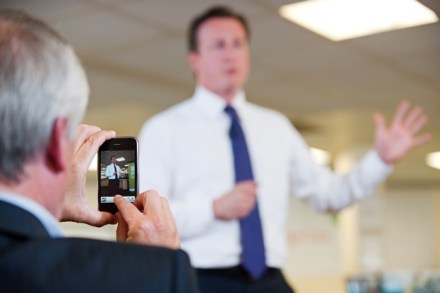
While the Tories scrabble around for a candidate for the 2016 London Mayoral election, Mr S hears one millionaire is already eyeballing the 2020 race. Barely an edition of the Evening Standard fails to feature either an interview by (or with) their proprietor Evgeny Lebedev. His face is regularly found across the pages of both his publications the Standard and the Independent, most recently in an awkward interview with David Cameron. His father Alexander must have been proud, as he uploaded a photo of the two to Instagram: Evgueny recently interviewed D.Cameron.Hope a question about UK/Russia relations was raised.
The dos and don’ts of the Russian art scene

From our UK edition

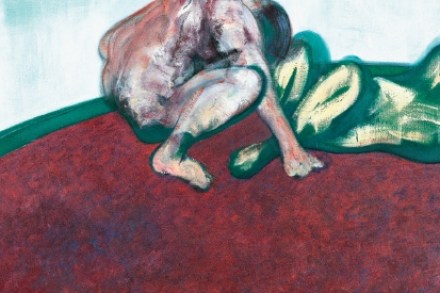
They’re doing fantastic deals on five-star hotels in St Petersburg the weekend the Francis Bacon exhibition opens at the Hermitage. With tensions between Russia and the west at their highest since the Cold War, ‘no one’, I’m told, wants to come here. No one, that is, except large numbers of elderly but well-heeled people from the Norwich area, many of them trustees and friends of the University of East Anglia’s Sainsbury Centre for Visual Arts — co-organisers of the exhibition — who have flown out here for the gala opening. If 2014’s UK-Russia Year of Culture passed virtually unnoticed for political reasons, the western visitor won’t experience the slightest sense of tension on the placid streets of St Petersburg.

The henchmen who prop up Putin need to be hit where it hurts

From our UK edition

If anyone thought Russian President, Vladimir Putin, was a strongman the West could do business with, that delusion has been punctured. Last week, Russian Bear bombers skirted by British airspace.  In January, a UK public inquiry into the murder of Alexander Litvinenko, KGB agent turned UK-based dissident, heard he was murdered at Putin’s behest in an ‘act of nuclear terrorism’ on British soil. And Kremlin-backed rebels are ensuring a cease-fire with Ukraine crumbles, leaving the West looking impotent as Putin’s stare shifts menacingly to the Baltic countries of the European Union. But, are we in Britain doing everything we realistically can to curb Putin’s bullying?

Will the real Swan Lake please stand up

From our UK edition

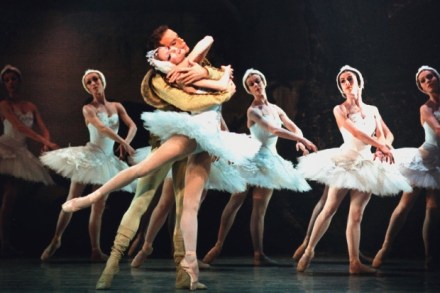
It is the end of an era — the Royal Ballet’s extravagant Fabergé-egg Swan Lake production by Anthony Dowell is on its last legs. When this 28-year-old production finishes the current run on 9 April, that will be it for one of the most controversial classical productions of the past half-century. It’s the one set in Romanov Russia, festooned with ribbons and golden squiggles, with swans in champagne ball-gowns rather than pristine white feathers. Hallucinatory, glamorous and opulently symbolist? Or hectic, fussy and tatty? Adjectives divide between the adoring and the withering for Yolanda Sonnabend’s Gustave Moreau-esque designs and for Dowell’s hyperactive staging.

How Vladimir Putin is waging war on the West – and winning

From our UK edition

Last month, the speaker of the Russian parliament solemnly instructed his foreign affairs committee to launch a historical investigation: was West Germany’s ‘annexation’ of East Germany really legal? Should it be condemned? Ought it to be reversed? Last week, the Russian foreign minister, speaking at a security conference in Munich, hinted that he might have similar doubts. ‘Germany’s reunification was conducted without any referendum,’ he declared, ominously. At this, the normally staid audience burst out laughing. The Germans in the room found the Russian statements particularly hilarious. Undo German unification? Why, that would require undoing the whole post-Cold War settlement!

Michael Fallon worries about Putin’s next step: this is what the Russian President plans to do

From our UK edition

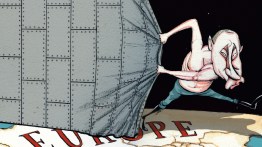
Michael Fallon is worried about Vladimir Putin repeating his tactics in Ukraine with other countries. The Defence Secretary told newspapers that he was ‘worried about his pressure on the Baltics, the way he is testing Nato’. This morning Nick Clegg said that while there was ‘no evidence right now’ that the Russian President was seeking to do the same in the Baltic states, ‘we should be vigilant when a leader of a nation like Russia starts throwing his weight around in the way that he does, in such an arbitrary and acceptable way, of course we need to be vigilant’. So what is Putin’s strategy? Well, in this week’s Spectator, Anne Applebaum examines the Russian President’s plan to draw a new Iron Curtain across Europe.

Why Putin is even less of a human than Stalin was

From our UK edition

LBC likes to tell us it’s ‘Leading Britain’s Conversation’, though in the case of weekday pre-lunch presenter James O’Brien you’ll have to sit through a series of bombastic monologues from the host before any punters get a word in edgeways. O’Brien knows everything, and he doesn’t mind telling you. Still, I understand that running a talk show is no job for timid introverts who might burst into tears if callers start giving them a hard time. The trick is pretending to listen sympathetically while being ready to drop the guillotine without compunction (after all, these people aren’t your friends, they’re just statistics for the business plan).

The Kremlin is dictating Russian culture once more – and it’s neo-Soviet and anti-Western

From our UK edition

It’s suddenly gone icy-cold in Russia’s arts relations with us and the US. Last year’s Russia-UK Year of Culture just snicked under the wire before the political chill started building up ice in all sorts of unexpected places. The international acclaim for the epic Russian film Leviathan, up for a Best Foreign Film Oscar, was sneered at by the feverishly nationalistic culture minister Vladimir Medinsky. Recently he denounced the film as 'perfectly calculated to pander' to western views of a bleak modern Russia, and he has previously proposed that only movies properly celebrating today’s Russia should be allowed either public funding or a release.

How Putin turned Russian politics into reality TV

From our UK edition

‘We all know there will be no real politics.’ A prominent Russian TV presenter is speaking off the record at a production meeting in 2001. ‘But we still have to give our viewers the sense that something is happening. They need to be kept entertained. Politics has got to feel … like a movie!’ When Peter Pomerantsev, a Brit of Russian descent, sat in on this meeting he had recently graduated and moved to Moscow to work as a TV producer. A decade in Russian television has now provided him with the material for his chilling first book. Nothing is True… is more than an evocative travelogue or an insight into a new system of authoritarian control, although it is both of these.

Want to understand the conflict in Ukraine? Compare it to Ireland

From our UK edition

What seemed this time last year to be a little local difficulty in Ukraine has metastasised to the point where a peace plan drafted in Paris and Berlin may be all that stands in the way of war between the West and Russia. Over the months, many of those watching, appalled, from the safety of the side-lines, have combed history for precedents and parallels that might aid understanding or offer clues as to what might be done. Last spring, after Russia snatched Crimea and appeared ready to grab a chunk of eastern Ukraine too, the favoured comparisons were with Nazi Germany’s 1938 annexation of Sudetenland. It was a parallel that seemed all too plausible, given the Kremlin’s statements about the need to protect Russian 'compatriots' wherever they might live.

The prophet Tolstoy and his dodgy vicar

From our UK edition

One fine day in June 1896, a lone Russian nihilist visited Leo Tolstoy on his country estate. Come to hear the master, the stranger questioned Tolstoy about his latest beliefs. Satisfied, he left later that day. But then he returned with a written confession. He was an undercover policeman, sent to check on what Tolstoy was up to. Deeply ashamed of his deception, he begged for forgiveness. This vignette, recounted by Alexandra Popoff in her new book about Tolstoy’s later life, perfectly captures the author’s power. Whether through his fiction or radical Christianity, Tolstoy could fascinate and compel in equal measure. Though the government spy was dismissed for his bungling, it is hard to imagine his regret at being seen as himself by the literary master turned prophet.

Panic, profiteering and a mysterious girl in a Mini: notes from Moscow

From our UK edition

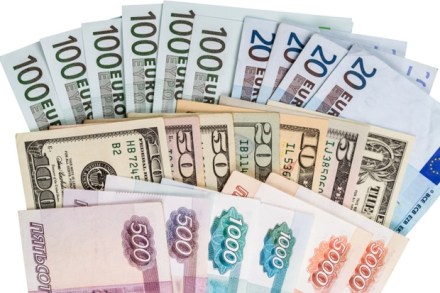
 Moscow Here we go again. The rouble slides, then tumbles, and slides again. For those of us who remember the crash of August 1998, the drill is familiar. For Muscovites, the old instincts have surfaced from the 1990s like a sausagey burp. Shoppers besieged Ikea, Auchan and other mega-markets, desperate to spend rapidly devaluing roubles. Cynical expatriates such as myself did much the same with our newly inflated hard currency. I cleared my local posh wine shop of a thousand bucks’ worth of Burgundy, now half-price in dollar terms. A correspondent colleague raided the Moscow Apple store to the tune of two iPhones and a pair of laptops before they shut down to recalculate prices.

Old Vic’s Tree: Beckett plus Seinfeld – plus swearing

From our UK edition

‘Fucking hell. You twat. Fuck off. Fuck. Fuck.’ These dispiriting words are the opening line of Tree, a newish play by the lugubrious comic Daniel Kitson, whose stand-up show once transported me into the heavenly arms of Lethe. His script opens with a chance encounter between two oddball smart Alecs. The outdoor setting, borrowed from Beckett, is a suburban cul-de-sac where a single tree is about to shed its autumn raiment. One man crouches in the branches, another stands below. They exchange confidences, observations, food and witticisms. At the end, one departs. This is a play of quips and anecdotes but no significant action. The tree-dweller is an eco-warrior protesting at the council’s policy of bough amputation and trunk eradication.

Cameron’s reaction to the Charlie Hebdo attacks has been depressingly predictable

From our UK edition

Last Sunday, David Cameron marched through Paris in solidarity, so it seemed, with those who stand up for free speech. Anyone who thought he meant it must now be crying out, ‘Je suis un right Charlie!’ Hardly had the march finished than the Prime Minister had rediscovered his other side: the one which reacts to terror by threatening yet more surveillance, more state control. He has promised to revive, in the Conservative manifesto, the ‘-snooper’s charter’ which would allow the state to retain indefinitely information about every email we ever send, every telephone call we ever make. Not only that. He added a further measure: he wants to ban all kinds of encrypted communications which the security -forces struggle to decipher.

Ed Miliband’s dinner date with Amal Clooney

From our UK edition

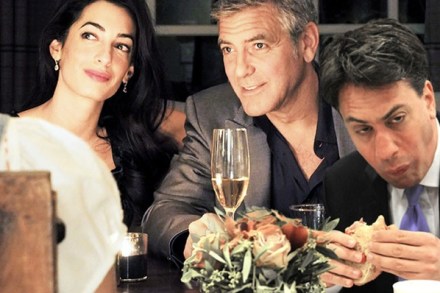
Ed Miliband's popularity may be at an all time low, but the leader of the Labour party is at least now moving in A-list circles. The Telegraph reports that Miliband recently enjoyed a supper at the mansion of Geoffrey Robertson QC, the human rights barrister, which both George and Amal Clooney attended. Mrs Clooney is a barrister at Doughty Street, Robertson's chambers. While the quality of Miliband's general dinner party chat remains unknown, he is thought to have discussed with the Hollywood couple proposals for 'fresh sanctions on Vladimir Putin's regime' following the case of Sergei Maginitsky,  the Russian whistleblower who died after months of beatings in prison.

The Saudis are playing a clever game with oil supplies. Here’s how to understand it

From our UK edition

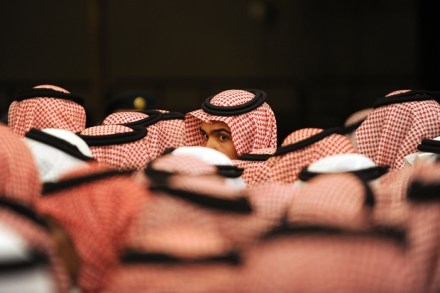
As oil prices continue to plummet, the rather sterile debate over Saudi intentions drags on. Some believe the Saudis are locked into a secret conspiracy with Washington to stiff Russia and Iran. Others prefer to take the Saudi oil minister at his word and believe that it’s all about market share. The truth is that the debate is founded on a false dichotomy: the Saudis are doing both things at once, and several other things as well. The best way to understand this is to try to step into the shoes (or sandals, rather) of a senior member of the al-Saud family. Your neighbourhood is convulsed in war and revolution, and you have seen apparently stable regimes in Tunisia and Egypt swept away, while your own vassal state of Bahrain is on the verge of civil war.

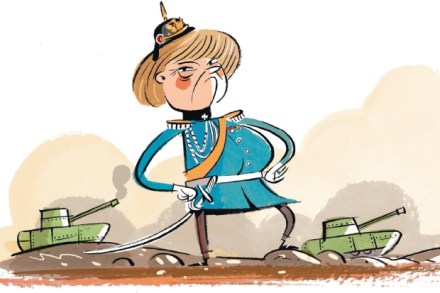
Europeans no longer fear Germany. But do the Germans still fear themselves?

From our UK edition

In the old Death Strip between East and West Berlin, which runs through the centre of the city, there is a graveyard full of German war heroes and a few war criminals too. From the Red Baron to Reinhard Heydrich, the best and worst of the German military are buried here. There’s also a mass grave full of civilians, killed by Allied air raids, and a memorial to the 136 East Berliners who died trying to cross the Berlin Wall — which ran through this cemetery. The Death Strip is still an empty space. Germany has been marking two anniversaries this year — one a celebration, the other a painful duty. The 25th anniversary of the Mauerfall (as Germans call the fall of the Berlin Wall) is one of those rare events in German history about which they can feel unequivocally happy.

Podcast: Autumn Statement, Russia’s information wars and life inside Tatler

From our UK edition

George Osborne appears to have delivered a successful Autumn Statement, but are there some dark secrets in the details? In this week’s View from 22 podcast, Fraser Nelson and James Forsyth discuss the Chancellor’s last major economic speech of this Parliament, the political consequences of the new measures announced and what it means for the outcome of the next election. Anne Applebaum also discusses this week's Spectator cover features on the quandary of Russia. Will the country put up with economic hardship in return for this experiment in rebelling against the West? How much chance is there for Russia to come back 'on-side' with the rest of the international community?

The crash of the ruble — and what’s next for Russia

From our UK edition

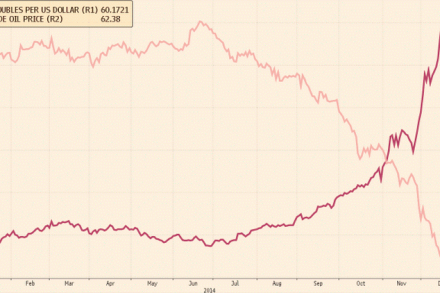
Since the Russian invasion of Crimea last February, many different phrases have been used to describe the tactics of the Russian President, Vladimir Putin. Some have spoken of a ‘new Cold War’. Others have described him as ‘anti-western’ or ‘anti-American’. But there is another adjective one could also use to describe his behaviour: ‘experimental’. For apart from everything else he has said and done, Putin has, in effect, launched a vast experiment into whether it is possible to extract a large and relatively well-integrated country from the global mainstream, and to reject the rules by which that mainstream runs. In truth, the experiment began long before Crimea.

Why Vladimir Putin’s threats about cutting off Europe’s gas supply are all bluff

From our UK edition

Has the West found a secret new weapon in its battle with Putin’s expansionist ambitions: reversible gas pipelines? Putin has never made a secret of his willingness to use energy as bludgeon against his neighbours. In 1999, the year before he became Russian leader, he wrote a pamphlet making the case that energy exports provided the means by which his country’s greatness could be restored. Putin’s behaviour over Ukraine has been typical. Over the past 15 years Russia has constructed a network of pipelines which can be used to bypass Ukraine. Starve Ukraine of energy, goes Putin’s thinking, and it might be forced back into Russia’s fold.