Russia

Vladimir Putin’s night at the Tucker Carlson circus

Tucker Carlson is a master contortionist. As conservative strategist David Reaboi reminded us this week, one of the most egregious examples of Carlson’s tendency for reality deformation came in the form of an interview with Kanye West, the troubled rapper who sat for an interview on Carlson’s erstwhile Fox News show a couple of years ago. It was the middle of West’s antisemitic meltdown, but because West was embracing Donald Trump, Carlson presented him as a sensible, even brilliant thinker. “Is West crazy?” Carlson asked at the top of the interview, before concluding at the end: “Not crazy. Worth listening to, even if you disagree with him.

tucker carlson

The biggest overreactions to Tucker Carlson’s Putin interview that no one has seen yet

Judging by some of the responses to Tucker Carlson’s announcement of his forthcoming interview with Vladimir Putin, you'd think the former Fox News host had been caught driving a tank into Kharkiv. Naturally, Cockburn is reserving judgment until he's seen the conversation itself — which is scheduled to be released this evening. Of course, Carlson has a track record of going easy in interviews with morally dubious guests such as Andrew Tate, Russell Brand and Kevin Spacey — and several other outlets were declined the opportunity to grill Putin by the Kremlin. Nonetheless, the reactions to Carlson's presence in Moscow seem particularly highly strung given no one currently knows what questions he asked. Among the most vocal critics of Carlson has been Hillary Clinton.

tucker carlson moscow

The stupidity of Biden’s liquefied natural gas export pause

Last week's White House announcement that it was pausing new permits for exports of liquefied natural gas, or LNG, is a desperate move by a desperate president. Its principal beneficiaries are likely to be Vladimir Putin and Hamas-harboring Qatar, rather than Joe Biden’s faltering re-election campaign. The president’s political calculation is overt. “We will heed the calls of young people and frontline communities who are using who are using their voices to demand action,” Biden says. “The pause on new LNG approvals sees the climate crisis for what it is: the existential threat of our time.”  From a national security perspective, the pause is extraordinarily damaging.

liquefied natural gas

The re-supplied Russians hit Ukraine with full force

LVIV — The Japanese have a concept of forest bathing for health. Joe Rogan promotes daily ice baths for a little shock to get you going in the morning. But in Ukraine, people often experience missile-and-drone baths, and so it was in the early hours of last Friday, when Russia launched what seems to have been its biggest ever sky assault upon Ukrainian cities. It was the first major Russian attack upon Ukrainian since the summer, when Ukraine disrupted Moscow’s missile-launching Black Sea Fleet.  Since then, it’s been a brutal New Year.  Just before 5 a.m.

ukraine

Facing the facts of the West

The century began with a global celebration — the West’s belief in liberal democratic capitalism had battled foes for centuries and emerged victorious. All that remained was for the rest of the globe to melt into the West’s soft and loving embrace. Two decades in, things look much less rosy. China’s rapid rise has not spurred democratization, as many suggested it might; instead it has nourished a massive ideological and political competitor that may supplant the West not only economically but as an arbiter of global culture and behavior. Western decline is not yet inevitable, but Western values will survive and spread only if leaders recognize two clear facts. The first is that the spread of Western values has in large part been due to the dominance of Western power.

west
poland

Poland and Hungary learn different lessons from history

For decades, the European Union was dominated by a combination of French élan and German economic clout. By the late 2010s, a conservative Budapest-Warsaw alliance seemed poised to challenge this arrangement. The ideological firepower was supplied by Hungarian prime minister Viktor Orbán, who emerged as an unlikely spokesman for the international right, while Poland’s booming economy and large population lent the partnership some much needed heft. The Polish elections in mid-October not only marked the end of the Law and Justice party’s near-decade of conservative rule; they offered another blow to a Polish-Hungarian relationship already fraying over the war in Ukraine.

Visiting with bears on the Russian border

Bear viewing in Finland can be a cloak-and-dagger affair. We were told to meet our guide, Pekka Veteläinen, at 5:45 on a Monday afternoon — not at a landmark, but at a set of GPS coordinates deep in the woods, fifty minutes outside a town called Kuusamo, just one kilometer short of the Russian border on logging road number 8691. Here are some of the instructions we received. Wear dark clothing. Take ready-made food with you. Bring cash because credit cards don’t work in this wilderness. We had an early dinner at a “wild food” certified restaurant in the Karelian town of Kuusamo — it’s Finland’s seventy-fifth biggest town, a distinction that means the place still has more reindeer than people.

bear

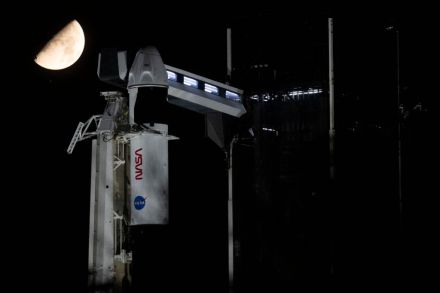
What exactly is the new space race all about?

The recent spate of articles about attempts by different countries to land vehicles on the Moon make it clear that a new space race is on. Just last month, Russia launched its first mission there in forty-seven years. And although the automated Luna-25 spacecraft spun out of control and crashed at the last minute, India’s heavily-instrumented Chandrayaan-3 landed successfully just four days later. NASA itself aims to return humans to the lunar surface in 2025 with its Artemis program. Remarkably, more than eighty countries, including Israel and the United Arab Emirates, have thus far established some kind of presence in space.

space

World events are not going America’s way

Contrary to the conventional wisdom, the world situation is grim for America. And it could actually get far worse. Why, then, are many of our national leaders acting as if things are going well? We need not doubling down but fundamental change. That starts with understanding that we are in serious trouble. The war in Ukraine, which is manifestly the Biden administration’s priority, is sadly likely to be protracted. While the Ukrainian counteroffensive is still ongoing, the best analysis indicates that the war has become a struggle of attrition. Russia is substantially mobilizing its economy and society for a long-haul war effort — and its armed forces appear to have at least partially adapted from their earlier failures.

world
NATO

NATO’s post-Cold War strategy has been a disaster

NATO is fighting for its life — and dying. The alliance has only grown larger as a result of Russia’s invasion of Ukraine. Now Finland is a member — and Sweden is on its way to becoming one. Ukraine and Georgia would like to join, too. All this is a sign of failure, however, not success. Whichever way one looks at the picture, NATO’s post-Cold War strategy has been a disaster. Either NATO did not expand far enough, fast enough — to the point of including Ukraine and thereby preventing the Russian invasion — or NATO’s continual expansion gave Russians reason to fear that they were being boxed in.

Lithuania

A month in the Baltics

On Joe Biden’s first day in Lithuania, he skipped the opening dinner of world leaders at the NATO summit and made a beeline from the airport to his suite at the opulent Kempinski Hotel for a plate of spaghetti bolognese and some quality sack time. My introduction to the country a couple of weeks later involved no fanfare, but was far more memorable. I woke up in the 700-year-old Jaunpils Castle, in a fantastic, out-of-the-way place, lost to my teenage son in an archery competition there and then drove south on winding country roads to northern Lithuania’s Hill of Crosses, a place that better symbolizes the victory of faith over communism than any other. The Baltic countries — Lithuania, Latvia and Estonia — are often lumped together.

Renewed hope on Ukraine’s Independence Day 

Kyiv Because I was born on the same day as Ukrainian Independence, there were always fireworks on my birthday. Until I was eight, I thought these rockets were in my honor. I even asked my mother to bring a bag so that I could catch a “firework” and it would keep shining for me all night long.  In addition to fireworks, there were concerts and cotton candy, and the fountain on the main square would be transformed from ordinary to multi-colored. It was like the Fourth of July in America, only on August 24 in Ukraine. But my childhood is over, I’ve become an adult and this year after eighteen months of Russia’s full-scale war, I’m not expecting fireworks. I’m hoping there won’t be Russian rockets or Iranian drones either. War forces us to adjust.

independence

What we learned from the Korean War

July 27 marks the seventieth anniversary of the armistice that ended major hostilities on the Korean Peninsula. Sometimes referred to as the Forgotten War, the last thing the Korean War should be is forgotten. First and foremost because tens of thousands of US and allied soldiers and millions of Koreans died, but also because of the lessons the war offers for policymakers today as the world enters an era not unlike the budding Cold War in 1950.  The first lesson is on the importance of messaging. The world pays attention to what the US says, and Washington’s adversaries pay particularly close attention. In January 1950, secretary of state Dean Acheson spoke to the National Press Club about a perimeter that the US would defend against communist aggression.

korean war

Russian failure is a lesson for America

We may never understand the series of events and decisions that led Yevgeny Prigozhin to stage an armed rebellion against Russian president Vladimir Putin’s administration with his Wagner Group private military company, or PMC. Prigozhin was opposed to the planned forcible incorporation of Wagner into the Russian armed forces. He also came to be a sharp critic of the fabricated rationale for Russia’s war on Ukraine and the sloppy way it was being waged by its generals, who are more focused on politics than on defeating Kyiv.

russian military
Yevgeny Prigozhin influencer

Yevgeny Prigozhin, the world’s strangest influencer

How did Yevgeny Prigozhin, the hot dog vendor-cum-leader of the Wagner private military company, become addicted to the allure of likes, retweets and digital validation? From the outside looking in, the warlord posts like a rich kid splayed over his dad’s Porsche — except rather than a swanky car, Prigozhin brags of the travails of the world’s deadliest private military, replete with tanks and artillery.   The early war days of PMC Wagner’s social media presence could be compared to that of ISIS or other paramilitary groups: the posts had a clear agenda, including intimidation, like the “hammer of revenge” video they circulated over Telegram, which documented the brutal murder of Yevgeny Nuzhin, a former Wagner Group member.

Prigozhin turns back, halting ‘coup’ attempt

Yevgeny Prigozhin, the leader of the Wagner mercenary group, has tonight halted his march on Moscow, in return for assurances from the Kremlin on his men’s safety. Alexander Lukashenko, Belarusian president, brokered the agreement. Prigozhin has just released the following statement on Telegram: We marched out on June 23 on the Justice March. In one day, we got within 200 kilometers of Moscow. During this time we did not spill a single drop of blood of our fighters. Now comes the moment when blood may be spilled. Therefore, understanding the responsibility that Russian blood will be spilled on one side, we are turning our columns around and retreating in the opposite direction to the field camps.

prigozhin

Wagner Group leader claims Russian forces attacked his troops

The leader of Russia’s Wagner group, Yevgeny Prigozhin, claimed Friday that Russian forces targeted his private military company, with “many victims.” The attack occurred after Prigozhin produced a video where he lambasted the Russian military brass for peddling falsehoods about the war to the Russian public and to President Putin. “The ministry of defense is trying to deceive the public and the president and spin the story that there was insane levels of aggression from the Ukrainian side,” said Prigozhin according to The Guardian, “and that they were going to attack us together with the whole NATO block.” “When Zelensky became president,” he added, “he was ready for agreements. All that needed to be done was to get off Mount Olympus and negotiate with him.

yevgeny prigozhin

Reminders of the Cold War in Vienna and Budapest

Apparently an acquaintance has dubbed me the “Kremlinologist of the right.” Redolent as it is of the Cold War-era drama surrounding the Kremlin, when the West was desperately trying to suss out what Winston Churchill called a riddle wrapped in a mystery inside an enigma, I could hardly object to this quip upon learning of it. Indeed, I recently traveled to two hot spots of the Cold War, Vienna and Budapest. I went full immersion in Vienna, where I attended a screening of Orson Welles’s The Third Man, a humdinger of a movie if there ever was one. Graham Greene set it in postwar Vienna, which was divided between the four occupying powers, France, Great Britain, America and the Soviet Union.

Cold War
ukraine

How the Ukraine war remade our world

War has a stronger appetite than any of the countries that wage it. Aggressors, defenders, small states and superpowers are all on the menu. Take the war in Ukraine, for example. The war really started in 2014 when Russia annexed Crimea and fomented secession in the Donbas. America slapped Moscow back with sanctions. This was virtue-signaling. Sanctions might sting Vladimir Putin and his cronies, but how could they change Russia’s interest in Crimea? The peninsula is Russia’s gateway to the Mediterranean. Sanctions can’t alter geography. Ukraine had a friend in Vice President Joe Biden, and it had his son Hunter on a Ukrainian oil company’s payroll. Then disaster struck — the Bidens were gone and Donald Trump became president.

poland

The Polish miracle

Poland’s Third Republic entered the world in 1989, after a dark period of occupation and oppression at the hands first of the Nazis and then the Soviets. As democracy was taking its first tentative steps in Warsaw, the USSR still had two years left to live and Germany was not yet unified. Yet somehow, over the next thirty-four years, Poland went from a poor post-communist state to a rapidly rising economic powerhouse and serious geopolitical force. Nothing about this rise was inevitable. Human agency, unforeseen events and providence play into every historical development — and Poland’s remarkable progress is no exception. It took leadership, will and luck. A central desire of the Polish people since long before 1989 has been to become a part of the West’s vision of Europe.