Russia

Portrait of the week: Employment falls, exam failures and a roundabout rigmarole

From our UK edition

Home In fine weather with calm seas, 565 migrants in four days crossed the Channel in small craft. French officials said that 33 migrants in two boats that got into difficulty had been returned to Calais. In July more than 1,000 migrants crossed the Channel. Priti Patel, the Home Secretary, appointed Dan O’Mahoney as Britain’s Clandestine Channel Threat Commander, tasked with somehow making such voyages ‘unviable’. Employment fell by 220,000 in the three months to June, the biggest quarterly fall since 2009, but unemployment remained at about 3.9 per cent, as millions stayed on the furlough scheme. At the beginning of the week, Sunday 9 August, total deaths from Covid-19 stood at 46,566, with a seven-day average of 53 deaths a day.

Portrait of the week: Vaccine hopes, the Russia report and a knighthood for Captain Tom

From our UK edition

Home A coronavirus vaccine developed by the University of Oxford, tested on 1,077 people, was found to induce antibodies and T-cells that could fight the virus. Boris Johnson, the Prime Minister, said he hoped for a ‘significant return to normality from November, at the earliest, possibly in time for Christmas’. At the beginning of the week, Sunday 19 July, total deaths from Covid-19 stood at 45,273, with a seven-day average of 68 deaths a day. But Professor Carl Heneghan of Oxford University discovered that anyone who had tested positive for coronavirus but died later of another cause was included in the Public Health England figures. The Queen knighted Captain Sir Thomas Moore, aged 100, on the grass of Upper Ward in Windsor Castle.

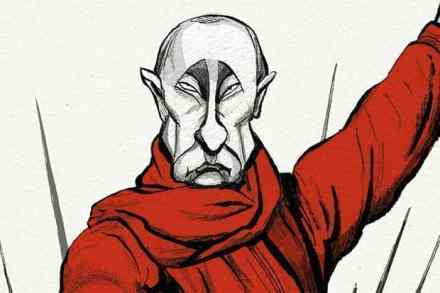
Putin plans to make the West destroy itself

From our UK edition

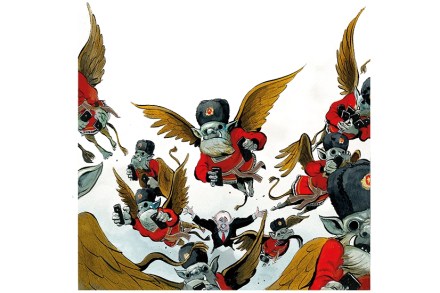
There’s only one person who’ll be genuinely pleased with the Intelligence and Security Committee’s Russia report, finally revealed on Tuesday, and that’s Vladimir Putin. Russia emerges as an amorphous and formidable enemy — all the more so because the inconclusive and much-redacted report contains next to no substantiated allegations. Instead Russia appears as a phantom, unknowable menace, and this will spawn a thousand conspiracy theories far more corrosive and confusing to our politics than any Moscow-generated Twitter-storm or document leak. There’s no smoking gun on Brexit. Yet the government-induced delay in publication allows anyone that way inclined to imagine a cover-up.

Sunday shows round-up: Chinese Ambassador denies Xinjiang concentration camps

From our UK edition

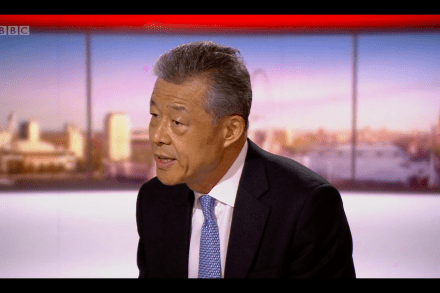
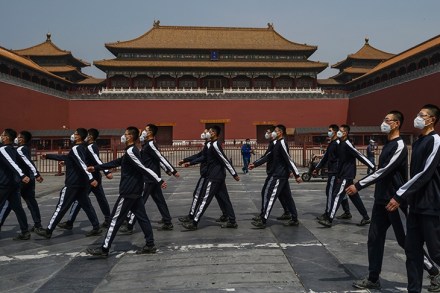
Liu Xiaoming - No Muslim concentration camps in Xinjiang Today's Sunday interviews took a heavier focus on foreign affairs than usual, with Andrew Marr counting not one, but two ambassadors among his guests. He began by speaking to Liu Xiaoming, the Chinese ambassador, and confronted him with aerial footage appearing to show restrained Uighur Muslims preparing to be transported to ‘re-education’ camps, alongside testimony that Uighur women were being forced to undergo sterilisation procedures. Liu denied that such human rights abuses were Chinese government policy and tried to brand the claims as fake: https://twitter.com/BBCPolitics/status/1284771337970552832?

These Russian cyber-attacks are a wake up call for the UK

From our UK edition

Days before the release of the becalmed Intelligence & Security Committee (ISC) report on Russian political interference, we suddenly started to hear news of Moscow’s meddling on Thursday. It’s almost as if the government, sensitive about appearing like it wants to bury the report, suddenly wants to steal the thunder and look serious. Surely not. Putting cynicism aside, it is worth taking a proper look at these two new stories of Russian interference and what they tell us about what Moscow is and isn’t doing – and, more to the point, what it can and cannot do. The first story is a leak about a leak.

The ineptitude of despots

From our UK edition

Displaying the pristine neutrality that has made her such a popular figure, Newsnight’s Emily Maitlis apparently tweeted the following last week: ‘No. 10 is trying to control the media, and everyone in our democracy should be afraid.’ Sadly, this typically sane and measured observation was later deleted. Was she told to delete it? Or did she think better of it but was not quite up to tweeting: ‘No. 10 isn’t trying to control the media and we should probably all rest easy.’ I wonder how many other tweets she’s deleted before I got around to seeing them? ‘The schools are closed not on account of Covid but because giant Tory goblins are devouring our children. And nobody says anything.

Britain’s Magnitsky sanctions will hit Putin where it hurts

From our UK edition

It’s rare for a Government minister to make an announcement that is universally welcomed in the House of Commons. But that’s exactly what happened on Monday, when the foreign secretary Dominic Raab introduced long-awaited sanctions against human-rights abusers. Raab’s announcement appeared on the Commons’ Order Paper under the rather mundane title ‘Introduction of the Global Human Rights sanctions regime’, but what he said will have far-reaching consequences. The measures Raab announced include asset freezes and travel bans against individuals who not only commit human-rights abuses but also those who benefit and profit from them. The names of such individuals will be made public, in a so-called ‘Magnitsky List’.

Imperialism is far from over, but gathering force in disguise

From our UK edition

From ancient times, empires have risen and fallen, driven by war, territorial acquisition, trade, plunder, religion, ideology, technology, culture and information. In this ambitious book, Samir Puri — formerly at the Foreign Office, now a lecturer on war and international studies — attempts to analyse how all this has affected the world today. Over eight chapters, he recounts the histories of empires around the globe, omitting only South America and Oceania. He looks at how their very different narratives linger in modern geopolitics. If we are living, as he says, through a ‘great imperial hangover’ it must have been one almighty booze-up.

Czar quality

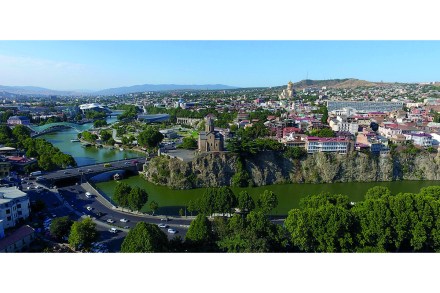
‘These regions are not under the control of the central government,’ reads a warning on a map in the bustling center of Georgia’s capital, Tbilisi. ‘Traveling to these regions is not advisable.’ One of these regions is Abkhazia, only a few hours’ drive away. The other is South Ossetia, barely an hour from here. Since 2008 both have been occupied by Russian troops, in defiance of the Georgian government. Yet here in Tbilisi, tourism is booming, and many of the tourists are Russians. This neat irony encapsulates what makes Tbilisi such a fascinating city, a looking-glass metropolis in which nothing is quite what it seems.

tbilisi georgia

Putin needs Xi more than China needs Russia

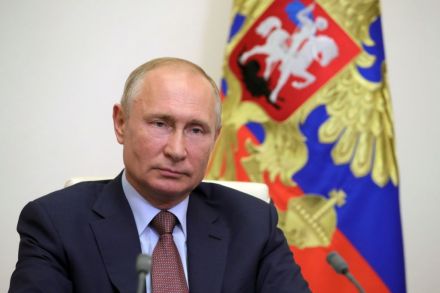
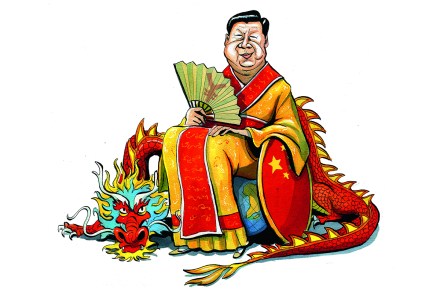
On May 9, Vladimir Putin had been due to review a parade of troops and military hardware on Red Square alongside Xi Jinping and Emmanuel Macron. Russia’s coronavirus lockdown forced Putin to cancel the elaborate celebrations of the 75th anniversary of the end of World War Two in Europe — as well as to postpone a national referendum that would have extended his personal rule until 2036. But though Putin and Xi have been deprived of the opportunity to make a show of solidarity amid the sea of Soviet flags that bedecks Moscow annually for Victory Day, the coronavirus crisis promises to throw Russia and China closer together than they have ever been. China needs friends; Russia needs money.

putin xi

Can Putin survive the coronavirus stress test?

From our UK edition

Vladimir Putin knows that a poor state is a weak state. As a middling KGB apparatchik in Dresden in 1989 he saw the USSR’s authority over its empire collapse along with its economy. Two years later, the Soviet state itself imploded, unable to feed its citizens or command the loyalty of its own security forces. Rebuilding Russia’s security apparatus back to Soviet levels and securing it against another systemic collapse has been the touchstone of Putin’s two decades in power. With the coronavirus crisis, the Putin system faces a stress test every bit as radical as that which brought down Mikhail Gorbachev. The proximate cause of the USSR’s collapse was a 1985 decision by the Saudis — with American encouragement — to crash the price of oil.

Covid-19 is testing Putin’s regime

From our UK edition

Vladimir Putin is observing the old adage that you should never let a good crisis go to waste. With the world’s attention focused on halting the spread of Covid-19, the Kremlin is grandstanding on the international stage. Russia has sent medical aid to Italy, sold medical aid to the US, and proposed a draft UN General Assembly resolution calling for global solidarity (and an end to economic sanctions) in the effort to combat coronavirus. At home, however, Russia is in crisis. While the Kremlin acted decisively in the early stages of the coronavirus outbreak, its response since has mostly focused on harassing doctors who dare speak the truth about the scale of the pandemic.

The Russia probe was mishandled worse than anyone could have imagined

It’s been over three years since the FBI first launched its investigation into an alleged conspiracy between the 2016 Trump campaign and the Russian government, and yet we’re still learning just how badly our intelligence agencies bungled Crossfire Hurricane. The president and his allies have been arguing since the probe went public that it was all a ‘witch hunt’ designed to put a stop to or delegitimize his electoral victory. Subsequently released details about the investigation seemed to track with that theory: Inspector General Michael Horowitz, for example, chided the FBI in a December report for failing to fulfill its full obligations when seeking FISA warrants against former Trump campaign official Carter Page. Sens.

George Papadopoulos

An extraordinary tale: BBC2’s The Countess and the Russian Billionaire reviewed

From our UK edition

There can’t be many programmes that bring to mind quotations from both Henry Kissinger and Boney M., but BBC2’s The Countess and the Russian Billionaire was one of them. While Kissinger’s idea that ‘power is the ultimate aphrodisiac’ may be a little out of fashion in the #MeToo age, it was hard not to think it played a part in the eye-popping events that Wednesday’s documentary laid out with some relish. As for Boney M., rarely has ‘Oh, those Russians’ from ‘Rasputin’ felt so penetratingly insightful. The programme began filming in 2015, with the apparent aim of providing a ringside seat at a fight between an excitingly wealthy British-based couple and the Russian government.

Corona confusion is being ruthlessly weaponised

From our UK edition

Few words have as great a hold on the contemporary imagination as ‘disinformation.’ Few words are as ubiquitous in contemporary discourse or as pervasive in political mud-slinging. Donald Trump castigates the 'fake news' media for perceived bias against him; Hillary Clinton blames foreign influence operations for her election loss. Disinformation, propaganda, lies: whatever you wish to call it, it’s the bogeyman of our age, a convenient repository for all our sins. There is a reason for this. The author Shoshana Zuboff has correctly observed that information technology brought with it a revolution that reordered capitalism. Human experience – as found in data, which is how we now harness information – became the 'raw material' for wealth creation.

Crude tactics: Russia and Saudi Arabia are at war over oil prices

From our UK edition

It all started at what every-one thought would be a routine meeting between Opec and non-Opec nations in Vienna. There were the usual fake smiles and firm handshakes in front of the cameras from the dignitaries. Bored journalists roused themselves to prepare to write stories they expected never to be read, before they could at last head to the pub. And then, out of nowhere, came a bombshell. Downward pressure on oil prices from the coronavirus panic was posing an obvious risk to Saudi Arabia’s still heavily oil-dependent economy. And this is what a cartel like Opec is for: to agree to release less oil into the market, pushing the price back up. A Saudi-led motion proposed a cut of 1.5 million barrels per day. To everyone’s shock, Russia rejected this outright.

Putin is resurrecting Russia’s Cold War pact with Cuba

From our UK edition

Russian foreign minister Sergei Lavrov kicked off his tour of Latin America this week with a visit to Cuba. The choice is not a mere coincidence. Lavrov's visit comes at a time when Moscow and Havana are enjoying their closest relationship in decades. The Soviet Union was once Cuba’s greatest patron. It lavished the island with economic subsidies and favourable trading arrangements in an attempt to bolster the lone communist outpost on America’s doorstep. Infamously, the United States and the Soviet Union neared the brink of nuclear war in 1962 over Moscow’s attempt to deploy ballistic missiles in Cuba. But as the Cold War approached its end, Cuba became less and less of a priority for the Kremlin.

Back in the USSR

A perfect summer day in the wild woods west of Moscow. Around us, slender birch saplings lean together, lean apart, like elegant dancers swaying to the music of the wind. Buckets in hand, Dmitri Denisovich and I walk between shimmering streaks of brightness and patches of shade, collecting mushrooms. Every Russian knows the names of at least a dozen forest mushrooms. Adults and children alike are said to be able to follow their rich musty fragrances into the darkest glades, recognizing the tastiest, rarest and most poisonous fungi. ‘Lisichki!’ cries Dmitri, spotting a cluster of yellow ‘little vixen’ chanterelles. ‘My favorite.’ In eastern Europe, all the food is on the table; in the West, it’s all in the cupboard.

russian food

China and Russia win from America’s wars

I woke up late on Friday, so missed the livestreamed assassination of Franz Ferdinand and the rolling barrage of tweet-commentary about the super-judicial martyrdom of Hassan Thingy and the start of World War Three. It was all over by lunchtime, bar the shooting, because there could only be one winner. Or was that two?The first winner, as always when it comes to American foreign policy, is Xi’s China. Anything that ties the United States into the open-ended shambles of the Middle East distracts the energies of the United States, and the eyes of America’s allies and clients, from China’s surreptitious campaigns to replace the United States as global patron. In war as in online shopping, China emerges as hegemon not despite American efforts, but because of them.

china

Tsar quality: the charm of Tbilisi

From our UK edition

‘These regions are not under the control of the central government,’ reads a warning on a map of Georgia in the bustling centre of Tbilisi. ‘Travelling to these regions is not advisable.’ One of these regions is Abkhazia, only a few hours’ drive away. The other is South Ossetia, barely an hour from here. Since 2008 both have been occupied by Russian troops, in defiance of the Georgian government, yet here in the Georgian capital tourism is booming, and many of these tourists are Russians. This neat irony encapsulates what makes Tbilisi such a fascinating city, a looking-glass metropolis in which nothing is quite what it seems.