Russia

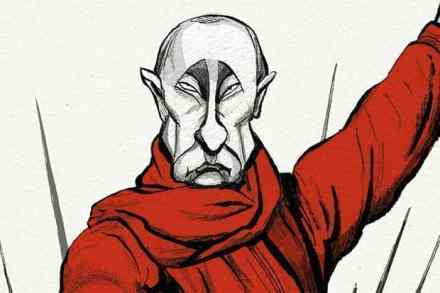
Putin needs Xi more than China needs Russia

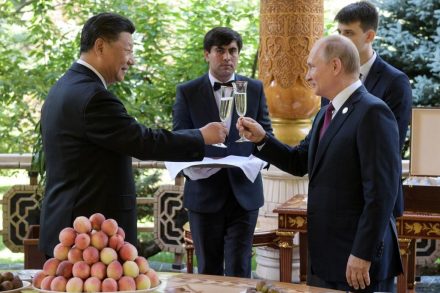
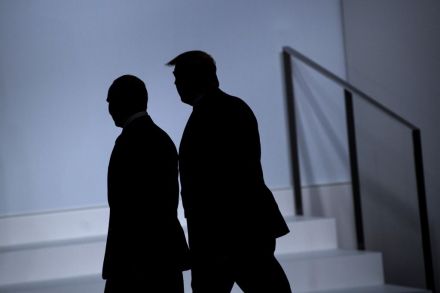
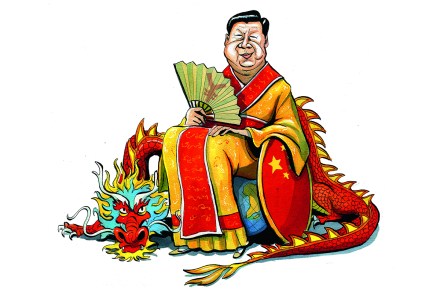
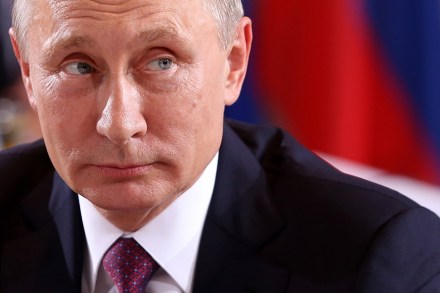
On May 9, Vladimir Putin had been due to review a parade of troops and military hardware on Red Square alongside Xi Jinping and Emmanuel Macron. Russia’s coronavirus lockdown forced Putin to cancel the elaborate celebrations of the 75th anniversary of the end of World War Two in Europe — as well as to postpone a national referendum that would have extended his personal rule until 2036. But though Putin and Xi have been deprived of the opportunity to make a show of solidarity amid the sea of Soviet flags that bedecks Moscow annually for Victory Day, the coronavirus crisis promises to throw Russia and China closer together than they have ever been. China needs friends; Russia needs money.
putin xi

Can Putin survive the coronavirus stress test?

From our UK edition

Vladimir Putin knows that a poor state is a weak state. As a middling KGB apparatchik in Dresden in 1989 he saw the USSR’s authority over its empire collapse along with its economy. Two years later, the Soviet state itself imploded, unable to feed its citizens or command the loyalty of its own security forces. Rebuilding Russia’s security apparatus back to Soviet levels and securing it against another systemic collapse has been the touchstone of Putin’s two decades in power. With the coronavirus crisis, the Putin system faces a stress test every bit as radical as that which brought down Mikhail Gorbachev. The proximate cause of the USSR’s collapse was a 1985 decision by the Saudis — with American encouragement — to crash the price of oil.

Covid-19 is testing Putin’s regime

From our UK edition

Vladimir Putin is observing the old adage that you should never let a good crisis go to waste. With the world’s attention focused on halting the spread of Covid-19, the Kremlin is grandstanding on the international stage. Russia has sent medical aid to Italy, sold medical aid to the US, and proposed a draft UN General Assembly resolution calling for global solidarity (and an end to economic sanctions) in the effort to combat coronavirus. At home, however, Russia is in crisis. While the Kremlin acted decisively in the early stages of the coronavirus outbreak, its response since has mostly focused on harassing doctors who dare speak the truth about the scale of the pandemic.

The Russia probe was mishandled worse than anyone could have imagined

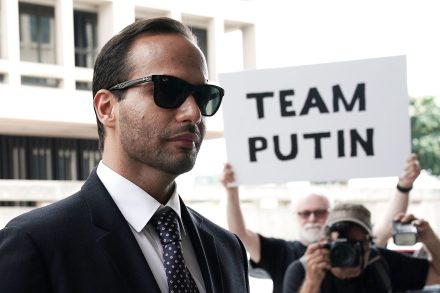
It’s been over three years since the FBI first launched its investigation into an alleged conspiracy between the 2016 Trump campaign and the Russian government, and yet we’re still learning just how badly our intelligence agencies bungled Crossfire Hurricane. The president and his allies have been arguing since the probe went public that it was all a ‘witch hunt’ designed to put a stop to or delegitimize his electoral victory. Subsequently released details about the investigation seemed to track with that theory: Inspector General Michael Horowitz, for example, chided the FBI in a December report for failing to fulfill its full obligations when seeking FISA warrants against former Trump campaign official Carter Page. Sens.

George Papadopoulos

An extraordinary tale: BBC2’s The Countess and the Russian Billionaire reviewed

From our UK edition

There can’t be many programmes that bring to mind quotations from both Henry Kissinger and Boney M., but BBC2’s The Countess and the Russian Billionaire was one of them. While Kissinger’s idea that ‘power is the ultimate aphrodisiac’ may be a little out of fashion in the #MeToo age, it was hard not to think it played a part in the eye-popping events that Wednesday’s documentary laid out with some relish. As for Boney M., rarely has ‘Oh, those Russians’ from ‘Rasputin’ felt so penetratingly insightful. The programme began filming in 2015, with the apparent aim of providing a ringside seat at a fight between an excitingly wealthy British-based couple and the Russian government.

Corona confusion is being ruthlessly weaponised

From our UK edition

Few words have as great a hold on the contemporary imagination as ‘disinformation.’ Few words are as ubiquitous in contemporary discourse or as pervasive in political mud-slinging. Donald Trump castigates the 'fake news' media for perceived bias against him; Hillary Clinton blames foreign influence operations for her election loss. Disinformation, propaganda, lies: whatever you wish to call it, it’s the bogeyman of our age, a convenient repository for all our sins. There is a reason for this. The author Shoshana Zuboff has correctly observed that information technology brought with it a revolution that reordered capitalism. Human experience – as found in data, which is how we now harness information – became the 'raw material' for wealth creation.

Crude tactics: Russia and Saudi Arabia are at war over oil prices

From our UK edition

It all started at what every-one thought would be a routine meeting between Opec and non-Opec nations in Vienna. There were the usual fake smiles and firm handshakes in front of the cameras from the dignitaries. Bored journalists roused themselves to prepare to write stories they expected never to be read, before they could at last head to the pub. And then, out of nowhere, came a bombshell. Downward pressure on oil prices from the coronavirus panic was posing an obvious risk to Saudi Arabia’s still heavily oil-dependent economy. And this is what a cartel like Opec is for: to agree to release less oil into the market, pushing the price back up. A Saudi-led motion proposed a cut of 1.5 million barrels per day. To everyone’s shock, Russia rejected this outright.

Putin is resurrecting Russia’s Cold War pact with Cuba

From our UK edition

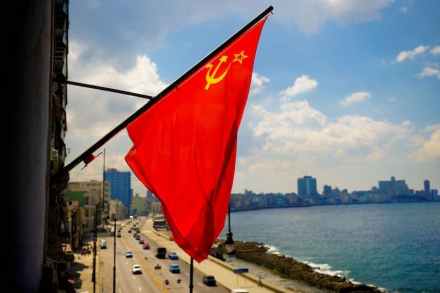
Russian foreign minister Sergei Lavrov kicked off his tour of Latin America this week with a visit to Cuba. The choice is not a mere coincidence. Lavrov's visit comes at a time when Moscow and Havana are enjoying their closest relationship in decades. The Soviet Union was once Cuba’s greatest patron. It lavished the island with economic subsidies and favourable trading arrangements in an attempt to bolster the lone communist outpost on America’s doorstep. Infamously, the United States and the Soviet Union neared the brink of nuclear war in 1962 over Moscow’s attempt to deploy ballistic missiles in Cuba. But as the Cold War approached its end, Cuba became less and less of a priority for the Kremlin.

Back in the USSR

A perfect summer day in the wild woods west of Moscow. Around us, slender birch saplings lean together, lean apart, like elegant dancers swaying to the music of the wind. Buckets in hand, Dmitri Denisovich and I walk between shimmering streaks of brightness and patches of shade, collecting mushrooms. Every Russian knows the names of at least a dozen forest mushrooms. Adults and children alike are said to be able to follow their rich musty fragrances into the darkest glades, recognizing the tastiest, rarest and most poisonous fungi. ‘Lisichki!’ cries Dmitri, spotting a cluster of yellow ‘little vixen’ chanterelles. ‘My favorite.’ In eastern Europe, all the food is on the table; in the West, it’s all in the cupboard.

russian food

China and Russia win from America’s wars

I woke up late on Friday, so missed the livestreamed assassination of Franz Ferdinand and the rolling barrage of tweet-commentary about the super-judicial martyrdom of Hassan Thingy and the start of World War Three. It was all over by lunchtime, bar the shooting, because there could only be one winner. Or was that two?The first winner, as always when it comes to American foreign policy, is Xi’s China. Anything that ties the United States into the open-ended shambles of the Middle East distracts the energies of the United States, and the eyes of America’s allies and clients, from China’s surreptitious campaigns to replace the United States as global patron. In war as in online shopping, China emerges as hegemon not despite American efforts, but because of them.

china

Tsar quality: the charm of Tbilisi

From our UK edition

‘These regions are not under the control of the central government,’ reads a warning on a map of Georgia in the bustling centre of Tbilisi. ‘Travelling to these regions is not advisable.’ One of these regions is Abkhazia, only a few hours’ drive away. The other is South Ossetia, barely an hour from here. Since 2008 both have been occupied by Russian troops, in defiance of the Georgian government, yet here in the Georgian capital tourism is booming, and many of these tourists are Russians. This neat irony encapsulates what makes Tbilisi such a fascinating city, a looking-glass metropolis in which nothing is quite what it seems.

I’ve found a lovely new home – in Russia

From our UK edition

Staraya Russa. About two thirds of the way from Moscow to St Petersburg, in the historic Novgorod Oblast, once the eastern outpost of that much preferable European union, the Hanseatic League. Beautiful cathedral square, lakes and forests, timber-clad museum where Dostoevsky wrote The Brothers Karamazov. There’s a rather grand house for sale — about 5,000 sq ft, five beds, nice garden — for £143,416. From where I’m sitting, as terrified Tories insist the polls are narrowing and Magic Grandpa is within inches of winning, you’d be mad not to. From where you’re sitting, too, a little later in this awful week, if the Tories were right to be terrified. Staraya Russa. No infantile gender wokeist faddism there, believe me.

The ‘Russians’ of Brighton Beach

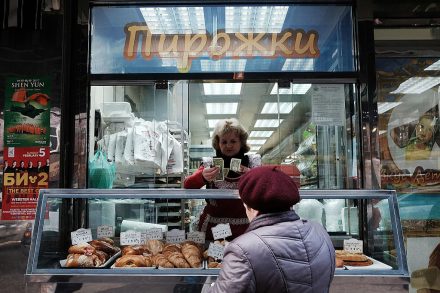
This article is in The Spectator’s November 2019 US edition. Subscribe here. At the very southern tip of Brooklyn, far from the hip avocado cafés and right before you hit the sea, there sits the neighborhood of Brighton Beach. Nicknamed ‘Little Odessa’ after the waterfront city in Ukraine, the area is home to primarily Russian-speaking immigrants from the former Soviet Union. It’s a jumble of identity. The immigrants are mostly Jews from Ukraine, hence the nickname, but also Russia, Belarus and the other Soviet republics. So what to call these people in America? In Russia, in Ukraine, in Belarus, our identity cards never described us as Russian, Ukrainian, Belarusian. We were just Evrei, Jews.

brighton beach russians

Exclusive: Dominic Cummings’s secret links to Russia

From our UK edition

This week, a malign foreign actor invaded the British media, spreading disinformation and seeking to meddle in the general election. A malevolent force exploiting our democracy to advance its own interests. That’s right, Hillary Clinton has been in London. She has another book to promote, The Book of Gutsy Women, and she’s again talking about male authoritarian-ism, why Britain needs to be ‘forward-looking’ (i.e. not leave the European Union), and the menace of Russia. It doesn’t take an intelligence expert to decode her message: ‘I didn’t win in 2016 and I’m still livid.

Clive Lewis’s Russia confusion

From our UK edition

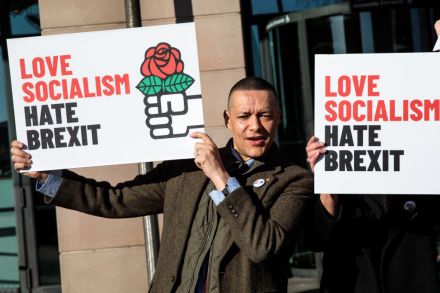
When Labour was hit by a cyber attack this morning it wasn't long before the finger of blame was pointed at Russia. Corbynista MP Clive Lewis suggested it was 'dirty tricks'. He wrote: But Mr S. recalls Lewis hasn't always been so quick to jump to conclusions. In the aftermath of the Salisbury poisonings in 2018, when damning evidence suggested Russia was to blame, Lewis was one of those calling for 'a level, calm head'. He told his local paper: 'This attack on British soil was completely outrageous. When we know beyond reasonable doubt then I think the response needs to be proportionate and strong. But we need to make sure on issues like this that the information is right.' Lewis has since clarified his comments in relation to today's attack. Time for a 'level, calm head' perhaps?

Hysteria about Russian interference is becoming a joke

From our UK edition

The murder of Russian defector and fierce Putin critic Alexander Litvinenko was a radioactive wake-up call to many in the West about the nature of the Russian regime. Eight years later, the annexation of Crimea and subsequent invasion of eastern Ukraine in 2014 were also rightly condemned around the world. It's safe to say these events – and the ongoing allegations of Russian meddling in western democracies – have made it an interesting time to be a Russian in this country. Yet while this topic has been a rich vein of material for a comedian, the extent of hysteria about Russia’s involvement in every aspect of our daily lives is now getting beyond satire. We’re told the Russians were responsible for Brexit.

The Russian attempt to swing 2020 for Trump

American intelligence is warning of a concerted effort overseen by Russian president Vladimir Putin to swing next year’s presidential election in favor of Donald Trump. Reports prepared by the National Security Agency and the Central Intelligence Agency are unequivocal, detailing a two-pronged Russian strategy: sow dissension inside America by manipulating social media and attack the voting process itself. There is also concern that a new front could be opened in this battle by the use of deepfakes, videos generated using artificial intelligence that recreate the image and voice of anyone, who can be made to say and do anything. The leading Democratic candidate, for example, could be seen to suggest pardoning Patrick Crusius, the man who killed 22 people in El Paso in August.

russian

Is this the only Catherine the Great review to mention the age gap?

Catherine the Great is the vanity project of star and executive producer Helen Mirren. One way you can tell it's a vanity project is that Mirren is 74 years old while the character she plays — at least at the start of the mini-series — is 33 years old. Now I don't wish to be ungallant. It's certainly true that Mirren has always scrubbed up well. She is a very handsome woman and she knows she is a handsome woman, as reflected by all those films and TV series earlier in her career — not, though, The Queen, as far as I recall — when she appears with her kit off.

catherine the great

The age of invective

A healthy democracy requires free speech and free assembly, tolerance for different views, and peaceful transfers of power among contending parties. It requires honest elections, where losers do more than concede. They acknowledge the legitimacy of the outcome, as Al Gore did in a highly-contested 2000 president contest. These fundamental pillars of liberal self-government are now being challenged across Europe and the United States. It is crucial to recognize the challenge, call out the worst violations, and push back. Vitriolic, white-hot rhetoric now paints political opponents not as loyal opponents but as traitors, determined to overthrow not only specific leaders but the democratic system itself.

invective

Pulling US troops out of Syria will prove to be the right decision

This article is in The Spectator’s November 2019 US edition. Subscribe here. Whenever neoconservatives and liberals chant in unison about American policy in the Middle East — as when they championed the Iraq invasion, for example, or the overthrow of Colonel Gaddafi in Libya, or the thwarted attempt to topple the Assad regime in Syria — it means we are being told a pack of lies. Par for the course is the hysterical response to President Donald Trump’s ‘betrayal’ of the Kurds in the wake of Turkey’s invasion of northern Syria. Turkey’s goal was to repatriate at least two million of 3.6 million Syrian refugees inside Turkey in a border zone controlled, until the invasion began, by the US-allied, Kurdish-led Syrian Democratic Forces.

turkey syria kurds