Russia

The commodity kings: have traders finally discovered a moral compass?

From our UK edition

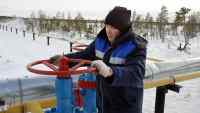
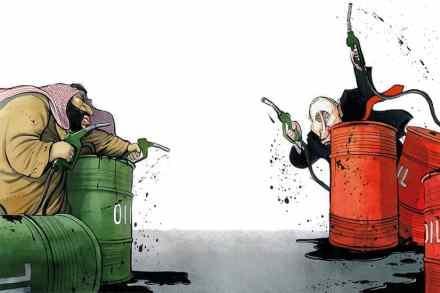
Many people around the world were glued to their screens in horror on 4 March, as they watched Russian shells raining down on Ukrainian cities. On a trading floor in central London, the oil traders at Shell were also glued to their screens – but watching the price of Russian oil. It was becoming a lot cheaper than normal (Brent) oil, due to the understandable reluctance to support Putin. But then again, everyone has their price. The Shell traders watched, and waited, as every minute the price was lowered further– to a $23 a barrel discount, then a $24 discount, then a $25 discount. Finally, at around 4 p.m., the traders could no longer resist. They agreed to buy the Russian oil at $28.50 below the world oil price (then just over $118).
Border farce: Britain is failing Ukraine’s refugees

From our UK edition

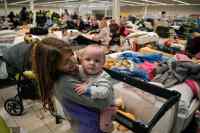
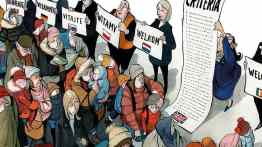
 Calais, France ‘The British government is not turning anybody around,’ Priti Patel told her French counterpart last weekend. ‘Ukrainian refugees are welcome in the UK.’ She doubled down on her claims in the House of Commons on Monday: ‘It is wrong to say that we are just turning people back; we are absolutely not.’ You don’t have to spend long in Calais to disprove the Home Secretary’s claims. As we checked into our hotel at 1.30 a.m. on Tuesday, we saw seven Ukrainian refugees resting on the couches in the lobby. There was nothing eye-catching about the group, apart from their obvious weariness and the pile of Ukrainian passports and documents on the table in front of them.

My one-way ticket out of Moscow

From our UK edition

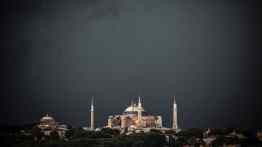
Things fall apart. Moscow friends call to say that I have to urgently send my 19-year-old son out of Russia. He is travelling on his Russian passport and a new law says that he is obliged to register for the military draft. Nikita is on a gap year working at a Moscow theatre and he begs not to be sent away. I dismiss the warnings. A day later, a friend’s nanny shows up at our door and hands me an inch-thick packet of high-denomination euros to take out of the country for her employer. The money’s owner is already en route to Israel on a private jet. I overrule my son and open up Skyscanner. Europe, the US and Canada have closed their airspace to Russian planes and the Kremlin has reciprocated. Istanbul is the only European destination still accepting flights from Moscow.

Is fracking the answer to the energy crisis?

From our UK edition

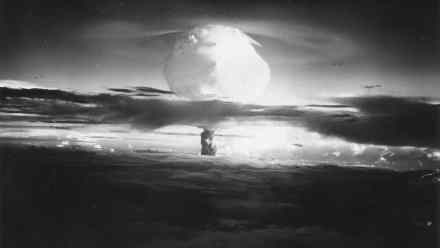
I’ll approach the hot topic of a ban on Russian oil by way of personal anecdote: I’ve never been a soldier or a spook but I have twice found myself ensconced in secure Nato conference rooms. The first occasion was a group visit to the military alliance’s Brussels headquarters 42 years ago, when an unsmiling American defence expert introduced us to the concept of ‘Mutually Assured Destruction’ – whose acronym was the key to the tense but relatively stable Cold War stand-off. In simple terms, it would have been utter madness for either side to fire the first nuclear missile. The odds on that happening by Kremlin order or error today are by no means as long as they were in 1980.

Putin is bad, not mad

From our UK edition

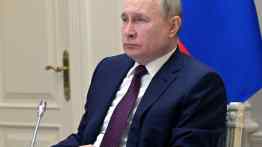
I wish people would not say Vladimir Putin is mad. One understands him much better if one says he is bad. In some ultimate sense, evil is a form of madness because it brings destruction to its perpetrators as well as its victims, but Putin is not mad in the ordinary sense of the word. He knows what he is doing. The value of saying something like ‘He would happily murder every single Ukrainian if it served his purpose’ is not to express one’s anger and disapproval (both of which should be obvious) but to shed light on his attitude of mind. Given that he is such a person and his purpose is the re-creation of the Russian empire, the western allies cloud their own minds by seeking a conventional diplomatic path.

Which European countries are most reliant on Russian gas?

From our UK edition

High commodity Nickel trading was suspended this week after prices rose to over $100,000 per tonne – double its previous peak of $50,000. How do other commodity prices compare with their peaks since the 2008 financial crisis? Previous peak Silver $43 Brent crude $140 Gold $1,853 Aluminium $3,124 Tin $33,015 This week Silver $26 Brent crude $139 Gold $2,050 Aluminium $3,849 Tin $50,025 Short squeeze The extraordinary rise in nickel prices was partly caused by a ‘short squeeze’, where investors try to exploit bets by other traders that prices would decrease.

Letters: Britain must offer immediate sanctuary to Ukrainians

From our UK edition

Unintended consequences Sir: The West has got it wrong when it comes to putting a stranglehold on Vladimir Putin (‘Putin’s rage’, 5 March). Harsh economic sanctions will ultimately punish millions of ordinary Russians, many of whom are poor and probably against the invasion of Ukraine. If the products Russian workers produce do not sell then those workers become unemployed and forced into poverty. That could quickly turn more Russian citizens against the West, strengthening support for Putin rather than weakening it, thus prolonging the occupation and hostilities. So far, the West hasn’t done a great deal regarding this invasion, other than turn the wheels of Putin’s propaganda machine for him.

Portrait of the week: Zelensky channels Churchill, Russia blocks BBC and Bercow banned from parliament

From our UK edition

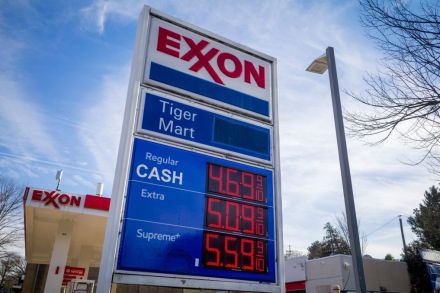
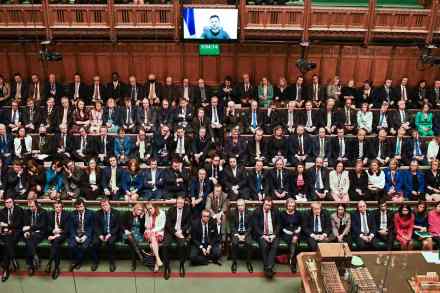
Home President Volodymyr Zelensky of Ukraine addressed a packed House of Commons by video, echoing Winston Churchill by declaring that Ukrainians would fight in the fields and in the streets. He said: ‘Please make sure that our Ukrainian skies are safe.’ Wearing a blue and yellow tie, the Speaker, clearly moved, thanked him. Earlier, Boris Johnson, the Prime Minister, announced a ban on Russian oil imports in the coming months, but no ban on gas imports. He proposed a six-point plan that included an international humanitarian coalition and maximising economic pressure on Vladimir Putin’s regime in Russia. Mr Johnson also said the government would publish a strategy for producing more energy in the UK. Petrol rose above 155p a litre.

The courage on Ukraine’s front line

From our UK edition

Central to the question of whether or not Ukraine can survive as an independent state is that of re-supply, not just of drones and anti-tank weaponry but also of food, especially if the conflict lasts for months or even years. The vast agricultural centre of the country is not being seeded, with potentially catastrophic consequences. Nato governments are providing lethal weapons and other aid, of course, but from what I have just seen in Berehove in western Ukraine there is another very heartening sign. For there is a large underground network of private, non-governmental groups – largely based on Christian groups with long-established family connections – that is transporting huge amounts of food and other non-lethal supplies into Ukraine.

Africa’s lessons for Ukraine

From our UK edition

Kenya During Russia’s invasion of Georgia in 2008 I got a close look at Moscow’s troops and their kit. These contractniki were a ragged bunch with rotting teeth, bad boots and homemade tattoos, using weapons and vehicles that seemed like hand-me-downs from a failed state in Africa. I had expected them to be much smarter. Recently my spooky friends told me that Putin’s military invading Ukraine was now a modernised, well-trained force. Instead it appears that Moscow’s generals have stolen the diesel, supplied the mechanised brigades with ageing knock-off Chinese tyres and sacked all the dentists.

Sanctions on Russia will shake the world economy for years

The war in Ukraine will dominate the news for the foreseeable future. But while the bombings will eventually cease, the economic consequences for the world have just begun. That’s because in an era of increasing interconnectedness, economic impacts don’t stop at borders. Most attention has been focused on the immediate impacts of sanctions on Russia, and they are significant. In the past, sanctions have proven largely ineffective at punishing foreign enemies. President Barack Obama, for example, failed to use them effectively in 2014 during the last Ukrainian-Russian dispute. But this time, the actions taken against Russia were largely unprecedented, with even traditionally neutral countries like Switzerland and Sweden calling for restrictions that are “as big as they can be.

economy

Why is Britain so useless at helping Ukrainian refugees?

From our UK edition

Some MPs were in tears yesterday when President Volodymyr Zelensky addressed the House of Commons, and understandably so, given the soaring rhetoric and bravery of a man who knows his days on earth could be numbered.  One kind interpretation is that the caseworkers at the Home Office haven't been trained sufficiently for them to use the initiative But across Westminster over the past few days, MPs and their constituency teams have also been crying tears of frustration at the Home Office's handling of the visa application process. Not only has there been intense confusion between the different arms of government about how many routes there are for refugees – with Home Secretary Priti Patel claiming she was creating a third one, only for No.

British fighters in Ukraine are brave but misguided

From our UK edition

The first British volunteers have arrived in Ukraine to ‘do their bit’ in thwarting the Russian invasion. According to reports in this morning’s newspapers, four serving soldiers are among them. Liz Truss must be heartened. The Foreign Secretary recently declared her support for any idealistic Briton wishing to head east to fight ‘for democracy’. Others were less enthusiastic at the prospect of Britons joining the war, notably Ben Wallace, the Defence Secretary, himself a former soldier. Also unenthused was Admiral Sir Tony Radakin, the chief of the defence staff, who cautioned: ‘This isn't really something that you want to rush to in terms of the sound of gunfire. This is about sensible support based in the UK.

Putin is bored

From our UK edition

At the beginning of this year, Vladimir Putin was sitting comfortably in the Kremlin: his legacy so far a steady leader who had saved his people from the helter-skelter of robber capitalism in the 1990s and given them a modicum of stability and pride. He must have known that if he waged war on a country of 45 million brother Slavs, he risked losing it all. Liberty and life are now less certain. So why did he do it? Having spent four years in Moscow and more than two decades of Russia-watching, I have never believed that Putin was a chess grandmaster. While his apologists in the West lauded his cunning, I have always seen him as an improviser. Like the best at his favourite sport – judo – he prepares for combat, studies his opponent, and considers various eventualities.

Zelensky’s address was strange, but sensational

From our UK edition

This afternoon, the Ukrainian President Volodymyr Zelensky addressed the House of Commons. A single flat-screen TV broadcast his speech to a packed chamber. Zelensky appeared in plain green fatigues next to Ukraine’s blue-and-yellow flag. He looked pale, tired, fearless and determined. Squads of foreign killers are roaming his homeland trying to find him. His words were spoken in English by a translator who probably had no advance sight of the text. The halting, ungrammatical phrases made the address strangely powerful. ‘I would like to tell you about the 13 days of war. The war that we did not start.’ Zelensky’s goal is simple. ‘We do not want to lose what is ours.

Could Turkey rejoin the West?

From our UK edition

Istanbul, Turkey Wherever you go in Istanbul, Atatürk is rarely far away. Portraits of the man who founded the Turkish Republic hang in the Grand Bazaar and in apartment building foyers. His face is etched on everything from street signs to café mugs. With his vision of Turkey as a liberal, secular state, Atatürk set his nation on the path to western alignment and, ultimately, Nato. When he died in 1938, Winston Churchill said his ‘death is not only a loss for the country, but for Europe is the greatest loss’. Yet in recent years, Turkey’s position as a western ally has all but disintegrated.

Republican hawks squawk at each other

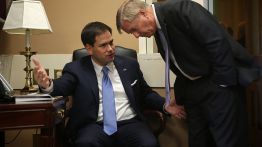
Cockburn has never been much of a hawk, unless you count his begrudging deficit hawkery over the massive tab he ran up at his local bar. But many elected Republicans are very hawkish on foreign policy, supporting "peace through strength," as Ronald Reagan put it, as well as occasionally war through strength. So how are the GOP's highest-flying hawks handling Russia's invasion of Ukraine? Cockburn was surprised to find them divided. Nearly every Republican lawmaker (and Democrat for that matter) agrees that we need to throttle Russia with economic sanctions. It's on the question of whether the United States should implement a no-fly zone over Ukraine that the cracks begin to show.

Putin miscalculated. Let’s not do the same

From our UK edition

Only the Russian people can decide how long Putin remains in the Kremlin, but the invasion of Ukraine will likely shorten his reign. In a lengthy interview when he assumed power 22 years ago, Putin answered a question about the forced resignation of German Chancellor Helmut Kohl by saying that ‘after 16 years, any people – including the stable Germans – get tired of a leader’. Russians have been more patient, but they didn’t expect to be led into pariah status. Change could come from within the political elite, many of whom are aware how counterproductive this war is for Russia, and some of whom feel shame for the suffering inflicted on Ukraine.