Russia

What happens if Russia defaults?

From our UK edition

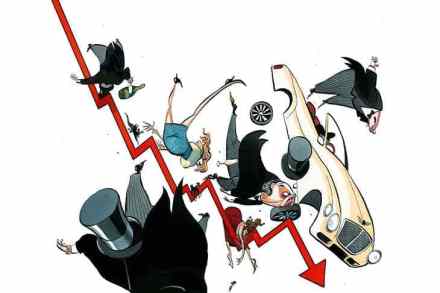
Well down the list of things to worry about as the ghastly Ukrainian tragedy unfolds is the high probability that the Russian government will stop paying its international debts. But this risk should certainly be somewhere on that list – as the fallout from past defaults has shown. We have been here several times before. Moscow also defaulted on its debt in 1998, exacerbating a sell-off across all emerging markets. It led to the collapse of a huge US hedge fund, Long-Term Capital Management, which had to be bailed out to prevent a worldwide meltdown. This came too late to save many other investors from large losses. Ten years later, apparently isolated problems in the US mortgage market did cause a global financial crisis.
Russia’s war is a global cancer

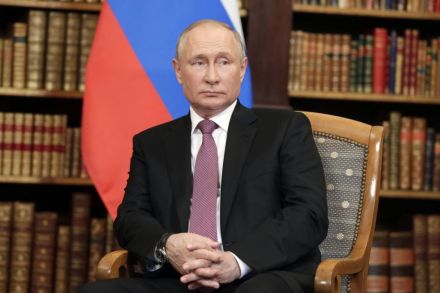
One thing I have always found fascinating about Russia is that when they tell us they are going to do something, they usually do it. So when Moscow struck a military base near the Poland-Ukraine border that was a staging ground for arms shipments, we shouldn't have been surprised. They told us that was their next plan of action just twenty-four hours before they did it. But that’s just the beginning of what Russia likely has in store for the West, NATO, and the entire world if we aren’t careful. Russian president Vladimir Putin’s plan seems simple: chaos on a scale that will extend far beyond Ukraine. You see, Putin is starting to come to grips with the fact that he can’t win the war in Ukraine — at least on paper — unless he destroys Ukraine.

cancer

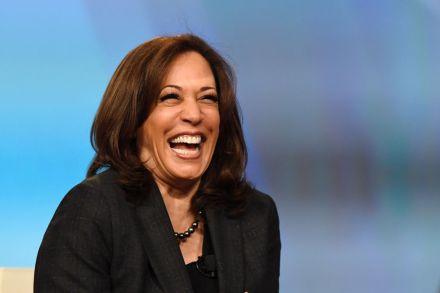
Kamala Harris laughs at a war

It’s nice to be prescient. On Thursday, in a column titled “Kamala Invades Poland,” I introduced the world to “cackle diplomacy.” “Silly partisan hyperbole!” I nearly heard as the social media-ites had their say. But then the vice president of the United States did me proud. Just a few hours after my column posted, there she was, holding a press conference with Polish President Andrzej Duda. Some say the people who run our government sent Kamala Harris to Eastern Europe in order to give her a chance to shine in the sphere of international relations. Watch her performance and tell me what you think. “I am here, standing here. On the northern flank...on the eastern flank...talking about what we what we have in terms of the eastern flank and our NATO allies.

Putin’s dream of annexing Ukraine is over

From our UK edition

As the Russian invasion of Ukraine enters its third week, it is becoming abundantly clear that the Kremlin’s maximalist geopolitical aims of regime change and a ‘greater Russia’ which includes Ukraine and Belarus are no longer achievable. The question now is how much damage will Russian forces inflict on Ukrainian cities and their brave defenders before Putin and his advisors lower their ceasefire conditions to terms that Ukraine’s leaders and population can accept. Ukraine is in a strategically stronger position than many in the West appreciate, but the war on the ground is still stacked in Moscow’s favour in the short term.

Peace and its consequences in Ukraine

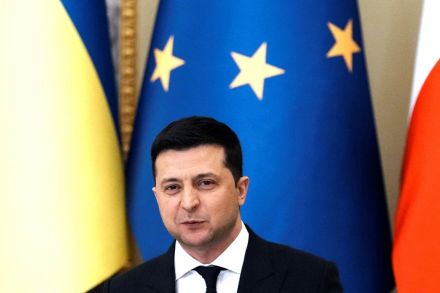
It is now a matter of consensus that Vladimir Putin never intended to fight the type of war that now faces him in Ukraine. What was plainly meant to be a blitzkrieg-style assault has devolved into a war of attrition, with death, destruction and violence on a scale unseen in Europe since the disasters of the last century. It is quite plain that the Kremlin, despite its bluster, is aware of this. The Kyiv government's claims of Putin dismissing his generals and raving in fury at his security services are consistent with events on the battlefield; indeed, after two weeks of fighting, Russia has only managed to decisively claim one Ukrainian city.

volodymyr zelensky ukraine invasion

Foreign policy is not SimCity

History is relayed through anecdotes. And there's one anecdote about foreign policy in particular that keeps coming back to me. It was 2013 and President Barack Obama's advisors were weighing what to do about Syria. Dictator Bashar al-Assad was then waging a bloody civil war against an increasingly jihadist-dominated rebellion, destabilizing the Middle East and feeding a refugee crisis. Enter that ridiculous balloon John Kerry, then the secretary of state, who at a White House principals meeting stood up and began bloviating about the need to bomb the Assad regime. Kerry was interrupted in the midst of his JFK LARPing by General Martin Dempsey, the chairman of the Joint Chiefs of Staff.

john kerry president

Don’t buy Biden’s ‘Putin price hike’

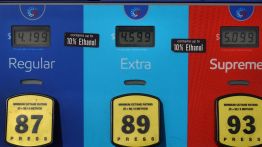
The Putin price hike. That’s the line the Biden administration is using to absolve itself of blame for higher gas prices. “Russia is one of the three largest oil producers in the world,” White House spokeswoman Jen Psaki said in a social media video meant to deflect criticism from President Joe Biden. “And the fact that they started this conflict, invaded a foreign country, and they are such a big producer of oil in the world is the reason why the global oil markets are disturbed and why gas prices are going up.” The administration banned Russian oil imports this week, with the House of Representatives approving a similar ban on Thursday.

Can Boris get the Saudis to pump more oil?

From our UK edition

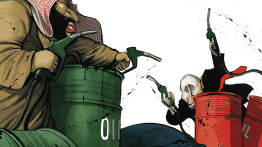
The oil price is up by more than 40 per cent since the start of the year. It is being driven up by the Russian invasion of Ukraine, the lack of investment in oil and turning the world economy on and off again: US production is still not back to pre-pandemic levels. In the immediate term, as I say in the Times today, pretty much the only way to bring the price down is to get Saudi Arabia – which has 1.5 to 2 million barrels a day of spare capacity – to pump more. The West’s relationship with Saudi Arabia has always been morally problematic.

Don’t make war in Ukraine about Putin’s mental health

From our UK edition

There was a time when supposedly serious commentators on world affairs used to at least feign historical knowledge. They might quote Bismarck or Castlereagh. Now, international relations punditry, like almost everything else, has succumbed to the language of pop psychology. Vladimir Putin is ‘gaslighting’ the Russian people, we are told, motivated by his ‘hypermasculinity’. His invasion of Ukraine is, according to one commentator on Radio 4 this morning, ‘unforgivable abuse’. I thought abuse meant kicking a dog or being cruel to a partner. Now it means starting a war. It’s almost as though we’re unable to think of Putin as anything other than a nasty contestant on reality TV.

Putin’s neo-communism is doomed to fail

From our UK edition

It is responsible for inequality. For financial instability. And probably for poverty, racism and global warming as well. We have heard a lot about neoliberalism over the last 20 years. But now Vladimir Putin’s Russia is going in completely the opposite direction. The world is about to witness an experiment in what can only be described as neo-communism. The twist is that, unlike its liberal counterpart, it will be a complete failure – and the best thing the West can do is wait for it to implode. A Big Mac is not going to be any better when it is grilled by the Russian government Over the last three weeks since Russian soldiers moved across the border into Ukraine it has become clear that Putin is trying to recreate a Soviet empire.

ukraine

Ukraine and the war for your mind

Deterrence works. Russia's nukes are the only thing keeping the US from full-out war in Ukraine just six months after retreating from Afghanistan. The unprecedented propaganda effort by Ukraine and its helpers in the American mass media to drag the US and NATO directly into the fight has failed — so far. But the struggle — the one for your mind space — is not over. To understand what follows, you have to wipe away a lot of bull being slung your way. Insanity is not the only explanation for Putin’s actions of the past few weeks.

Why taking cold showers could help Ukraine

From our UK edition

I found myself in Berlin at the weekend gasping for breath in a cold shower, doing my bit for Ukraine. Berliners are a phlegmatic bunch but the arrival of a European war two hours from their doorstep is triggering memories of much darker periods of conflict and stirring not-so-dormant feelings of solidarity and direct action. Could cold showers be the answer? Last week the German government undid decades of foreign policy, announcing massive investment in German defence spending and sending anti-tank and air defence weapons to Ukraine. Chancellor Olaf Scholz called Putin’s invasion a Zeitenwende, a ‘watershed moment’ as he pledged €100 billion to upgrade German’s defence forces and committed to top the two per cent GDP contribution to NATO.

Chernobyl Two?

From our UK edition

The electricity supply to the ruined nuclear plant at Chernobyl in Ukraine has been cut off. According to one knowledgeable source I spoke to, this is a serious problem as power is needed to pump water around spent nuclear fuel rods stored there. There is a back-up diesel generator, but it has just one day’s supply of fuel left and once that runs out, the temperature could start to climb. If the water evaporates, the zirconium metal ‘fuel assemblies’ could start to melt – with radioactive material released into the atmosphere. This would not be anywhere near as bad as the original Chernobyl disaster, in 1986, when a reactor had a power surge and exploded – but still bad enough.

This is what liberal war fever looks like

From our UK edition

In a private letter written in 1918, the recently deposed German chancellor Theobald von Bethmann-Hollweg admitted that in the run-up to the Great War, 'there were special circumstances that militated in favour of war, including those in which Germany in 1870-71 entered the circle of great powers' and became 'the object of vengeful envy on the part of the other Great Powers, largely though not entirely by her own fault'. Yet Bethmann saw another crucial factor at work: that of public opinion.'How else,' he asked,'[to] explain the senseless and impassioned zeal which allowed countries like Italy, Rumania, and even America, not originally involved in the war, no rest until they too had immersed themselves in the bloodbath?

What’s behind Russia’s new Z symbol?

From our UK edition

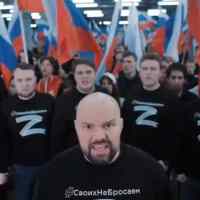
National symbols are usually proudly emblazoned for all to see. That’s the point of them. One, though, seems rather to have crept up on us in recent weeks, being flashed almost like a secret tattoo and then quickly covered up again. It is the letter ‘Z’ that Russians have started using to denote national solidarity and support for their country in the war in Ukraine. The Z came to international notice when a Russian gymnast, Ivan Kuliak, displayed it prominently on his strip two weeks ago while standing next to a Ukrainian competitor at a tournament in Qatar. He now faces a disciplinary inquiry as under the rules such symbols must not be worn.

Is it time to break up the Home Office?

From our UK edition

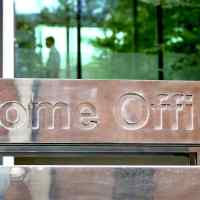
When was the last time the Home Office produced some good news? Even in the middle of a crisis that most will concede the government has handled quite well, the department has managed to generate the usual abysmal headlines. Even the Foreign Office, slow as it was in cracking down on Russian oligarchs, couldn’t steal the limelight. There may perhaps be a narrow defence to be made over particular policies. Sources in the department point out that the Ukrainian government would prefer refugees to remain in neighbouring countries than come all the way to Britain. But take a step back and such arguments start to look ridiculous. Britain wouldn’t have to take millions of refugees to create an easier pathway for the few fleeing war with family here.

Rising energy bills are a price worth paying to stop Putin

From our UK edition

Nato countries are being careful not to do anything that Russia could claim is an act of war. Just look at the reluctance from the US to provide Ukraine with Polish fighter jets. Yet Britain and other Nato members are involved in a huge effort to break Vladimir Putin’s war machine through supplying Ukraine with weapons and imposing financial pressure on Moscow. Russia, a G20 country, has been severed from the world economy. It has now surpassed Iran as the most sanctioned country on Earth and it is beginning to occupy a similar economic position. The speed with which Russia has been hit by these economic measures has been a display of the West’s financial power. Yet western politicians now have to rally their publics to accept the cost of the sanctions.

What if Putin hasn’t miscalculated – but the West has?

From our UK edition

Conventional wisdom dictates that Vladimir Putin has ‘miscalculated’ in his invasion of Ukraine. His blitzkrieg has been poorly executed. He has reinvigorated the Nato alliance and the EU and triggered heavy sanctions. And he has lost the ‘information war’ to Volodymyr Zelensky, the TV comedian turned global hero. But what if the West has ‘miscalculated’ in reading Putin’s intentions? What if the West’s sanctions, along with intensified military aid to Ukraine and a courageous local resistance, encourage Putin to double down? What if he decides to use a weapon of last resort, a nuclear, chemical or biological weapon, even at the risk of World War 3?