Russia

Why Europe can’t go it alone on Ukraine

Who will pay for Ukraine’s war effort now the Trump administration has turned off the financial taps? European leaders have expressed themselves ready and willing to take up the burden, with European Commission President Ursula von der Leyen affirming that “if we continue to believe that Ukraine is our first line of defense, we need to step up our assistance.” Individual countries have come up with generous funding packages – most open-handed of all being Germany, which has recently pledged more than €3 billion in direct funding. But that’s just a drop in the ocean compared to what Ukraine says it needs.

zelensky ukraine
azov enemy ukrainian

How the Ukrainian far right is preventing peace

Since the start of the Russian invasion of Ukraine in February 2022, discussion of the Ukrainian far right has been verboten in western media, largely because one of Vladimir Putin’s stated war aims is the “denazification” of Ukraine. Putin’s claim that Ukraine is a Nazi state has been recycled by Russian propagandists and the western party line has consistently been that while the Ukrainian military does have far-right strains, they are marginal and inconsequential. This may have been true in 2022, but things have changed significantly after almost four years of war. Today, far-right figures control some of Ukraine’s strongest military units, and neo-Nazi ideology is displayed openly in the Ukrainian ranks.

Putin thinks time is on his side

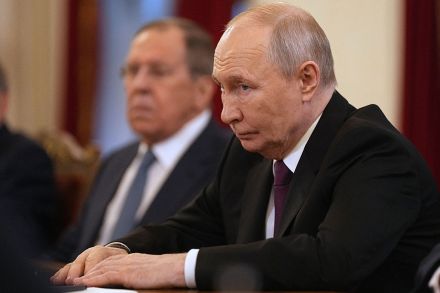
Very well then – war. That is the bottom line of Vladimir Putin’s response to Donald Trump’s latest attempts at mediating an end to Russia’s invasion of Ukraine. In August, Putin rejected the peace deal that Trump lined up in Alaska. Now, the Kremlin has scuttled the White House’s plan for a summit in Budapest by insisting that Russia’s demands for Ukrainian demilitarization and “de-nazification” remain in force. Clearly, the Russian President still believes that he can win the war on the battlefield – and terrorize Ukraine’s civilians. What is Putin’s plan?

putin

Will Trump meet ‘Little Rocket Man?’

As President Trump sets off on his East Asian tour, all eyes will be on the bilateral summits that the US president will hold. After all, Trump has made no secret of his preference for tête-à-têtes over multilateralism. With a meeting with Xi Jinping scheduled in South Korea, on the sidelines of the Asia-Pacific Economic Cooperation (APEC) summit, the question of whether Trump will meet Little Rocket Man is unsurprisingly pervading, not least given how few details have been revealed as to Trump’s agenda. Although such a meeting, whether at the Demilitarized Zone or otherwise, seems unlikely at a time when US-North Korea relations are poor, nothing can be ruled out. Nevertheless, whilst the first Trump administration taught the world to expect the unexpected, Trump 2.

Kim Jong Un

So much for Trump’s peace push

Here we go again. Now that Russian president Vladimir Putin has resumed his bombardment of Ukraine, President Donald Trump is responding by sanctioning the oil giants Rosneft and Lukoil. So much for the vaunted peace push that Trump has been engaging in since he met with Putin in August in Alaska.  The atmosphere has turned distinctly frostier since they held their pow-wow. Budapest was supposed to be a reprise of the brief thaw that took place in August but Trump has got cold feet after the Kremlin indicated that it was in no mood to compromise over the actual boundaries between it and Ukraine.

Ukraine

From Russia with love

My morning routine is the same. Coffee, feed cats, exercise, walk, read the latest news. Except now I wake up in Moscow. The coffee shop, Skuratov, is Siberian and they roast their own beans. The coffee is strong with a chicory flavor. I meet my colleague from RT International and we discuss all the latest geopolitics and news around town. Later, I take the metro. For less than $5, I am across town. The metro is clean, marble and looks like a museum with beautiful sculptures. Unlike the metro in NYC or Chicago, there are no drunks, no rats and the train is quiet as passengers read their books or phones. No one has to clutch their purse or bag as there is very little petty theft.

tara reade

Trump, the foreign policy president?

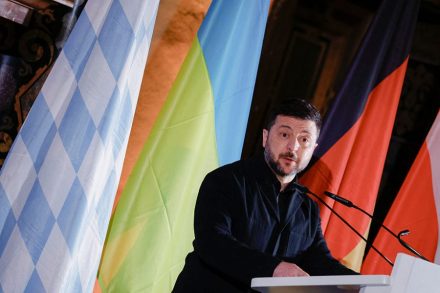
President Volodymyr Zelensky of Ukraine continued his excellent sartorial adventure at the White House, appearing in an elegantly cut black suit and shirt on Friday as he met with President Donald Trump in the Cabinet Room. But while they may have helped avoid any emanations of wrath from his host, his habiliments did not appear to prompt Trump to approve the dispatch of Tomahawk missiles to Kyiv, a coveted item indeed. “We’d much rather not need Tomahawks,” Trump said. “We’d much rather get the war over. It could mean a big escalation. It could mean a lot of bad things could happen.”  Back to square one, in other words. In August, Trump had claimed that his summit meeting with President Vladimir Putin would lead to a breakthrough. It never happened.

Trump

Would taking back lost territories make Ukraine whole again?

For many of Ukraine’s supporters, Donald Trump’s recent declaration that Ukraine “is in a position to fight and WIN all of Ukraine back in its original form” came as a welcome – and unexpected – turnaround in US policy. “Ukraine would be able to take back their Country in its original form and, who knows, maybe even go further than that!” wrote Trump in a Truth Social post in late September. “Putin and Russia are in BIG Economic trouble, and this is the time for Ukraine to act.” But would taking back the lost territories of the Donbas, Zaporizhzhia, Kherson and Crimea make Ukraine whole again – or could a reconquest instead condemn Ukraine to perpetual civil war against itself and prolong the conflict with Russia indefinitely?

Ukraine

No, Trump has not changed course on Ukraine

President Trump has once again played the global foreign-policy commentariat for fools. They have taken a startling statement from Trump’s Truth social-media account on Tuesday as a sign of a new policy – or at least a new attitude – toward the Russia-Ukraine war. Yet what Trump actually wrote says nothing of the sort.  If Trump really were newly committing himself to Ukraine, why would say, as he’s so often said before, “I wish both countries well”? One country has invaded the other; wishing one of them well means wishing defeat on the other. Wishing them both well indicates indifference.

Trump Ukraine

Trump admonishes the United Nations

Was there a plot against President Trump at the United Nations? Upon his arrival, the escalator apparently stopped working. Next his teleprompter failed. Small wonder that Trump was in less than a concessive mood as he delivered his speech denouncing the UN itself as a colossal failure. The result was the kind of talk he would give to a political rally – except it was to an unreceptive, if not hostile, audience. Throughout, Trump made it clear that his estimation of his abilities is very different from his view of the UN. “I’m really good at this stuff,” he declared. “I’ve been right about everything.” As for everyone else: “Your countries are going to hell.

Donald Trump

The West can’t afford to shun Russian oil

Donald Trump is a radical foreign-policy innovator. Over the past few decades, the US has tried a range of non-military means to nudge, squeeze and occasionally strangle its adversaries. These range from travel bans and banking restrictions, to export controls and trade limitations. But never has the US – or indeed anyone – tried to use import tariffs as a species of economic sanction. Trump has threatened Vladimir Putin with introducing “secondary sanctions” against countries that import Russian oil – a threat intended to strike at the heart of Russia’s war economy. And on August 4, Trump appeared, for the first time, to make good on that threat.

oil
China

How powerful is the China-Russia alliance?

This summer’s big security summit in Tianjin, followed by the military parade in Beijing on September 3, has been widely interpreted as a sign of a new global realignment. At a time of growing friction within the US alliances in East Asia and Europe, President Xi Jinping of China, President Vladimir Putin of Russia and about 20 leaders mostly from Central Asia have not just reaffirmed their nations’ close ties. They sought to strengthen the emerging multipolar system, which they see as a rejection of the US-dominated global order. This idea is hardly new.

space

Russia, China and the US are preparing for battle in orbit

Russia is playing a dangerous game in space. Despite its history it’s a declining space power, having abandoned many of its long-term projects due to lack of money and technology. It effectively crippled much of its space activity when it attacked Ukraine, which was the source of many of its high-tech components. This year has seen its lowest launch rate since 1961 – the year Yuri Gagarin became the first person to go into space. Yet significantly, three of Russia’s eight orbital launches this year (the US has launched more than 100) could be potential anti-satellite weapons. On May 23, Russia launched the Cosmos 2588 satellite from the Plesetsk launch site situated 500 miles north of Moscow. The Cosmos designation is a general term used to obscure the satellites’ purpose.

Ukraine’s own Wagner Group

As peace in Ukraine seems still far and the conflict is witnessing a new escalation of violence, a new breed of private military companies is already emerging, ready for a post-conflict Ukraine. Rooted in a draft legislation “On International Defense Companies” proposed on April 2024, the Ukrainian government aims to channel combat-seasoned veterans into regulated, transparent security firms rather than leave them adrift or, worse, turn them into mercenaries for hire in distant conflicts from the Sahel to the DRC.

Ukraine

Europe is a paper tiger

“The purpose of NATO,” Lord Hastings Ismay, the alliance’s first secretary general, once quipped, was “to keep the Americans in, the Russians out, and the Germans down.” That formula defined Europe’s security for decades, and it worked because US power anchored the alliance. But as President Donald Trump’s administration demands its European allies carry their share of the burden, shows little appetite for sending troops to Europe and worries more about the Southeast Asian theater, Europeans are being forced to confront their lack of political will for their own security, underinvestment in defense and dwindling public appetite to fight for their country.

europe

The Trump-Zelensky meetings offered a show of Western unity

Did President Trump make any progress toward ending the war in Ukraine after successive meetings with Vladimir Putin, Volodymyr Zelensky and key NATO partners?  The short answer is “yes – but it’s very slight, and there are still formidable obstacles, which could block a final deal.” The biggest obstacles are Ukraine agreeing to cede sovereign territory and Russia agreeing to the presence of a combined European-American military force within Ukraine, meant to prevent another Russian attack.  The joint military force is the most important proposal to emerge from Monday’s meeting. We already knew Ukraine would have to cede territory – or “swap it” as Trump delicately puts it.

western alliance nato ukraine

Trump, Putin, and the hidden power of the Bering Strait

Ahead of the Trump-Putin summit in Alaska to discuss Ukraine, President Trump said there would be “some land swapping.” He waxed lyrical about “prime real estate.” The summit’s location is a good example of land swaps and prime real estate and is in a region of growing geopolitical importance.   In 1867 Russia "swapped" Alaska for $7.2 million in a deal mocked as Seward’s Folly after Secretary of State William H. Seward who negotiated the exchange. It turned out to be a snip. Commercially viable oil was discovered three decades later and has brought in more than $180 billion in revenue since Alaska became a state in 1959.

Trump Putin Alaska Bering Strait

What will happen in Alaska?

"Alaska," said the mountaineer Jon Krakauer, "is a place that constantly reminds you of just how small you are in the grand scheme of things." I doubt somehow that Vladimir Putin and Donald Trump will echo that sentiment when they meet tomorrow in the Last Frontier to carve up the future between themselves – Plumb-Pudding-in-Danger-style. The two leaders will have each traveled some eight hours over their own mighty lands to see each other. It will be a case of today, Ukraine; tomorrow, ze world.  Yesterday, the Trump administration went to great lengths to assure nervous European leaders and Ukrainian President Volodymyr Zelensky that Trump would not, in their absence, simply roll over for Putin.

Why Trump must build a nuclear reactor on the Moon

Sean Duffy, the secretary of transportation whom President Trump appointed last month as temporary leader of NASA, has issued a directive to fast-track efforts to put a nuclear reactor on the moon. “To properly advance this critical technology to be able to support a future lunar economy, high power energy generation on Mars, and to strengthen our national security in space,” he says.A small nuclear reactor on the moon is a good idea, but the directive is about more than that: it is about renewing America’s leadership in space exploration that, with its magnificent achievements receding into the past, looks vulnerable. Bill Nelson, NASA’s last leader, didn't mince his words when it came to the new rivals, China. “It is a fact: we’re in a space race.

The Moon

How to jail the Russian hoax colluders

Now comes word that Attorney General Pam Bondi is opening a grand jury investigation into the attempt to falsely dragoon President Donald J. Trump with criminal Russian meddlers during the 2016 presidential election. In attempting to direct some measure of sunlight to ground that has been well trod and littered with distracting debris, the US Department of Justice will be facing a significant uphill battle. First, various government officials planted seeds of disinformation and sowed misdirection during the first Trump administration, aided and abetted by the Biden administration in subsequent years. Robert Mueller was appointed in May 2017 to investigate alleged Russian interference in the 2016 election and purported ties to the Trump campaign.

Russia