Russia

Is this really the moment to scrap bankers’ bonuses?

From our UK edition

Chancellor Kwasi Kwarteng – keen to sharpen the City’s competitive edge, we’re told – wants to remove the legislative cap, imported from Brussels in 2014, that limits bankers’ bonuses to 100 per cent of their base salary, or up to 200 per cent with shareholder approval. That raises interesting questions. Was the cap a good idea in the first place? If not, why wasn’t it binned as soon as we left the EU? Is now the ideal moment to do so? And are bankers still a breed of greedy bastards? The answer to the first question is certainly not. This column called the cap a ‘boneheaded’ measure that would merely provoke wily moneymen to find ways of gaming an unwelcome restraint on their wealth.

Exhausted by America’s culture of fear

When I try to sleep at night, I can't relax. I blearily turn on the TV, but I can't change the channel. My TV is telling me I am going to die, maybe from Covid (they say there's a new variant, you know, called Monkeypox); maybe from climate change because it is likely already too late. Before I drown because of climate change, I'll be hungry because supply chains don't work anymore, and inflation is stripping away my purchasing power, and some sort of fascist coup will happen, and I'll probably have to wear all gray clothes all the time like in the dystopian movies. Then there are the TV diseases, bowel disorders and skin problems that medicines I can't afford might fix except side effects can include blindness, paralysis, saying thingstoofasttounderstandanditallisjustablur of fear.

What’s behind Putin’s no-show?

From our UK edition

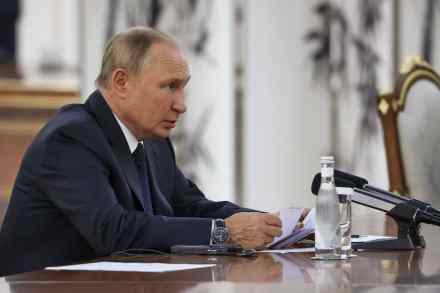
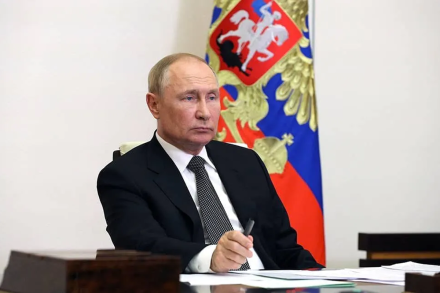
Has Vladimir Putin carried out a cynical stunt, or ducked out of a seismic decision? That’s the debate among Kremlinologists tonight, as the Russian President failed to show up for a planned 8 p.m. address to the Russian people. Faced with catastrophic losses of territory in north-east Ukraine, a weaker Putin has been considering his options. One that has been suggested is fully mobilising the population to fight, and introducing martial law, which the State Duma (parliament) proposed today. Men aged between 18 and 65 would be banned from leaving the country. Today also saw the announcement of referendums on Russian annexation for the Luhansk and Donetsk regions of Ukraine, as my colleague Lisa Haseldine reported.

Putin and Xi herald a rising authoritarian axis

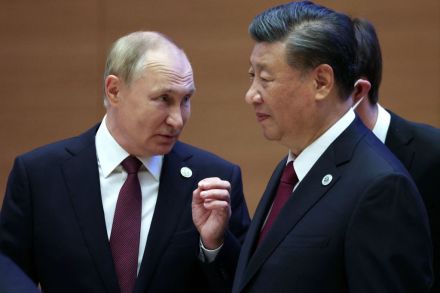
Russian President Vladimir Putin and Chinese President Xi Jinping met in Uzbekistan during this week’s Shanghai Cooperation Organization (SCO) summit — and a lot had happened since their last meeting. With the Russian Army on the back-foot in Ukraine and its economy forecasted to contract by over 4 percent in 2022, Putin is in a far worse position. Whether this impacted the meeting is hard to tell, though Putin indicated that Xi had “questions and concerns about [Ukraine].” Nevertheless, both countries expressed support for one another, touching on their respective concerns. Xi stated that China wanted to work with Russia “to set an example of a responsible world power,” a jab at the Western powers that both countries are positioning themselves against.

On the front lines of Europe’s newest war

From our UK edition

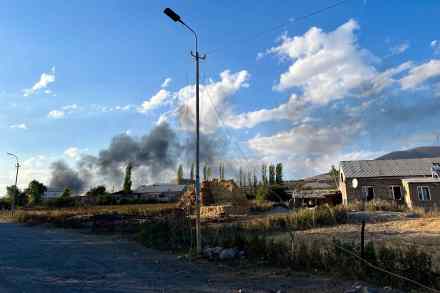
Sotk, Armenia A group of Armenian soldiers stand guard on the road towards the village. ‘It’s not safe to go ahead,’ one says, slinging his Kalashnikov across his shoulder and motioning for our van to pull over. ‘They were shelling the highway just 15 minutes ago.’ In the distance, there’s the unmistakable thunder of artillery and smoke rising from the side of the mountains. Beyond them is the border with Azerbaijan from where, in the early hours of Tuesday morning, a massive barrage was unleashed on towns and cities across Armenia. The offensive is the most dramatic escalation since the two former Soviet republics fought a brutal and bloody war two years ago, leaving more than 5,000 dead on both sides.

More mad than Vlad: Russia’s ultra-nationalist threat

From our UK edition

‘Russia without Putin!’ was the cry of Muscovites who turned out to protest against Vladimir Putin’s return to the presidency for a third term in December 2011. Crowds 100,000 strong chanted their opposition on Moscow’s Academician Sakharov Prospect – as symbolically named a venue as you could wish for – as riot police stood calmly by. There was anger in the crowd. But there was hope, too, not least because the massive protest was officially sanctioned. One after another, prominent opposition politicians such as Ilya Yashin, Boris Nemtsov and Alexei Navalny denounced Putin from a stage provided by the city authorities. Today the memory of those protests seems to belong to a different age of Russia. Yashin and Navalny are in jail.

How Russia is forcibly relocating Ukrainian civilians

With the stunning, rapid advance of its military against the Russians, Ukraine has shot back into the headlines. The focus is, understandably, on the battlefield, but the happenings behind the lines deserve attention too. Since the first weeks of the war, information has trickled in about Russia’s massive, criminal attempts to relocate Ukrainian civilians. While much of the situation in the Russian-occupied regions of Ukraine remains murky, what is known provides a rough outline. Russia’s attempt at social control in Ukraine consists of two key elements: filtration and forced relocation.

Vladimir’s no good, very bad week

The Ukraine war’s first seven months have been a long slog, with high costs in both men and material. Then, over the last week of combat, that suddenly changed. While casualties undoubtedly remained high on both sides, the Ukrainian army’s surprise counteroffensive in the northeast shattered Russia’s defensive lines and culminated in the most humiliating Russian tactical defeat since its forces were pushed out of Kyiv in April. While Russian President Vladimir Putin was celebrating the opening of a new Ferris wheel in Moscow, his troops 534 miles to the south were dropping their weapons and retreating.

russia realities
kharkiv

Ukraine’s incredible success turns the tables on Russia

Ukraine’s swift counter-offensive has captured more territory in four days than Russia’s huge army did in six months. The victories go beyond the 3,000 kilometers of liberated land. The Ukrainians have managed to break and scatter the enemy army across city after city in Kharkiv (in the country’s northeast) and are now moving swiftly into Luhansk (in the north Donbas region). Russian commanders have abandoned major cities and supply hubs, forfeited their hard-won control of vital rail lines and highways, and fled eastward for their lives. Their soldiers have dropped their guns and abandoned vast stores of heavy weaponry, from tanks to anti-aircraft batteries. It has been a complete rout. How did Ukraine accomplish this swift and unexpected victory?

I’ve become a war addict

From our UK edition

It is an almost unquestioned orthodoxy that war is hell, and that every needless death in a needless war diminishes our common stock of humanity. It’s curious, though, how we're able to hold that conviction alongside a positively visceral excitement at watching the Ukrainian counter-offensive carve its way through the Kharkiv Oblast. Some 3,000 square kilometres have been recaptured: Ukrainian troops are moving through their own land at such a clip that they’ve made more progress in three days than the massed might of the Russian invaders have since April. I’ve been eating it up. Haven’t you? The images of abandoned armour, the fuel dumps, the sullen faces of Russian commanders rounded up as prisoners of war.

Portrait of the week: Truss in, Johnson out and Nord Stream 1 off

From our UK edition

Home Liz Truss, the new Prime Minister, said in a speech outside 10 Downing Street: ‘Boris Johnson delivered Brexit, the Covid vaccine and stood up to Russian aggression. History will see him as a hugely consequential prime minister.’ For her part: ‘I am confident that together we can ride out the storm.’ Earlier, on being elected leader of the Conservative party, she had said: ‘I know that we will deliver, we will deliver, we will deliver.’ She had been elected by party members ahead of Rishi Sunak by 81,326 votes to 60,399 (57.4 per cent to 42.6). Turnout was 82.6 per cent.

The missing Biden foreign policy

What is Joe Biden's foreign policy? It's a trick question, because he has no actual policy, no plan, no careful set of chess moves a step ahead of his adversary. America suffers for it. Biden's foreign policy initially began and ended in Afghanistan with the disastrous withdrawal that left refugees strewn across the globe. There were years, then months, then weeks, then days to plan the NEO — the noncombatant evacuation order — and plenty of planning books for one sitting on desks in places like Seoul.

Ukraine turns the tables on Russia

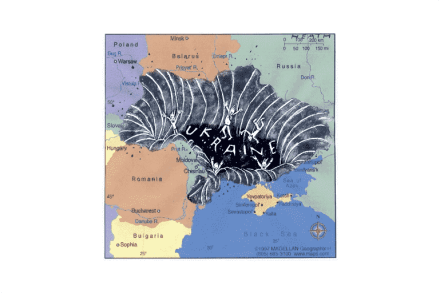
Russia’s brutal war on Ukraine has moved into a new phase, a very encouraging one for Ukraine and its western allies. In Phase 1, Russia tried — and failed — to seize the capital city of Kyiv with a blitzkrieg assault. The idea was to decapitate the Zelensky government quickly and install a puppet regime, subservient to Moscow. After that failed, Russia focused on taking the Donbas region of eastern Ukraine and forming a “land bridge” to Crimea, which Russia seized in 2014. Russia has had some success in this Phase 2 of the war, at very high cost, but movement along that front has now stalled.

Why the Baltics fear Russia

From our UK edition

In the historic heart of Riga, Latvia’s lively capital, there is a building that reveals why the Baltic States remain so wary of the Russian Bear. From the street, it doesn’t look like much – just another apartment block on a busy boulevard full of shops and cafes. Only the discreet sign outside gives the game away: ‘During the Soviet occupation the KGB imprisoned, tortured, killed and morally humiliated its victims in this building.’ Most passers-by barely give it a second glance. They know this story all too well. The KGB vacated this apartment block in 1991 when Latvia regained her independence, but over 30 years later the memories remain raw. As we step inside my Latvian guide, Edgars, tells me his father was summoned here twice for interrogation.

Will energy bills kill off working from home?

From our UK edition

‘The jury’s out’, was Liz Truss’s pert response to the question ‘Macron: friend or foe?’ at last week’s Norwich hustings. ‘I’ll judge him on deeds not words.’ In a video clip of the event you can see a bald bloke in the second row applauding wildly, as if she had just delivered from memory the whole of Henry V’s speech before Agincourt. Hard to know which is worse: whether as Foreign Secretary she thinks it’s shrewd diplomacy to cast doubt on the bona fides of our nearest ally and Europe’s only current statesman; or whether, even with victory in the bag, she’ll say anything to win the vote of every last backwoods xenophobe in the Tory party.

Will Russians soon realise how remarkable Mikhail Gorbachev was?

From our UK edition

Mikhail Gorbachev, the final president of the Soviet Union who died last night, was remarkable both as an international politician and as a domestic reformer. I first met him when he came to London in December 1984, when Mrs Thatcher said that she liked him and could do business with him. He was open, friendly, and spoke without notes: the opposite of his predecessors. Some of Thatcher’s own officials suspected that he was merely an old-fashioned communist who had learned new tricks, and that his charm was seducing her from her clear view of the Soviet threat. Thatcher was right, and the sceptics were wrong. By that time, the Soviet system was in serious trouble. It could just about keep up with American military technology.

Gorbachev was no saint. But he was a kind of hero

From our UK edition

Mikhail Gorbachev is dead at the age of 91, and in a way I feel orphaned. I became fascinated by what was still then the Soviet Union in its late years of sclerosis, when one moribund geriatric at the top of the system succeeded another (the dark joke at the time went as follows: a KGB guard stopped someone at one of the state funerals and asked him if he had a pass – ‘oh,’ came the reply, ‘I’ve got a season ticket’). But my early years as a Russia-watcher were during his time as General Secretary, and if my seniors had become used to the idea that the USSR was a stagnant, unchanging police state, for us, the thought that there could be change, even change for the good, was baked into our assumptions.

Moscow

From Moscow to Kyiv and back again

During the best of times, I left New York for gonzo journalism in Moscow; and during the worst of times, I fled a jingoistic wartime Moscow for the post-Covid euphoria of a resurgent New York City. My life in a sense has come full circle: I left New York for Russia in my freewheeling, bohemian twenties in search of future adventure and returned in my fifties when the rose-tinted dreams of the future that fueled Russia’s hedonistic capital were snuffed out in a murderous rage. That rage of a crumbling empire also engulfed lovely Ukraine in flames, battering its gorgeous capital Kyiv, where I had spent a blissful decade. With two of the three cities that I had called home caught up in a fratricidal zero-sum war, New York is once again King of the Hill.

It’s time to kickstart North Sea oil

From our UK edition

It is reported this morning that one of Liz Truss’s first acts as prime minister, assuming she wins the Conservative party leadership election, will be to grant new licences for North Sea oil and gas extraction. But will it be enough – and quick enough – to alleviate the energy crisis? There are still substantial known oil and gas reserves in the North Sea left to be exploited. According to a report produced by the Oil and Gas Authority last September, known reserves of oil and gas in the North Sea at the end of 2020 amounted to 4.4 billion barrels of oil equivalent (BOE). This is just a tenth of the 45.9 billion BOE which have already been extracted. However, that ignores that exploration for oil is an ongoing business.

Ukraine stuns Russia with a counter-offensive in Kherson region

From our UK edition

The southern city of Kherson, which fell to Russian forces in the first few days of the war, is one of the places Ukraine would need to liberate if Putin’s army is to be repelled. But what realistic chance is there? Many argued that the Russian occupation is a one-way process: that having taken Crimea, Putin would extend his reach northwards and westwards – with the only question being how long Ukraine could hold off an offensive from its far-bigger enemy.  But that conversation is changing, and fast. This morning, the Ukrainian army broke through the first line of the Russian defence in Kherson region – a move that was only recently seen to be beyond the capability of Ukrainian troops.