Russia

A Soviet version of Martin Parr: Adam Curtis’s Russia 1985-1999 –TraumaZone reviewed

Russia 1985-1999: TraumaZone – even the title makes you want to scream – is Adam Curtis’s Metal Machine Music: the one where he frightens off his fans by abandoning the trademark flourishes that made him so entertaining and instead goes all pared-down and raw and grim. If you don’t know or remember what those trademark flourishes were, let me refer you to a cruelly funny pastiche which you can easily find on YouTube called The Loving Trap. This sends up poor Adam as a pioneer of the collage-umentary, a genre resembling ‘a drunken late-night Wikipedia binge with pretence to narrative coherence’ which ‘vomits grainy library footage onto the screen to a soundtrack of Brian Eno and Nine Inch Nails.

Portrait of the week: Sunak in No. 10, pasta gets pricier and Russia hits Ukraine’s energy grid

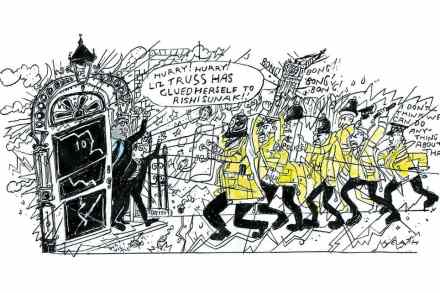
Home Rishi Sunak, aged 42, became Prime Minister. At the weekend Boris Johnson had flown back from a holiday in the Dominican Republic in response to the resignation of Liz Truss. She said she could not ‘deliver the mandate on which I was elected by the Conservative party’. The 1922 Committee devised a hurdle of 100 nominations for any MP to be considered as leader, with secret ballots of MPs and, if two candidates remained, an online vote by party members. It was thought that if Mr Johnson secured 100 votes, the membership would elect him. At 9 p.m. on Sunday, the day before nominations closed, he withdrew from the contest. Next day, a minute before nominations closed, Penny Mordaunt withdrew. So Mr Sunak won.

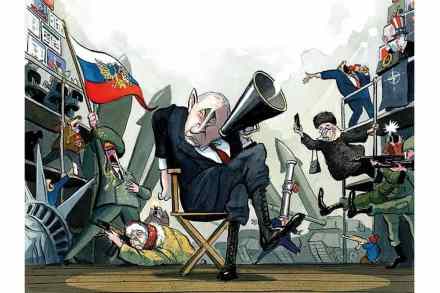
Is Putin preparing a nuclear strike?

Russia is peddling implausible tales of Ukrainian ‘dirty bombs’. Kyiv and the West are embarked on a campaign to counter this propaganda, and again the talk is of the risk of Moscow using weapons of mass destruction in Ukraine. And that’s the point. First of all, Russian Defence Minister Sergei Shoigu broke months of relative silence – with the West, at least – and called his British, American, French and Turkish counterparts. His main message was to assert, with no evidence in support of his claims, that Kyiv was preparing to use a dirty bomb. This is a conventional munition, around which is packed radioactive materials, which is dispersed when it explodes.

America and Russia are finally talking to each other again

From our US edition

Defense Secretary Lloyd Austin and Russian Defense Minister Sergei Shoigu haven’t really been on speaking terms. That is, until last weekend, when the two defense chiefs conversed with each other twice in three days. The readouts released by the Defense Department are about as brief as brief can get. They don’t tell us much about what was said, other than the general observation that Austin, a former four-star army general, swatted away Moscow’s explanations for the war in Ukraine. What the conversations illustrate more than anything is just how rare they've been. Indeed, the reason why so many news outlets wrote about the Austin-Shoigu calls was because they were extraordinary.

What price must the West pay for Crimea?

From our US edition

For centuries before Vladimir Putin arrived on the scene, Russian foreign policy has been shaped by the country’s need for warm-water ports. To be a great power in Europe and the Near East, Russia must have access to the Mediterranean. Commercial as well as military considerations dictate this. In the eighteenth century Russia conquered the khanate of Crimea and acquired a splendid location for a new Black Sea port — what is now the city of Sevastopol. The Crimean peninsula had been a gateway from Asia to the Mediterranean since the days of the ancient Greeks, who built some of their northernmost colonies there. Russia made Sevastopol the permanent home of its Black Sea Fleet.

crimea

The US knows the main threat is China

China's President Xi Jinping opened the CCP’s 20th party congress by doubling down on four key issues: no let up on zero-Covid; no renunciation of force when it comes to Taiwan; a promise to build up China’s military strength; and no tolerance of any opposition to his rule. As he enters his third term, the most important new challenge he has to address are the export controls announced by the US on the eve of the congress that threaten to undercut China’s ability to develop semiconductors and supercomputers. Xi remains defiant: he promised to ‘resolutely win the battle in key core technologies.

What does Russia really want?

The question of ‘why’ Russia invaded Ukraine has been forgotten amid war’s fog. Greed and malice partially explains it. History, geopolitics and culture reveals more. A country which has more land than anyone else on Earth is not grabbing territory for territory’s sake. Logically, Russia should be giving away land to anyone who might manage it better. But that’s not how Putin thinks. He is pursuing a dogged policy of annexations – first in Georgia, then in the Crimea, and now of four further Ukrainian districts.

Why Israel won’t give lethal aid to Ukraine

From our US edition

Israeli defense minister Benny Gantz announced this week that Israel would maintain its policy of not supplying weapons to Ukraine. This drew criticism, including charges that Israel has a moral obligation to help Ukraine and is instead foolishly prizing its relations with Russia. Critics also note that Israel’s archenemy Iran is providing weapons and advisors to Russia. They further point out that Israel’s Ukraine arms embargo puts it out of step with Israel’s most important partners in the West, especially the United States. Yet aiding Kyiv is a far riskier bet for Jerusalem than for most Western capitals. This is no easy call, and the one Israel made is probably the right one.

Portrait of the week: Truss says sorry, Hunt reverses mini-Budget and Kanye West buys Parler

Home Liz Truss said in a BBC interview as Prime Minister that she wanted to ‘say sorry for the mistakes that have been made’. Declaring that she would lead the Conservatives into the next election, she addressed blocs of MPs: the One Nation group one day, the European Research Group the next. She watched Jeremy Hunt, the Chancellor of the Exchequer whom she had just appointed to replace Kwasi Kwarteng, deliver a statement to the Commons reversing most of the provisions of the ‘fiscal event’ of 23 September. The new Chancellor announced the end of current subsidies for domestic energy bills in April, preferring something that ‘will cost the taxpayer significantly less than planned while ensuring enough support for those in need’.

kyiv

Homage to Kyiv

From our US edition

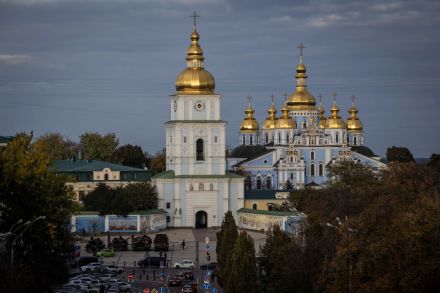
It was 11:15 p.m. in Kyiv, just after the curfew, and the military had set up its checkpoints on the city streets. Finding your way home after hours can be a hazardous business. The city is paranoid about assassins and saboteurs, and in wartime few are above suspicion. Things were looking ominous until my friend Sasha declared: “we are late for breakfast.” The guards waved us through. This was the daily password, shared with those important enough to move around after curfew. Checkpoints and curfews were a few reminders of the war in Kyiv, where I was just before last week’s deadly air strikes. In the capital city, life was approaching some form of normalcy.

Tsar Vladimir brings in martial law

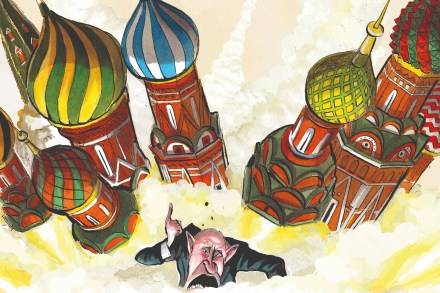
Martial law can arrive with a bang: tanks on the streets, Swan Lake on the TV. It can also creep up on a country in the guise of a presidential edict with the title ‘The Decree On Measures taken in the Constituent Entities of the Russian Federation in Connection with the Decree of the President of the Russian Federation of October 19, 2022 No. 756’. Either way, Vladimir Putin has just moved Russia one step closer to totalitarianism. What is interesting is just how long and half-hearted a process this has been. When Putin invaded Ukraine in February, the sharpest-beaked hawks in his entourage were urging total war, and with it an imposition of tight state control over much of the economy.

How long can Europe’s support for Ukraine last?

From our US edition

Can Ukraine sustain a war effort that is proceeding far better than most military analysts ever expected? Part of that answer, of course, depends on the extent to which the Ukrainian army can keep their troops in the field equipped, supplied, and motivated. That challenge comes as the Russian military increasingly relies on so-called “kamikaze drones” to strike deep into Ukrainian territory (on October 17, a Russian drone attack killed four people in Kyiv during the morning rush hour). But another factor that will determine success or failure is whether Europe remains onboard — or, more to the point, whether Europe’s support to Kyiv will continue as the war enters a dreary, unforgiving winter.

The Cuban Missile Crisis has become a cultural touchstone

From our US edition

At the beginning of 1962, President John F. Kennedy had high hopes for a peaceful year with the Soviet Union, the United States’ most dangerous adversary. On December 30, 1961, Kennedy issued a statement offering his good wishes for the new year to Soviet Premier Nikita Khrushchev and the Soviet people. Ten months later, in October of 1962, the US and the Soviet Union were on the brink of war. The Soviets had moved missiles into Cuba, which initially went undetected by US intelligence. On October 14, an American U-2 spy plane took pictures showing missile base construction taking place in Cuba. The next evening, American analysts realized the implications of what that construction meant.

The right’s dangerous embrace of soft isolationism

From our US edition

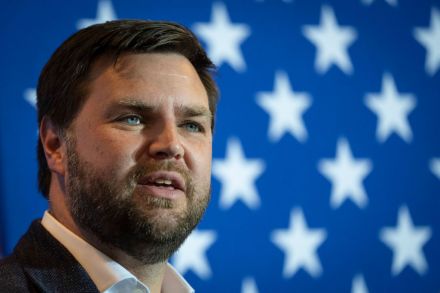
Traditionally, the GOP has been the favorite of those concerned with safety and national security. The party of Ronald Reagan emphasized the need for strong engagement abroad, a willingness to project power when necessary, and a commitment to the free world. Yet the contours of the conservative movement have begun to change in recent years, calling into question the GOP’s credibility on the issue of security. The growing support for a sort of soft isolationism is a problem. It is also fundamentally not conservative. Prominent voices from the American right have been carrying the banner of soft isolationism for years, from Tucker Carlson and J.D. Vance to Senator Josh Hawley and former president Donald Trump.

The Russia-Iran axis that’s menacing Ukraine

From our US edition

Russia’s brutal war in Ukraine is coming up on its eighth month, and the costs to the Kremlin’s military have been immense. Increasingly isolated on the world stage, Vladimir Putin has joined the world’s club of pariah states, the only group willing to give him support. Chief among his allies is the Islamic Republic of Iran, a state with similarly imperialistic designs and global isolation. This axis has been brewing for some time — the two nations worked together extensively in Syria, for example — but the relationship has reached new heights as the Russian armed forces buckle under the strain of war. Perhaps the most potent symbols of this relationship are the hundreds of Iranian drones flooding into Ukraine to fill a gap in Russia’s weapons inventory.

A house-price crash won’t be the only effect of the Kwarteng calamity

Where next for house prices? Clearly, they’re going down as mortgage rates go up – and my forecast in May that they would shed ‘recent froth’ and then stagnate rather than plunge, has been entirely overtaken by events, or at least by Kwasi Kwarteng’s calamitous ‘fiscal event’ last month. Reverberations from the Chancellor’s debut continue apace, with more emergency bond-buying by the Bank of England despite news that the OBR-assessed forecast missing from his September speech will now be unveiled on 31 October instead of on 23 November.

Russia’s brutal strategy of war is failing

From our US edition

Ukraine’s devastating attack on the Crimean Bridge and Russia’s sickening response — deliberately targeting civilians — perfectly encapsulate how these adversaries are fighting this war. Ukraine has a coherent strategy, effective operational design, and close coordination among its forces. Russia is failing because it has none of this. The centerpiece of Ukraine's strategy is eviscerating Russian combat power without getting into a raw slugfest that would sacrifice its own troops. That means knocking out Russian combat power without a head-on battle, wherever possible. How does Ukraine do that?

Osipov

The Soviets brought far from home

From our US edition

"It’s best not to talk politics with patients, but if a woman has an unusual mitral valve, it’s tempting to think that she herself must be interesting,” sighs the Russian doctor, essayist and short-story writer Maxim Osipov towards the end of his 2017 essay “The Children of Dzhankoy.” The temptation does not, alas, live up to expectations for Osipov. His mitral valve patient is “a thirty-six-year-old journalist and amateur pilot who misses the USSR.” “Now, that was strength” she claims. Osipov, with typical economy, comments, “nothing interesting.

penguin

A haunting novel remembers 1990s Ukraine

From our US edition

"They don’t treat people nowadays, let alone penguins.” When Americans ask what went wrong after the fall of the Berlin Wall, this wry comment on the state of Ukrainian healthcare in the 1990s isn’t a bad place to start. It’s also typical of the darkly funny Death and the Penguin, an account of a young writer in Kiev and his pet penguin, Misha, formerly of the city zoo. Did I say Kiev? Of course I meant Kyiv. It has lately become unfashionable to mention the commonalities between Ukraine and Russia, lest you give aid and succor to Vladimir Putin. But Putin’s propaganda resonates because it contains a grain of truth. Despite war and ethnic conflict, Russia and Ukraine have a great deal of shared history.

Why is Biden giving up on nuclear deterrence?

From our US edition

What’s more alarming than President Trump trying to frighten Kim Jong-un with “fire and fury”? President Biden trying to frighten Americans with Putin. “I don’t think there’s any such thing as the ability to easily [use] a tactical nuclear weapon and not end up with Armageddon,” the president riffed at a New York fundraiser, while fretting to supporters about his need to find that elusive off-ramp for the Russians. Biden’s loose talk about Putin’s formidability contrasted with US handwringing fits a pattern. Pervasive throughout Putin’s war has been far too much focus on what the United States should do to help Putin find these mythical off-ramps, and on how to restrain Ukraine to prevent it from getting nuked.