Russia

The Russian Orthodox Church eyes Ukraine

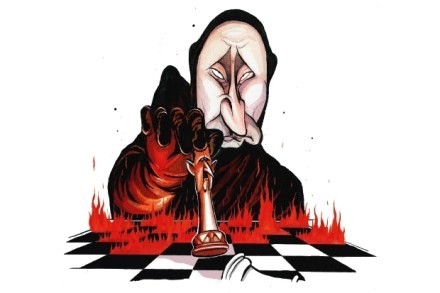
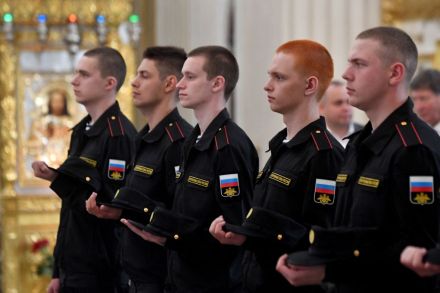
Christopher Hitchens, allergic to the idea that secular regimes might actually be more bloodthirsty than religious ones, infamously attempted to blame the atrocities of Stalin’s Soviet Union on the Russian Orthodox Church. It was an end run worthy of the NFL Hall of Fame, and no doubt Hitch would be attempting something similar if he’d lived to see Russian President Vladimir Putin’s invasion of Ukraine. He would be wrong, but as Putin fights to reclaim territory once held by the Soviet and tsarist empires, the church appears to be conducting its own parallel campaign of spiritual imperialism. There’s little doubt Putin sees the church as politically useful.

The Ukraine invasion is nothing compared to Iraq

Of the war in Ukraine, New York Times columnist Thomas Friedman writes, “Our world is not going to be the same again because this war has no historical parallel.” In the very next sentence, he describes the Russian invasion of Ukraine as “a raw, eighteenth-century-style land grab by a superpower,” thereby acknowledging that the episode actually has innumerable historical parallels — just not ones that Friedman cares to acknowledge as legitimate. Friedman figures prominently among those claiming to have divined the essential character of the present age. His key finding: tech-driven globalization has rendered old-fashioned power politics obsolete. The rules of the game have changed irrevocably. Practically speaking, nations have no choice but to submit.

invasion iraq

Putin understands America’s moral decay

Last October, Vladimir Putin aired a speech to the Russian nation chiding the United States for its moral decay. He observed an America “blotting out whole pages” of its history, pursuing “reverse discrimination against the majority in the interests of minorities,” and renouncing time-honored values in an effort at “public renewal.” “It’s their right, but we are asking them to steer clear of our home,” he warned. “We have a different viewpoint.” This iteration of family values and conservative critique went barely noticed by the American press at the time.

Putin

The creeping authoritarianism of facial recognition

In an effort to lower crime rates, American law enforcement is pushing to combine facial recognition with expanded video surveillance. Politicians worried about their re-election chances due to a perceived crime wave see the expansion as necessary. It’s a sharp swing from 2019 and 2020, when cities like San Francisco and New Orleans were banning or at least enacting limits on facial recognition technology due to privacy concerns. Now, New Orleans plans to roll back its facial recognition prohibition. The Virginia State Senate gave law enforcement a late Valentine’s Day gift by passing a facial recognition expansion bill on February 15 — the Democrats who unanimously approved a ban on facial recognition last year suddenly changed their minds, as did five Republicans.

Putin is making the EU great again

The Europeans have been jolted awake from their deep Pax Americana slumber, when the continent was largely content to eat the spoils of economic prosperity and allow the United States to do the heavy lifting on all things security. And we have Vladimir Putin to thank for it. Russia’s nearly week-long invasion of Ukraine has shocked the conscience of many who believed Europe would never return to the dark days of large-scale land warfare.

llya Kaminsky

Ilya Kaminsky’s poetry in a time of war

There is currently a poem going viral on Twitter. “We Lived Happily During the War” is by the Ukrainian-American poet Ilya Kaminsky, and it is the first poem of his prize-winning collection Deaf Republic (2019). It is easy to see why it feels particularly relevant: Kaminsky was born in the former Soviet city of Odessa, which is now under attack from Russia. The poem opens: “We Lived Happily During the War” And when they bombed other people’s houses, we protested but not enough, we opposed them but not enough. It is a heart-breaking meditation on the way normal life continues despite crises. The speaker describes how “I took a chair outside and watched the sun.” But he ends with a plea: “we (forgive us) / lived happily during the war.

taiwan

What does Ukraine really mean for Taiwan?

No one should think that Vladimir Putin’s invasion of Ukraine means that Xi Jinping will decide to use force against Taiwan anytime soon, if ever. China is not Russia, nor Taiwan Ukraine. Yet neither should policymakers presume that Beijing will not be influenced by what happens on the other end of Eurasia. Washington must consider whether and how Putin’s aggression has raised the stakes in defending Taiwan from the People’s Republic of China. At the least, US strategists will seriously have to assess whether a global environment in which norms of international behavior are regressing may serve to spur Beijing to military action that once seemed unlikely.

The GOP isn’t quitting on Trump

Will he or won't he? Americans tired of the rampant speculation are surely having a relief-filled two months. First Tampa Bay Buccaneers quarterback Tom Brady responded to a hasty ESPN report by announcing his retirement from the NFL. Then, former president Donald Trump told a roaring crowd at CPAC that he intends to run for America's highest office a third time. "We did it twice, and we’ll do it again,” Trump said. “We’re going to be doing it again." Trump's announcement is a gut punch for other 2024 contenders who secretly hoped he'd step back and play kingmaker.

Putin’s endgame is preserving ‘his’ Russia

Vladimir Putin’s war in Ukraine does not appear to be going well, and the Russian economy is about to experience the full force of Western sanctions. American social media is already in a celebratory mood. But caution is in order — it’s never smart to underestimate your opponent. Putin was expecting sanctions, and he and his war planners could not have discounted Ukrainian resistance, even if they underestimated its intensity. Maybe they did expect the invasion to be a cakewalk and are taken aback by how difficult it’s proved to be in just these first few days. But as of now the invasion still seems to be on its timetable, and its military objectives are achievable. Russians are surrounding Kyiv.

takes

And now the dumbest takes about Ukraine

If hot takes brought peace, mankind would never know war again. At least, that’s the impression one is left with after spending time on Twitter during Russia’s horrific invasion of Ukraine. Some social media users seem to operate under the understanding that they are legally required to put their first — and often worst — opinions immediately onto the internet for all to see. Many of these tweets reflect the understandable human tendency to grasp at an explanation for terrible events. Laurie Garrett, a Pulitzer Prize-winning writer who is considered an oracle of sorts on the coronavirus pandemic, put forth an interesting theory. “It’s been suggested that #Putin isn’t thinking properly, perhaps due to long #COVID19,” she wrote.

Yes, Russia could use nuclear weapons

“Nuclear war is part of our strategic culture. Yes, we would start one if our homeland, our way of life, was threatened, absolutely. Why wouldn't we?” That’s what a retired Russian diplomat told me on the sidelines of a track-two dialogue between US, Russian and Chinese experts back in 2012. And to be honest, for several years, I didn’t believe him. I took his comments as bragging, atomic machismo, if you will. The context of the conversation was a response to a question to my Russian colleague on the subject of Moscow’s nuclear weapons doctrine and thinking. Russia for several years has believed in the concept of escalating nuclear tensions to deescalate tensions, or what defense scholars call “escalate to deescalate.

Biden’s confusion over sanctions

Russia’s military aggression against Ukraine requires a swift and effective Western response. But according to neoconservative and liberal internationalist pundits like columnist Walter Russell Mead, the invasion marks nothing less than an assault on the “world order” akin to Nazi aggression at the opening of World War II. “Not since Hitler attacked the Soviet Union in 1941 has a European leader committed an act of aggression as brutal or as nakedly cynical as Mr. Putin’s unprovoked attack on Ukraine,” Mead writes in the Wall Street Journal.

No, China isn’t about to invade Taiwan

I have a medal for winning the Cold War. And I'm not alone — they were awarded to all members of the military and federal civilian employees who served during the Cold War. That included me, at the tail end, with the State Department. Ironically, my so-called Cold War service was in Taiwan. I probably should return the thing; the Cold War is far from over. Part of the Cold War's real conclusion is playing out in Ukraine in real time. Is Taiwan, another hanging chad from that era, next? Is President Xi watching a weakened America giving in to the Russians and seeing his chance to seize Taiwan? Nope. Taiwan is not Ukraine is not Taiwan. The two places only exist next to each other in articles like this one because both are the results of American policy.

Europe’s ‘green’ transition put it at Russia’s mercy

Germany’s “halt” on the certification of the Nord Stream 2 pipeline on Tuesday is a classic case of too little, too late — a fact made all the more painfully clear in light of Russia’s invasion of Ukraine. Oil and gas still flow through Nord Stream 1 and many other Russian pipelines to Europe, and the continent has no choice but to keep importing the fossil fuels that finance Vladimir Putin’s offensive. We all saw this coming. Europe’s supposed “green” energy transition disregarded energy security and common sense, and Ukraine is now paying the price. The world will never tackle climate change if it's in a constant state of geopolitical energy insecurity, relying on authoritarian regimes like Russia and China to meet its basic needs.

Putin’s path to war in three speeches

With regard to the illegal war being waged by Russia against Ukraine, no one has any right to be surprised. For all the understandable and justifiable outrage over Russian president Vladimir Putin’s decision to abandon diplomacy and launch what appears to be an unprovoked act of aggression, a look at prior statements by Mr. Putin shows that, with the passage of time, patience and rationality gave way to irrationally, paranoia and ultimately the decision to launch an armed conflict. Any proper accounting of the history of the downturn in US-Russia relations must include Putin’s 2007 address to the Munich Security Conference. To many, this was a kind of point of no return, with Putin putting the US and its European allies on notice: there are red lines not to be crossed.

The stakes for Europe are even higher than in 1938

Any analysis of the Ukraine situation risks lagging behind the news. As of the time this article was published, Russia had conquered the former Chernobyl nuclear power plant. Its forces are only about sixty miles away from Ukraine’s capital, Kyiv, which has already experienced shelling. Russians have also attempted to capture Antonov International Airport, just fifteen minutes away from the capital’s ring road. Meanwhile, European leaders are resorting to the usual responses: “concerned,” “strongly condemning." There is even a Twitter account mocking the EU’s approach to all major crises, called “Is EU Concerned?” The response to the invasion of Ukraine is not spared from similar mockery. Here in Europe, it feels like 1938 all over again.

ukraine

Let Russia choke on Ukraine

At least for the moment, it looks like Russian president Vladimir Putin is intent on conquering Ukraine, a nation he's never believed has the right to exist. While the fog of war always limits accurate real-time military analysis, it seems for now that Russia has committed to annexing at least large sections of Ukraine and is winning the day militarily with ease. Of course, the media has predictably gone into overdrive, warning of World War Three, gas prices that will stay high for years and perhaps even Putin attacking NATO and nuclear war. But let’s put away the hysterics for a moment and think about the here and now. Russia’s goal in Ukraine has always been clear and does not involve war on NATO or even conquering Ukraine in its entirety.

never trumpers

Never Trumpers play 4D chess over Russia — and lose

“Pro-democracy” Washington Post columnist Jennifer Rubin — she long ago ditched the “conservative” descriptor — had a howler of a tweet about foreign policy the other day. On the subject of Russia’s invasion of Ukraine, Rubin wrote that “we don’t have to guess what Trump would have done – he would have praised Putin and rolled out the red carpet to the rest of Europe. THIS is who the GOP follows.” Rubin was joined in this opinion by novelist Stephen King, who tweeted that “Mr. Putin has made a serious miscalculation. He forgot he is no longer dealing with Trump.” King is right in at least one key respect: Putin is not dealing with Trump. And we need not speculate — contra Rubin’s advice — as to what Trump would have done.

Biden’s weak words on the Russian invasion

Vladimir Putin has invaded Ukraine, a chilling moment that cries out for a tough response. Thankfully, the president of the United States has deployed his usual silver tongue. "The world will hold Russia accountable," Joe Biden said last night. "I will be monitoring the situation from the White House this evening and will continue to get regular updates from my national security team." Cue Cockburn nearly collapsing from the sheer rhetorical power of that statement. It's a wonder the Russian tanks didn't screech into reverse and roll back over the border. Cockburn understands this is a dangerous situation that calls for delicacy and forethought. But were such bland bromides really the best the leader of the free world could do?