Russia

Republican hawks squawk at each other

Cockburn has never been much of a hawk, unless you count his begrudging deficit hawkery over the massive tab he ran up at his local bar. But many elected Republicans are very hawkish on foreign policy, supporting "peace through strength," as Ronald Reagan put it, as well as occasionally war through strength. So how are the GOP's highest-flying hawks handling Russia's invasion of Ukraine? Cockburn was surprised to find them divided. Nearly every Republican lawmaker (and Democrat for that matter) agrees that we need to throttle Russia with economic sanctions. It's on the question of whether the United States should implement a no-fly zone over Ukraine that the cracks begin to show.

Vladimir Putin, deep statist

Vladimir Putin's brutality in Ukraine is only going to get worse. The Ukrainians have fought valiantly, far better than anyone expected, but then that only means the Russians will have to up the slaughter in the coming days. As for Putin, he's reportedly fuming over his army's setbacks, threatening reprisals, while hunkering down in — I'm not making this up — his "mountain lair" deep in the Urals. If that makes Putin sound like a Bond villain, then that's just one of the many images of him that's emerged in recent days (the most popular is Putin as Hitler). The seemingly insane nature of his Ukraine invasion has left observers grasping for a reference point. Is Putin addled by cabin fever? Under the sway of extremists? Mentally ill? Who is this Vladimir Putin anyway?

What Erdogan is thinking about Ukraine

Turkey’s twentieth-century experience was very different from that of most European countries. During World War One, the late Ottoman Empire joined forces with Germany, a decision the sultans not only came to regret but that ultimately led to the fall of their monarchy. The Turkish War of Independence followed, touched off by Mustafa Kemal Atatürk, who transformed the Ottoman Empire into the secular Turkish Republic that still exists today. During World War Two, Turkey remained neutral, because of its previous experiences with joining a German military campaign, but also because it was in dire economic shape. In 1952, Turkey joined NATO, and has since been an ally of the West.

propaganda

Watch out for Ukrainian social media propaganda

Stop me if you’ve heard the one about the Ukrainian beauty queen who volunteered to fight the invading Russian forces. If you’ve been on social media these past few weeks, you’ve probably seen the striking photo of the woman clad in tactical gear and holding a rifle. “We are living in a materiel world, and I’m a materiel girl,” the stunner says to the viewer through her steely glare. Or the one about the Japanese ambassador to Ukraine kitted out in his ancestor’s samurai gear and ready to defend his adopted homeland? You’ve surely heard about the “Ghost of Kyiv,” a Ukrainian fighter pilot who has been terrorizing his Russian counterparts, accomplishing the feat — uncommon in contemporary air combat — of becoming an ace.

Putin will escalate

“I can’t tell you how this ends. All I can tell you is that I just hope millions of people don’t die, or that both Ukraine and Russia aren’t both destroyed in some way thanks to this war.” Those words, spoken to me on an encrypted smartphone app yesterday, are from a Ukrainian commander actively fighting Russian soldiers that I have known for years thanks to wargames I helped organize that brought together national experts, military officials, and policymakers from around the world.

Rise of the dimwit vodka dumpers

Passive news absorbers across the nation haven’t been able to avoid this thing they heard about some guy named Poutine, who’s, like, Russia’s Orange Man, invading Ukraine, which is, like, a peaceful society of hunter-gatherers and supermodels who live harmoniously with nature, talk to animals, and invented Democracy. This is a super important, really bad thing. The Crane people have been forced to take up arms and defend their way of life. Now, Americans across social media are also stepping up to let you Cranes know they’re paying attention, they care, and they’re ready to strike back at the invaders. Yellow and blue are this season’s black square.

Ukraine and the art of viral war

The sky is dull and gray, the sun obscured by clouds. The camera pans down past some desolate Soviet housing blocks. Some wintry, apocalyptic trees line a road. It could be Kyiv, it could be Bucharest, it could be any city where the residents liberally pepper their words with the -sky suffix. Suddenly, a flash of metal across the sky, a fighter plane roars into shot, then out again. The caption proudly declares, “This is the Ghost of Kyiv, the bravest fighter pilot in the Ukrainian Air Force. He has downed six Russian planes just today.” You don’t know that much about Ukrainian fighter pilots, but placed among a million other viral clips of heroic Ukrainians fighting against Goliath, you think it seems believable enough. You retweet it. You send it down group texts.

lindsey graham

Lindsey Graham unites the world

It was a beautiful moment of bipartisan unity when, left and right, American and European, young and old, united to call Lindsey Graham a moron. The South Carolina senator made headlines Thursday night after appearing on Sean Hannity’s show on Fox. He openly called for Vladimir Putin to be assassinated: How does this end? Somebody in Russia has to step up to the plate. Is there a Brutus in Russia? Is there more successful Col. Stauffenberg in the Russian military? The only way this ends, my friend, is for somebody in Russia to take this guy out! You would be doing your country a great service and the world a great service. Graham doubled down on his insanely dangerous comments on Twitter right after. Best to put this kind of stupidity in writing, in case there was any confusion.

european union

Ukraine won’t join the European Union any time soon 

In the wake of Russia’s aggression in Ukraine, President Volodymyr Zelensky has renewed his country’s wish to join the European Union. This week, the European Parliament approved Ukraine’s application to join the EU with an overwhelming majority. But Ukraine will not join the European Union this year, and possibly not even in the next five years to come. The reasons for that lie within the structure of the EU. The closening ties between Brussels and Kyiv had been the reason for Ukraine’s revolution back in 2014. Then Ukrainian president Viktor Yanukovych had rejected the EU-Ukraine association agreement, which tied both partners closer together, politically and economically.

Putin’s Stalinist playbook

Vladimir Putin's actions have shocked many Western observers over the past few days. But his moves bear all the hallmarks of one of his predecessors: Joseph Stalin. Last Monday, the Russian Duma passed a direct appeal to Putin to recognize the Russian-controlled separatist states of Donetsk and Luhansk. The Russian president first said he would not immediately recognize the so-called republics. The reason for this was he wanted it to appear that when he finally did recognize them as independent republics, he was simply reacting to popular pressure from below. This is straight out of the Stalin playbook.

stalin

Russia’s war is not a Trump redux

I hate going back, again, to Orwell, but since the world is intent on using Nineteen Eighty-Four as an instructional guide, I have no choice. So proles, take note: this week's Two Minutes Hate will be split between Vladimir Putin and Donald Trump. They apparently share the goal of destroying American democracy via the invasion of Ukraine. Something very sinister has happened in the American mind-space over the last few days. Ukraine, a country of little importance to the United States, suddenly became the sole focus of most media-consuming Americans. This was constructed to appear organic, but it is impossible not to imagine guiding hands behind the shift of every single media outlet to a single story told in a single way.

trump-russia hoax

America’s long history of sitting out Russian invasions

By now, my colleagues in the media may have convinced you that Russia’s invasion of Ukraine has been a “transformative” event, a challenge by a reactionary dictator to the “liberal international order,” if not an end to one historical epoch and the beginning of a new one. The world has turned upside down, nothing will again be the same, blah, blah, blah. When millennials make such apocalyptic observations, I can understand. Like Founding Father Thomas Paine, they assume that each day marks the “birthday of a new world.” But what about baby boomers like New York Times columnist Tom Friedman, who were in high school in 1956 during the so-called Hungarian Revolution, which was very much like what is happening in Ukraine today?

Pro-Ukraine citizens clash with authorities in Georgia

Tbilisi, Georgia After one week of fighting, Russia's invasion of Ukraine has already caused far-reaching geopolitical consequences, most of which point to gross miscalculation from the Kremlin. Following an arguably hesitant start, the Western world has united to provide Ukraine with lethal and non-lethal aid, as well as economic and humanitarian support. In addition, despite Putin ostensibly launching his war to prevent Ukraine from becoming a NATO member and curtail the alliance's easterly expansion, Kyiv's relations with the West have ironically become closer. Both Sweden and Finland appear to be closer than ever to considering joining NATO.

georgia

The Russian Orthodox Church eyes Ukraine

Christopher Hitchens, allergic to the idea that secular regimes might actually be more bloodthirsty than religious ones, infamously attempted to blame the atrocities of Stalin’s Soviet Union on the Russian Orthodox Church. It was an end run worthy of the NFL Hall of Fame, and no doubt Hitch would be attempting something similar if he’d lived to see Russian President Vladimir Putin’s invasion of Ukraine. He would be wrong, but as Putin fights to reclaim territory once held by the Soviet and tsarist empires, the church appears to be conducting its own parallel campaign of spiritual imperialism. There’s little doubt Putin sees the church as politically useful.

The Ukraine invasion is nothing compared to Iraq

Of the war in Ukraine, New York Times columnist Thomas Friedman writes, “Our world is not going to be the same again because this war has no historical parallel.” In the very next sentence, he describes the Russian invasion of Ukraine as “a raw, eighteenth-century-style land grab by a superpower,” thereby acknowledging that the episode actually has innumerable historical parallels — just not ones that Friedman cares to acknowledge as legitimate. Friedman figures prominently among those claiming to have divined the essential character of the present age. His key finding: tech-driven globalization has rendered old-fashioned power politics obsolete. The rules of the game have changed irrevocably. Practically speaking, nations have no choice but to submit.

invasion iraq

Putin understands America’s moral decay

Last October, Vladimir Putin aired a speech to the Russian nation chiding the United States for its moral decay. He observed an America “blotting out whole pages” of its history, pursuing “reverse discrimination against the majority in the interests of minorities,” and renouncing time-honored values in an effort at “public renewal.” “It’s their right, but we are asking them to steer clear of our home,” he warned. “We have a different viewpoint.” This iteration of family values and conservative critique went barely noticed by the American press at the time.

Putin

The creeping authoritarianism of facial recognition

In an effort to lower crime rates, American law enforcement is pushing to combine facial recognition with expanded video surveillance. Politicians worried about their re-election chances due to a perceived crime wave see the expansion as necessary. It’s a sharp swing from 2019 and 2020, when cities like San Francisco and New Orleans were banning or at least enacting limits on facial recognition technology due to privacy concerns. Now, New Orleans plans to roll back its facial recognition prohibition. The Virginia State Senate gave law enforcement a late Valentine’s Day gift by passing a facial recognition expansion bill on February 15 — the Democrats who unanimously approved a ban on facial recognition last year suddenly changed their minds, as did five Republicans.

Putin is making the EU great again

The Europeans have been jolted awake from their deep Pax Americana slumber, when the continent was largely content to eat the spoils of economic prosperity and allow the United States to do the heavy lifting on all things security. And we have Vladimir Putin to thank for it. Russia’s nearly week-long invasion of Ukraine has shocked the conscience of many who believed Europe would never return to the dark days of large-scale land warfare.

llya Kaminsky

Ilya Kaminsky’s poetry in a time of war

There is currently a poem going viral on Twitter. “We Lived Happily During the War” is by the Ukrainian-American poet Ilya Kaminsky, and it is the first poem of his prize-winning collection Deaf Republic (2019). It is easy to see why it feels particularly relevant: Kaminsky was born in the former Soviet city of Odessa, which is now under attack from Russia. The poem opens: “We Lived Happily During the War” And when they bombed other people’s houses, we protested but not enough, we opposed them but not enough. It is a heart-breaking meditation on the way normal life continues despite crises. The speaker describes how “I took a chair outside and watched the sun.” But he ends with a plea: “we (forgive us) / lived happily during the war.

taiwan

What does Ukraine really mean for Taiwan?

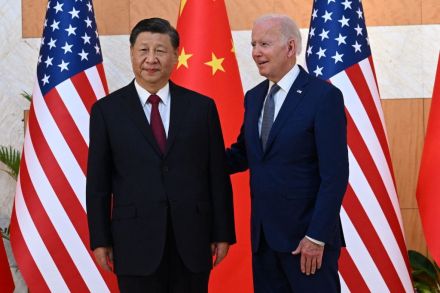
No one should think that Vladimir Putin’s invasion of Ukraine means that Xi Jinping will decide to use force against Taiwan anytime soon, if ever. China is not Russia, nor Taiwan Ukraine. Yet neither should policymakers presume that Beijing will not be influenced by what happens on the other end of Eurasia. Washington must consider whether and how Putin’s aggression has raised the stakes in defending Taiwan from the People’s Republic of China. At the least, US strategists will seriously have to assess whether a global environment in which norms of international behavior are regressing may serve to spur Beijing to military action that once seemed unlikely.