Royal festival hall

The dirty secrets of the Royal Festival Hall

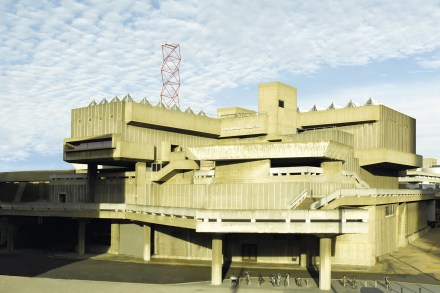
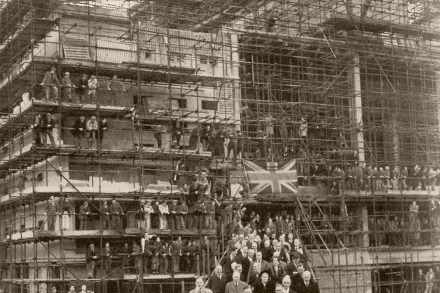
The Festival of Britain – that much mythologised moment of national renewal – is wheeled out every time the country goes through an identity crisis. An echo of the Great Exhibition, the 1951 South Bank extravaganza was spoofed by Tony Blair in his millennium plans and Theresa May in her entirely forgotten ‘Festival of Brexit’. With the country currently in a bit of a state, the Festival’s 75th anniversary this month comes at a fitting moment. Several lessons can be learnt by looking closer at the only part of the Festival to survive: the Royal Festival Hall.
Spellbinding: Herbert Blomstedt’s Mahler 9 reviewed

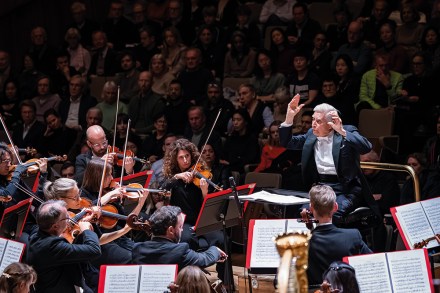
Ivor Cutler called silence the music of the cognoscenti. But there’s silence and there’s silence, and a regular concertgoer hears a fair bit of both. The ability to fold silence into a musical line – to create the impression that a conductor is somehow sculpting a sound which doesn’t exist – is an indicator of high artistry on the podium. This was real: the concentrated hush of 2,700 people listening as if the silence was part of the symphony Conversely, there’s the embarrassing strained silence when, at the end of a work, a conductor decides to keep the baton raised and see how long he can hold back the tide of applause. It’s spray-on sublimity; an attempt to force the illusion of shared transcendence. It’s the musical version of faking an orgasm.

The importance of lesbianism to British modernism: Double Weave, at Ditchling Museum, reviewed

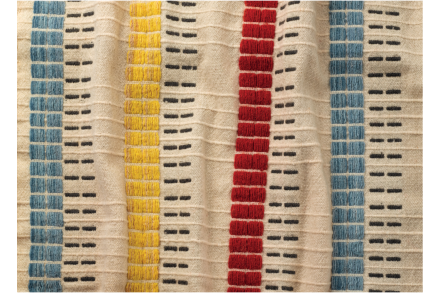
The name of Ditchling used to be synonymous with Eric Gill, but since he was outed as an abuser of his own daughters the association has become an embarrassment. Obliged to quietly drop its most famous name, Ditchling Museum of Art + Craft has been exploring less controversial connections. Its latest show, about Bourne and Allen, is a tribute to a forgotten creative partnership that casts a fascinating sidelight on the contribution of women’s traditional crafts – and lesbianism – to British modernism. After the Festival Hall put them on the map, they were approached to weave the fabrics for Ben-Hur Hilary Bourne was a Ditchling girl.

A giddy delight: Regina Spektor, at the Royal Festival Hall reviewed

We’ll get on to the brilliance of Regina Spektor in a moment. But first a question: why are pop music fans treated so abysmally? The afternoon of Spektor’s second sold-out show at the Royal Festival Hall, the venue tweeted that she would be on stage at 7.30 p.m. She actually took to the stage a few minutes past 8 o’clock. Spektor was absolutely magnificent once she did come on. She filled the room with charisma, charm and wit If that were a one-off, so be it. But anyone who goes to a lot of shows is familiar with how malleable the concept of stage-time is in pop music. Lana Del Rey had her Glastonbury set cut short because she was so late coming on – apparently she was having her hair done. It’s maddening. Why can they not meet their call times?

The death of the Southbank Centre

The one thing everyone agrees is that the Southbank Centre is in deep trouble. In May, the institution made an unusually public plea for government help. Management predicted the best-case scenario was ending the financial year with a £5 million loss, having exhausted all reserves, used the £4 million received from the furlough scheme and having gobbled up the remainder of its Arts Council grant. All the while, with the exception of the Hayward Gallery, the 21-acre site on London’s Thameside, incorporating both the Royal Festival Hall and the Queen Elizabeth Hall, remains closed. It was pitiful news, but there was worse to come. With no concerts, performances, talks or readings, drastic staff cuts are in the offing.

Privatisation is the best option for the South Bank Centre

I must have written about this subject 100 times in 30 years and I’m still having to restate the bloody obvious. London’s South Bank Centre, which has just gone bleating to the government for more money, is the biggest subsidy guzzler in the country and the despair of the rest of British arts. The South Bank receives £19 million a year from the Arts Council, on top of the many millions that go to each of the so-called ‘resident ensembles’ that perform within it. What it does with the money is anyone’s guess because, as far as the eye can see and the nostrils can smell, the South Bank is now a fast-food mall with an occasional classical concert buried within it. How did it get so bad?