Royal ballet

An American in Paris: a zingy new Wheeldon dance-musical that you won’t want to miss

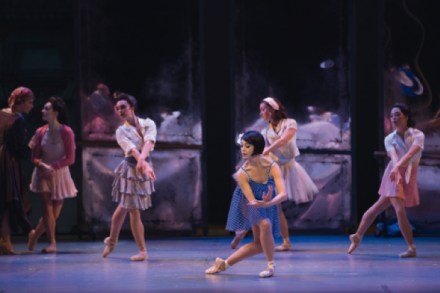
A new year must start with hope and resolution, and if you’re very rich, with influence in the highest places, I’d urge you to resolve to dust off the private jet and get to Paris quick this weekend hoping to find a ticket somehow for the last Châtelet performances of An American in Paris, Christopher Wheeldon’s s’wonderful, s’marvellous new staging of the Gershwin/Minnelli musical film. Or book for New York in March when the show moves to its second home on Broadway. But surely there must be a UK run soon. It’s the first big dance-musical of the Royal Ballet’s favourite son, which is why we should pay attention. The secret of Christopher Wheeldon’s current status at 41 as blue-eyed boy of the Western ballet world is his geniality.
Royal Ballet’s Don Quixote: Carlos Acosta is too brainy with this no-brain ballet

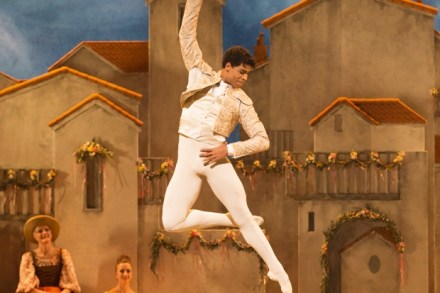
One feels the pang of impending failure whenever the Royal Ballet ventures like a deluded Don Quixote into a periodic quest to stage that delightful old ballet named after him. Twice in recent years has it tilted at the windmill and flopped back, dazed and bruised. It never remembers, though, and here it goes a third time. A Spanish romp in the sun, with brilliant dancing, silly comedy and a happy ending, makes a perfect change from the usual Christmas Nutcracker, does it not? And nowadays, with such a substantial cohort of Cuban, Argentinian, Brazilian and Spanish dancers the Royal should be able to scorch the floor in required style, shouldn’t it?

Sylvie Guillem interview: ‘A lot of people hate me. Bon. You can’t please everybody’

If you follow dance or music closely, make them part of your life, you look on certain performers as your daemon. These are the artists who become part of your inner landscape. They act as a tuning fork for your emotions and imagination. And you mark their progress with particular hope that you won’t be disappointed. When the 25-year-old Sylvie Guillem arrived in London in 1989 from Paris Opera Ballet, with a flaming reputation as Rudolf Nureyev’s prodigal daughter, one’s first reaction was wariness. She seemed so flashy in her incredible bodily gifts.

Thomas Ades’s Polaris at Sadler’s Wells: the dance premiere of the year

This has been an extraordinarily exciting fortnight, on and off stage. Premieres in anything from ice-skating to classical ballet, charismatic soloists in flamenco and Indian kathak, the front-page news of Sylvie Guillem’s retirement, and, even more astonishingly, English National Ballet’s announcement of its new Giselle next year by Akram Khan. Consequently I have to short-change some of the highlights (note for next year’s diaries, folks — October is invariably the dance month of the year), including the liberation of ice-skating by the Canadians of Le Patin Libre, who made Alexandra Palace rink feel like a frozen field with their casual pyrotechnics (ice-o-technics?).

Birmingham Royal Ballet and the Royal Ballet battle for the heart of English dance

English ballet erupted out of the second world war in the hands of the rival choreographers Frederick Ashton and Robert Helpmann, colleagues but of different instincts, one for dance, the other for drama. The case is currently being made for each by the Royal Ballet and Birmingham Royal Ballet. But how to revive the sensations and imaginings of the 1940s? It was long before most of us were even born, and more than any other art form ballet is dependent on evoking memory, atmospheres, intangible associations. Ashton, who emerged as the creative giant of the Royal Ballet’s nurturing, has recently been as out of fashion as furs and cocktail parties.

Does a tart like Manon have a place in the Royal Ballet repertoire?

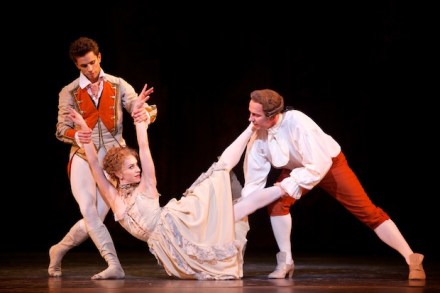
What can the Royal Opera House be insinuating about its target audience? No sooner had Anna Nicole closed than Manon opened the new ballet season. Kenneth MacMillan’s gold-digger turns 40 this year but her promiscuous allure shows no signs of failing punters with money to burn on sex thrills. I once took my partner to see Sylvie Guillem as Manon. His verdict was, ‘Too immoral’. I guess he got MacMillan’s point rather well. Manon has no heart at all, she is deliciously low. Since 1974 she has dodged bullets when powers-that-be proposed that a conscienceless tart had no place in the Royal repertoire.

Bach is made for dancing

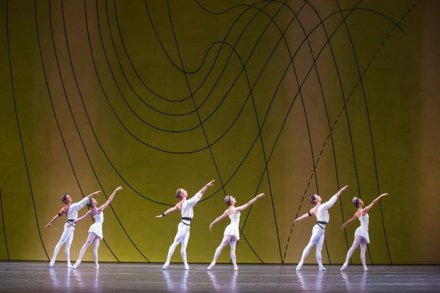
It appears that J.S. Bach’s music is to theatre-dance what whipped cream is to chocolate. Masterworks such as Trisha Brown’s MO, George Balanchine’s Concerto Barocco and a plethora of less-known, though equally acclaimed compositions owe a great deal to the giant of baroque music. Wayne McGregor is the most recent addition to this illustrious roster of successful Bach-inspired dance-makers with Tetractys —The Art of Fugue, which world-premièred last Friday. Set, as the title implies, to Michael Berkeley’s orchestration of The Art of Fugue, played on the piano by Kate Shipway, the new work stands out for the intensity of the dialogue between music and dance.

The Royal Ballet’s triple bill was danced to perfection

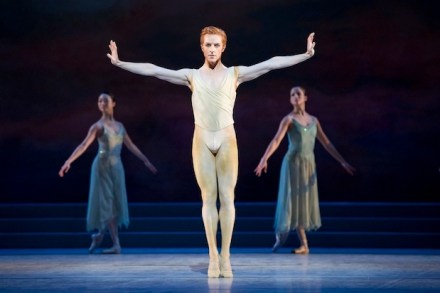
There was a time when the term ‘world première’ was not as fashionable as it is these days. Great works simply ‘premièred’, and their artistic status was not diminished by the fact that the opening had not been advertised as a globally significant event. Which is what ‘world première’ implies, even though it is seldom the case. The term has a sensationalistic ring to it, and should therefore be used carefully and sparingly. According to a recent press release, David Dawson’s The Human Seasons is the second of the five ‘world premières’ that the Royal Ballet will perform this season.

Dance review: Raven Girl, Symphony in C

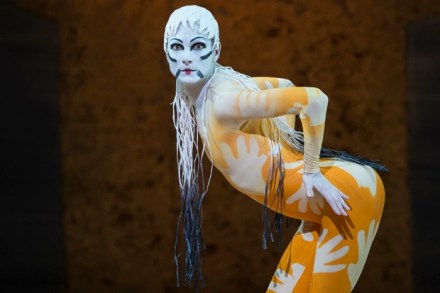
Last Friday, ballet’s overcrowded aviary welcomed a new addition: Raven Girl.  Sexy, sleek, troubled and troublesome, she is the creation of the bestselling author Audrey Niffenegger and Royal Ballet’s resident choreographer Wayne McGregor.  Expectations were high, as McGregor is not a choreographer one would normally associate with balletic storytelling. The work, with stunning designs by Vicki Mortimer, splendid lighting by Lucy Carter, great video design by Ravi Deepres and a lusciously seductive score by Gabriel Yared, enthrals the senses and sits perfectly with McGregor’s vision of a creatively synergetic unity of the arts. It’s a pity that neither the choreo-graphy nor the dramaturgy were as impressive.

Visual pleasure

According to the programme note, the message in Thierry Smits’s To the Ones I Love ‘does not direct itself to the mind but to the senses’. According to the programme note, the message in Thierry Smits’s To the Ones I Love ‘does not direct itself to the mind but to the senses’. Well, his work is certainly a pleasant sensory experience. Neat patterns of colour, possibly recalling the chakras or energy centres that, in Eastern philosophy, govern our senses and feelings, mark the sections of this one-hour dance. The undeniable prowess of the nine handsome black male dancers with their superbly co-ordinated movements, derived from a mix of idioms, adds to the visual pleasure.