Romania

Warrant for alarm

From our UK edition

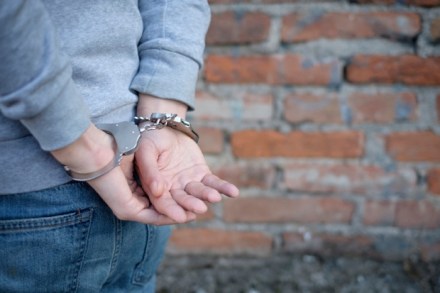
A concerted effort is under way to make sure that, when it comes to the European Arrest Warrant, Brexit does not mean Brexit. The Police Federation, for example, will hear no ill spoken of the system. And the same might be said of the Prime Minister, who as home secretary praised it to the skies. As she put it in October 2014, without the European Arrest Warrant, ‘British criminals would be able to hop on to the Eurostar or fly to Spain, safe in the knowledge we wouldn’t be able to get them back to prosecute them.’ Without it, the UK would become ‘a honeypot for all of Europe’s criminals on the run from justice’. The statistics appear to back her.

My big fat Gypsy fortune

From our UK edition

In his latest documentary for the This World series, the Romanian film-maker Liviu Tipurita could have been forgiven for treading carefully — and not just because it meant him entering the world of organised crime. After all, his previous film in the series, the uncompromisingly titled Gypsy Child Thieves, was ferociously denounced by Roma groups for showing how some Roma parents send their children into European cities with strict instructions to beg and steal — the charge being not that this was necessarily untrue, but that it might confirm ugly prejudices. So how would Tipurita tackle the equally awkward facts behind The New Gypsy Kings (BBC2, Thursday)?

The ejection of Romania from Eurovision is shameful

From our UK edition

On Eurovision night, the best and most heartfelt performances always come from the countries imprisoned behind an Iron Curtain not so long ago. Since Romania joined the comity of Eurovision in 1994, its entries have always impressed. It has always known that Eurovision is a rare chance for the peoples of Europe – and its environs – to come together, drink vodka and laugh with (and sometimes at) each other’s entries. The sheer effort that these tiny countries go to, as they show themselves to the world’s largest television audience for a non-sporting event, is testimony to the awesome soft power of Eurovision.

The rarest blend of white and gold

From our UK edition

This unusual book is beautifully written, produced and illustrated, but its subject — the small Slender-billed curlew — is strangely absent. In his ‘introduction to a ghost’, Horatio Clare explains that, when he was commissioned to tell the story of the western world’s rarest bird, it did, at least officially, still exist. This grail of the birding world, which he has never seen, he describes as a beautiful creature, a species of curlew plumaged in a blend of whites and golds, with dark spots on the flanks, slim and graceful of form, more refined than the plump common curlew, with a thinner down-curving beak which makes it look as though it is chewing a stem of grass. He tries to trace it in Sicily, Italy, the Peloponnese, the Balkans and Turkey.

Portrait of the week | 5 November 2015

From our UK edition

Home The all-party Foreign Affairs Committee urged David Cameron, the Prime Minister, not to press ahead with a Commons vote on British air strikes against Islamic State positions in Syria. At its conference, Scottish Labour adopted a policy of opposition to Trident renewal, though Kezia Dugdale, its leader, remained in favour, while the Labour party in the United Kingdom as a whole favoured retaining the nuclear deterrent, though its leader, Jeremy Corbyn, opposes it. Britain was smothered in fog, except in Wales, where temperatures on 1 November reached a record 22˚C. A man had his ear bitten off in a pub in Aberystwyth on Halloween.

Lame duck unleashed – Bulgarian in London asks ‘what next’ on US immigration

From our UK edition

London Careening through the city in a minicab last night, en route to a pub in Bloomsbury that had promised to screen US election results, the mustachioed driver confirmed my accent and inquired: 'So, what will happen after the elections?' I issued the run-down: left-ish Democrats lose control of the Senate to right-ish Republicans, who also expand their House majority. The Republican gains won't be enough to have too much fun (for instance, re-reforming health care) without meeting the President's veto pen; but should prove enough to justify more executive action from the White House, bypassing Congress in areas such as immigration and border control, if Mr Obama's pre-election promises can be believed.

Celebrations of song and humanity

From our UK edition

‘All my life, always and in every way, I shall have one objective: the good of Hungary and the Hungarian nation.’ Ask any musician for a one-sentence summary of Béla Bartók (1881–1945) and they will probably tell you that he is Hungary’s national composer — a musical modernist who passionately championed his nation’s folk music tradition. David Cooper’s new biography seeks both to enrich and complicate that statement, questioning the definition of musical ‘nationalism’ in a country of such pronounced ethnic heterogeneity, at a time when borders were being drawn and redrawn, peoples created and destroyed, across Europe.

Former Communist spy: KGB created Catholic liberation theology

From our UK edition

The respected Catholic News Agency has published an interview with Ion Mihai Pacepa, a former general in Romania's secret police who was one of the Eastern Bloc's highest-ranking defectors in the 1970s. In it, he says that Soviet Union – and the KGB in particular – created liberation theology, the quasi-Marxist movement that flourished in Latin America from the 1960s to the 1990s and is still a powerful influence on the Catholic Left. The interview provides fresh evidence of the infiltration of liberation theology by Russia – a subject Catholic liberals would much rather not discuss, just as they don't want to know about the heavy Soviet investment in CND. But first, some caveats.

Portrait of the week | 20 November 2014

From our UK edition

Home David Cameron, the Prime Minister, said: ‘Red warning lights are once again flashing on the dashboard of the global economy.’ He then offered £650 million to a ‘green climate fund’. In a speech in Singapore, Mark Carney, the Governor of the Bank of England, said that fines for banks over rigging foreign exchange rates showed that ‘it is simply untenable now to argue that the problem is one of a few bad apples. The issue is with the barrels in which they are stored.’ Official figures showed that the number of British Army reservists has been boosted by a recruitment drive in the past year from 19,290 to 19,310. Friends of the Earth went to law to secure the future on the river Otter of a family of beavers living wild there.

Actually, Bob, they do know it’s Christmas (we checked)

From our UK edition

Yeah, Bob, they know The answer to the rhetorical question posed by the Band Aid single, ‘Do they know it’s Christmas?’, is broadly yes. Christmas Day is a public holiday everywhere in Africa except Mauritania, Western Sahara, Morocco, Algeria, Tunisia, Libya and Somalia, although countries have widely differing customs associated with the event. — In Liberia, one of the Ebola-affected countries, it more resembles Halloween, where children go from door to door dressed as demons and begging for presents. — The two countries where Bob Geldof’s line might be appropriate are Ethiopia, the target of the first record in 1984, and Egypt.

The Spectator at war: The scale of neutrality

From our UK edition

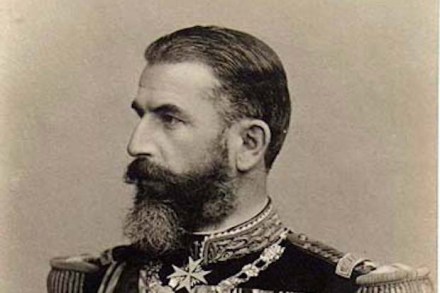
From The Spectator, 17 October 1914: King Carol of Roumania died suddenly at the Castle of Pelesh, Sinaia, on Saturday last, in his seventy-sixth year, and is succeeded by his nephew, Prince Ferdinand, born in 1865, who married in 1893 Princess Marie, daughter of the Duke of Edinburgh. King Carol, as a Hohenzollern, undoubtedly cast all his weight into the scale of neutrality; he was even credited with the remark that he would sooner abdicate than consent to his country's taking the field against Germany. And the weight of his authority was greatly enhanced by the gratitude of his subjects, who recognized in him the founder of the kingdom and one of the chief architects of its prosperity.

What’s the difference between German and Romanian immigrants?

From our UK edition

Nigel Farage is in the papers again today – unbelievably! – this time with a full-page advert in the Telegraph responding to his remarks about Romanians on LBC radio. Such was the universal media condemnation over his interview with James O’Brien that on Saturday even the Sun had an editorial on anti-Romanian racism. You couldn’t make it up. Farage was stereotyping, and his tone of ‘you know what the difference is’ hit the wrong note, which lost him the argument over a fairly reasonable point; that is, the typical profile of a German migrant is very different to that of a Romanian migrant.

German or Romanian neighbour – which would you choose?

From our UK edition

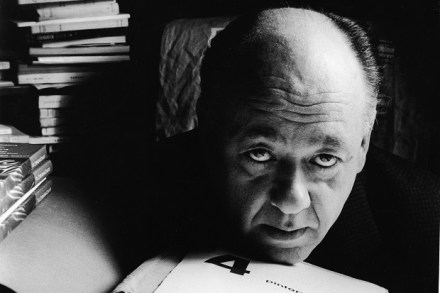
I would rather live next door to a German than a Romanian. I thought I’d just make that clear. I don’t mean I’d rather live next door to SS Obergruppenfuhrer Reinhard Heydrich than the humorously surreal dramatist Eugène Ionesco. I mean, in general, on average, given what I know about the people from both countries who have come here to live. Not all of them, obviously. Just as a generality, if you were to offer me the choice, without telling me any more about the respective merits of the people concerned, just here’s your choice, Rod – Germans or Romanians. I may be wrong, but I suspect most people in this country, if offered the same choice, would choose likewise.

Go east – the people get nicer, even if their dogs get nastier

From our UK edition

When Nick Hunt first read Patrick Leigh Fermor’s account of his youthful trudge across Europe in A Time of Gifts and Between the Woods and the Water, he knew ‘with absolute certainty’ that one day he would make that journey himself. When I embarked on Patrick Leigh Fermor’s biography, I made an equally firm resolve that I wouldn’t walk a step of it. Paddy’s books had left me with a vision of a timeless Europe suspended somewhere between memory and imagination, and I didn’t want that vision distorted by layers of personal impressions. But to Hunt the books posed a question. Eighty years on, was there anything left of the ‘gifts’ Paddy had enjoyed in prewar Europe?

Ed Miliband’s immigration nightmare

From our UK edition

[audioplayer src="http://traffic.libsyn.com/spectator/TheViewFrom22_9_January_2014_v4.mp3" title="David Goodhart and Tim Finch on Labour's immigration woes"] Listen [/audioplayer]Victor Spirescu came to Britain last week looking for work washing cars, but seems to have landed himself with a career in broadcasting. The Romanian, who arrived on the first flight into London after restrictions on workers from Bulgaria and Romania ended on 1 January, has now spent the days since touring studios and newspaper offices, obliging those who wish to talk to him about his new life. Those who bump into him as he weaves his way across television studios have the impression that he wishes he’d caught a slightly later flight.

Economists – the scourge of mankind

From our UK edition

Are there any disciplines on earth as hyped-up and overrated as economics? Every subject depends to some extent on others; you can’t, for example, understand history without a bit of geography or human biology, and you can’t master either of those without a bit of chemistry, for different reasons. The same goes for all disciplines – except, for some reason, economics, where the opinion of the experts seems to count for a great deal in discussions where their field is only one aspect. The great example of this was the euro, which was promoted by the great and the good of the dismal science as a brilliant idea because, of course, reducing barriers between markets will make us wealthier.

The ugly, cynical EU immigration debate

From our UK edition

Tristram Hunt, Shadow Education Secretary, is an intelligent and articulate individual but like everyone in politics, has the handicap of having to square his views with the record and policies of his own party. His interesting interview with the Fabian Review is a case in point. He attributes some of the education failures of white boys -- the new educational underclass -- in British schools to the influx of large numbers of East European immigrants in areas like Kent and East Anglia. His remedy for the problem is benign, namely, to educate indigenous youth to the standards needed by employers, so as to outflank the competition, and to focus on vocational skills in a way that Labour didn't do in power. So far, so dandy.

Our criminal justice system is institutionally racist, surely?

From our UK edition

I think this following quote, from the Romanian ambassador Ion Jinga, may go down as my favourite of the year: ‘In their overwhelming majority, Romanians in the UK are well integrated and, as Prime Minister David Cameron has acknowledged, ‘work hard, pay taxes and are valued by their employers.’ New figures just out from the police reveal that Romanians in London are seven times more likely to be arrested than other Londoners, and 800 of them were arrested in November alone. I assume that’s because we have a criminal justice system which is institutionally racist and determined to stop upright, law-abiding Romanians from working hard and paying their taxes…….expect that article to appear in The Grauniad some time soon, if it hasn’t already.

The long and winding story of the Danube

From our UK edition

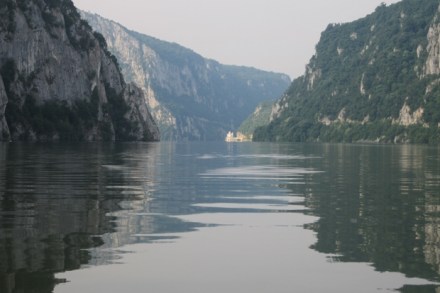
For much of its history the Danube has been a disappointment. It looks so tempting on the map but, far from being a natural motorway for trade and ideas, its sheer awkwardness has thwarted generations of visionaries, engineers, soldiers and dictators. Freezing up, expanding into baffling flood-plains, racing through narrow defiles and randomly scattered with dangerous islands and hidden rocks, it has at best tended to function only for fishermen and the most local trade. Until the 19th century there was the additional problem, from a western point of view, of its lower reaches having Turkish owners who, as customers, had the disadvantage of wanting to kill or enslave everyone upriver.

Portrait of the week | 5 December 2013

From our UK edition

Home George Osborne, the Chancellor of the Exchequer, said that average energy bills would be brought £50 lower through government intervention to reduce the obligation of energy companies to subsidise insulation. The government also said it would cut subsidies for onshore wind turbines and solar energy, and increase those for offshore wind farms. David Cameron, the Prime Minister, said that new arrivals from Bulgaria or Romania found to be begging or sleeping rough would be thrown out of the country and barred from returning for a year, unless they had a job. He then flew to China to further British trade. A bridge across the Thames from Temple to the South Bank, the idea of Joanna Lumley, and designed by Thomas Heatherwick, attracted government support.