Romania

When oh when will we ever be able to talk about immigration (sensibly)?

From our UK edition

I do wish we were never allowed to speak about immigration. That seems the only way to prevent folk from spouting - and writing - rubbish on the subject. But of course there is no conspiracy intent on stifling discussion on immigration. Not even a liberal, metropolitan or elitist conspiracy. Sorry. You can say all the things you think you can't say. And we know this because many, even most, of them are said all the time. So often, in fact, that they lack novelty. And we also know that no-one really wants to have a conversation about immigration. Conversation would require some back and forth. It might even allow the possibility someone might change their mind. Just imagine that.
The EU needs to limit free movement to stay together

From our UK edition

David Cameron’s proposals on free movement recognise that the European Union is very different now from what it used to be. When it was essentially a club of rich Western European nations, total freedom of movement was workable. But now that it includes countries whose GDP per head is less than half ours it is not. This is not a particularly Eurosceptic insight. As I reported back in February, Nick Clegg and the Liberal Democrats were thinking of basing future transition controls on per capita GDP to prevent an unsustainable level of immigration. But what is true is that unless the freedom of movement issue is dealt with, it’ll be hard for any government to win a referendum to stay in.

Transylvania Diary by Thomas W. Hodgkinson – diary

From our UK edition

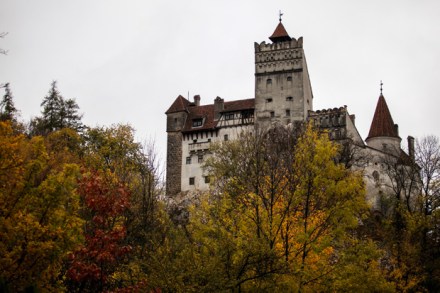
Ehe-Gefängnis. The word, strictly speaking (which is how one should always speak), means ‘marriage prison’, and refers to an austere cell maintained in some of the magnificent fortified Saxon churches of central Transylvania. When a local couple decided to divorce, they were first locked in this narrow room for several weeks. There was only one bed: single. There was one chair, one plate, one knife, one fork, one cup. The result was that within a few days, the couple would realise they didn’t actually need a divorce after all — not because they wanted to escape the hell of enforced proximity, but because they had fallen in love again.

What’s the difference between Romanian immigrants and second home owners? Well…

From our UK edition

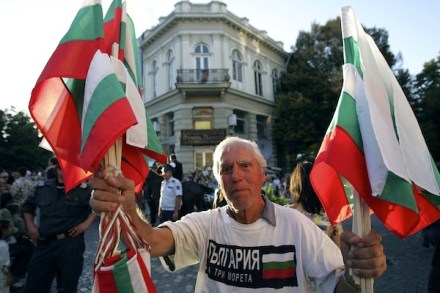
Romanian and Bulgarian immigrants to this country are ‘just like’ British people who have second homes in France, according to the government’s Crime Prevention minister, Jeremy Browne. He is absolutely right, except for a small number of really quite insignificant differences. One being that the Romanians and Bulgarians don’t own homes here. The second being that Brits with second homes in France are rarely in receipt of that country’s welfare benefits. The third being that Brits in France are rarely a matter of concern for that country’s Crime Prevention minister.

The Broken Road, by Patrick Leigh Fermor – review

From our UK edition

Sound the trumpets. Let rip the Byzantine chorus of clattering bells and gongs, the thunder of cannons, drums and flashing Greek fire. Raid cellars and let champagne corks fly. Eighty years after Patrick Leigh Fermor’s epic trudge across Europe, 20 years after the death of his long-suffering publisher Jock Murray, ten years after the passing of his wife Joan, and two years after his own death, the elusive third volume that so tormented him is published at last. The travel trilogy is complete. It is, as John Murray reminds us, the literary event of the year. But for those who admire Paddy’s densely beautiful prose, can this awkward, unformed orphan live up to its billing?

A visit to Bulgaria with Nigel Farage

From our UK edition

One Sunday evening, while I was trying to avoid ironing my shirts, it occurred to me that it would be a good idea to take Nigel Farage to Bulgaria or Romania. The Ukip leader is convinced that hordes of people from these countries are poised to pour into Britain when the rules are relaxed next year, so why not go there with him to see if he’s right? A few weeks later, I put my proposal to him. ‘But nobody will come here from Romania,’ said Nigel. ‘They’ve eaten all the transport.’ So we went to Bulgaria. ‘I am getting lots of funny looks,’ observed the scourge of open-door immigration as we walked past scores of wide-eyed Bulgarians settling down on the plane to Sofia.

Isn’t Germany’s attitude towards Romania a little at odds with the EU project?

From our UK edition

‘Can you imagine anything worse,’ a Hungarian once said to me, ‘than a Slav who thinks he’s Latin?’ He was referring to the Romanians, of course. There is a certain degree of tension in Romania between the ethnic Romanians, who run the place, and the ethnic Hungarians, who feel that they have been press-ganged into a chaotic and useless country and, worse, forced to learn a stupid language. The Hungarians hole up in the beautiful wilderness of Transylvania, yearning for the old empire and metaphorically spitting upon their political masters. But the enmity dissolves entirely when a third racial group is brought into the equation: the gypsies.

Barometer | 28 February 2013

From our UK edition

Political joke The Five Star Movement, led by comedian Beppe Grillo, won 26% of the vote in the Italian general election. Comedian John O’Farrell competed as Labour’s candidate in the Eastleigh by-election. Some other comedians who have won office: — Jon Gnarr won Reykjavik’s mayoral election in 2010 with 35% of the vote, on a platform of free towels in swimming pools and putting polar bears in the city’s museum (instead of shooting them). He had previously played a Swedish Marxist in a TV comedy show. — Al Franken was elected to the US Senate for Minnesota in 2009, after a recount. He had previously been a writer for Saturday Night Live and a stand-up comedian.

What the government must do to prepare for Romanian and Bulgarian migrants

From our UK edition

Ministers and MPs are nervous about a mass influx of Romanian and Bulgarian migrants putting the benefit system under strain next year. But ministers should beware, and learn from the political mistakes of the past. The failure to predict the scale of post-2004 migration to the UK from the EU caused major political problems for the Labour government. The public were left with the impression that the government was not in control of immigration and that Labour were contemptuous of public views and that they were even deliberately misleading them. The Conservatives have less to worry about on the second point – polling suggests the public broadly support them on immigration - but they have plenty to worry about on the first.

The Myth of the Immigrant Benefit-Scrounger

From our UK edition

The Sunday Express is at it again. It is outraged that Britain's prisons contain some inmates who were not born in this country. Of course, everyone is hopping aboard the immigrant-bashing bandwagon these days. Immigration, it sometimes seems, is something to be feared, not valued. I understand the political calculation behind all this. The restrictionists have carried the day and there are few votes in seeming "soft" on immigration these days. Which is a shame. But there you have it. Nevertheless, the immigration brouhaha increasingly bears more than a passing resemblance to a moral panic. As tends to be the case, such fears are not utterly groundless but they are hyped and exaggerated to a point at which they become irrational and, even, nonsensical.

Briefing: Immigration from Bulgaria and Romania

From our UK edition

What's changing? Bulgaria and Romania joined the European Union on 1 January 2007. This gave their citizens the freedom to travel unrestricted within the EU, but countries were allowed to impose transitional controls on their freedom to work for up to seven years. In 2004, when eight other east European countries (the 'A8') joined the EU, the Labour government decided not to impose such restrictions, but this time they did. Those controls must be lifted by 1 January 2014. What are the transitional controls?

The government’s attitude to Romania and Bulgaria is contemptible – Spectator Blogs

From our UK edition

Pity the staff at the British embassy in Bucharest. Only last month they were cheerfully banging the drum for Great Britain, telling Romanians what a swell country this rain-soaked archipelago is. You see: The GREAT campaign invites the world to take a fresh look at the UK, and is designed to promote Britain as one of the very best places to visit, live, work, study, invest and do business. Oh dear. Time to reverse ferret. Brother Forsyth reports that the government is so spooked by the appalling thought that plucky Romanians and enterprising Bulgars might think the United Kingdom a land of opportunity that they are considering a new advertising campaign targeting the EU's newest members: Britain is crap. Don't come here.

… in the fall of a sparrow

From our UK edition

Set in Romania in the 1950s, this is the story of two people, Augustin and Safta, who are both very different and yet very closely linked. Safta is the daughter of the big house, while Augustin is the deaf mute illegitimate son of the cook. Safta’s mother, high-minded, overly religious since the death of a baby, disappointed in her marriage, takes Augustin into the schoolroom until it becomes clear that while the boy has an impressive artistic talent he can learn nothing, and so he is returned to the stables. War comes, the house is dismantled, Safta, mourning her lost love, leaves the countryside and becomes a nurse and Augustin is left with the remaining servants and the dogs.

In the land of doublespeak

From our UK edition

An Oxford don and poet, Patrick McGuinness lived in Bucharest in 1989, and in this fictionalised account of the regime’s death throes he puts his first-hand experience to compelling use. An Oxford don and poet, Patrick McGuinness lived in Bucharest in 1989, and in this fictionalised account of the regime’s death throes he puts his first-hand experience to compelling use. So compelling, in fact, that at times one feels he can’t bear to leave anything out, and the plot is accordingly tweaked. But even if there’s the odd creak, this first and Booker-longlisted novel is a wonderfully good read, giving one a convincing taste of how it might be to live under the most surreal kind of communist rule. Ceausescu’s Romania was the land of doublespeak.