Rishi sunak

Rishi, it’s not the 1980s anymore

From our UK edition

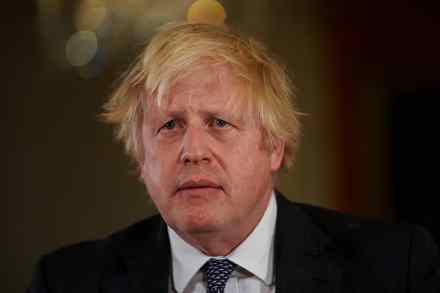
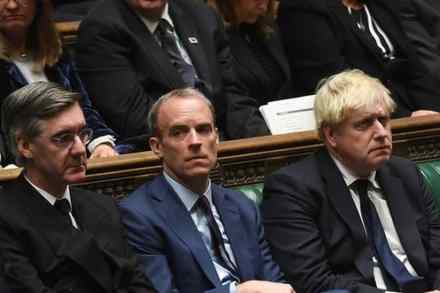
The stench of death clings to Boris Johnson. Bury South MP Christian Wakeford has crossed the floor to join Labour. David Davis has told him to resign ‘in the name of God’. Tory MPs reportedly continue to hand in letters of no confidence to the 1922 Committee. Once they reach 54, there will be a vote of confidence. Fresh polling on the Red Wall, conducted by JL Partners for Channel 4, puts Labour at 48 per cent and 37 per cent for the Tories, a near inversion of the 2019 election result. Sir Graham Brady — and Sir Keir — should expect some more knocks on their doors. The revelation that Downing Street held lockdown-breaking parties, while the rest of the country was banned from being next to dying loved ones, is anathema to Red Wall voters.
After Boris, who?

From our UK edition

Even Boris Johnson’s longest-standing supporters now think he might be on the way out. His admission that he attended a Downing Street garden party when the rest of the country was living under strict Covid rules has proved the final straw for politicians ground down by months of negative headlines. MPs complain they've had enough, and don’t think he can recover. But there are two outstanding questions that are much harder to answer: when does he go? And who exactly should replace him? Until now, ministers had been talking up the May local elections as the crunch point.

Wanted: a Budget co-ordinator for Rishi

From our UK edition

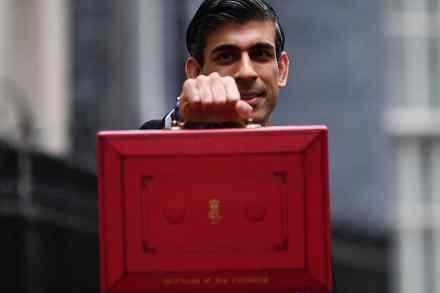
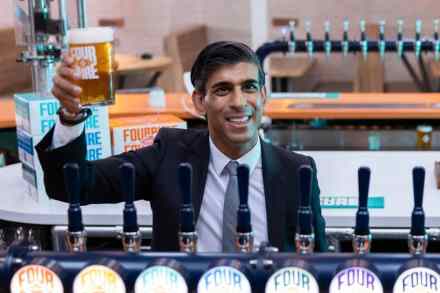
Budgets can be tricky things to manage. George Osborne saw two of his unravel in 2012 and 2016, over hot pasties and welfare cuts respectively, while his 2013 effort was derailed by the Evening Standard breaking its embargo. Thankfully Rishi Sunak has largely avoided such embarrassments in his three efforts so far. Helped by a legion of Rolls-Royce civil servants – and a savvy social media team – the Richmond MP has enjoyed favourable poll ratings off the back of his well-received statements, accompanied, as always, by carefully-crafted images depicting the Chancellor at his best. But it seems all that isn't enough for the ambitious resident of No. 11.

Get ready to start paying the cost of Covid

From our UK edition

Forget the desirability (or lack thereof) of tax hikes: can Britain survive them? That’s the economic question that kicked off the new year in cabinet this week when Jacob Rees-Mogg was reported to have encouraged the Prime Minister and his colleagues to roll back plans to bring in the new National Insurance levy this April. A recap on the proposals: the 1.25 per cent National Insurance hike will be paid by both employers and employees, and will eventually be funnelled into social care, we're told. But for the first few years, most of the tax revenue it raises (roughly £12 billion) will go to addressing the NHS backlog and the millions of people on waiting lists.

Portrait of the year: Lockdown, protests, parties and Matt Hancock’s kiss

From our UK edition

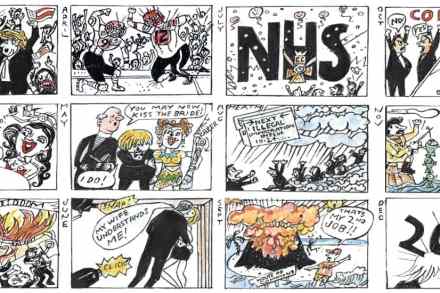
January The United Kingdom found itself in possession of a trade agreement with the EU. Coronavirus restrictions were tightened. The Oxford-AstraZeneca vaccine was administered with authorisation for the first time; retired doctors could not vaccinate before undergoing ‘diversity’ training. To prevent vaccines being exported from the EU to Northern Ireland, the EU prepared to invoke Article 16 of the Northern Ireland Protocol, but soon changed its mind. The Capitol in Washington, DC was overrun by weird people, one with horns, supporting President Donald Trump, despite his electoral defeat. Joe Biden was inaugurated as President a week later. February The government promised to legalise the drinking of coffee by two people on a park bench.

Can Boris take back control of No. 10?

From our UK edition

There’s a mutinous mood in Westminster this Christmas. In quiet corridors on the parliamentary estate the question is being asked: has Boris outlived his usefulness? Ministers are laying low. Tory WhatsApp groups are hushed. MPs are dodging calls from the whips, claiming to be sick or working from home. In conversations with Tory MPs, it isn’t long before the topic of Johnson’s long-term future comes up. ‘Everyone’s sniffing the air — you can just feel it,’ says a former adviser to the Prime Minister. Members of the cabinet, from Liz Truss to Rishi Sunak, are accused of being on manoeuvres. One former minister has taken to measuring his office to work out how many desks he can fit into it, should a contest begin sooner rather than later.

Unbowed Boris has put his Tory rivals in their places

From our UK edition

Boris was resurgent at PMQs today. He sprinkled scorn, merriment and mischief in all directions. He even boasted that last night’s Plan B crackdown was a Tory triumph that had not been won with Labour votes. Sir Keir Starmer (who also had a good day) clasped at his hair in incredulity. ‘He’s so far socially distanced from the truth that he actually believes that,’ scoffed the Labour leader. Boris is surrounded by cabinet plotters who are not without their qualities. Liz Truss has nice hair. Rishi Sunak looks like the perfect son-in-law. Priti Patel’s mean streak may win her a few votes.

Can Boris Johnson take back control of No. 10?

From our UK edition

There’s a mutinous mood in Westminster this Christmas. In quiet corridors on the parliamentary estate the question is being asked: has Boris outlived his usefulness? Ministers are laying low. Tory WhatsApp groups are hushed. MPs are dodging calls from the whips, claiming to be sick or working from home. In conversations with Tory MPs, it isn’t long before the topic of Johnson’s long-term future comes up. ‘Everyone’s sniffing the air — you can just feel it,’ says a former adviser to the Prime Minister. Members of the cabinet, from Liz Truss to Rishi Sunak, are accused of being on manoeuvres. One former minister has taken to measuring his office to work out how many desks he can fit into it, should a contest begin sooner rather than later.

Boris’s successor should be Rishi Sunak, not Liz Truss

From our UK edition

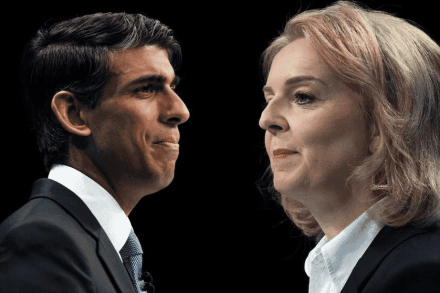
Is the ball about to come loose at the back of the scrum? Though an imminent defenestration of Boris Johnson is still just about odds-against, the chances of him leading the Tories into the next election are certainly receding. Should a leadership contest be required as early as next year it is already clear who the two leading candidates would be. The Chancellor Rishi Sunak will face off against the Foreign Secretary Liz Truss for the right to define yet another new Tory era. Truss is a total rookie in a great office of state, having been in post for just a few months. As someone yet to mark his second anniversary as Chancellor, Sunak is hardly a seasoned statesman either. But there is nobody around the Cabinet table who eclipses these two media performers.

When will the Tories do something about house prices?

From our UK edition

Anyone who doubts that the fiscal response to the pandemic has stoked inflation needs to look at the latest figures from the Nationwide on the housing market. Yet again they confirm that the deepest recession in modern history has been accompanied by a boom in house prices. Moreover, the inflation does not seem to have been reined-in by the ending of the stamp duty holiday. The price of the average home, according to the building society, rose by a further 0.9 per cent in November to reach £252,687. This is ten per cent up on last November and 15 per cent up on March 2020, at the beginning of the pandemic. How can a global crisis which temporarily put several million people out of work in Britain have resulted in a housing boom?

Boris could pay a heavy price for his tax hikes

From our UK edition

Given the enthusiasm for tax cuts usually shown by Conservative MPs it is remarkable how few of them have, in public, raised objections to the government’s loose fiscal policy. True, the Prime Minister’s announcement of a hike in National Insurance ostensibly to pay for social care, elicited squeals from the back benches, yet last month’s Budget drew only muted objections. This was in spite of claims by the Resolution Foundation that the Budget will cost an average household £3000 a year – if you take into account the effect of higher prices as businesses seek to pass on their higher tax bills to consumers.

Does Rishi Sunak really understand red wall voters?

From our UK edition

Rishi Sunak thinks Boris Johnson goofed badly when he conspired to upend Commons standards procedures. And he agrees with his red wall colleagues that this appeared to place the government on the side of a privileged elite. That is certainly the standard interpretation of his comment this week that the government needed to do better – and indeed unattributable briefings by an ally say that he regarded the episode as a ‘mistake’ which should be acknowledged by someone of cabinet rank. But if red wall Tories are tempted to regard Sunak as the true keeper of their flame then I suggest they think again. Because while Johnson has indeed gaffed, the Chancellor has also recently announced a decision that may well imperil their re-election prospects.

Eighteen months of inflation is not ‘transitory’

From our UK edition

The big central banks have been insisting for months now that the rise in inflation is temporary, and will fade once the great awakening of the world economy starts to settle down. The Federal Reserve, Bank of England and the European Central Bank have looked on as inflation has overshot their forecasts. But when the opportunity to tame it with an interest rate hike approaches, the banks pass it up, reiterating instead that it is ‘transitory’ — the monetary equivalent of ‘it’ll be fine’. With inflation now at a 30-year high in the United States — 6.2 per cent — it’s starting to look like a pretty big bump. But should we worry? Is this just a glitch of lockdown unwinding itself?

Why Rishi Sunak’s sleaze row apology matters

From our UK edition

Sorry may be the hardest word for Boris Johnson but that isn't the case for certain members of his cabinet. After the Prime Minister refused once again in an appearance at the COP26 summit to apologise for backing Owen Paterson in a row over a proposed suspension for a lobbying breach, his ministers are finding their voice. This morning Rishi Sunak broke his silence on the issue. In an interview with the BBC, Sunak was asked about the current Tory sleaze row and former cabinet minister Geoffrey Cox’s outside earnings working in a tax haven. He replied: ‘I’m not familiar with specific details of that case. It wouldn't be right for me to comment on individuals.

Will the Tories cut taxes before the next election?

From our UK edition

The Tory party has reached a fork in the road, I say in the Times today. One path involves sticking to the spending plans, hoping to cut taxes before the next election and getting rid of the new perception of them as tax raisers. The other drags them into ever more spending, led by big increases in public sector pay, and ends with them going to the country as a high-tax party. In his Budget speech and his address to Tory MPs, Rishi Sunak made clear that his preference was for the former approach, which should cut taxes before the country goes to the polls again. But sticking to even the spending limits set out this week will require tough choices that the Tories have not wanted to make in recent years.

Nicola Sturgeon is flailing in response to the Budget

From our UK edition

The big tax and spend budget. More Gordon Brown than George Osborne. Sunak's spending spree. However you wish to describe it, one thing is clear: Rishi Sunak's budget marks a radical departure from previous Conservative chancellors. And while it might have ruffled the feathers of some Tories, it’s also causing problems for the SNP. In some ways the break from Tory convention is no surprise. Calls by the International Monetary Fund (IMF) in 2020 for rich countries to spend their way out of the pandemic – and then further calls this year to shell out to boost recovery – signalled a new economic orthodoxy that Sunak has tapped into. Austerity is passé. Fiscal activism is the new normal.

Rishi Sunak has blown his premiership

From our UK edition

The amount the state takes out of the economy will rise to the highest level in 70 years. An unreformed public sector will be showered with cash, with the health service allowed to spend whatever it likes. A tax system that was already creaking under the weight of its own complexity has just been made slightly more complicated, and it has been made a lot less competitive. The Chancellor Rishi Sunak with his usual panache sailed through his Budget yesterday. The problem, however, is this. While he might get away with pushing up taxes and spending for now, sooner or later it is going to catch up with him. And in truth, he has just blown his premiership.

Rishi Sunak’s low tax pitch to MPs

From our UK edition

Is Rishi Sunak a low tax chancellor? He certainly likes to tell anyone who will listen that he is. Yet his actions tend to suggest the opposite. The tax burden is currently on track to reach its highest level since the early 1950s, and while Sunak unveiled one big tax slash in the Budget in the universal credit taper rate cut, the main thrust of Sunak's announcements was spend, spend, spend. Tonight Sunak addressed Tory MPs at a meeting of the 1922 committee. After announcing £150 billion in extra public spending, Sunak sought to convince his party that, despite this, he was committed to lowering taxes.

Would the real Rishi Sunak please stand up?

From our UK edition

It was a tale of two chancellors at today’s high-spending Budget. Rishi Sunak began by embracing the big-state profligacy pursued by Cameron and May, and maintained by their successors, Boris and Carrie.  The Chancellor reeled off stacks of figures indicating that the economy is roaring back to life. 'Growth up! Wages up! Employment up!' he shouted. And he announced that government spending sprees will also surge by £150 billion. He plans to restore the 0.7 per cent spending target for foreign aid by the end of this parliament. And he has ordered civil servants across Whitehall to find more stuff to buy.  ‘A real-terms rise in spending for every single department,’ he boasted.

Sunak backs the Union with cash, not love-bombs

From our UK edition

Devolution has done so much to fracture the UK that, in Scotland, Rishi Sunak's Budget is an event of the second order. Scottish interest in Budget day is typically limited to whisky duty, support for North Sea industries and the Barnett formula: the additional spending Scotland gets when the Chancellor splurges on England. Today’s Budget was for all of Britain. Not just Scotland, but Wales and Northern Ireland were weaved throughout Rishi Sunak’s speech. Quite apart from the fiscal or economic merits of the policies announced, the Chancellor’s speech was good politics. Not long after Sunak was promoted to the Treasury, I was told Scotland was a weak spot for him and he was not particularly up-to-speed on the intricacies of Scottish politics.