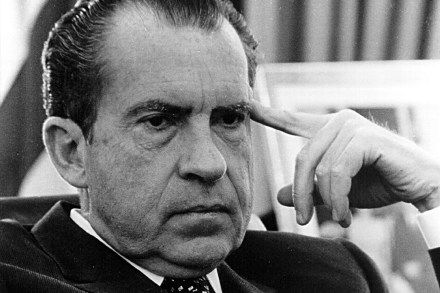
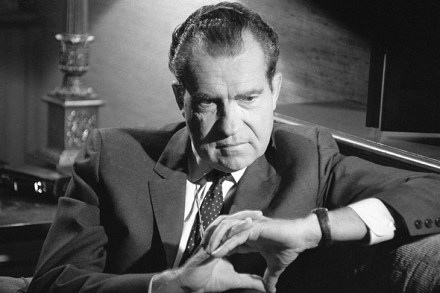
Richard nixon

Running on empty, and on and on

From our UK edition

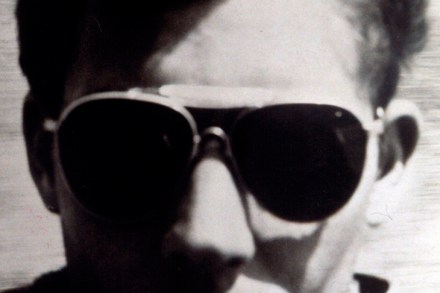
Hunter Stockton Thompson blazed across the republic of American arts and letters for too short a time. When in February 2005 Thompson, 67, killed himself with a .45 at home in Woody Creek, Colorado, freethinkers and lovers of his savage, beautiful words grieved the world over — and we still do. Thompson was a Southern boy from Louisville, Kentucky, whence comes F. Scott Fitzgerald’s Daisy Fay, later Buchanan. After a sally into higher education and military service, both marked by varying degrees of brilliance and insubordination, Thompson moved to New York City and worked as a reporter. His specialty was, initially, sport, and his forte was observation.

Richard Nixon: the president who made George H.W. Bush possible

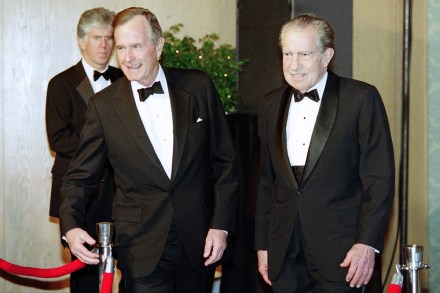
After losing a US Senate race, Congressman George H. W. Bush was prepared to head back to the Texas oilfields and a life of relative obscurity when the new Republican president summoned him to Washington. The president thought highly of the young man and wanted to ensure his political future. He offered Bush the Ambassadorship to the United Nations, a position that would give him a chance to remain politically relevant as he burnished his foreign policy credentials. Bush accepted. And with that, Richard Nixon launched George H.W. Bush as a national figure.

george hw bush richard nixon

Republicans should have seen the Brett Kavanaugh ambush coming – Richard Nixon did

‘Who the hell would want to go through this?’ Former president Richard Nixon posed that question to me on October 11, 1991, as we discussed the spectacle of the Clarence Thomas confirmation hearings taking place before the Senate Judiciary Committee and the nation. While I thought Thomas would survive the fusillade of sexual harassment allegations made against him by Oklahoma law professor Anita Hill and win confirmation to the Supreme Court, I also believed that the trauma of the circus might discourage future outstanding candidates from accepting nominations or running for office.

richard nixon brett kavanaugh

50 years after Bobby Kennedy’s murder, the ‘deep state’ still reigns supreme

New York This week 50 years ago saw the assassination of Robert Kennedy, a man I met a couple of times in the presence of Aristotle Onassis, whom some Brit clown-writer once dubbed Bobby’s murderer. (Bad books need to sell, and what better hook than a conspiracy theory implicating a totally innocent man?) I once witnessed Bobby, at a Susan Stein party, asking Onassis for funds — the 1968 election was coming up — and Ari showing Bobby his two empty trouser pockets. Bobby’s assassination did alter American politics. Violence, black anger and despair spilled out on to the streets of American cities.

High life | 7 June 2018

New York   This week 50 years ago saw the assassination of Robert Kennedy, a man I met a couple of times in the presence of Aristotle Onassis, whom some Brit clown-writer once dubbed Bobby’s murderer. (Bad books need to sell, and what better hook than a conspiracy theory implicating a totally innocent man?) I once witnessed Bobby, at a Susan Stein party, asking Onassis for funds — the 1968 election was coming up — and Ari showing Bobby his two empty trouser pockets. Bobby’s assassination did alter American politics. Violence, black anger and despair spilled out on to the streets of American cities.

Encounters with eight presidents

Peregrine Worsthorne, the hugely distinguished British journalist, has died aged 96. He was a wonderful man and a brilliant columnist, who once described his job as 'the articulation of an intelligent, well thought out, coherent set of prejudices'. He also worked as Washington correspondent for The Times of London and the Daily Telegraph. In 2014, he wrote the following piece about meeting various American presidents. It was his last contribution to The Spectator. RIP. I feel a bit of a fraud writing about the ‘presidents I knew’, since journalists do not really get to know the great figures they interview or shake hands with. Indeed the relationship between journalist and great personage is about as false as any relationship can be, since each is trying to make use of the other.

Richard Nixon in September 1968

His dark materials

In this giant, prodigiously sourced and insightful biography, John A. Farrell shows how Richard Milhous Nixon was the nightmare of the age for many Americans, even as he won years of near-adulation from many others. One can only think of Donald Trump. Nixon appealed to lower- and  lower-middle-class whites from the heartland, whose hatred of the press and the east-coast elite, and feelings of having been short-changed and despised by snobs, held steady until their hero and champion unmistakably broke the law and had to resign his second-term presidency. Nixon won a smashing re-election in 1972, even as it was apparent that the White House was awash with skulduggery.

His dark materials

In this giant, prodigiously sourced and insightful biography, John A. Farrell shows how Richard Milhous Nixon was the nightmare of the age for many Americans, even as he won years of near-adulation from many others. One can only think of Donald Trump. Nixon appealed to lower- and  lower-middle-class whites from the heartland, whose hatred of the press and the east-coast elite, and feelings of having been short-changed and despised by snobs, held steady until their hero and champion unmistakably broke the law and had to resign his second-term presidency. Nixon won a smashing re-election in 1972, even as it was apparent that the White House was awash with skulduggery.

American quartet

From our UK edition

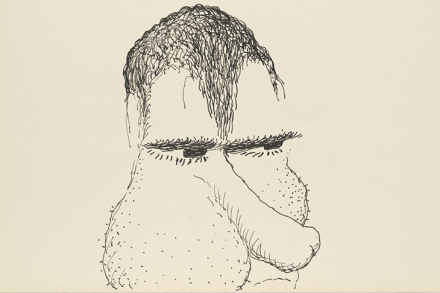
Politics and art can make for an awkward mix. Much more than with religious subjects it seems to matter whether the viewer shares the artist’s beliefs. But whatever you think of Richard M. Nixon, it would be hard not to enjoy Philip Guston’s satirical drawings of him and his cronies at Hauser & Wirth, Savile Row. These were the most exuberant, scatological, obsessive and imaginative such works since 1937 when Picasso produced an extraordinary strip-cartoon vilification and lampoon entitled ‘The Dream and Lie of Franco’. Indeed, the two series have a good deal in common. Picasso portrayed the Generalissimo as a sort of obscene, moustachioed set of bagpipes.

The madness of King Donald

From our UK edition

 Washington DC Trump is a fighter - he seems to thrive on pressure - and he is lawyering up The panhandlers outside the White House hold signs saying: ‘Trump is President — saving to leave the country.’ Those signs will have to be updated if Trump’s enemies are right and the 45th President is driven from office by a scandal called ‘Putingate’. Inside 1600 Pennsylvania Avenue, Trump is said to be in a fury about the allegations that he is Russia’s pawn. Washington is gripped by rumours of a president sitting up in bed at night, a cheeseburger balanced on his stomach, raging at the television news. He does not, like Nixon, wander the halls at night talking to the portraits. Instead, he reaches for his phone to tweet.

High life | 9 February 2017

From our UK edition

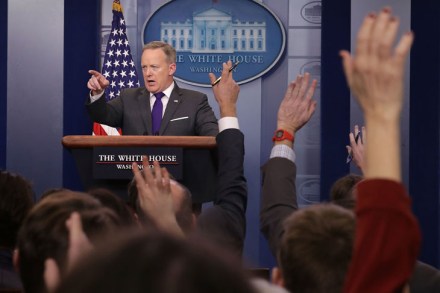
When I was young my recurring nightmare was that I would die and be reincarnated as a polo pony. I squeezed in lots of polo during the years I played, at least three matches per week, mostly in Paris, and I felt that polo ponies had the kind of deal the mass media are now handing Trump. I wasn’t mad about the people I played with either. Back then, in the Sixties and Seventies, fat businessmen who cantered hired good Argentines to carry the can, but picked up the cup after strolling around the field and yelling quite a lot. Well, now I’m over it, but have an even worse nightmare: that I might return as Trump’s White House press secretary, Sean Spicer, and have to face the outraged and hysterical so-called press corps every day.

The plots against Trump

From our UK edition

The ‘most deadly adversaries of republican government,’ wrote Alexander Hamilton, arise ‘chiefly from the desire in foreign powers to gain an improper ascendant in our councils. How could they better gratify this, than by raising a creature of their own to the chief magistracy of the Union?’ Hamilton’s warning against ‘intrigue, and corruption’, published in 1788, speaks eerily to the Washington of today, where Donald Trump’s enemies imagine he is a Russian ‘agent of influence,’ bought or blackmailed by the Kremlin.

Out – and not proud

From our UK edition

‘Many people are mourning,’ said Sam West on a BBC panel show discussing the response of the arts world to Brexit. According to West’s figures, ‘96 per cent of those polled were for Remain. Collaboration and connection are our bread and butter.’ The atmosphere of bitterness and anger was palpable at the Edinburgh Festival. I spent four days immersed in comedy shows and I heard only one pro-Brexit gag. The excellent Geoff Norcott said he was puzzled to meet Remainers who told him the result had been swung by ‘thick’ Leave voters. ‘Thick?’ he said. ‘The Remain campaign waited until after 23 June to stage their street protest.

Darth Vader is dirty and it’s not just me that thinks so

From our UK edition

Malcolm Tucker delivered the best description of Star Wars, in The Thick of It: ‘The one about the fucking hairdresser, the space hairdresser, and the cowboy. The guy, he’s got a tinfoil pal and a pedal bin. His father’s a robot and he’s fucking fucked his sister. Lego, they’re all made of fucking Lego.’ He didn’t mention that Star Wars is really about Henry Kissinger. It was written by George Lucas, grossed $33 billion over six films, with merchandise, founded a new and stupid religion called Jedi, which, in the 2001 census 0.8 per cent of the population of England and Wales said they identified with, and invented the Star Wars convention where you can, as I did, meet the man who operated Jabba the Hutt’s left arm.

Super man of legend

From our UK edition

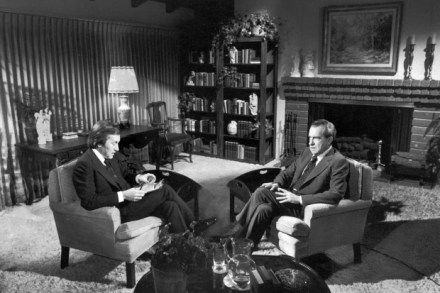
On 13 March 2014 a congregation of 2,000 people, including many of the great and the good, gathered in Westminster Abbey for a memorial service for David Frost, who had died suddenly six months previously while travelling on the Queen Mary to America. During the service a select band, led by the Dean of Westminster, John Hall, retired to Poets’ Corner, sacred to the memory of Keats, Shelley and others of the immortals, where the Prince of Wales laid flowers on a tablet in the floor bearing the illustrious name of Frost. Given that in only a few years’ time Frost’s name, along with many of today’s celebrities, was likely to be forgotten, it might have been better to dedicate the tablet ‘To the Unknown Television Personality’.

Dick at his trickiest

From our UK edition

In the more than 40 years since Richard Nixon resigned as president — disgraced as much by his inveterate lying as by his actual crimes related to Watergate — history has been relatively kind to him. Compared with Ronald Reagan, Bill Clinton and George W. Bush, Nixon in retrospect can seem statesmanlike, thoughtful and liberal-minded. He established diplomatic relations with communist China, took the US off the gold standard, negotiated the wind-down of the Vietnam war, and created the Environmental Protection Agency — accomplishments that generally prompt even Nixon-haters to pause before they condemn Tricky Dick to perdition. But now comes Joan Brady with a bracing reminder of what indeed was so hateful, so villainous about Nixon and his political ascent.

Edinburgh round-up

From our UK edition

Propaganda is said to work best when based upon a grain of truth. Ukip! The Musical assumes that most electors are suspicious of the movement and its leaders. And in Edinburgh that may well be the case. The show portrays Nigel Farage as a bewildered twerp with no charisma and little talent for oratory. His first speech at an Essex shopping centre begins, ‘I am not a pretty nationalist, sorry, a petty nationalist.’ He then falls under the influence of a manipulative racist named Godfrey Bloom. I should point out that ‘Bloom’ in this piece refers to the character in the show, not to the retired politician. Bloom is first seen in a Westminster club, Gay Banana, dressed in a grass-skirt and singing the praises of Bongo-Bongo Land.

Two ways to disgrace a president

From our UK edition

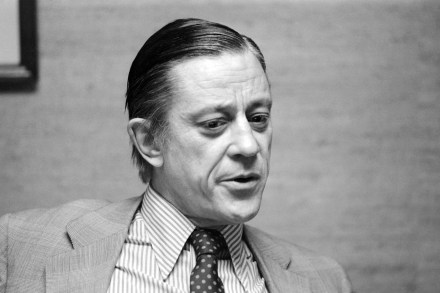
On 21 October Ben Bradlee, the famous ex-editor of the Washington Post, died, aged 93. The day before that, on 20 October, Monica Lewinsky, 41, the even more famous ex-girlfriend of Bill Clinton, made her first public speech after ten years spent keeping out of the public eye. They had nothing in common except for the fact that each had been responsible for bringing disgrace to a president of the United States. Richard Nixon would have faced impeachment by Congress over the Watergate scandal, which the Post exposed, if he had not first resigned in 1974 (the first president ever to do so) and then been pardoned by his successor, Gerald Ford. President Clinton was impeached in 1998, but acquitted by the US Senate.

Spectator letters: Mindfulness, addiction, and dinner with Richard Nixon

From our UK edition

Mind games Sir: I hope that people are not unduly put off by Melanie McDonagh’s misrepresentation of mindfulness as a cop-out for navel-gazers who lack the moral fibre to engage in ‘proper’ religion (‘The cult of mindfulness’, 1 November). She describes it as a ‘practice of self-obsession’, but it is the opposite: it creates a space in which the self can be seen for what it is as it hops around, generating superfluous judgments. You begin to obsess less about what your ‘self’ compulsively comes up with, and to approach life from a more anchored perspective. May I invite those who think that sounds bogus and flaky to engage in a short experiment?

Bourbon from Bush, envy from Nixon… and running into Herbert Hoover: encounters with eight presidents

From our UK edition

I feel a bit of a fraud writing about the ‘presidents I knew’, since journalists do not really get to know the great figures they interview or shake hands with. Indeed the relationship between journalist and great personage is about as false as any relationship can be, since each is trying to make use of the other. So in all likelihood my dreamed relationship with President Herbert Hoover — which began and ended in 1933 when I was aged 11 and only lasted for about a minute — came nearer to being a genuine human relationship than all the other journalistic ones later — which included Harry Truman, Dwight Eisenhower, Jack Kennedy, Richard Nixon, LBJ, Ronald Reagan and George H.W. Bush. Quite a mouthful. My Hoover story — to the best of my childish memory — happened like this.