Richard nixon

Two ways to disgrace a president

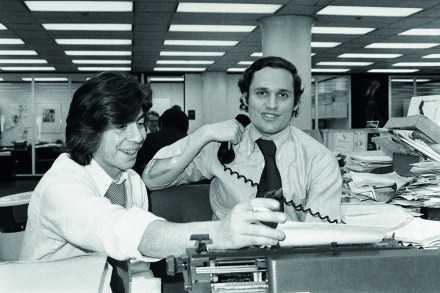
On 21 October Ben Bradlee, the famous ex-editor of the Washington Post, died, aged 93. The day before that, on 20 October, Monica Lewinsky, 41, the even more famous ex-girlfriend of Bill Clinton, made her first public speech after ten years spent keeping out of the public eye. They had nothing in common except for the fact that each had been responsible for bringing disgrace to a president of the United States. Richard Nixon would have faced impeachment by Congress over the Watergate scandal, which the Post exposed, if he had not first resigned in 1974 (the first president ever to do so) and then been pardoned by his successor, Gerald Ford. President Clinton was impeached in 1998, but acquitted by the US Senate.

Spectator letters: Mindfulness, addiction, and dinner with Richard Nixon

Mind games Sir: I hope that people are not unduly put off by Melanie McDonagh’s misrepresentation of mindfulness as a cop-out for navel-gazers who lack the moral fibre to engage in ‘proper’ religion (‘The cult of mindfulness’, 1 November). She describes it as a ‘practice of self-obsession’, but it is the opposite: it creates a space in which the self can be seen for what it is as it hops around, generating superfluous judgments. You begin to obsess less about what your ‘self’ compulsively comes up with, and to approach life from a more anchored perspective. May I invite those who think that sounds bogus and flaky to engage in a short experiment?

Bourbon from Bush, envy from Nixon… and running into Herbert Hoover: encounters with eight presidents

I feel a bit of a fraud writing about the ‘presidents I knew’, since journalists do not really get to know the great figures they interview or shake hands with. Indeed the relationship between journalist and great personage is about as false as any relationship can be, since each is trying to make use of the other. So in all likelihood my dreamed relationship with President Herbert Hoover — which began and ended in 1933 when I was aged 11 and only lasted for about a minute — came nearer to being a genuine human relationship than all the other journalistic ones later — which included Harry Truman, Dwight Eisenhower, Jack Kennedy, Richard Nixon, LBJ, Ronald Reagan and George H.W. Bush. Quite a mouthful. My Hoover story — to the best of my childish memory — happened like this.

Henry Kissinger interview: ‘I don’t see the wisdom there once was’

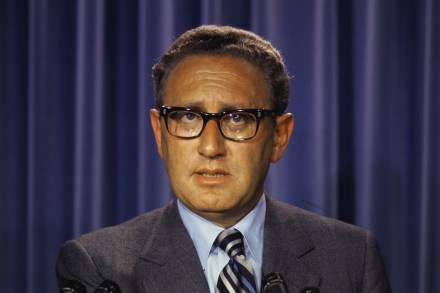
Henry Kissinger doesn’t believe in retirement. At 91, having had a heart-valve operation three months ago, he is nonetheless publishing a book entitled World Order. As I happened to be interviewing him about it on 11 September, I asked him about his memories of 13 years ago. ‘I was in Frankfurt addressing a business group,’ he recalled in that voice of his that sounds like gravel has found its way into your car’s exhaust pipe. ‘A member of the audience had just asked a question when someone came on to the stage to say that he had an important announcement to make. I said that that may be, but I wanted to answer the question first, which I did, before the man said that New York had been attacked. It was about 2 p.m.

The many lives of Richard Nixon

Winston Churchill once said of politics that it’s ‘almost as exciting as war and quite as dangerous. In war you can only be killed once, but in politics — many times.’ Perhaps no one personified this dictum better than Richard Milhous Nixon. From his election to Congress in 1946 to his resignation from the presidency in 1974, Nixon had been written off time and again. After each setback, though, ‘Tricky Dicky’ was incredibly formidable on the rebound. Even after Watergate, the disgraced former president transformed himself into a bestselling author and something of an international elder statesman.

Harry Shearer on bringing out Richard Nixon’s feminine side

Hollywood tends to treat Richard Nixon as an oafish B-movie villain, so it is ambitious and original of Harry Shearer to try to convince a British audience of the very feminine side of the 37th American president. As a veteran comedy actor and the ‘voice’ of several of the Simpsons cartoon characters — including Mr Burns, Smithers, and Ned Flanders — Shearer has the vocal range to get almost anyone right if he puts his mind to it. But voice work was not the main challenge in the forthcoming Sky Arts drama. Shearer is more intrigued by the physical aspects of the central role in Nixon’s the One, which he insists is not an impersonation, but a characterisation.

Rumours of Chris Christie’s political death are exaggerated.

January 2014, two years before the Iowa caucuses and already Chris Christie, the pugnacious governor of New Jersey, has been handed the Black Spot. His chances of securing the Republican party's presidential nomination are already ruined. Or so the likes of Jonathan Chait would have us believe. Why? Because, well because Chris Christie is a New Jersey kind of politician. With all that entails. And because he's a punk and a bully. Christie is guilty on each of these charges. Let's rewind. Last September Christie, running for re-election, was keen to harvest endorsements from Democratic figures in the Garden State. This would make him seem a presidential kinda guy. The sort of man who can win - and win, er, large - in Democratic states.

The wounded Kennedy – and the people who gave him strength

Ten years ago, a determined historian transformed our picture of John F. Kennedy. Robert Dallek had finally got his hands on the president’s medical records and discovered just how big a part JFK’s constant health problems played in his life. Instead of a young, fit, athletic leader, Dallek revealed a man racked with pain, suffering from Addison’s disease and excruciating spinal damage and swallowing a daily pharmacy of drugs and potions. During the Cuban Missile Crisis, for example, when his finger hovered over the nuclear button, he was pumped full of steroids and antibiotics, amphetamines and testosterone, ritalin and sleeping pills. He had been given the last rites on three occasions before he was 35.

High life | 28 February 2013

‘I was distressed to learn of some of your current problems and wanted to send you a word of encouragement. Since the time Bob Tyrrell introduced us a few years ago, I have been one of your admirers...’ This letter, dated 23 January 1985, was addressed to me and was signed by Richard Nixon. I had it framed and it hangs in my office. The only other letter hanging next to it is from Sir Denis Thatcher, after he and the Lady visited me in Switzerland. Nixon and Thatcher, two vastly misunderstood leaders who one day will be seen rightly as giants among the midgets who preceded and followed them. Lady T I do not know well. President Nixon and I grew close during the late Seventies and Eighties.

Nixon’s lessons for today’s Republicans

If the past few weeks are any indication, conservative Republicans learned very little from the 2012 election. While the party’s establishment tries to claw its way back from defeat, tea partiers and neoconservatives have decided to double-down on obstructionism. Less than a week after nearly derailing the fiscal cliff negotiations, tea partiers threaten to drive the U.S. into default in the coming debt-ceiling showdown. Meanwhile, neoconservatives are sharpening their knives over foreign policy realist Chuck Hagel, whom President Obama nominated this week for Secretary of Defence. Mired in ideological infighting, how can the Republican Party rescue itself? The answer, surprisingly enough, is Richard Milhous Nixon.

Far from a sleeping partner

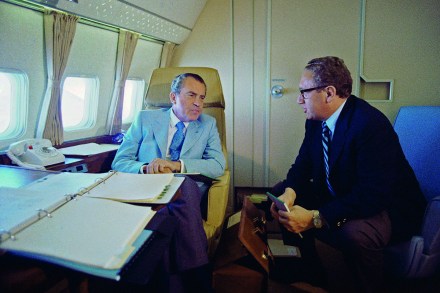
Richard Nixon had met Henry Kissinger only once before he asked him, on his landslide victory in 1968, to be his National Security Adviser, saying to an aide, ‘I don’t trust Henry but I can use him.’ Richard Nixon had met Henry Kissinger only once before he asked him, on his landslide victory in 1968, to be his National Security Adviser, saying to an aide, ‘I don’t trust Henry but I can use him.’ Kissinger, then at Harvard, had strongly supported Nixon’s rival for the Republican nomination, Nelson Rockefeller, openly deriding Nixon and calling him at one point ‘a hollow man … evil.