Restaurants

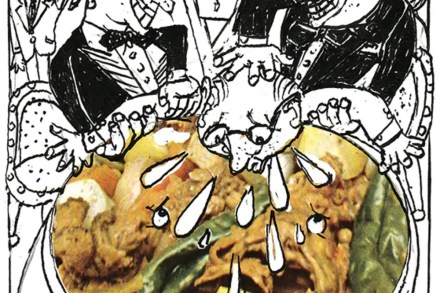
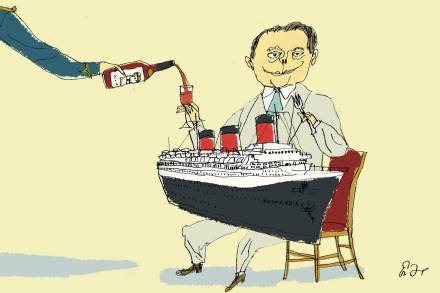
Ship shape: Normandie, the biggest French restaurant of all

These pages recently carried a lament for the little French restaurant, and the loss from the cities they once graced of a certain element of gentility and, yes, class. On the same subject, let us consider another era when class was valued more highly, and which produced the classiest, and the grandest, French restaurant of all. This requires a journey. In July 1936, a Chicago family, relations of mine, embarked on an unrushed two-month European vacation. A meticulous Thos. Cook & Son-Wagons-Lits, Inc. itinerary routed them first to France, then Italy, Switzerland, Germany, Holland and finally to England. It was a thoroughly first-class affair.

French

How to eat like a president

From our UK edition

John F. Kennedy opted to serve New England lobster, Ronald Reagan a California-inspired garden salad – and James Buchanan 400 gallons of oysters. Held at Statuary Hall in the US Capitol, the inaugural luncheon for a new president is as much part of inauguration day as the swearing-in ceremony and the inaugural address.  Nixon enjoyed pineapple slices topped with cottage cheese and washed down with a glass of milk First time around, in 2017, Donald Trump’s inaugural meal featured dishes including Maine lobster and Gulf shrimp. But for those not on the guest list to find out what he serves tomorrow (McDonald’s ice cream, perhaps?), there are plenty of other opportunities to eat like a president in Washington DC.

The victory of Instagram over food: Gallery at the Savoy reviewed

From our UK edition

The Savoy Hotel is a theatre playing Mean Girls with a hotel attached to it, so you can expect it to both dream and fail. That is a polite way of saying that its new restaurant, Gallery, is not a success, but the Savoy will survive it. Though it didn’t survive the Peasants’ Revolt. It burned down, courtesy of medieval far-leftists who I would suspect were less annoying than modern far--leftists. They could hardly be more so, and I’m sure Geoffrey Chaucer, who wrote some of the Canterbury Tales on this site, would agree.

The unpalatable truth about British food

From our UK edition

Last year a friend who lives in Lyon came to visit me in London. It was only her second trip to the UK and she was determined to venture deep into our indigenous food culture. ‘So, where can I get good fish and chips?’ she asked me. Now, if I was a citizen of Vienna and she was asking me where to find really good sachertorte, I suspect I wouldn’t struggle to reel off myriad cafes. If I lived in Athens and was questioned about where to get decent souvlaki, I would probably have a list as long as Hercules’s personal meat skewer. But fish and chips? In London? I could, in all good conscience, recommend only two places in which, during my quarter of a century in the capital, I’ve had a half decent chippie tea.

Not worth its salt: Wingmans reviewed

From our UK edition

I see this column as an essay on cultural polarisation: artisanal butter can only take you so far into wisdom. I cower in Covent Garden, mourning Tory romanticism, and stare, cold-eyed in St James’s, at oligarchic mezze. Sometimes I eat by mistake. I couldn’t get into the fashionable noodle place in Soho, whose Instagram-made queue stretched to Cambridge Circus on Saturday night. It reminded me of the crowds at royal weddings: both camp for dreams. So, I went to Wingmans instead.  Wingmans – it lost the apostrophe, it’s a decadent age – calls itself ‘London’s best wings’. They are chicken wings, not angel wings, and this is Pottersville, not Bedford Falls. (Some people think Pottersville is more fun and that may be, but not here. This is not a wonderful life.

Something out of a Spectator reader’s dreams: The Guinea Grill reviewed

From our UK edition

Back to the past: it’s safer there. There is a themed restaurant dedicated to George VI of all people, near Berkeley Square – a sort of Rainforest Café for monarchists who won’t sink to the Tiltyard Café at Hampton Court. I was looking for a restaurant my husband might like – Brexit, meat, maps of the Empire at its height in colour – and I found the Guinea Grill in Bruton Place. George VI isn’t a vivid monarch. He lived in the shadow of queens – one Mary, two Elizabeths – and on film he is always crying, or dying. In The Crown (Jared Harris, marvellous) he lost his lung. In The King’s Speech (Colin Firth, good, but handsome) he lost his happiness. I like to think George was tougher and less pitiable than the chronicles suggest.

Ideal for winter: The Dover reviewed

From our UK edition

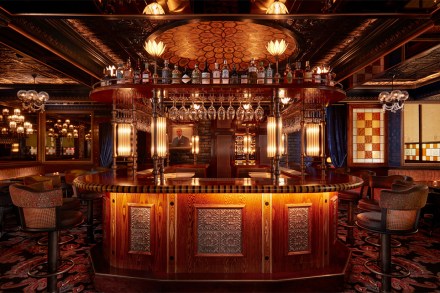
For British people, America is an idea brought by cinema, and The Dover, the New York Italian bar and restaurant in Mayfair, meets a version of it. It’s not quite the ballroom in Some Like It Hot, not quite Rick’s Café in Casablanca, but it’s as close as you will find near Green Park Underground, and that has a charm to it, because Americans can speak. It’s from Martin Kuczmarski, formerly of the once preening, now ragged Soho House. He has named his company Difficult Name. There’s a message there, and a story, and it made a glorious restaurant with the tagline ‘A good place to be since 2023’.

Casa Bonita, the greatest restaurant in the world

Colfax Avenue is the longest commercial street in the United States. It’s over fifty-three miles long, from the foothills of the Colorado Rockies all the way through the capital of Denver and out to the Eastern plains. It is littered with single-story, seedy roadside motels, some with working neon signage and some without. Hemp shops and dispensaries have moved in now as well. East of Denver, it has gained a sort of urban-legend reputation for sex work, vagrancy, crime and as of late, migrant gang activity. However, West Colfax is legendary for another reason. Nestled in the corner of a semi-rundown strip mall in the suburb of Lakewood, next to a coin-op laundromat and a Dollar Store, sits the mythological pastel-pink stucco tower of Casa Bonita.

Casa Bonita

The Swedish model: Ikea’s restaurant puts others to shame

From our UK edition

Ikea has opened its first high-street restaurant in the UK. There's not a flat-pack in sight – but a hotdog is 85p and a children’s pasta dish with tomato sauce (plus soft drink and piece of fruit) is 95p. A nine-piece full English will set you back £3.75, while a serving of their famous meatballs (with mash, peas, cream sauce and lingonberry jam) is £5.50. Vegetarians are amply catered for. It’s open 12 hours a day (and that may be extended further to enable dinner). There’s free wifi and somewhere to charge your phone. Even better, there is no music. It’s not pretending to be anything it isn’t.

A light in the darkness: Home Kitchen reviewed

From our UK edition

Home Kitchen is in Primrose Hill, another piece of fantasy London, home to the late Martin Amis and Paddington Bear. It is a measure of the times that Elizabeth II had no literary chronicler – no Amis, no Proust for her – but was, almost against her will, given Paddington Bear instead. When I saw the small bear at her memorials, I thought: is that her genre? Infants’ fiction? Couldn’t she do better? The question that follows is, of course: would they have eaten together at Home Kitchen? The barley is doughty, fragrant and from the earth.

Spare me the truffle takeover

From our UK edition

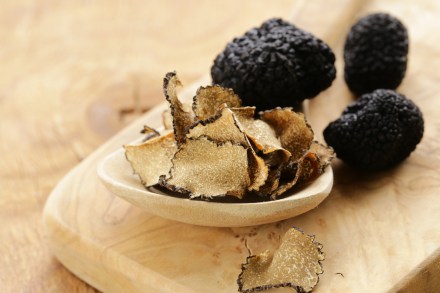
I remember, vividly, when working at Raymond Blanc’s Michelin-starred Le Manoir, the moment the truffles were delivered. A frisson went round the kitchen staff as the napkin covering the precious morsels was dramatically whipped off. Physically inspecting the gnarled, knobbly nuggets was a right reserved for head chef alone. As a lowly pot-washer, I was confined to the back, neck craned for a glimpse. So I am not blind to the excitement and sheer theatre of the treasured truffle. I even like them. But why on earth have they taken over every restaurant menu, as plentiful as lashings of ‘EV’ olive oil and flaky sea salt? 2018-19 was when the truffle takeover first got going on the London restaurant scene. Then the rot quickly set in.

You’re spoiling us: The Ambassadors Clubhouse reviewed

From our UK edition

The Ambassadors Clubhouse is on Heddon Street, close to Savile Row and the fictional HQ of Kingsman, which was a kind of privatised MI6. I wonder if the Kingsmen eat here, being clubmen. Heddon Street needs fiction because its reality is one-dimensional. It is an alleyway behind Regent Street, and it used to be interesting. There was an avant-garde café under the Heddon Street Kitchen called The Cave of the Golden Calf. Ziggy Stardust was photographed for his album cover outside No. 23; from Heddon Street you could hear the Beatles play their final concert on the roof of 3 Savile Row in 1969. This is dense, fierce, very sophisticated food and it is all superb But that is over.

At Japan House humanity has arrived at the perfect future: food for ogling, not eating

From our UK edition

There is a popular Japanese television show that features a segment called ‘Candy Or Not Candy?’. Contestants are presented with objects and must guess if they’re edible or not. Is that a dish sponge – or a steamed sponge cake? I might not consider afternoon tea to be art, but the confectionery artifice required to dupe contestants into mistaking the replica for reality is impressive – or at least entertaining. The lacquered steaks, fruits, vegetables and sliced bread feel wrong. They surely ought to be matte The inverse – using inedible materials to create replicas of food – is also a Japanese art form, and the subject of Looks Delicious! at Kensington’s Japan House.

There’s more to Bordeaux than fine wine

In the seminal Casablanca, there is a classic moment when the Humphrey Bogart character is asked how he ended up there. Bogie, doing laconic and world-weary as only he could, replies, “My health. I came to Casablanca for the waters.” When Claude Rains’s iconic Captain Renault purrs, “Waters? What waters? We’re in the desert!” Bogart’s response is simple. “I was misinformed.” This exchange occurred to me when I recently visited Bordeaux, a city with awe-inspiringly beautiful architecture, some of France’s most stylish places to shop and eat, situated teasingly close to the beaches of the Atlantic coast. Yet if you attempted to tell anyone that you’d come to Bordeaux for history, couture or coastline, you’d get the Bordeaux version of “What waters?

Bordeaux
Chinese

Dining with the Chinese food pioneers of New York

For first-time restaurateur Bolun Yao, New York is a city to experiment in: “I feel like New York is the city that is always exploring new things. If you have a new idea, you put it here.” The Chinese-born entrepreneur — who has also spent significant time in New Zealand — came to NYU to complete a master’s degree in food studies. He quickly fell in love with the fine-dining Korean scene, including the two-Michelin-starred Atomix and COTE, America’s only Michelin-starred Korean steakhouse. Both merge contemporary and traditional techniques and ingredients. “Wow, that’s really, really smart and really creative,” the twenty-eight-year-old recalls thinking. “Why is there not a Chinese restaurant that does the same thing?

A teashop like no other: Sally Lunn’s Historic Eating House reviewed

From our UK edition

Sally Lunn’s is a teashop in Bath. It sits in a lane by the abbey, and the Roman baths. Paganism and Christianity jostle here: Minerva battles Christ, who wins, for now. Sally Lunn’s calls itself ‘the oldest house in Bath’ (c. 1482). It is rough-hewn, with a vast teal window and pumpkins on display. The pumpkins might be plastic. I don’t know. Tourists queue in the hallway behind a large wooden cutout of a woman who might be Sally Lunn. She is a semi-mythical woman: the Huguenot refugee Solange Luyon, who came to Bath in the 1680s with brioche in her hands. No one knows if she really existed.

An inedible catastrophe: Julie’s Restaurant reviewed

From our UK edition

At Julie’s at the fag end of Saturday lunchtime, Notting Hill beauties are defiantly not eating, and the table is covered with crumbs. Restaurant Ozymandias, I think to myself. This is no longer a district for the perennially wracked, or unrich. The Black Cross – Martin Amis’s ideal pub in London Fields – is now a sushi joint. Of course it is. The omelette is bright yellow and tough, like a hi-viz croissant Julie’s, which is named for its first owner, the interior designer Julie Hodgess, mattered in the 1980s.

As good as Noble Rot: Cloth reviewed

From our UK edition

Cloth is opposite St Bartholomew the Great on Cloth Fair. People call this place Farringdon, but it isn’t really: it belongs to the teaching hospital and the meat market and William Wallace who died a famous death here and has only a little plaque in turn. Smithfield embraces the dead. Sherlock Holmes met Dr Watson here and, for BBC1, jumped off the roof of the hospital. If Cloth calls itself a ‘neighbourhood wine bar’, which sounds less threatening than ‘restaurant’, its true customers are the dead, and that is no criticism. The chips are marvellous, and this matters. I always judge a restaurant on the chips I am early, so I sit in St Bartholomew the Less – this is how buildings fight!

Is it time to pity restaurant critics?

From our UK edition

An atom is made of protons, electrons and neutrons, and protons are made of quarks, and a quark is the size of the violin you’d play for a restaurant critic who complains about their job. It’s the best job in the world: go out for dinner on expenses with a friend or a lover, then bash out a thousand words. Why, then, might we feel some pity for our restaurant critics? One reason could be that the Grim Reaper is hovering. Last week, the Evening Standard’s restaurant critic Jimi Famurewa announced that his column was being scrapped, as the paper moves to a weekly edition. Another reason, perhaps, is the lifestyle of a restaurant critic. Earlier this year, the New York Times’s Pete Wells left his column for health reasons: ‘I can’t hack the week-to-week reviewing life any more.

Curiously understated: Porthminster Kitchen reviewed

From our UK edition

Porthminster Kitchen sits above Warren’s Bakery on St Ives Harbour, like a paradigm of the British class system in food. This happens everywhere, but it is particularly pronounced in St Ives, which is unlucky enough to be a site of pilgrimage for Virginia Woolf addicts – her childhood holiday home sits above the town, her lighthouse is on the bay – and other feckless Londoners. But the balance is long lost. Since the Tate Gallery arrived in 1993, Cornish natives, who used to live alongside artists – Barbara Hepworth, Patrick Heron – have left the old town (‘downalong’).