Restaurant

Dear Mary: how do I stop friends buying me pet-themed presents?

Q. I have been working in a large restaurant alongside a very attractive, although shy, girl. I live near the restaurant and she has come back for drinks on a few occasions. She seems to enjoy my company but I have been too feeble to take things further. I fear that if she does not find me attractive, by making a move I could ruin our friendship. What should I do? – Name withheld, London W6 A. Step one: buy a Feverscan forehead thermometer. This liquid crystal strip is held on to one person’s forehead by another, thus requiring a degree of physical intimacy. Step two: ask the girl to your flat along with another colleague. When they arrive, act slow-witted and explain you are feeling odd.

presents

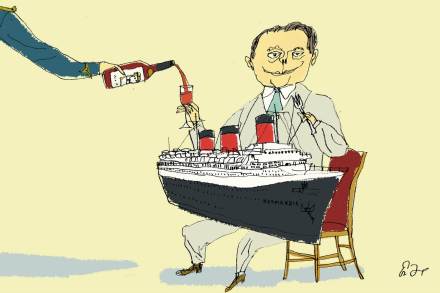
Ship shape: Normandie, the biggest French restaurant of all

From our US edition

These pages recently carried a lament for the little French restaurant, and the loss from the cities they once graced of a certain element of gentility and, yes, class. On the same subject, let us consider another era when class was valued more highly, and which produced the classiest, and the grandest, French restaurant of all. This requires a journey. In July 1936, a Chicago family, relations of mine, embarked on an unrushed two-month European vacation. A meticulous Thos. Cook & Son-Wagons-Lits, Inc. itinerary routed them first to France, then Italy, Switzerland, Germany, Holland and finally to England. It was a thoroughly first-class affair.

French

‘An uneasy place’: Chez Roux at The Langham reviewed

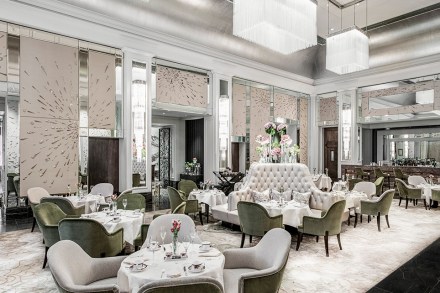
The Langham is a Victorian Gothic hotel opposite the BBC in Portland Place. It’s an odd place: haunted house near the wreckage of Newsnight. Perhaps I think this because the last time I came here I interviewed Jeremy Paxman about his ghosts: when he was anxious he banged the wall. The time before, my godmother collapsed at tea in this very room, now Chez Roux. It’s a vast, dimly lit silver space. The lights are long and slender, like giant earrings. Palms wobble. A palm court is a Victorian conceit; the Titanic also had one. I wonder if they were here for Napoleon III, Guy Burgess, or Sherlock Holmes. I wonder how they stay alive in darkness. Le Gavroche closed in January, and if it hasa successor, it is this It’s a hard thing to dress, a windowless room.

‘An exceptional roast lunch’: Quality Chop House reviewed

The oldest and best chophouse in London was Simpson’s Tavern in Ball Court Alley off Cornhill (since 1757 on that site): Charles Dickens’s favourite chophouse, and mine. Simpson’s was locked out by landlords who impersonate cartoon villains at the end of 2022 for failing to pay pandemic arrears promptly. Simpson’s said they survived world wars, the plague and the Industrial Revolution, but not a landlord who doesn’t understand chops. (This part I paraphrase.) We settle into a spindly table for what is, by any measure, an exceptional roast lunch Court proceedings are ongoing: meanwhile it’s a ruin. It was vandalised in May, as these things tend to be. Now it is empty, and ornamental books tumble out of smashed windows.

‘Grand and isolated’: The Wolseley City, reviewed

I am fretting about this restaurant column’s election coverage and then I alight on something superficially grand and lovely, which has been hollowed out and is now useless and barely able to function: a shell. It is the Wolseley 2 – the Wolseley City – and this is perfect. I name it the election restaurant, and Tories should eat here while they still have their shirts Few restaurants are important, though I treasure Martha Gellhorn’s description of an operating theatre for the wounded of the Spanish Civil War which was once a restaurant in a grand hotel. But was it any good? Tales of society folk eating are self-serving: real history happens nowhere near them, says the Marxist in me – and PR is, well, PR.

‘Great restaurants can’t thrive in Hampstead’: Ottolenghi reviewed

Ottolenghi is an Israeli deli co-owned by Yotam Ottolenghi, an Israeli Jew, and Sami Tamimi, a Palestinian Muslim. They met in Baker & Spice in London, where they bonded over the dream of persuading more British people to eat salad. This is an ideal story of co-existence (I have met a group of Israeli Jews and Arabs dieting for peace) and I thought the new Ottolenghi in Hampstead might be picketed by idiots shouting for peace but meaning war. (Martha Gellhorn was right about slogans. Never shout them: even ones you agree with.) It is fine in that I wish I were in the Middle East to eat the original But this is Hampstead, not Bloomsbury, and there aren’t any pickets.

Dear Mary: how can I help pay for an expensive lunch without seeming rude?

Q. My husband and I (both in our eighties) recently visited a carpet shop with a view to replacing the stair carpet in our four-storey house. The salesman showed us various carpets and we discussed their relative merits. When I asked him how hard-wearing a particular carpet was, he looked at us carefully and said: ‘Well, it is not going to need to be very long-lasting is it?’ We were a bit surprised and will be taking our business elsewhere. But can you suggest how we might have been able to indicate to him politely that this particular form of words was unlikely to secure a sale? – R.H., Cheltenham A. You might have cried pleasantly, ‘What do you mean? We’ve just extended our lease by 20 years!’ and then stared at him enquiringly while he struggled to answer. Q.

‘Vital but fraying’: Five Guys reviewed

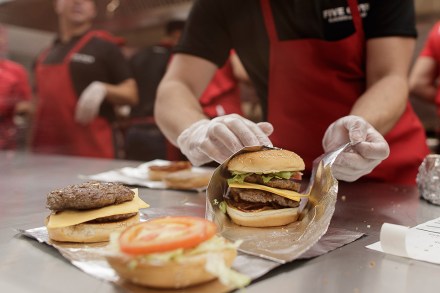
Five Guys is a burger house from Arlington, Virginia, based on the premise that if you can serve a drink, cut a fringe, or make a hamburger, you will always make money in America. Thirty years and 1,700 restaurants later, it sits on Coventry Street off Piccadilly, soaking up the alcohol of a thousand British stomachs. If central London is a strip-lit bin alley between palaces, this is its restaurant: vital but fraying. I am here because I will not eat at McDonald’s, even when I am sad. I do not think my McDonald’s burger is all from the same cow, and this disturbs me: I can eat one cow happily, but a multitude frightens me. McDonald’s doesn’t fill you either, no matter what you eat: is it just an idea?

‘Five stars, no notes’: Arlington reviewed

Arlington is named for the 1st Earl of Arlington and his street behind the Ritz Hotel. It used to be Le Caprice, which was opened in 1947 by the Italian Mario Gellati, who would not, by the new rules, get into Britain now, but this is not a column about pain. In 1981 Le Caprice was taken over by Chris Corbin and Jeremy King, and it became the most fashionable restaurant in London. Princess Diana dined here and when Jeffrey Archer was released from prison, he ate here. None ofthese dishes could be improved. Five stars, no notes After an interregnum from Richard Caring, under which Le Caprice closed in 2020 – it could not compete with Caring’s mad themed restaurants across Piccadilly – Jeremy King, who is more emotional and skilful than most restaurateurs, returned here.

Bar-hopping, Venetian style

From our US edition

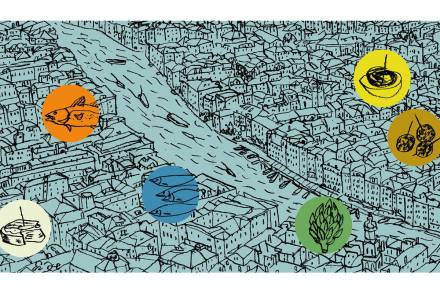
It’s a mist-steeped weekday morning in the Dorsoduro district. The kind when the rising lagoon licks at the old stones as if trying to devour the city, footsteps echo mournfully between peeling palazzi and even the marble statues seem to hang their heads. But not too early nor too dismal, it turns out, for wine. In Osteria Al Squero — named after Venice’s oldest boatyard, which it faces across the narrow canal — the lights are on. A huddle of Venetian men stands beneath the wooden beams with their grocery bags and small dogs, enjoying un’ombra. It means “shade” in Italian but also, here in the Veneto, a small glass of vino.

Venetian

‘Can’t help but exude warmth’: Paper Moon at the OWO, reviewed

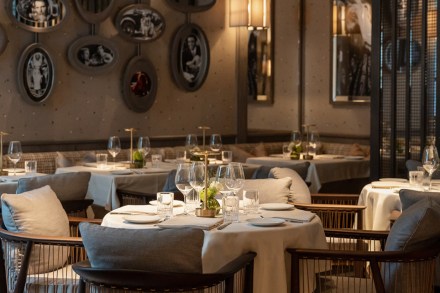
Paper Moon is the Italian restaurant inside the Old War Office on Whitehall, now a hotel called Raffles London at the OWO. It has nine restaurants and bars, because it is a Disneyland for the 1 per cent in the fraying centre of the British state, which is enraging and hilarious. I reviewed Saison in November and found it as chilly and finessed as the British state pre-crisis. OWO reminds me of a theme park I visited in Georgia, Russia, two decades ago in winter. It was a fine endeavour but pointless, the happy children had fled. You can’t have a grand hotel inside a post-Imperial bin fire. It makes no sense. Paper Moon is grey, and Art Deco, of course: the pre-calamity aestheticof choice Paper Moon is rather better than Saison: perhaps Italian food can’t help but exude warmth.

‘The interiors are happily insane’: Dear Jackie, reviewed

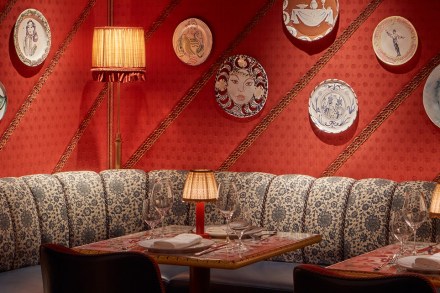
Dear Jackie is the restaurant in the new hotel Broadwick Soho on Broadwick Street in Soho, which is most famous, if you are an infectious diseases nerd, for being the site of the 1854 cholera outbreak and its cure. Dr John Snow isolated it to the street’s water pump, noted local brewers were immune, and proved cholera is not airborne. When children stopped dying, Soho eased into its time of moral rot. This is as spirited an attempt to re­animate the 1970s as I have found beyond musical theatre This is a changeable thing. Drama fled Soho in the 1970s, and Broadwick Soho is an attempt to put it back. This is no generic hotel.

‘As good as you will find in London’: Noble Rot Mayfair, reviewed

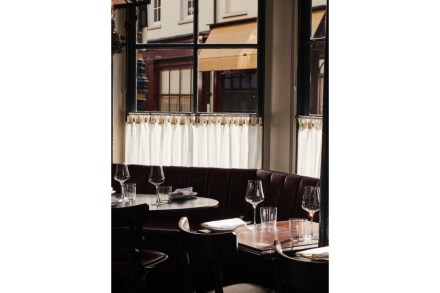
Noble Rot, which is named for a sickness that afflicts grapes, a self-aware name for a restaurant in London, is becoming a chain. Don’t get me wrong. The Rots in Lamb’s Conduit Street and Greek Street (which replaced the Gay Hussar that died in sympathy with the intelligent left) are two of the best restaurants we have. My only complaint is that, like the Plastics in Mean Girls, they know how lovely they are and have their own promotional magazine. This food has a loving intensity to it, and it is as good as you will find in London Now they have expanded into Mayfair – but the least horrifying part, which is Shepherd’s Market.

Deck the halls at Rolf’s

From our US edition

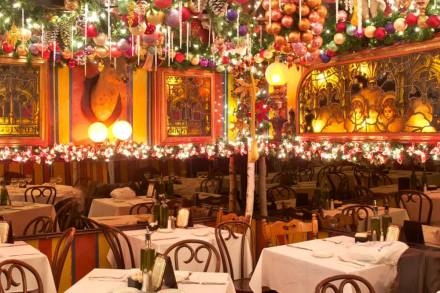
It’s a common lament each year — starting around October, people love to complain that the Christmas season continues to creep further and further into the fall. But for some, that creep is a welcome one. If that’s you, I know a place. At 3rd Avenue and 22nd Street in Manhattan, you can get your Christmas fill for around six months of the year — at least if you wander into the narrow German restaurant on the corner. You might almost miss it if you walk by during daylight hours. At night, it’s hard to miss. In this rather unsexy portion of Manhattan, Rolf’s has been a New York institution since 1968.

rolf's

Barbecue is America’s food

From our US edition

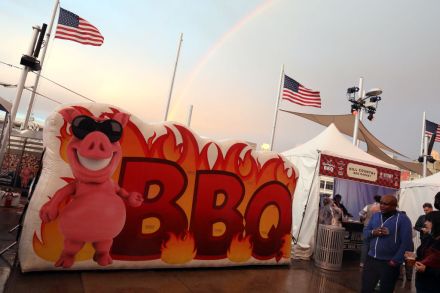
Summer is fading fast, and though, according to my calendar, “the Autumnal Equinox” (is that the newest model of Hyundai?) isn’t until September 22, all the things we love about the season — swimming, county fairs, outdoor drinking, the August congressional recess — are essentially over after this weekend. And while people mark Labor Day in different ways, one of the best is with a barbecue, one of the few culinary traditions America can truly call its own. Smithsonian Magazine tells us barbecue has its origins in the first indigenous tribes Christopher Columbus encountered, who had a “unique method for cooking meat over an indirect flame, created using green wood to keep the food (and wood) from burning.

Against the ‘concept restaurant’

From our US edition

My wife and I live in Northern Virginia, in Fairfax County. Whenever we go out to eat, we almost always go somewhere in the suburbs. Fairfax, along with neighboring Montgomery County in Maryland, is home to a wealth of restaurants serving cuisines from all over the world. Just last January, Bon Appétit wrote that “to travel DC’s Beltway is to sample the flavors of the world,” and the New York Times declared that “America’s next great restaurants are in the suburbs.” You could argue that the suburban food scene in the DC metro area surpasses that of the city itself. Nonetheless, DC is widely seen as a “foodie city,” and its restaurants generally get more coverage and hype than their suburban counterparts.

Stephen Graham drives this terrific, relentless, one-take film: Boiling Point reviewed

Boiling Point is a single-take drama set during a busy service at a London restaurant and it has to be the most stressful film of the year. I realise it’s early days, but if a more stressful film comes along I would be most surprised. If this film were a recipe, the first instruction would read: ‘Nerves, shred.’ Followed by: ‘Put in pressure cooker and whack the temperature up.’ It is brilliantly executed but also one of those films you can find compelling and engrossing while praying for it to be over. It stars Stephen Graham, that little powerhouse of a fella, who now serves as a kitemark, surely. (Has he ever been in anything bad? Did you see him in Time?

My wig faux pas

I listed for Catriona the reasons why I did not want to go out to dinner that evening at the posh new restaurant in the village. The Hammers were on telly that evening and we had a fire lit. Plus, I was only just back from the hospital at Marseille where another half pint of turps was tipped into the tube in my neck, which would easily do for my supper. Also I wanted to lie down. Also that day the Omicron variant, in its speed and spread across France, was doing a fair impression of Rommel. Why should I with my double-asterisked low white blood cell count take an unnecessary risk of catching the highly infectious version of Covid by eating poncy food in a small dining room with a lot of strangers?

Dear Mary: Can I still socialise with my virus-denying friends?

Q. An old friend offered to treat me to a birthday lunch, provided I choose and book the restaurant myself. (He has always hated admin.) On booking, the restaurant asked me for a £50 deposit — this to deter no-shows — and I was told this would be refundable on our arrival. When the bill was presented my friend characteristically just handed over his card without even glancing at it. The next day, on noting that my deposit had not been refunded, I rang up this agreeable local restaurant. It turned out there had been a misunderstanding. They had not refunded my account but had instead reduced my friend’s bill by £50. It’s not that I want the £50 back.

Is my phobia of upmarket restaurants misplaced?

Scotching my bright idea of a stiff gin for Dutch courage in the bar across the road, Catriona bounded straight for the door of the Colombe d’Or. My restaurant phobia was fast upon me and I followed her into the bourgeois holy of holies more slowly than a nudist climbing through a barbed wire fence. We were half an hour early and directed to the bar. Here my plea for strong spirits was again denied and I had to make do with champagne. Speechless with ecstasy — this was her birthday treat — Catriona toddled off with her flute to cast her eye over the Miros, Matisses and Chagalls in the dining room. I sat alone on the windowsill in the bar where Picasso and Yves Montand and James Baldwin had once parked their famous arses and I mourned.