The FCO must do more to stem the bloodshed
From our UK edition
The Foreign Office has kindly responded to my Telegraph piece from last week, which suggested that they could do more to confront the religious cleansing sweeping the Middle East.
From our UK edition
The Foreign Office has kindly responded to my Telegraph piece from last week, which suggested that they could do more to confront the religious cleansing sweeping the Middle East.
From our UK edition
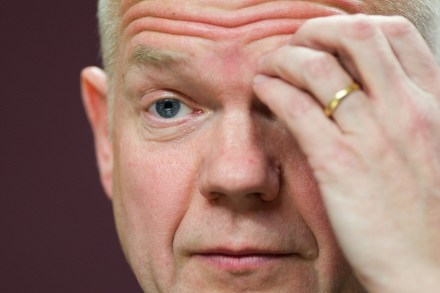
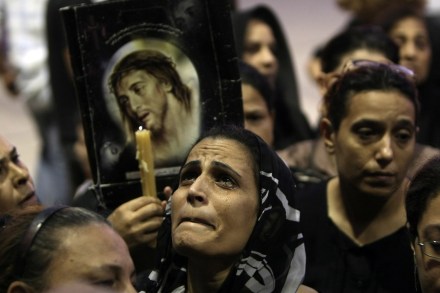
William Hague has transformed the Foreign Office in his 18 months in charge. He inherited a system hardwired with the dynsfunctionality of the Labour years, and it’s almost fixed. But not quite. It has not yet woken up to the wave of what can only be called ‘religious cleansing’ in the Middle East, which I look at in my Telegraph column today. Here’s a rundown of my main points. 1) The killing has begun, and could get worse. In Iraq, about two thirds of its 1.4 million Christians have now fled — being firebombed by the jihadis. Last year, gunmen entered a Baghdad church and killed 58 parishioners. To go to church in Iraq, which Christians have been doing for two millennia, now means risking your life.
From our UK edition
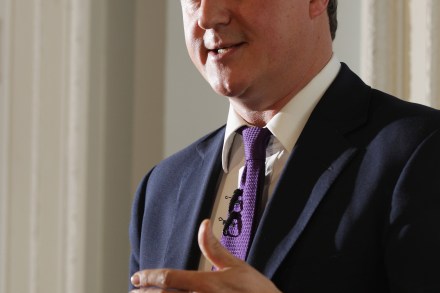
The Prime Minister does God. At least, that's the gist of his first major speech on religion. Actually, the interesting thing is that a Tory Prime Minister feels that he has to make the point that he is a Christian. Other than Michael Howard, who was Jewish, most other Tory leaders could have assumed we’d take it as read that he or she was more or less CofE, including Mrs Thatcher, who was, of course, a Methodist. Following Richard Dawkins' remark that the Prime Minister may 'not really' be a Christian, Mr Cameron responded: 'I am a committed – but I have to say vaguely practising – Church of England Christian, who will stand up for the values and principles of my faith'.
From our UK edition
If I’d said that an MP had accused the Church of England of being too obsessed with gay marriage and women priests — and not worried enough about how God can keep young boys out of harm’s way — you’d probably imagine that a Tory had gone nuts. But this is the David Lammy, Labour MP for Tottenham, who has gave an interview to our Books Blog. In it, he elaborates on the theme of his new book: that his colleagues are so keen to help single mothers that they’ve lost sight of what really helps working class boys. Amongst the contributing factors, he mentions two things that may cast him out as a heretic in Labour’s secular religion: fathers, and God. Lammy’s book, Out of the Ashes, was released yesterday. On Monday.
From our UK edition
The immediate beatification of Steve Jobs, the visionary Apple chief who has been killed by pancreatic cancer aged 56, fulfills all the criteria for mass delusion and is evidence of some kind of quasi-religious quackery. The Book of Jobs, indeed. Sky News report that Apple-obsessives are "flocking" to Apple stores, presumably to "pay tribute" to the man behind the iBook, iPod, IPhone and iPad. Here again we may pause and wonder at the Mania of Crowds. There are live-blogs and vigils and everyone is iSad and all the rest of it. Strewth! To say this does not diminish Mr Jobs' achievements. It merely asks that we keep them in some kind of perspective and by doing so might better honour his life, work and legacy.
From our UK edition
A fact which often surprises those who pick up the Bible in adulthood, having not looked at it for years, is how very short the stories are. Adam and Eve, Noah’s Ark, the Feeding of the Five Thousand — in spite of their familiarity they are raced through in just a few lines. It is, however, perhaps the very terseness of the Bible that has caused at least as much ink as blood to be spilled in its cause; had it spelled the answer out, for instance, medieval scholars could never have whiled away so many jaw-droppingly fatuous hours in wondering how many angels could dance on the head of a pin, and other pressing questions. In his new novel Richard Beard draws attention to this brevity and uses it as a springboard.
From our UK edition
What on earth is ‘Dominionism’? Lots of Americans who first heard the word just a few weeks ago are suddenly feeling very angry about it. Liberals say that the US constitution is facing a ‘Dominionist threat’ in the form of Michele Bachman and Rick Perry, two Republicans running for president in 2012. Christian conservatives, meanwhile, cry prejudice: they accuse a secularist elite of conducting a witch-hunt against Christians in politics. What's the fuss? Dominionism is, we are told, a school of evangelical thought that aims to impose Biblical law over secular government. It is to nutty Evangelicals what Shariah Law is to Islamists, a way of achieving theocracy on earth.

From our UK edition
Yesterday, Andrew Mitchell was the toast of the broadcasters. They have turned on him to an extent today. The news that portions of the £52.25 million given in emergency aid to the starving masses in the Horn of Africa will be distributed in areas controlled by al-Shabaab has forced Mitchell onto the defensive. “We shall have no dealings with al-Shabaab,” he said, and then added that the aid will reach its intended recipients by means other than collusion with the jihadists. This is an embarrassing moment for Mitchell and, of course, it is vital that money and supplies do not fall into the hands of well-fed fighters. However, it is worth pointing out that Mitchell has always intended to distribute aid in al-Shabab controlled areas of Somalia.
From our UK edition
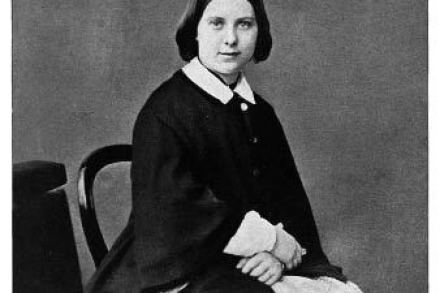
Archbishop Edward Benson was the ideal of a Victorian churchman. Stern and unbending, he was a brilliant Cambridge scholar and a dreamily beautiful youth. Older men fell over themselves to promote him, and he climbed effortlessly from one plum post to the next, rising almost inevitably to become Archbishop of Canterbury. As Rodney Bolt shows in this fine book, Archbishop Benson’s domestic life was less than perfect. When he was 23, Benson chose an 11-year old girl named Mary Sidgwick to become his wife. She was his second cousin, and when she was 12 (which was at that time the age of consent) he proposed to her. They married when she was 18. Mary Sidgwick later claimed that being a child wife meant that ‘I did not grow up’. Benson tried to control her in everything.
From our UK edition
The Spectator hosted a debate at the Royal Geographic Society yesterday evening with a rather meaty motion: “Secularism is a greater threat to Christianity than Islam”. We have two reviews of the occasion. The first, by Kate Maltby, is below. Lloyd Evans' can be found here. Last night’s Spectator debate on the motion “Secularism is a greater threat to Christianity than Islam” was marked by a highly personal level of investment from the speakers, a sudden swing in the vote, and the uncharacteristic sight of Chair Rod Liddle acting as the most conciliatory person in the room.
From our UK edition
Sayeeda Warsi’s upbraiding of Pakistan for not living up to Jinnah’s ideals is another sign of how the government believes Baroness Warsi to be uniquely able to speak to Britain’s most difficult ‘ally’. David Cameron and his circle were thoroughly impressed by how Warsi managed to cool tempers in Islamabad following the Prime Minister’s criticism of Pakistan, in of all places India, for facing both ways in the war on terror and have been using her since to speak to the country’s leadership.

From our UK edition
Ignore the antediluvian hatreds for a moment. As Anne Dawson says, the recent violence in East Belfast was largely inspired by current economic distress. Northern Ireland’s economy is a serious cause for concern. Central expenditure per head is 25 per cent higher in Ulster than the UK norm and 70 per cent of Northern Ireland’s economy lies in the public sector according to parliamentary one estimate. Although the province has much to commend itself to business – competitive operating costs and excellent transport links serviced by substantial capital investment – private enterprise remains depressed. A report by PriceWaterhouseCoopers in March found that growth was negligible and that unemployment is running at 6.
From our UK edition
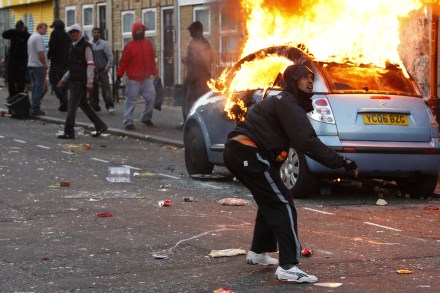
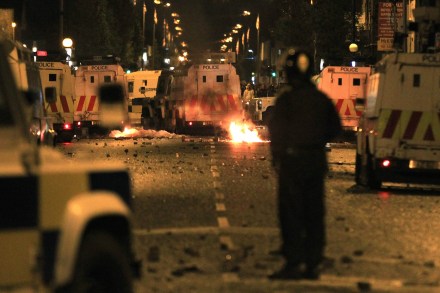
I live three miles away from where the rioting was happening in East Belfast last night, and heard the helicopters whirring overhead. It was the kind of sound that anyone living in the city hoped never to hear again. As a child, I'd lie in bed and hear bombs and sirens and helicopters — and we had all hoped that dark chapter had been closed. A tipping point of violence has now been reached. A press photographer has been shot, another given a fractured skull after a second night of riots. And in the aftermath, the blame game cacophony begins: Who started it? It was them. No it was them … ad infinitum on BBC Radio Ulster's Stephen Nolan Show. While the most important question in all of this is not addressed. Why is this happening? Why now?
From our UK edition
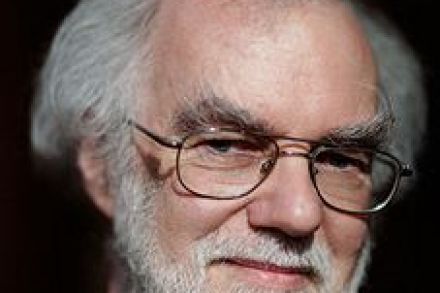
“Nowadays politicians want to talk about moral issues, and bishops want to talk politics,” said Sir Humphrey. This week’s New Statesman has been guest edited by the Archbishop of Canterbury. In his lead editorial, Dr Rowan Williams has launched a brutally eloquent assault on the coalition for embarking on a programme of radical reform for which, he claims, there is no mandate. With particular reference to the health and education reforms, Williams says: “With remarkable speed, we are being committed to radical, long-term policies for which no one voted. At the very least, there is an understandable anxiety about what democracy means in such a context.
From our UK edition
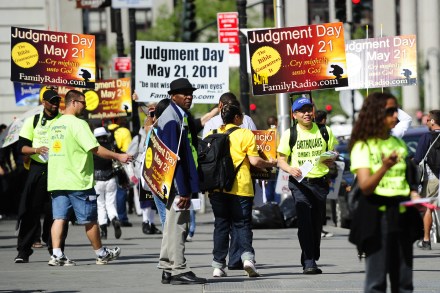
This evening, an event will occur that will make all the controversies and scandals of the last week seem somewhat irrelevant — at least according to American evangelical Harold Camping. He says that 6pm today is the time of the Rapture, as foretold in Thessalonians 4:17: all those "true believers" who accept Jesus Christ as their one true saviour will be taken up to heaven. For those of us left, we might wonder who will lead us through the "chaos and awful suffering" following both the loss of 40 per cent of the UK population and the earthquakes that will accompany it. Our Prime Minister — with his "sort of fairly classic Church of England faith" — would be gone.
From our UK edition
The Rapture is almost upon us. According to Harold Camping, the 89 year-old Family Radio network in Florida. The righteous, he has calculated, will ascend to heaven at 6pm EST tomorrow (11pm in the UK). Those of us not fortunate enough to be called to Heaven must suffer the consequences of the damned. As you might expect this has occasioned much hooting and hollering on Twitter today. I made a feeble joke about it myself. And now, via Hopi Sen, I feel a wee bit of a heel for mocking the afflicted. This is Camping's second Rapture date, the first having mysteriously failed him. While we need not necessarily spare too much sympathy for him, his poor followers, few though they may be, merit are in a pitiful place tonight.
From our UK edition
Where once the British set out for new fields to conquer, they now set out for new cultural nadirs to reach. And it must be admitted that, in the latter search, they show considerable ingenuity as well as determination. In the field of popular vulgarity they are unmatched in the world. Just when you think that their childish lavatorialism can descend no further, along come their future Queen’s sister’s buttocks to prove you wrong. No feeling for the person to whom the buttocks belong (if ownership is quite the relationship one has to one’s buttocks), no sense of national or personal dignity restrains them. The British are a nation of playground sniggerers who insist, in the name of freedom of expression, that their sniggers not only be heard but broadcast.
From our UK edition
Yes, this is a site soliciting commitments (and email addresses) from those prepared to pray for Mike Huckabee to assist him make the anguished decision to run for the Presidency of the United States. Or not. It's not, his spokesman tells Ben Smith, an official Huckabee site, though it is linked to from his own Facebook page and he did write this gawd-help-us piece of simpering guff for his devotional followers: As many of you know, I am prayerfully considering an important decision about seeking the office of President in the 2012 election. I am asking for God's guidance now, and I humbly ask that you would join me in prayer as I seek to discern His will for my life. When I look across America, I see a country looking for answers.
From our UK edition
I was all set to write a post complaining that, as usual, the Anglophone press never pays enough attention* to the Giro d'Italia but for the saddest of all possible reasons, that won't be the case tomorrow. Wouter Weylandt, pictured above winning the third stage of last year's Giro, died this afternoon after crashing on a descent some 20km from the finish of today's stage in Rapallo. CPR and atrophine injections and the arrival of an air ambulance weren't enough to save the young Belgian. A race designed to celebrate the 150th anniversary of Italy's road to unification will now be remembered for something else. Weylandt is the fourth rider to die during the Giro and the first cyclist to be killed during one of the Grand Tours since Fabio Casartelli crashed in the Pyrenees in 1995.
From our UK edition
Can Tom Elliott lead the Ulster Unionists? That’s the question commentators in Northern Ireland are asking, after the party suffered yet another reverse at the polls. Elliott was elected leader on a landslide in September and he is already under pressure, seemingly powerless to arrest the decline of the once dominant force in Northern Irish politics. He is visibly rattled, as the clip above proves. It was probably a reaction in the heat of the moment, but one that should alarm for those Tories who still seek an alliance with the UUP.* It was hoped that the scale of Elliott’s victory would unite the fractious party. But the divisions that characterised Sir Reg Empey’s leadership have intensified under Elliott. The factions are many and various.