Religion

Robbing Peter to pay Paul

From our UK edition

Two hundred years ago Jeremy Bentham wrote a tract which purported to demonstrate that the Christian religion was in effect manufactured by St Paul and not by Jesus. This was actually quite a common ploy at the time: a means by which freethinkers could assail Christian tenets without being prosecuted. And because St Paul’s writings occupy such prominence in the New Testament, and are plainly a major authority for so much Christian theology and understanding, there was reason well in excess of mere subterfuge to justify the procedure. In his restrained and in many ways compelling Introduction to his translations of the New Testament Rabbi Brichto (who died last year) adds a distinctive voice to what is therefore a fairly established debate about the place of Pauline theology.

Mystery of the empty tomb

From our UK edition

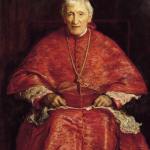
John Henry Newman was an electrifying personality who has attracted numerous biographers and commentators. John Cornwell, in his excellent guided tour around this well-ploughed field, recalls the young woman in Oxford in the 1830s who ‘wept with emotion’ at Newman’s very appearance. W. G. Ward recalls the awe which fell upon him and his undergraduate friends if Newman so much as passed them in the street. And figures such as Mark Pattison, James Anthony Froude and Matthew Arnold, none of them followers of the Newman cult in grown-up life, recollected similar feelings in their youth. When the mature George Eliot read Newman’s spiritual autobiography, she said it ‘breathed much life into me’.

Gove’s school reforms get off the ground

From our UK edition

The arduous process of reforming our country's education system begins today.  After two school reform bills were announced in yesterday's Queen's Speech, Michael Gove is writing to all English primary and secondary schools inviting them to cut loose from local authority control and become academies.  This is but stage one of the reform process: changing the system that's already in place.  The really radical part will come after the summer recess, with the government's plans for pupil premiums and the like.

The woman behind the god

From our UK edition

The emperor Augustus was the original god/father. Julius Caesar was often referred to as ‘the divine Julius’, but his nephew (and adopted son) was the first Roman to have temples dedicated to him in his lifetime. If uncle Julius had died a natural death, or in some brave battle, the Roman upper class would never have suffered the decimation (and then some) which Caesar’s ‘son’ and heir visited upon it under the rubric of vengeful piety. His last and greatest enemies had had nothing to do with Caesar’s death. Mark Antony had been Julius’s number two and was actually Octavian’s brother-in-law; Cleopatra had been his uncle’s most passionate love.

Crying in the wilderness

From our UK edition

For 30 years Alastair Crooke was ostensibly a British diplomat working in Northern Ireland, South Africa, Columbia and Pakistan. Ten years ago he became Middle East adviser to Javier Solana, playing an important role in negotiating ceasefires between Israel and Hamas, as well as helping to end the siege of the Church of the Nativity in Bethlehem in May 2002. In the summer of that year an Israeli newspaper named Crooke as an agent for the Secret Intelligence Service, and shortly after he was recalled to London. It has been reported that his sympathy with the Palestine cause caused embarrassment to Tony Blair’s government.

No earthly good

From our UK edition

Peter Hitchens writes a stern column most weeks in the Mail on Sunday. It expresses disdain not only for today’s politicians but also for those of us who vote for them. The weekly Hitchens can leave even his fellow right-wingers feeling demoralised. He argues that David Cameron’s Tories are no better than Gordon Brown’s clowns. Anyone who swallows campaign promises from Wesmtinster’s stinking fraudsters — a plague on all their second houses — is, in his view, a fool. Hitchens is brave and clever. He writes fluently, with the eye of a shrewd reporter. The best newspaper columnists have always been contrarians, but surely few have been so consistently against everybody with such Old Testament hotness.

Unholy warriors

From our UK edition

Taming the Gods is an extended essay about the secular state, something which would until recently have been regarded as a non-issue by English-speaking readers. The separation of Church and State is taken so much for granted in the West, that one can easily forget how recent and local its origins are. Religious beliefs, wrote Edward Gibbon, are ‘considered by the people as equally true; by the philosopher as equally false; and by the magistrate as equally useful’. As usual, Gibbon was fathering on the Romans the instincts of enlightened Englishmen of his own day. For the secular state was born in 18th-century England, and adopted by Revolutionary France.

The Vatican plays the “Jewish Card”

From our UK edition

Speaking in a Good Friday homily, with the Pope listening, the Pontiff’s personal preacher, Fr Raniero Cantalamessa, likened the drive by the victims of abuse to seek justice from the Vatican, whose priests committed the sexual crimes, with the persecution of Jews. Victims' groups and Jewish organisations have said it was inappropriate to liken the discomfort of the Catholic Church to hundreds of years of violence and abuse. But it is more than inappropriate. It shows either an ignorance of the history of anti-Semitism; a desire to relativise the Holocaust; a near-pathological disregards for other people’s suffering; or a wilful aspiration to shift the blame away from the Vatican.

The greatest puzzle of all

From our UK edition

Philip Pullman’s trilogy, His Dark Materials, is one the best works written in English in my lifetime. Philip Pullman’s trilogy, His Dark Materials, is one the best works written in English in my lifetime. He is a truly great storyteller, and the details of his myth, as well as the rich gallery of characters, live forever in the reader’s memory. It upset many religious readers, especially in America, because of the fact that the central villainy of the Gobblers, child-stealers controlled by the Magisterium, are a Blake-inspired vision of Church Christians. (And rather a prophetic picture of what is now revealed on a daily basis in the papers about the activities of the Roman Catholic clergy).

A major test for the Charity Commission<br />

From our UK edition

There are few more damaging allegations against the trustee of a charity than that they forged the signature of a fellow trustee on a document. But that is what Khalid Mahmood, the MP for Birmingham Perry Bar, is alleging has happened to him. Mahmood told the Sunday Times that his signature had been forged on the declaration of trust sent by the North London Mosque to the Charity Commission. Mahmood's accusation is incredibly serious and he has referred it to the Charity Commission. When I contacted the Charity Commission today, I received this statement from them:  "The Charity Commission is aware of the allegations made relating to the North London Central Mosque (registered charity no.299884) and we are considering what, if any, regulatory concerns there are for the Commission.

Faith under fire

From our UK edition

Giles St Aubyn, in this long, scholarly book, sets out to chronicle the shifts in the Christian churches from the scientific revolution of the 17th century, and the Enlightenment of the 18th, to the apparent triumph of secularism in the 20th. H. H. Asquith, as leader of the Liberal party, was not an enthusiastic Christian. Nor did the Labour Prime Minister Clement Attlee waste much time on religious concerns, which bored him. What mattered was the NHS and the welfare state, which saved men’s bodies rather than their souls. The Reformation had shattered the universal Catholic church of the Middle Ages, leaving in its wake what the Catholic apologist Blaise Pascal called ‘the thousand bizarre sects of Protestantism’.

Scientology: Cult or Worse?

From our UK edition

The problem Scientology has... Let me start again, among the problems with Scientology is that it wasn't founded a couple of thousand years ago. Had it been it might not seem quite so obviously fraudulent and, well, nuts. Age rubs off the harsh edges and all that and at least permits the creation of a splendid literature, if nothing else. And that literature is a bit more than nothing. But Scientology, apart from its artistic desert, also seems to be a wicked organisation. Consider this New York Times story: Raised as Scientologists, Christie King Collbran and her husband, Chris, were recruited as teenagers to work for the elite corps of staff members who keep the Church of Scientology running, known as the Sea Organization, or Sea Org.

Pope Benedict XVI is correct: the Equality Bill is fundamentally un-British

From our UK edition

I doubt His Holiness and I would hit it off, but he is right that Harriet Harman’s Equality Bill would impose strictures upon religious communities that run contrary to their beliefs. The coalescence of British and EU anti-discrimination law is but an immodest garment for trenchant ideology. Harman’s bill strives to subjugate individual freedoms, such as that to religious expression, beneath state-imposed rights. This legislation is the progeny of faith in social engineering, not social mobility; it ignores that toleration and freedom in Britain were derived from the right to religious observance free from state proscriptions.

Will faith prove Cruddas’ undoing?

From our UK edition

What intrigues me most about the Cruddas/Purnell axis is their commitment to faith in public life. Many politicians discuss faith carefully and define its role in society as essentially passive – remember David Cameron’s recent interview with the Evening Standard. Cruddas and Purnell envisage faith and the civic mutualism it engenders as an active ingredient to renew both party and country. Writing in the Guardian earlier this week, Purnell wrote: ‘The Labour movement was built upon organisation, the practices of reciprocity and mutuality that, if successful, led to a shared responsibility for one another's fate...

Addle-pated modernist

From our UK edition

In 1564 a book was published calculating that there were 7,409,127 demons at work in the world, under the administrative control of 79 demon-princes. Eight years later, Michel Eyquem de Montaigne began to write his Essays, a book which still seems to speak to us directly with all the force of rational understanding and an identifiable human personality. If Montaigne marks the beginning of modernity, it is because he tells us exactly what he is like; how he sees the world, fallibly and yet honestly; and because there was no book in the world like it before, and we are still writing books rather like it today. Montaigne, in common with all great authors, has continued to be infinitely applicable.

What do Muslims think?

From our UK edition

Coffee House readers sometimes complain that we do not talk enough about Muslims and Islam. I have certainly shied away from the subject, fearing that emotion and prejudice, rather than argumentation and empirical data, would dominate the debate. I don’t write about Christians, Jews or Buddhists, so why focus on Muslims? At any rate, I don’t like talking about collective groups, much as I prefer not to be talked about based solely on my heritage. But now a new study called Muslims in Europe allows for an empirically-based debate about sentiments across a number of Muslim communities. Based on interviews and surveys in 11 European cities, it presents some interesting facts. It does not tell us what Muslims think, of course, but gives a statistically-relevant sample of views.

Parsons’ displeasure

From our UK edition

Despite its prosaic title, this is a humdinging page-turner of a book, revealing in livid detail the scandal of how the Church of England jettisoned onto the market what the author describes as ‘perhaps the most admirable, desirable and ascetic body of domestic buildings ever built’. Despite its prosaic title, this is a humdinging page-turner of a book, revealing in livid detail the scandal of how the Church of England jettisoned onto the market what the author describes as ‘perhaps the most admirable, desirable and ascetic body of domestic buildings ever built’.

A careful believer

From our UK edition

Is David Cameron religious? In the course of his interview with the Evening Standard he provides a clear glimpse of his attitude to religion. He sees it as something that should be advocated with the utmost care, if votes are not to be squandered. He is asked if faith in God is important to him. "If you are asking, do I drop to my knees and pray for guidance, no. But do I have faith and is it important, yes. My own faith is there, it's not always the rock that perhaps it should be.” Hmmm. Surely praying for God’s guidance is a basic part of Christian faith, and nothing to be ashamed of. He is trying hard to sound pro-God but not in a Blair-like way.

The BNP’s appropriation of British institutions must be resisted

From our UK edition

Hardly a day passes without Nick Griffin cosying up to a poster of Churchill and the Few. Valour provides potent nationalist imagery, but Griffin has no right to it – as his distinctly ambiguous stance on the Ghurkhas’ residency rights makes clear. This morning, senior officers, in conjunction with Nothing British, condemned Griffin’s opportunism:   ‘We, the undersigned, are increasingly concerned that the reputation of Britain’s Armed Services is being tarnished by political extremists who are attempting to appropriate it for their own dubious ends. We deplore this trend for two reasons.

Biblical Corruption: Liberals & Fellow-Travelling Surrender Christians

From our UK edition

Did you know that the problem with the Bible is that it is, frankly, a book for liberal surrender-monkeys? Apparently so. Hence the urgent need for a new, properly conservative translation. Let's hear it for the Conservative Bible Project. Apparently, As of 2009, there is no fully conservative translation of the Bible which satisfies the following ten guidelines...