Religion

Romney’s continuing religious troubles

Some well-informed people — Rupert Murdoch among them — have suggested that Mitt Romney could exploit Obama’s increasingly fractious relationship with America’s Catholics to win the presidential elections in November. The so-called ‘Catholic vote’ is often said to be the crucial swing factor in American democracy. Romney, however, may be facing a bigger socio-religious stumbling block than Obama’s: evangelicals. They don’t like him. Mainstream Protestant Republicans in the north have plumped for Mitt, generally speaking, but he has been far less successful in the evangelical south. ‘As a county’s evangelical population expands,’ says Real Clear Politics analyst Sean Trende, ‘Romney’s vote share declines.’ The obvious explanation is that southern Baptists

Sentamu for Canterbury!

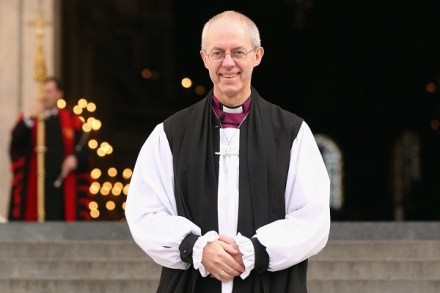
John Sentamu, the Archbishop of York, is our cover boy this week. It’s the Church of England Synod next week, word is that Rowan Williams will be standing down soon, and Rod Liddle is backing Sentamu as his successor. When planning the headline, I thought about calling him the ‘British Obama’. We didn’t use this, as it’s not a compliment — but if Britain is to have a figure who epitomises our country’s inherent tolerance and open-mindedness I’d pick Sentamu above anyone else in public life. If he was made Archbishop, I really don’t think there would be an uproar about the fact that he’s black, or even that he

The benefits of religion flow from belief

Most Spectator readers have probably heard by now of Alain de Botton’s latest, Religion for Atheists, in which he argues that the benefits of religion are too great to be confined to believers — not least because he wrote the Diary column for this week’s magazine. And for those who haven’t yet read about the book, let alone read it, they need look no further than Terry Eagleton’s brilliant demolition of the argument in The Guardian. Mr de Botton is, he makes clear, in a very long and not entirely creditable line of those who find religion intolerable for themselves but useful for others, notably the servant classes: Matthew Arnold

The frontiers of freedom

The problem with Nick Cohen’s very readable You Can’t Read This Book is the way that you can, glaringly, read this book. This isn’t quite as glib an observation as it sounds. Cohen’s central point is that the censors’ pens did not fall down with the Berlin Wall. And yet here he is, very obviously free to tell us about them. Cohen is a rambunctious pessimist. His  style involves mustering a degree of anger for a page or two, often through an outrage only loosely connected to the matter at hand (Islam’s treatment of women, segregation in the Deep South, the crimes of Roman Polanski, for example) and then, once

Helping our unbelief

Over 125 of the 320 pages in this book are either blank, or taken up with black-and-white illustrations, of subjects as various as Madonna and her former husband Guy Ritchie, slates arranged by Richard Long, Buddhist truth-seekers going for a walk in a wood, and a little boy having his Bar Mitzvah in a New York restaurant. It is in the remaining 200 or so pages that the author must persuade his readers that there is no reason why atheists should not practise a religion, or, if they are not disposed to follow one of the existing cults, why they should not make one up for themselves. It is an

The evil being perpetrated against Christians in Nigeria

The religious cleansing against Christians is intensifying in Nigeria, where Christians have been told they have until Friday to leave the country or face attacks by Islamic extremists. As I wrote recently in the Daily Telegraph, this is a trend sweeping the Middle East. Thousands are fleeing Iraq and Egypt, but Nigeria is the scene of the most ferocious attacks. Its government condemns the attacks, but seems unable to respond to the Boko Haram menace. This from the National Review: ‘Catholic archbishop John Onaiyekan, of Abuja, Nigeria’s capital city, appealed for help. “It’s a national tragedy. We are all unsecured. It’s not only Catholic. Today it’s us. Tomorrow we don’t

The FCO must do more to stem the bloodshed

The Foreign Office has kindly responded to my Telegraph piece from last week, which suggested that they could do more to confront the religious cleansing sweeping the Middle East. In an extended version of a letter he has sent to the paper, the Foreign Office minister Alistair Burt says that his department is doing plenty: ‘Concrete examples include: Iraq, where the Prime Minister and Foreign Secretary have raised religious freedoms and where the FCO is funding a further meeting of the High Council of Religious Leaders; Algeria where I recently met a delegation of Christian leaders to discuss the challenges they are facing; Egypt where the Deputy Prime Minister has

We can’t ignore the persecution of Christians in the Middle East

William Hague has transformed the Foreign Office in his 18 months in charge. He inherited a system hardwired with the dynsfunctionality of the Labour years, and it’s almost fixed. But not quite. It has not yet woken up to the wave of what can only be called ‘religious cleansing’ in the Middle East, which I look at in my Telegraph column today. Here’s a rundown of my main points. 1) The killing has begun, and could get worse. In Iraq, about two thirds of its 1.4 million Christians have now fled — being firebombed by the jihadis. Last year, gunmen entered a Baghdad church and killed 58 parishioners. To go

Cameron’s missing the point: Christian values require Christianity

The Prime Minister does God. At least, that’s the gist of his first major speech on religion. Actually, the interesting thing is that a Tory Prime Minister feels that he has to make the point that he is a Christian. Other than Michael Howard, who was Jewish, most other Tory leaders could have assumed we’d take it as read that he or she was more or less CofE, including Mrs Thatcher, who was, of course, a Methodist.  Following Richard Dawkins’ remark that the Prime Minister may ‘not really’ be a Christian, Mr Cameron responded: ‘I am a committed – but I have to say vaguely practising – Church of England

We cannot forget the riots, nor ignore their causes

If I’d said that an MP had accused the Church of England of being too obsessed with gay marriage and women priests — and not worried enough about how God can keep young boys out of harm’s way — you’d probably imagine that a Tory had gone nuts. But this is the David Lammy, Labour MP for Tottenham, who has gave an interview to our Books Blog. In it, he elaborates on the theme of his new book: that his colleagues are so keen to help single mothers that they’ve lost sight of what really helps working class boys. Amongst the contributing factors, he mentions two things that may cast

The Cult of Jobs

The immediate beatification of Steve Jobs, the visionary Apple chief who has been killed by pancreatic cancer aged 56, fulfills all the criteria for mass delusion and is evidence of some kind of quasi-religious quackery. The Book of Jobs, indeed. Sky News report that Apple-obsessives are “flocking” to Apple stores, presumably to “pay tribute” to the man behind the iBook, iPod, IPhone and iPad. Here again we may pause and wonder at the Mania of Crowds. There are live-blogs and vigils and everyone is iSad and all the rest of it. Strewth! To say this does not diminish Mr Jobs’ achievements. It merely asks that we keep them in some

Friendships resurrected

A fact which often surprises those who pick up the Bible in adulthood, having not looked at it for years, is how very short the stories are. Adam and Eve, Noah’s Ark, the Feeding of the Five Thousand — in spite of their familiarity they are raced through in just a few lines. It is, however, perhaps the very terseness of the Bible that has caused at least as much ink as blood to be spilled in its cause; had it spelled the answer out, for instance, medieval scholars could never have whiled away so many jaw-droppingly fatuous hours in wondering how many angels could dance on the head of

Gripped by ‘Dominion’

What on earth is ‘Dominionism’? Lots of Americans who first heard the word just a few weeks ago are suddenly feeling very angry about it. Liberals say that the US constitution is facing a ‘Dominionist threat’ in the form of Michele Bachman and Rick Perry, two Republicans running for president in 2012. Christian conservatives, meanwhile, cry prejudice: they accuse a secularist elite of conducting a witch-hunt against Christians in politics.   What’s the fuss? Dominionism is, we are told, a school of evangelical thought that aims to impose Biblical law over secular government. It is to nutty Evangelicals what Shariah Law is to Islamists,­ a way of achieving theocracy on earth.

Mitchell rejects allegation that UK aid is going to Islamists

Yesterday, Andrew Mitchell was the toast of the broadcasters. They have turned on him to an extent today. The news that portions of the £52.25 million given in emergency aid to the starving masses in the Horn of Africa will be distributed in areas controlled by al-Shabaab has forced Mitchell onto the defensive. “We shall have no dealings with al-Shabaab,” he said, and then added that the aid will reach its intended recipients by means other than collusion with the jihadists. This is an embarrassing moment for Mitchell and, of course, it is vital that money and supplies do not fall into the hands of well-fed fighters. However, it is

The gay Lambeth way

Archbishop Edward Benson was the ideal of a Victorian churchman. Stern and unbending, he was a brilliant Cambridge scholar and a dreamily beautiful youth. Older men fell over themselves to promote him, and he climbed effortlessly from one plum post to the next, rising almost inevitably to become Archbishop of Canterbury. As Rodney Bolt shows in this fine book, Archbishop Benson’s domestic life was less than perfect. When he was 23, Benson chose an 11-year old girl named Mary Sidgwick to become his wife. She was his second cousin, and when she was 12 (which was at that time the age of consent) he proposed to her. They married when

A fierce debate on a religious matter

The Spectator hosted a debate at the Royal Geographic Society yesterday evening with a rather meaty motion: “Secularism is a greater threat to Christianity than Islam”. We have two reviews of the occasion. The first, by Kate Maltby, is below. Lloyd Evans’ can be found here. Last night’s Spectator debate on the motion “Secularism is a greater threat to Christianity than Islam” was marked by a highly personal level of investment from the speakers, a sudden swing in the vote, and the uncharacteristic sight of Chair Rod Liddle acting as the most conciliatory person in the room. Although the debate ranged far and wide, at its heart was an old-fashioned

Could Warsi’s next job be High Commissioner to Pakistan?

Sayeeda Warsi’s upbraiding of Pakistan for not living up to Jinnah’s ideals is another sign of how the government believes Baroness Warsi to be uniquely able to speak to Britain’s most difficult ‘ally’. David Cameron and his circle were thoroughly impressed by how Warsi managed to cool tempers in Islamabad following the Prime Minister’s criticism of Pakistan, in of all places India, for facing both ways in the war on terror and have been using her since to speak to the country’s leadership. Given that the Tory high command does not believe Warsi to be suited to being an election-campaign party chairman or to running a department, this raises the

Ancient hatreds mask Stormont’s current challenge

Ignore the antediluvian hatreds for a moment. As Anne Dawson says, the recent violence in East Belfast was largely inspired by current economic distress. Northern Ireland’s economy is a serious cause for concern. Central expenditure per head is 25 per cent higher in Ulster than the UK norm and 70 per cent of Northern Ireland’s economy lies in the public sector according to parliamentary one estimate. Although the province has much to commend itself to business – competitive operating costs and excellent transport links serviced by substantial capital investment – private enterprise remains depressed. A report by PriceWaterhouseCoopers in March found that growth was negligible and that unemployment is running

Why Belfast is ablaze

I live three miles away from where the rioting was happening in East Belfast last night, and heard the helicopters whirring overhead. It was the kind of sound that anyone living in the city hoped never to hear again. As a child, I’d lie in bed and hear bombs and sirens and helicopters — and we had all hoped that dark chapter had been closed. A tipping point of violence has now been reached. A press photographer has been shot, another given a fractured skull after a second night of riots. And in the aftermath, the blame game cacophony begins: Who started it? It was them. No it was them

The turbulent priest

“Nowadays politicians want to talk about moral issues, and bishops want to talk politics,” said Sir Humphrey. This week’s New Statesman has been guest edited by the Archbishop of Canterbury. In his lead editorial, Dr Rowan Williams has launched a brutally eloquent assault on the coalition for embarking on a programme of radical reform for which, he claims, there is no mandate. With particular reference to the health and education reforms, Williams says: “With remarkable speed, we are being committed to radical, long-term policies for which no one voted. At the very least, there is an understandable anxiety about what democracy means in such a context.” Not for the first