Religion

Spectator letters: St Augustine and Louise Mensch, war votes and flannel

From our UK edition

Faith and flexibility Sir: What a contrast in your two articles on religion last week: one liberal atheist parent (Claire Stevens) concerned about her son’s turn to conservative Islam, and one conservative Catholic (Louise Mensch) determined that her children understand her unbending fidelity to the tradition.  Ms Mensch’s problem is endemic throughout the western church, Catholic and Protestant alike: greater confidence in human sinfulness than in God’s forgiveness. Mrs Stevens’s problem is the opposite: a lack of confidence in her atheism. Brought up to believe in nothing, one is prone to believe in anything.

My boy the radical Muslim

From our UK edition

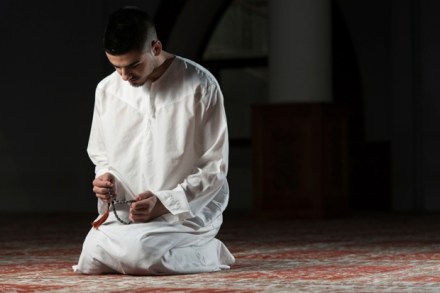
Two years ago this week, my stepson came home wearing an Arabic black thawb. He walked into the sitting-room, smiled defiantly at me and at his father, and asked us how he looked. We were a little shocked, but being English of course we said he looked very nice. Our boy had never shown any interest in religion before he found Islam at 16. We’re atheists, and we raised him to be tolerant of all faiths but wary of anyone selling easy answers. It all began after he left school. He was feeling slightly isolated, depressed and vulnerable after breaking up with his first girlfriend, so we were pleased when he began college and some new friends appeared. They were all young Muslim men.

Conservative Anglicans’ emergency plan to escape women bishops

From our UK edition

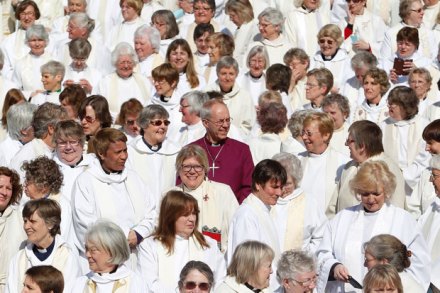
Anglicans aren’t the sort of church-goers who set much store by miracles, signs and wonders. Yet their own church is one of the greatest miracles of our society: it has managed to hang together, in spite of raging differences, for centuries. Since 14 July, that miracle has been under threat. For most, it was a great leap forward when the General Synod finally approved the ordination of women bishops. A delighted Archbishop of Canterbury was ‘grateful to God and to answered prayers’. David Cameron called it a ‘great day for the church and for equality’. But one section of the church didn’t feel it was a great day. Members of the conservative evangelical movement, represented by a pressure group called Reform, had resisted this change for years.

Knee-jerkers vs knee-tremblers

From our UK edition

A little joke by Paddy, Lord Ashdown of Norton-sub-Hamdon, turned upon something to be shunned. Conservative ministers, he said, had ‘indulged in a spasm of knee-jerking which would have made even St Vitus feel concerned’. He has, I think, got his spasms in a twist. Apart from saying ‘Aaah’, the cartoon task for a patient at the doctor’s is to cross a leg for it to be hit with a little hammer. ‘Striking the tendon below the patella gives rise to a sudden extension of the leg, known as the knee-jerk,’ wrote the physiologist Sir Michael Foster in 1890. He was a busy man, sitting on committees to rid Victorian England of evils linked to malaria, sewage, tuberculosis and the University of London. But he didn’t object to knee-jerks.

The theological illiteracy of Eric Pickles

From our UK edition

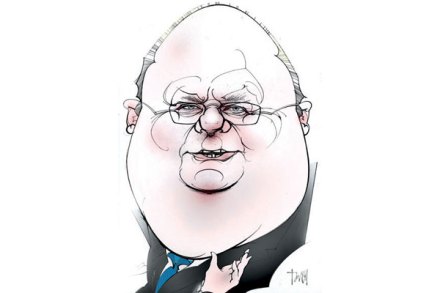
It is worrying that Eric Pickles is in charge of religion for this government. I first came across his footprints in Bradford, where in the Eighties he was as much responsible as any other politician for the introduction of 'multicultural' policies into English cities. He understood that there were Pakistani Muslim votes at stake, and introduced policies to gratify their sensibilities, something conveniently forgotten once he moved down to Essex. The central flaw in this policy was not that it encouraged Islam but that it locked Pakistani machine politics into the indigenous machine politics of local government. Labour turned out to be the main beneficiary of the process, though you can't fault Pickles's political astuteness in trying to make his own party benefit instead.

Is Britain hardening its heart against Muslims?

From our UK edition

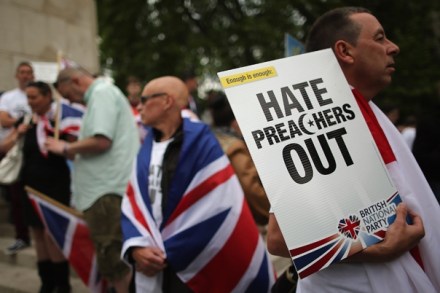
British public opinion has never really turned against Muslims. According to Pew’s 2014 Global Attitudes survey, 26 per cent of us have ‘unfavourable’ attitudes towards Muslims in this country; compare that to 46 per cent in Spain, 53 per cent in Greece and 63 per cent in Italy. Our national tolerance has, so far, proved robust. Even after the 7/7 London bombings, favourable attitudes towards Muslims in Britain dipped by only a couple of points. But is it strong enough to survive the horrors of Isis and Rotherham coming to light simultaneously? It feels as if we are on the verge of an anti-Muslim backlash that could spread beyond the strongholds of the aggrieved white working class in Barking and Rochdale and into the home counties.

Six rivals for the name Isis

From our UK edition

Not in their name The BBC decided to start calling the Islamic terror group Isis by the acronym IS instead. Some organisations who are retaining the name: — Isis Equity Partners London-based private equity group — The Isis Student magazine at Oxford University — Isis day spa and hair salon in Oxford (not to mention hair salons in Birmingham, Ascot, Sunningdale and Writtle) — HMP Isis Young Offenders’ Institution in Thamesmead — Isis Motors Secondhand car dealership in Hayes, Middlesex — Spirit of Isis Ethically sourced crystal shop in Bedford Fighting faiths It was claimed that more British Muslims are fighting for jihadist forces than have joined HM Forces. What is the declared religion of British servicemen? Christian 86% No religion 12.

The SNP’s ‘cybernats’ are a modern political scourge – with the zeal of converts

From our UK edition

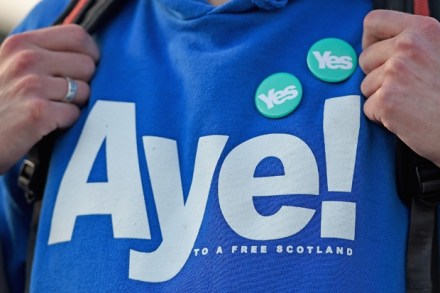
The first ‘yes’ campaign volunteer knocked on my door towards the end of last year. She was a member of the Scottish Socialist Party. I glanced at her dog-eared tally sheet — in my old block of 40 flats, only three residents had said they would vote no. In this neglected pocket of Edinburgh there are men who roll up their tracksuit bottoms to show off their prison tags. It is made up of decaying towers and pebble-dashed tenements. The people here are going to vote for change. Who can blame them? Now that I have moved to a more genteel suburb outside of the city, a further three yes activists have attempted doorstep conversions. I have heard appeals to my head, my heart and my wallet from nationalists who are as dogged as Jehovah’s Witnesses.

Romance isn’t a religion. Stop looking for The One and join The Queue

From our UK edition

[audioplayer src="http://traffic.libsyn.com/spectator/TheViewFrom22_21_August_2014_v4.mp3" title="Julie Burchill and Louise Mensch discuss whether 'The One' exists" startat=1773] Listen [/audioplayer]Pity the modern starlet. Be she steaming-hot pop-tart or reality-show show-off, her range of emotional experiences will, thanks mostly to the gentlemen of the press, be strictly limited. She will have ‘lonely hells’ (often but not always linked to ‘drug hells’), ‘sex romps’ (sometimes ‘three-in-a-bed’) and watch her life ‘spiralling out of control’.

Islamic extremism and the hypocrisy of the Church of England

From our UK edition

The Church of England has written to David Cameron accusing him of lacking ‘a coherent or comprehensive approach to Islamic extremism as it is developing across the globe’. The letter, signed by the the Bishop of Leeds, Nick Baines, and approved by the Archbishop of Canterbury, Justin Welby, also reportedly accuses the PM of turning his back on Christians slaughtered or made homeless in northern Iraq – and wonders why Cameron has chosen to concentrate on the plight of the Yazidis instead. These criticisms are spot on. But I’m surprised that the C of E has had the brass neck to make them. For decades, the Anglican and Catholic Churches have ignored the growth of the domestic Islamic extremism that has seen British Muslims travel to Syria and Iraq to fight for Isis.

Richard Dawkins and the cost of rationality

From our UK edition

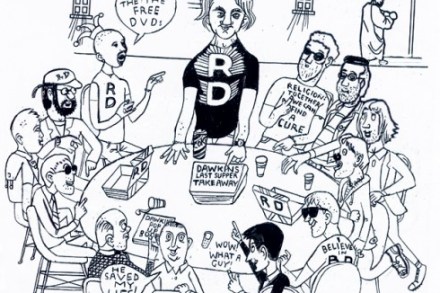
Rationality doesn't come cheap -- not if you're buying Richard Dawkins' brand. In this week's Spectator, Andrew Brown examines the costly cult of personality that has grown up around the professor; and the stratospheric cost of supporting his work. But your money doesn't just aid Dawkins' monstering of tithe-bloated religion -- there are discounts and money-can-buy treats for non-believers too. So, what do you get? For $85 a month or $1,000 a year - Reason Circle membership Invitation to member-only event with personalities from Dawkin's foundation A discount for all purchases in the richarddawkins.

Richard Dawkins doesn’t get it: religion is rational

From our UK edition

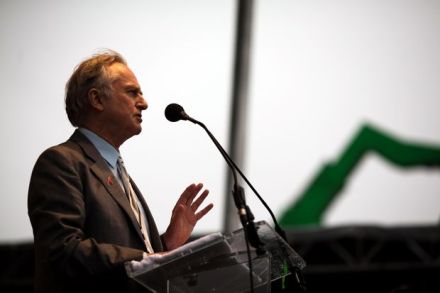
Where to start with Prof Dawkins’ latest observations about religion and fundamentalism? In response to questions from an audience in Edinburgh where he was promoting his autobiography this week he observed that ‘nice’ religious people give credence to suicide bombers. It’s remarkable, really, that after a good eight years of debate and dialogue with people like Rowan Williams and Jonathan Sacks — viz, perfectly rational believers — he can still say the following: ‘...there is a sense in which the moderate, nice religious people – nice Christians, nice Muslims – make the world safe for extremists. ‘Because the moderates are so nice we all are brought up with the idea that there's something good about religious faith.

The bizarre – and costly – cult of Richard Dawkins

From our UK edition

[audioplayer src="http://traffic.libsyn.com/spectator/TheViewFrom22_14_August_2014_v4.mp3" title="Andrew Brown and Daniel Trilling discuss the cult of Richard Dawkins" startat=788] Listen [/audioplayer]The other day I wrote something to upset the followers of Richard Dawkins and one of them tracked me down to a pub. I had been asked to give a talk to a group of ‘Skeptics in the Pub’ about whether there are any atheist babies — clearly not, in any interesting sense — and at the end a bearded bloke, bulging in a white T-shirt, asked very angrily where Dawkins had said there were any. I quoted a couple of his recent tweets on the subject: When you say X is the fastest growing religion, all you mean is that X people have babies at the fastest rate.

A lesson of Iraq in 2014: the nation-state is the future

From our UK edition

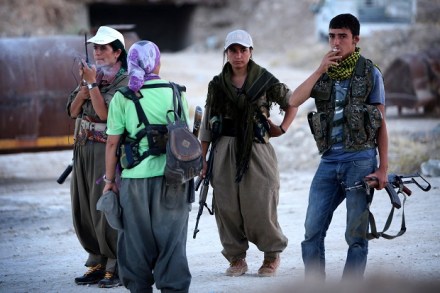
The collapse of some of the Sykes-Picot states in 2014 will spur people to ask which way the world is heading and what it all tells us, just as with the fall of Communism in 1989. After Communism we had at first Francis Fukuyama’s The End of History,which foresaw the triumph of western-style liberal democracy, and then the more prescient, although equally controversial, The Clash of Civilizations by Samuel Huntingdon, which viewed the world as essentially consisting of power blocks centred around ancient civilizational, religious ties. So what does 2014 mean? A clear lesson that the Yazidis and Christian Assyrians have learned is that without a patch of land for oneself, and soldiers to protect it, no people is safe.

What has Hezbollah’s Secretary General been reading this summer?

From our UK edition

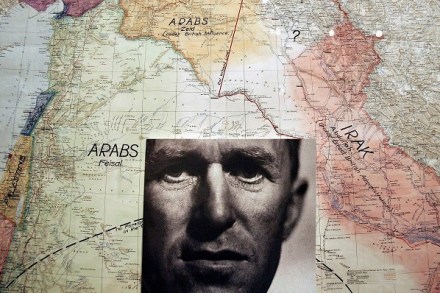
In Britain we seem to be obsessed by what our politicians are reading this summer. It tells us, so we think, about the way they’re thinking or perhaps just what they want us to think they’re thinking. Why don’t we study what other political leaders are interested in? Lebanon’s Daily Star offered us a revealing vision of one regional actor, Hezbollah’s Secretary General Sayyed Hassan Nasrallah. Sitting with Lebanon’s veteran Druze leader, Walid Jumblatt, in late July, Nasrallah has a copy of James Barr’s A Line in the Sand in front of him. The book, one of the best researched and most readable studies of the making of the modern near east (read The Spectator’s review here), offers a tantalising glimpse of what might have been.

Jean-Marie Charles-Roux, a good and holy priest

From our UK edition

I am so sorry to hear of the death of Fr Jean-Marie Charles-Roux in Rome at the age of 99. I won't attempt an obituary, but my memories of him from the late 1980s are still vivid. He was a slender, aristocratic figure who wore a frayed but superbly cut soutane; his long hair was combed backwards in the style of the first Doctor Who, William Hartnell. For many years he was based at the Rosminian church of St Etheldreda's, Ely Place, where he celebrated only the Tridentine Rite. 'When the New Mass came in I tried it in English, French, Italian, even in Latin – but it was like a children's game,' he told me.

Why is China tearing down church crosses? Because it’s terrified of religion

From our UK edition

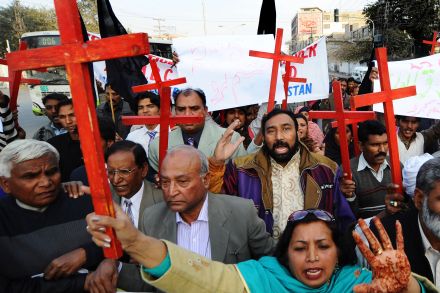
Since the beginning of this year, China has been engaged in a cruel and bizarre campaign against Christians in the south-eastern province of Zhejiang. Its main target is Wenzhou, a city known as ‘China’s Jerusalem’ because a million of its eight million residents are Christian. Wenzhou’s 2,000 churches display hundreds of crosses that illuminate the skyline (a pattern familiar to any visitor to South Korea, where even the smallest towns sprout neon crosses). Now China wants those crosses taken down, and fast. According to AP, at the end of July ‘200 congregants rushed to the Longgang Huai En Church in Wenzhou to protect their building – but to no avail.

What about August 1714? 300 years since the Hanoverian accession

From our UK edition

The centenary of the start of the first world war is getting much more attention than the tricentenary of the accession of George I, which also falls this week. As far as I can tell, no new biographies of the first Hanoverian king are imminent, whereas books on the great war are pouring forth. You can see why. The replacement of a plump, if benign, queen by an ‘obstinate and humdrum German martinet with dull brains and coarse tastes’ (Winston Churchill’s words), who presided over a huge financial scandal and died unlamented after a short reign, need hardly detain us. But forget the royals and focus on what we might call the reshuffle among politicians that accompanied the change.

Now that Richard Dawkins is attacking Muslims and feminists, the atheist Left suddenly discover he’s a bigot

From our UK edition

‘Richard Dawkins, what on earth happened to you?’ asks Eleanor Robertson in the Guardian today. Ms Robertson is a ‘feminist and writer living in Sydney’. She follows to the letter the Guardian’s revised style guide for writing about Prof Dawkins: wring your hands until your fingers are raw, while muttering ‘Oh, what a noble mind is here o’erthrown’. For some time now Dawkins has been saying rude things about Muslims and feminists. This makes him a bigot in the eyes of the Left — and especially the Guardian, which is extraordinarily and mysteriously protective of Islam. As Robertson puts it: ‘Sure, he wrote some pop science books back in the day, but why do we keep having him on TV and in the newspapers?

Moeen Ali reminds us that sometimes sport is the only place for politics

From our UK edition

Moeen Ali, the England cricketer, faces a possible reprimand after the International Cricket Council (ICC), the game’s governing body, censured him for wearing two wristbands, one saying ‘Save Gaza’, the other ‘Free Palestine’. International cricketers are, you see, prohibited from making political statements on the field. The English Cricket Board, which is not above making political statements (as its various boycotts of Robert Mugabe’s Zimbabwe suggest), dissents from the ICC’s view, and says that Moeen’s stance is ‘humanitarian not political’. What, then, of ‘Save Gaza’ and ‘Free Palestine’? There is politics here. And, yes, it is partial.