Religion

Identity crisis | 27 October 2016

From our UK edition

You may not listen to them every year. Or even to every lecture in the current series. But the survival of the annual Reith Lectures on Radio 4 from the old days of the Home Service and Radio 3 (they were established in 1948 to honour what Reith had done for the corporation) is crucial to the existence of the BBC.

Islam’s savage war against atheists: listen to Holy Smoke, the Spectator’s new religion podcast

From our UK edition

Are former Muslims who 'come out' as atheists in Islamic countries becoming the most persecuted minority in the world? And are Western social media turning a blind eye to their plight? Maajid Nawaz, the former Islamist who chairs the anti-extremist Quilliam Foundation, thinks so. He and Douglas Murray, associate editor of the Spectator, join me for the first episode of Holy Smoke, our new fortnightly religion podcast. Over the last 20 years, religion has become a wildly unpredictable factor in world affairs, toppling governments, re-drawing national boundaries and provoking bitter disputes in Western civil society.

It’s time the Government ended its silence on Sikh hate crime victims

From our UK edition

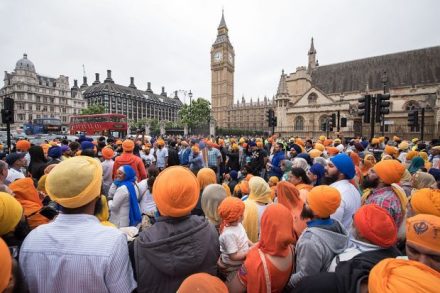
On 15 September 2001, Balbir Singh Sodhi, a gas station owner, was arranging flowers outside his family business in Arizona. He had just returned from Costco, where he purchased some American flags and donated money to a fund for victims of 9/11. Moments later, he was shot dead. Sodhi, a turbaned Sikh, goes down in history as the first person killed in retribution for the Al Qaeda terror attacks. On his arrest, his murderer Frank Roque told police, 'I’m a patriot and American.' Fifteen years on, Sikhs, both in the US and Britain, are acutely aware that hate does not discriminate. And Sikhs, like Muslims, continue to face the backlash to the Islamist war on the West.

We must have the freedom to mock Islam

From our UK edition

How did mocking Islam become the great speechcrime of our times? Louis Smith, the gymnast, is the latest to fall foul of the weird new rule against ridiculing Islam. A leaked video shows Smith laughing as his fellow gymnast, Luke Carson, pretends to pray and chants ‘Allahu Akbar’. Smith says something derogatory about the belief in ‘60 virgins’ (he means 72 virgins). Following a firestorm online, and the launch of an investigation by British Gymnastics, Smith has engaged in some pretty tragic contrition. He says he is ‘deeply sorry’ for the ‘deep offence’ he caused. He’s now basically on his knees for real, praying for pity, begging for forgiveness from the guardians of what may be thought and said.

Why cathedrals are soaring

From our UK edition

Something strange is happening in the long decline of Christian Britain. We know that church attendance has plummeted two thirds since the 1960s. Barely half of Britons call themselves Christian and only a tiny group of these go near a church. Just 1.4 per cent regularly worship as Anglicans, and many of those do so for a privileged place in a church school. Yet one corner of the garden is blooming: the 42 cathedrals. At the end of the last century, cathedrals were faring no better than churches, with attendances falling sometimes by 5 per cent a year. With the new century, everything changed. Worship in almost all 42 Anglican cathedrals began to rise, and it is now up by a third in a decade. This was in addition to visits by tourists, who number more than eight million.

Why does Justin Welby want us to understand jihadis?

From our UK edition

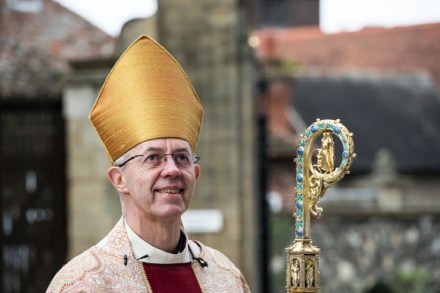
Hallelujah, everybody. The Archbishop of Canterbury has been pontificating again. Justin Welby says we must try to understand radical Islam a little better. He explained last week, with great patience, that the jihadis think they’re in an end-time war against Christians and Jews, so killing them is exactly what they expect to happen. It sort of proves them right and makes them happy, he argued. Well, thank you for that, Justin. And now we’ve understood this crucial point, what approach should we take to them henceforth? Invite them round for a fondu party and a game of Twister? Justin doesn’t say. It does rather seem to me that if killing them makes them happy, and it certainly makes me happy, we’re in a sort of win-win situation. What’s not to like?

Christian criticism of Israel is myopic

From our UK edition

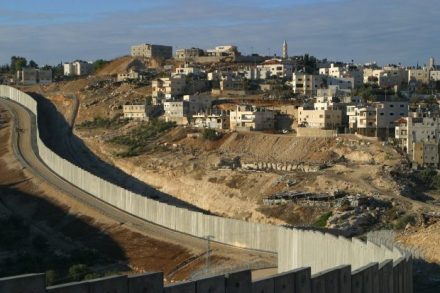
A Methodist church in Hinde Street, London, is exhibiting ‘You cannot pass today: Life through a dividing wall’, a reconstruction of a border control point between Israel and the occupied territories. The purpose, needless to say, is not to show how to deal with a terrorist threat, but to attack Israel’s oppression of Palestinians. A Jewish human rights group which has written to protest has been told, soapily, by the minister, ‘I respect your passionate concern for these issues…This exhibition… has been carefully curated… to promote reflection and prayers for peace.’ I have noticed these wall protests popping up on campuses etc., and they never seem either reflective or prayerful. They are propaganda.

Western values are more Christian than classical

From our UK edition

There is an important article in this week’s New Statesman. It addresses the big (embarrassingly big) issue of what our most fundamental values are in the West. The historian Tom Holland explains that his study of the classical world has made him realise that a huge gulf exists between the values of that era and modern Western assumptions – especially the assumption that all human lives matter. Classical culture has huge allure for modern intellectuals, but in reality its values were never far from fascist. And it was Christianity that put new values on the table – a fact that Enlightenment thinkers massively downplayed, due to their sneering dismissal of ‘superstition’.

Va-t’en, Satan

From our UK edition

What do you say to someone who is killing you? It is seldom possible to decide in advance. We are told that Fr Jacques Hamel, aged 85, murdered while saying Mass at Saint-Étienne-du-Rouvray on 26 July, said, as his killers brought him to his knees to cut his throat: ‘Va-t’en, Satan.’ It is a reasonable thing to say, not necessarily identifying the attackers with Satan, just indicating that he is at work in the actions of the moment. Fr Hamel’s death reminded me strongly of that of St Thomas Becket at the hands of fellow Normans in 1170. Language had due importance on that occasion. Reginald FitzUrse, on breaking into the cathedral, shouted: ‘Where is Thomas Beketh [sic], traitor to the king?

Why CofE schools must resist becoming more religious

From our UK edition

The Church of England’s relationship with state education seems simple enough. Its schools have been a major source of strength, significantly slowing its rate of decline over the past few decades. Many congregations have been swelled by parents seeking a better-than-average state education for their offspring. From an Anglican point of view, what’s not to like?  Well, this: selection by church attendance is unpopular with those who do not benefit, giving the Church an image problem with its non-members. This makes some of its members, including me, uneasy. Also, the integrity of church attendance is in doubt, in parishes near a popular school. The cliché of the pushy parents faking their piety is partly true, and it affects the meaning of contemporary churchgoing.

Death of an anti-feminist

From our UK edition

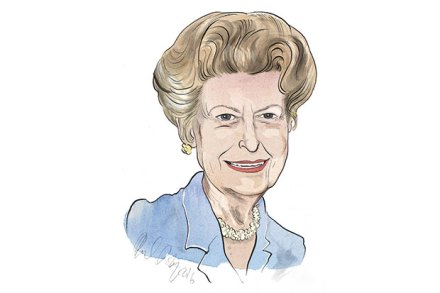
Phyllis Schlafly could have been America’s number one feminist. She graduated from good universities, wrote important books on serious topics, was an outspoken orator and political organiser, didn’t let her life be defined by her husband’s career, and stood up to bitter abuse from her opponents. In reality, however, she was America’s leading anti-feminist. Her death this week, at the age of 92, marks the passing of an organisational and publicity genius who did all she could to fight against the spirit of the age. When passage of the Equal Rights Amendment to the US constitution seemed imminent and inevitable in the mid-1970s, she created a democratic grassroots pressure group, ‘StopERA’, that managed to kill it once and for all.

Islamic State’s ‘Jizya tax’ for Christians is pure propaganda

From our UK edition

Christians continue to be slaughtered in the Middle East. But as reports of genocidal atrocities mount up, our governments have found a new reason to sit on their hands. Christians, the theory goes, don't have it as bad as the Yazidis. As 'people of the book’, Christians enjoy privileged status. Rather than suffering the full extent of Islamic State's depravities, they can pay a tax (Jizya) in return for protection. It sounds credible and contains just enough theology to bamboozle the secular population of the international community. Here's the Office of the UN's High Commissioner for Human Rights: 'While Christian communities still living in Daesh controlled territories live difficult and often precarious existences...

The Islamist war against Sikhs is arriving in Europe

From our UK edition

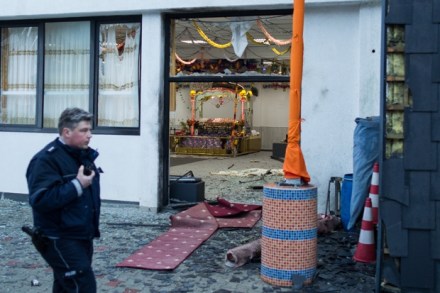
Terror attacks in Germany are becoming remarkably unremarkable. So when a bomb went off in the German city of Essen, near Düsseldorf – and killed nobody - it barely registered. The three teenagers who detonated the device were all members of a Whatsapp group called ‘Supporters of the Islamic Caliphate’, so their intentions seemed pretty clear: they wanted to wage war against the infidels of the West. But their target – a Sikh temple – was striking. While initial reports suggested there was ‘no indication’ of a terrorist incident, any Sikh reading the news would have understood the motive, just as any Jew or Christian would have understood precisely why Islamic extremists target synagogues or churches.

Tomorrow’s world | 1 September 2016

From our UK edition

It may be difficult to believe when you think of Donald Trump, but the age of super-humans is almost upon us. Some people are confident that over the next century genetic engineering, electronic implants, new drugs and the medical defeat of ageing will give rise to a race of beings with capabilities far beyond our own. And what will they do with them? What will clichéd fears about ‘playing God’ mean to our descendants who, by comparison with us, will effectively be gods? Such questions exercise the historian authors of these two books.

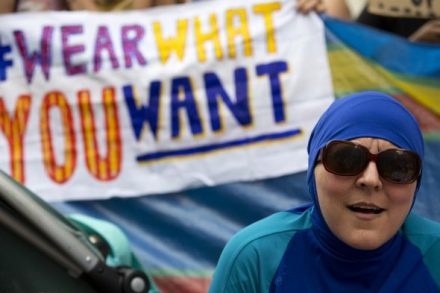
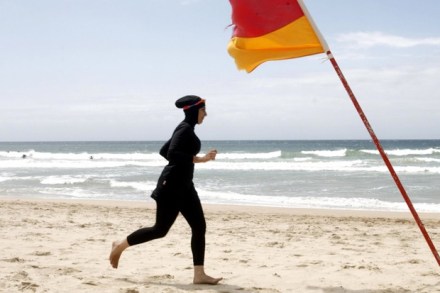
France’s burkini ban was an own goal for secularism

From our UK edition

I’ve always hated the beach. The water? Great. The sunshine? Terrible. It starts with the hot trek across the sands to find a square of free ground – loaded up with factor 60, several books, a comedy floppy hat, two towels, three bottles of water and the rusty family parasol. Then there’s the bodily anxiety. Find me a woman who doesn’t fret about her body on the beach, and I’ll find you a liar. Just over a year ago, I wrote a post for The Spectator about my own fraught history with my body on the beach. I still don’t understand how it ever became acceptable to wear an itsy bitsy bikini around one’s dad. And even in a one-piece, if I don’t draw attention to my thickening waist, my mother will.

France is right to ban the burkini

From our UK edition

May I interrupt, for a moment, the howls of anguish from those liberals in uproar at the news that authorities in France are banning burkinis on their beaches? I'd like to relate an incident that occurred earlier this month in France. It involved my girlfriend, who was on her way from Paris to visit her grandmother in eastern France. An hour into her journey she pulled into a service station to fill up with petrol. On returning to her car she made a small sign of the cross as she slid into her seat. Navigating one's way on a French motorway during the height of summer can be a fraught experience, particularly for the nervous driver. Suddenly there was a violent thump on her window. She jumped with fright. A man stooped so his face was level with hers. 'Why do you make that sign?

Freedom is our best weapon against Isis

From our UK edition

Of all the guff churned out about Isis, the refrain that we are engaged in a 'clash of civilisations' and 'battle of ideas' is uniquely moronic. Isis doesn't want civilisation. As for a battle of ideas - what ideas? Isis doesn't have any, unless you count an apocalyptic fight to the death in Dabiq or Rome. We are reliably informed that Isis includes some very intelligent people who spend years planning terror attacks. Yet it took the, ahem, 'conflicted' Mohamed Bouhlel - that brave warrior who defecated on his own daughter's bed - months to plan his terror attack, which consisted solely of getting in a lorry and putting his foot down. Has any moment more succinctly captured the utter hatred of these brainwashed idiots than the moment Bouhlel's truck accelerated into the crowd?

What performing stand-up in Ukip country taught me about racism

From our UK edition

Most people would say UKIP lends itself to comedy better than Denis Healey’s eyebrows lent themselves to tweezers – but not the people of Walton-on-the-Naze, as they live in the party’s only constituency. I’m a stand-up comic, and I was booked to play the town’s first comedy night this month. I don’t know if the lovely promoter realised I was Asian when he booked me; for my part, I didn’t realise Douglas Carswell was Walton’s MP, and only discovered while Googling the town on the way to the gig, when it was too late to turn back.

Is there something that the BBC isn’t telling us about these Norwegians?

From our UK edition

A man has set fire to a train in Switzerland and stabbed lots of people. On the BBC News last night the perpetrator was described as 'a Swiss national'. Similarly on the BBC News online today: 'The suspect, described as a Swiss man aged 27, was also taken to hospital after the incident near Salez in St Gallen canton, close to Liechtenstein.' Do you know, I think there is something the BBC – and the Swiss authorities – are not telling us. This attack was quite similar in some respects to one carried out in London recently, in which an elderly American woman was murdered. Then, at least, the BBC and the authorities told the truth – the perpetrator was Norwegian. It seems highly likely to me that the pyromaniac stabber in Switzerland was Norwegian too.

The Spectator’s Notes | 11 August 2016

From our UK edition

Those who want to revive grammar schools are accused of ‘bring backery’ — the unthinking idea that the past was better. But many of their accusers suffer from the rigid mindset of which they complain. They say that grammar schools ‘condemned most children to failure at the age of 11’, and that, even at their peak, grammars catered for less than 20 per cent of the school population. Why assume that the return of grammars must re-create either of these things? Grammar schools grew up, historically, in different ways and at different times. Then, in the mid‑20th-century mania for uniformity, they were standardised and, in the later 20th-century mania for comprehensives, almost completely abolished.