Religion

Deepfakes and the war for the soul of reality

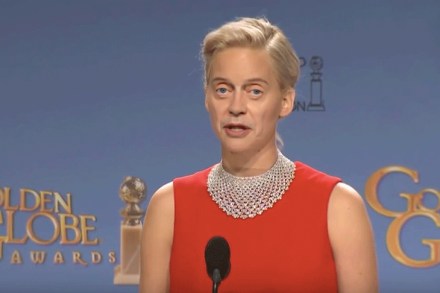
The faked video of Nancy Pelosi slurring her words as if she was drunk was shared on social media over 2.5 million times. The video wasn’t only shared by random accounts intent on spreading misinformation. Those willing to believe it, or at least to seem willing to do so, included Trump attorney and former NYC mayor, Hizzonor Rudy Giuliani. ‘What is wrong with Nancy Pelosi? Her speech pattern is bizarre,’ Giuliani asked, before his critical faculties kicked in and deleted the post. Though Facebook has banned some forms of speech, including white nationalism and fair housing ads from the city of Houston, it opted not to take down the doctored Pelosi video. The concept of reality is under threat.

deepfakes jennifer buscemi

What terminal cancer taught me about life

From our UK edition

"I’m sorry,” said the doctor, “you have large tumours in numerous places. We can’t operate or cure you. You have 18 months to live”. With those words, I burst into tears. In that mundane hospital room, my life changed. The job I love – I worked as boss of a private bank – was gone. My priorities shifted immediately. Nobody on their death bed wishes they had spent more time in the office. When my time comes, I was determined I would not have that regret. I wanted to make the most of however long I had left. Nearly four years on, I am still alive thanks to my wonderful oncologist and staff at the Royal Marsden hospital. My fight with cancer has not been easy. Problems with my eyes nearly left me blind.

The wonder of Whitby

From our UK edition

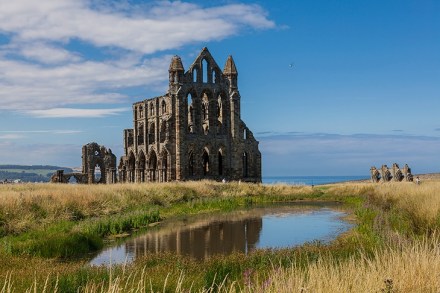
The 199 steps up to the ruins of Whitby Abbey are a pilgrimage; they always have been. And any good pilgrimage takes effort. Count Dracula (also acquainted with the north Yorkshire town) cheated — he climbed the steps in the guise of a black hound. These days, with its new £1.6 million museum and visitor centre, our vampire friend would find a ground-floor café and gift shop. Knowing English Heritage, there is probably a bowl of water for dogs, which would have kept the Count happy. Whitby is a surprise, with a history that puts it at the heart of Britain’s spiritual and literary life. It’s also a vibrant fishing port, somewhere you can pick up a Whitby smoky — smoked herrings — made in a backstreet smokehouse.

The return of plainchant

From our UK edition

‘I’m still warmed up from last night,’ said Sophie Bevan early on a Sunday morning in the practice-room behind the presbytery of St Birinus Catholic Church in the charming village of Dorchester-on-Thames, Oxfordshire – a tiny Pugin-esque gem dwarfed by the enormous Anglican abbey up the road. She and the other four members of the Davey Consort (two of them her cousins from the musical Bevan clan) were running through a Renaissance polyphonic mass, with Sophie’s husband, the composer and conductor Ryan Wigglesworth, directing from the practice harpsichord.

Why Peter Sellars’s staging of the St John Passion – which I sang in – was deeply flawed

From our UK edition

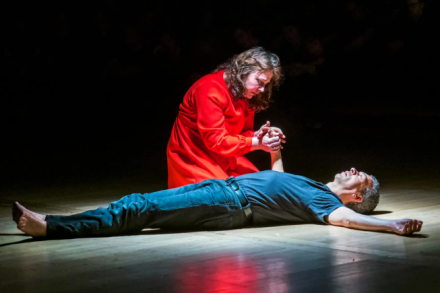
It has been my privilege over the past two weeks to sing in the chorus of the Orchestra of the Age of Enlightenment under conductor Simon Rattle and director Peter Sellars in a staged production of J.S. Bach’s St John Passion. The experience has been life changing for some of my colleagues; it has certainly been unique. Dressed in black casual clothing, we spend much of the performance sauntering around the stage making abstract gestures intended to highlight certain words and distill the myriad emotions found in the music. Some find this effective; others find it silly.

Why don’t we talk about Van Gogh’s Christian faith?

From our UK edition

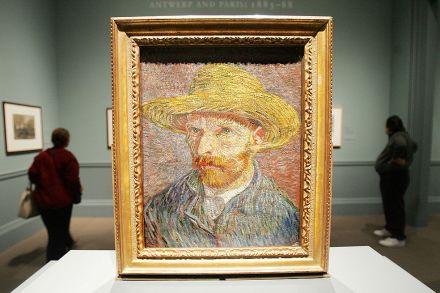
Vincent Van Gogh has been airbrushed by the secular arts media. I have not yet seen the new exhibition at Tate Britain about his London years, so I can only comment on the publicity I have read and heard. This arts chatter downplays, or even ignores, the central feature of his life at this time: his religious zeal. It gives the impression that he was dedicating himself to art, gearing up to be the archetypal creative genius. In reality he did not take art fully seriously in the mid 1870s: though he worked for an art dealer, his real passion was religion.

The shame of the Parkfield school protesters

From our UK edition

An estimated 600 children were withdrawn for the day from a primary school in Birmingham last week. A rather disturbing video has since been circulating on social media, showing scores of Muslim parents with their young children in Birmingham, shouting “shame, shame, shame”. What has caused such a reaction? Parkfield, a primary school in Saltley, teaches a programme called No Outsiders which is designed to encourage children to be “happy and excited about living in a community full of difference and diversity”. It covers issues such as race, gender, ability, sexual orientation, gender identity, age or religion. One part of the programme, on LGBT rights, offended some Muslim parents who saw it as a promotion of homosexuality.

The false equivalence between ‘Islamophobia’ and anti-Semitism | 8 March 2019

From our UK edition

I have been travelling in the Middle East for the last few weeks and slightly regret returning to the maelstrom of ancient animosities and unbridgeable sectarianism that is modern Britain. But in my absence I see that one of the worst tropes of our time has been stalking unhindered across the land. That is, of course, the latest push to make an equivalence between anti-Semitism and the crock term ‘Islamophobia’. It is not just in the UK that this play has been made. In America over recent days people have been able to follow the progress of the new Muslim congresswoman Ilhan Omar, with her supporters deciding to deflect attention from her expressions of anti-Semitism by claiming ‘Islamophobia’.

My suggestions for Justin Welby’s Brexit prayers

From our UK edition

Would anyone like to join me in the “Five Days of Prayer” that Archbishop Welby has announced to mark the days that we leave the European Union? (Yes, sure, IF we do. Otherwise I assume there will be five days of rejoicing.) I will be praying on Day One for Welby to be replaced by a less gullible, less virtue signalling, less privileged person. Day Two will be a prayer that the Church of England start dealing with personal morality rather than grandstanding political gestures. Day Three will be the prayers to stop Muslims preaching in CofE churches, until such time as Islamic states allow Christians to proselytise without getting their heads chopped off. Day Four will be a prayer that Welby finally grasps that austerity might be a salient response to a serious economic problem.

Why I find the George Pell verdict hard to believe

From our UK edition

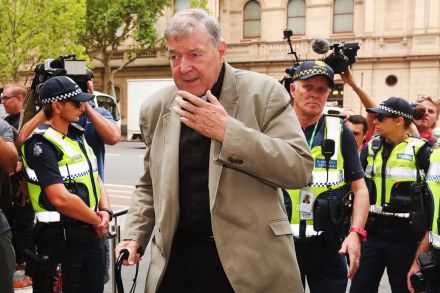
Sorry. I just don’t believe it. The conviction of George Pell – still Cardinal Pell – last December, on which reporting restrictions are lifted today, isn’t credible; he’s appealing against it. Fiat Justitia and all that, but the problem with the rerun of this bizarre trial on five counts of child abuse in 1996 is that the implausibilities of the case against the Cardinal are as great as ever – in his first trial, the Catholic News Agency reported the jury was divided 10-2 in Pell’s favour. Here is what Pell was accused of: “The complainant said that he and another choir boy left the liturgical procession at the end of one Sunday Mass and went fossicking in the off-limits sacristy where they started swilling altar wine.

How agnostics can help save the Church of England

From our UK edition

General Synod has repealed the old law that every Anglican church must hold a Sunday service. It’s not really the end of an era, because the law has been flouted for decades: many rural vicars are in charge of a large handful of churches and cannot hold services at all of them every week. It’s a reminder that we have to think creatively about how to keep our parish churches alive. And this is not just the responsibility of Anglican churchgoers. Because we have an established Church, it makes some sense for an agnostic who never, or nearly never, attends worship to feel some connection with his or her local church. It is part of the public realm, part of the historic life of the village or district.

Victoria Bateman’s naked Brexit stunt isn’t feminist

From our UK edition

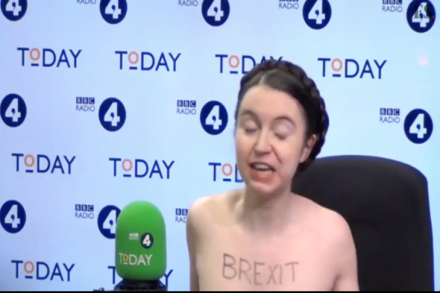
Dr Victoria Bateman’s naked Brexit stunt should not be seen in terms of modern feminism but in terms of early modern religious performance art, especially that of the Ranters and Quakers. The trauma of the seventeenth century English civil war caused some strange religious groups to emerge, and some of them went in for shocking little stunts, or ‘happenings’, in the hippy-sixties term. Cromwell’s frail Commonwealth got rid of the old established church, and deciding what to put in its place was a bit like Brexit. Lots of Puritans wanted their new orthodoxy set up, but plenty of liberals wanted a more open-ended free for all, a ‘no-deal’ scenario perhaps. The Ranters were religious punks; they mixed religion with sex, drugs and swearing.

Why the Pope’s visit to Abu Dhabi matters

From our UK edition

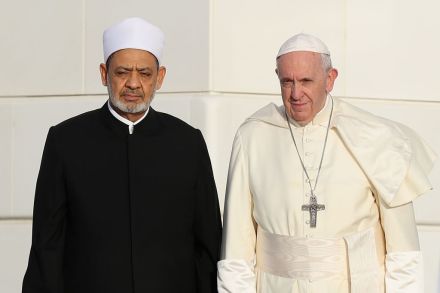
Today, the Pope celebrated mass in Abu Dhabi and you do know what that means? It’s a mass in the Arabian peninsula, the birthplace of Islam. And for the first time in centuries – whenever the Nestorian church last had its rites there, maybe 1300 years ago, the gospel was said in Arabic there. It was a happy, celebratory affair (way more cheerful, I may say, than the Pope’s mass in Dublin) preceded last night by a more serious affair, the signing of a joint declaration on Human Fraternity by the Pope and the grand imam of al Azhar. It’s the culmination of the Year of Tolerance proclaimed here by the rulers of the United Arab Emirates.

Damian Thompson: my sister on fighting cancer with faith

From our UK edition

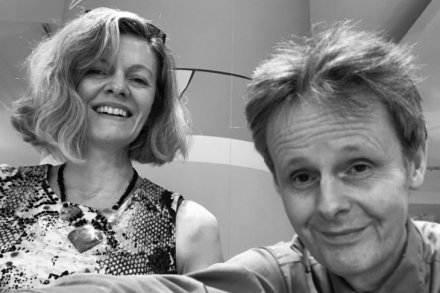
The photo above is of my sister Carmel and me having tea a few days after our mother’s funeral. She looks cheerful, doesn’t she? That’s because she was: although we both missed our mother intensely, and always will, we had done most of our grieving before she died, as we watched her tortured by Parkinson’s disease and severe dementia. Carmel looks well, too. And she thought she was. Ovarian cancer plays that trick on women. The first symptoms tend to be annoying rather than alarming. A few weeks after this photograph was taken, I was reassuring her that Irritable Bowel Syndrome is a common response to bereavement – which it is. But that’s not what was wrong with her.

Justin Welby’s reformation

From our UK edition

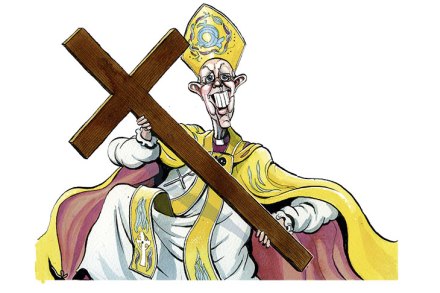
Justin Welby is working in Thomas Cranmer’s old study in Lambeth Palace, a room that looks as if it hasn’t changed at all since the Book of Common Prayer was written here almost six centuries ago. It feels like a mini-monastic retreat: there is a desk, a crucifix, several Bibles and not much else. The 105th Archbishop of Canterbury studies and prays here, deciding how best to lead a national church whose Sunday services are now attended (according to its own figures) by barely 1 per cent of England’s population. These are new times — and require new tactics. When he was enthroned six years ago, he was seen as just the man to provide the new tactics. He’s a convert, who was ordained in his thirties after a career as an oil company executive.

American Catholicism is going back to the future

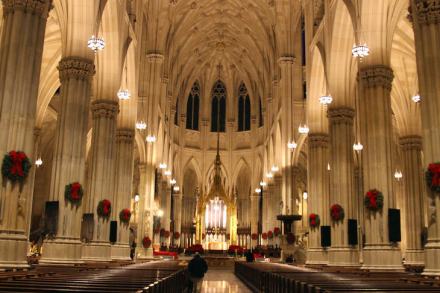
A couple of years ago, in high summer, my wife and I attended Mass in St Patrick’s Cathedral, as we do every time we visit New York. It is, in general, a bracing experience for Catholics who have been paddling in the tepid pools of Irish Catholicism. The celebrant, a middle-aged man with the physique and personality of a matinee idol, gave a startling sermon about the gospel of the day, Matthew 10:34, in which Jesus declares, ‘I have come to bring not peace but a sword.’ In his homily, the priest tore into sentimental notions of Christianity and the corruptions of concepts such as compassion and mercy.

catholicism

Andrew Sullivan’s false gods

Reading Andrew Sullivan reminds me of a Latin tag the novelist Iris Murdoch favored: corruptio optimi pessima: the corruption of the best is the worst. Sullivan is an intelligent and well educated man. He is capable of writing quite movingly about religion, especially about the challenges our media-saturated age — we really are, as T. S. Eliot put it, ‘distracted from distraction by distraction’ — pose to that reservoir of quiet thoughtfulness that any spiritual life worth the name requires. Back in 2012, Sullivan wrote a little paean to St Francis, a well-to-do young man, who sold everything he had and devoted himself to a life of poverty and renunciation, practices that Sullivan described as the ‘core’ of Jesus’s message.

andrew sullivan

Does Theresa May’s Anglicanism explain her muddled Brexit?

From our UK edition

Ever since ‘Brexit’ was first breathed, there have been comparisons with Henry VIII’s break with Rome. At first such comparisons seemed a bit far-fetched, for there are some big differences between the Catholic Church and the EU, and between Protestantism and zeal for Brexit. But now they seem uncannily apt. For it looks as if we are embarking on an almighty compromise, a monster muddle middle-way that will be decades in the making. It was about thirty years after Henry’s break that his daughter Elizabeth started stabilising things. Let’s hope we’re a bit quicker to realise that we must lay aside our purism and channel the Tudor spirit of compromise. Now, like then, tidy-minded ideologues on both sides scorn the very idea of a middle-muddle way.

The reinvention of a nation

From our UK edition

When Japan hosts the Rugby Union World Cup next year, and still more so the summer Olympics in 2020, all eyes will be on its omotenashi (hospitality), perhaps its technology, certainly its efficiency, but there will be little thought of symbolism. Not so for the 1964 Tokyo games, when the Olympic flame was carried up its last 160 steps by a 19-year-old named Yoshinori Sakai, who had been born, near Hiroshima, on the day the atomic bomb was dropped. ‘Atom Boy’ bore twin messages: that Japan had been a victim of an unbelievable horror; and that it was now reborn as a modern, democratic state.

The real reason atheists want to be on Thought for the Day | 13 November 2018

From our UK edition

Oh God. Or maybe not. There’s a letter in the Guardian today from assorted unbelievers asserting their right to a place on Radio 4’s God slot, Thought for the Day. 'It’s time for the BBC to open Thought for the Day to humanists. Religion doesn’t hold a monopoly on ethical worldviews. Humanists… make sense of the world through logic, reason and evidence, and always seek to treat others with warmth, understanding and respect…' Etc. It’s signed by Sandi Toksvig, Julian Baggini, the philosopher, agony aunt Virginia Ironside and Peter Tatchell. Plus 29 others. Consider folks. Is there a gap in your life that comes from not hearing enough of Sandi Toksvig?