Religion

The infantilism of Advent calendars for grown-ups

From our UK edition

Long ago and far away, small children used to arm-wrestle their siblings for the privilege of opening a door in a cardboard Advent calendar. It was reward enough to find a picture of an angel or an awestruck donkey. How quaint that now seems. Because then Cadbury saw an opportunity and launched an alternative calendar, with little chocolate inducements. I mean, which would you choose, the donkey or a chocolate button? It was a no-brainer. Childhood, which used to end around the time you were tall enough to reach a clocking-in machine, now drifts on and on. Grown men forget to leave home, women in their fifties buy colouring books, and we are all exhorted to cosset our inner infant. Treat yourself. Go on, you know you deserve it.

The high cost of Beijing’s demands for uniformity

Last month, the Vatican and the Chinese Communist party announced the renewal of a two-year agreement on the appointment of bishops in China. Under the deal in 2018, the Catholic Church lifted the excommunication of bishops hand-picked by the atheist CCP and formally recognized them. Besides interfering in such appointments, Beijing subjects Chinese Catholic congregations to state regulation and the reeducation of what it considers insubordinate priests. These methods are evidence of the party’s efforts to cull Catholicism of the traditions, doctrines, and practices that have defined the faith for millennia.  Anyone who prizes religious freedom worldwide should be disturbed. Why is Beijing so hostile toward those looking to practice their faith according to their conscience?

ccp

Why has England banned worship?

From our UK edition

Over the weekend, more than a hundred religious figures from across the different faiths launched a legal challenge against the ban on communal worship in England. They claim the Covid restrictions are a violation of their basic human right to freedom of religious expression. Leaders from the Anglican and Catholic churches, as well as the Muslim Council of Britain, are in agreement on how unfair they view the ban. It's difficult to think of a cogent argument against their position.  For background, I am an atheist. Raised in a Catholic family, I never truly believed, even as a small child. Atheism has been something that has been with me throughout my whole life. Yet the argument that those of faith should be allowed the freedom of communal worship is compelling.

The loyal opposition

Last week, a group of academics published a report that showed over 40 percent of Americans think violence might be justified if the other side wins the election. Both sides talk of the other ‘stealing the election’. Each side claims this is the most important election in US history. For the first time in generations, there’s a sense that the US election could prompt skirmishes, blood in the streets.‘What would the military do?’ people ask. In the world’s most powerful democracy, a nation that fetishizes its Constitution, and obsesses over its checks and balances, how did we come to this?‘Polarization’ is a word we’ve heard a great deal these last years.

belief polarization

Spectacular and mind-expanding: Tantra at the British Museum reviewed

From our UK edition

A great temple of the goddess Tara can be found at Tarapith in West Bengal. But her true abode, in the view of many devotees, is not this sacred structure itself but the adjacent, eerily smoking cremation ground. There she can be glimpsed in the shadows at midnight, it is believed, drinking the blood of the goats sacrificed to her during the day. Many holy men and women live in that grisly spot too, adorned with dreadlocks, smeared with ash, and dwelling in huts decorated with lines of skulls painted crimson. As a domestic setting this wouldn’t suit everybody. But the varieties of religious experience (to borrow the title of a celebrated work by William James) are many and extremely diverse.

How the Catholic church betrayed the dying

From our UK edition

Of all the sad and surreal things to happen in the past few months, the Catholic church’s decision to abandon the dying was, for me, the worst. The Church of England abandoned its churches, forbidding first congregants then priests from setting foot in them, making it clear that in fact it actively dislikes church buildings. But the Catholic church in England betrayed the people who needed it most: the men and women who found themselves in the awful eye of the storm, dying of Covid-19 without family and, as it turned out, without even the possibility of a priest.

Is Evensong too problematic to survive?

From our UK edition

If only God had clearly decreed exactly what sort of music he wanted us to make in church. For uncertainty on this matter is highly problematic. If only he had said, for example, unaccompanied female voices on weekdays and an all-male choir on Sundays, with nothing composed before 1800 and no stringed instruments, except at Christmas. Or something else, similarly specific. The Calvinists of the sixteenth century decided that he had said something of this sort: no music at all, except for chanted Psalms. You can imagine the Dean of Sheffield Cathedral feeling a flicker of sympathy for this position. For Sheffield Cathedral has announced that its choir is not working and needs a fresh start.

The woke war on religion

Though you wouldn’t know it from most American media outlets, the phenomenon of vandalizing and burning religious sites which is accelerating in Europe has, like a virus, jumped an ocean and is now among us. Over the past month, statues of Christ and the Virgin Mary have been damaged in states as far apart as Colorado, Missouri, New York, Tennessee, and Massachusetts. On July 11, a vehicle was driven into a Catholic church in Florida with the clear intent of burning the building to the ground while congregants were inside. But it’s not just Catholic symbols and edifices being targeted. America’s Jewish community has received similar treatment.

religion

My fears for the future of my church have been realised

From our UK edition

The only memorable argument I have ever heard in that tedious debate about whether Shakespeare was a Catholic came from the poet Tom Paulin. I remember him claiming in a lecture that the ‘bare ruin’d choirs’ sonnet must have been written by someone who had seen the despoiled monasteries, desecrated churches and ravaged holy places of a faith of which they were a part. Famously, such an argument only gets you so far, for by this logic Shakespeare was also a king, empress, ex-king, sailor, magician and fool, among many hundreds of others. But part of the rationale stayed with me. Which is that the bitterest truth of all is that loving a thing does not mean you can protect it, and that even the things you consider most sacred can be trampled over.

There is no justification for turning Hagia Sophia into a mosque

From our UK edition

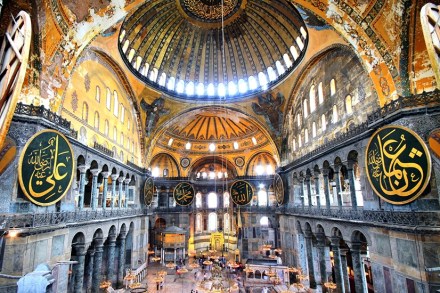
It is official: Hagia Sophia, for a thousand years the world’s largest cathedral, and since 1934 a museum, is to be turned back into a mosque. Ever since I heard of the possibility, I have been praying it would not be so because of the impact it will have on Muslim-Christian relations in Turkey, the Middle East and beyond. A suitably purged and compliant judiciary, however, has bowed to the wishes of the authoritarian President Erdogan that Turkey should become more Islamic and less secular. There has been a church on the site since 360 ad and the present building dates from the reign of Justinian in the mid-sixth century.

Black Lives Matter is a state-backed religion

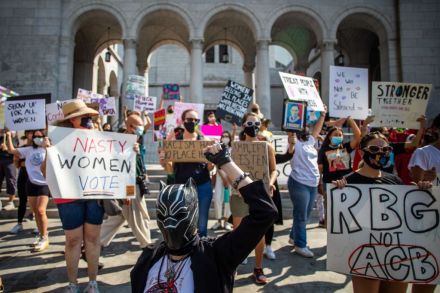
'Protest' often feels inadequate as a characterization for the public exhibitions that have erupted nationwide over the past several weeks. The term 'protest' carries a connotation of actions carried out in opposition to existing structures of power; hence, you 'protest' against forces that are arrayed against you (even if some municipal bureaucrat might have reluctantly granted you a permit). However, at least in many jurisdictions, events which were presented as 'protests' should more rightly be labeled as something along the lines of 'state-backed demonstrations.' For instance, in my otherwise sleepy hometown of Caldwell/West Caldwell, New Jersey, high-school students organized what turned out to be an astonishingly large protest march.

religion

Why can’t Britain’s foreign aid be used to help Christians too?

From our UK edition

For years now, the British government has prided itself on how much money it gives away in foreign aid. But of course it’s not just the amount that matters — it’s how effective it is. Now that the Prime Minister is to wrap the Department for International Development back into the Foreign Office, it’s a chance for us to ask again: who are we as a country? What are our values? And how can we ensure that taxpayers’ money is well spent? It can be difficult to ensure that a recipient of aid is legitimate and worthy. That’s why there’s been a tendency for the UK and aid agencies to rely on giving to foreign governments and their bureaucracies.

Something woke this way comes

Man’s refusal to accept reality can take entertainingly paradoxical form. One of the more enjoyable is the New Atheists’ crusade (I use the term advisedly) against God — a battle with human nature which, like most battles with human nature, can never be won. God may never have appeared in a burning bush, but, he, she or they came to life in the brains of some ancient hominids, probably as a bug in a new pattern-recognition app. It was a bug with benefits, and as evolution is an opportunist, God has never gone away since. Tara Isabella Burton, who has a doctorate in theology, does not deal with the sources of religious belief in Strange Rites, Instead, she focuses ‘primarily on what a religion does’.

rites

This could have been a great opportunity for the Church

From our UK edition

During these months of inertia, I confess to having on occasion made illicit trips to churches in the English countryside. Enjoying the frisson that surely accompanies all law-breaking, I have often gone so far as the church door, there to examine not only the locks and bolts but also the laminated notices which adorn so many buildings of the Church of England. The other week I visited a 12th-century church whose laminated instructions were an especially fine example of their kind. These signs informed the visitor that the church was closed due to the Covid crisis and that God can of course be worshipped anywhere, but (and this part was underlined) ‘not here’. A little harsh, that wording, I thought.

Superbly convincing: Unorthodox reviewed

From our UK edition

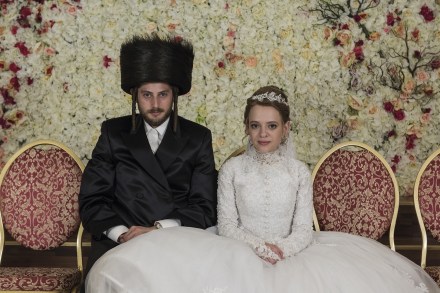
When I lived briefly in Stamford Hill I was mesmerised by the huge fur hats (shtreimel) worn by the local Hasidic Jews, and the wigs worn by their wives, and the almost tubercular pallor of their children. I often wondered how such a remote, aloof and archaic sect could possibly relate to 21st-century London. The answer, of course, was that they didn’t: they were like ghosts from another age, walking the same streets but not of this world. I wished I could get a glimpse of their private lives — and now, thanks to Unorthodox (Netflix), we all can. Loosely based on a memoir by Deborah Feldman, it tells the story of 19-year old Esther ‘Esty’ Shapiro (Shira Haas) who flees her ultraorthodox Jewish sect in Williamsburg, Brooklyn, for a new life in very secular Berlin.

Scotland’s new ‘hate speech’ rules are a modern blasphemy law

From our UK edition

It is 178 years since the last recorded charge of blasphemy in Scotland, against the Edinburgh bookseller Thomas Paterson for ‘exhibiting placards of a profane nature’ in his shop window in 1842. One of those placards announced that ‘Paterson & Co (of the Blasphemy Depot, London)… Beg to acquaint infidels in general and Christians in particular that… [we] will sell all kinds of printed works which are calculated to enlighten, without corrupting — to bring into contempt the demoralising trash our priests palm upon the credulous as divine revelation — and to expose the absurdity of, as well as the horrible effects springing from, the debasing god-idea.

Letters: The joy of balconies

From our UK edition

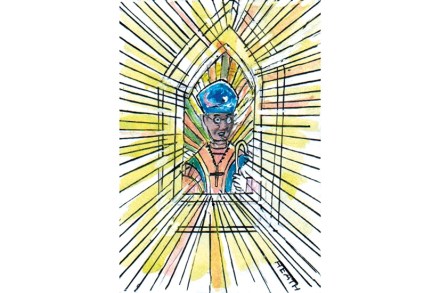
The closing of churches Sir: Stephen Hazell-Smith is quite right in writing that churches should re-open (Letters, 18 April), however the issue is now more fundamental. Recent weeks have demonstrated a crisis of leadership in almost every aspect of national life, excluding the Queen, who has exercised a spiritual leadership made necessary by the failure of bishops. The closing of churches may be seen as a defining moment in the life of the Church of England. As the Archbishop of Canterbury broadcast from his kitchen on Easter Day, impervious to the damage his ‘leadership’ has caused, many Anglican clergy and people I know looked to the image of the Pope in an almost empty St Peter’s, and saw the true image of Christian service.

Why I joined the Jehovah’s Witnesses

From our UK edition

The toad who lives at the bottom of the garden in the pile of bricks beneath the potting table was very happy with his new plunge pool. I made it on a particularly slow afternoon when I had run out of ideas for things to do. It was either make a toad Jacuzzi or darn socks, so naturally Mr Toad lucked out. Before that, I tidied the cellar, going through all the laundry bags full of horse tackle. I sorted and bagged rugs, cleaned and polished bridles, reorganised my ever-burgeoning collection of multicoloured lead ropes, overreach boots and numnahs, and even sorted out all the saddle soaps and boot polishes. From the back windows of the houses around me drifted the urgent sounds of people working from home, barking instructions such as, ‘Listen, guys, we need to nail this issue!

Letters: The ban on public worship has enabled more of us to experience spiritual riches

From our UK edition

Divine works Sir: Luke Coppen writes that livestreamed services ‘lack the vital communal dimension of worship’ and ‘are, at times, excruciatingly dull’ (‘Risen again’, 11 April). I would beg to differ. Catholics, at least, have had the rare opportunity to tune in to some beautifully sung Latin Masses in the Extraordinary Form which they would otherwise struggle to attend. As a Hampshire resident, for example, I have greatly appreciated the Birmingham Oratory’s livestreams. When celebrated well, these Masses are divine works of art in themselves, but are also highly prayer-focused and God-centred, with the celebrant facing the same way as the congregation — towards the altar.

Will coronavirus hasten the demise of religion – or herald its revival?

From our UK edition

On Saturday evening, Christians will prepare for an Easter unlike any other. With every church closed, from St Paul’s Cathedral to the meanest country chapel, Anglican worshippers will be directed to a website where lay leaders, priests and bishops will hold a ‘virtual vigil’ ending at dawn on Easter Sunday. In Westminster Cathedral, the mother church of Catholics in England and Wales, a deacon will sing the great Easter proclamation known as the Exsultet. But this year, when the final syllable dies away, he will look out into the nave and see row upon row of vacant seats. It’s faith, but without the faithful. It’s happening the world over. This week Jewish families were forced to celebrate the Passover Seder without guests for the first time.