Refugees

Everyman

From our UK edition

Toby Jones shuffles into the café in Clapham where we are meeting. He’s wearing a duffle coat and a hat and carrying a rucksack. He looks just like one of those unsung characters that he specialises in, the kind of person you don’t take much notice of unless you have to. Today we are talking about his new ‘vehicle’ (sorry), Don’t Forget the Driver. It’s an everyday tale of an everyday coach driver (Peter Green) from Bognor Regis, his daughter Kayla, who turns ennui into an artform, and mother Audrey, who’s going downhill fast with Alzheimer’s. It is going to twang the nation’s heartstrings. What makes it different is that it is Jones’s first go at writing a TV comedy — or co-writing one.

Dumb and dumber | 12 July 2018

From our UK edition

The Lieutenant of Inishmore is a knockabout farce set during the Troubles. Like Monty Python’s dead parrot sketch it uses the expiry of a pet to examine human obsessiveness and self-delusion. But it takes two hours rather than three minutes to make its point. We meet a handsome terrorist, Padraic (Aidan Turner), whose adoration of his black cat symbolises his crazed devotion to republicanism. The cat is accidentally run over by Davey, an amiable twerp on a bike, who must find a new cat or face reprisals from the insanely brutal Padraic. Donny, Padraic’s dad, offers to help Davey and they borrow a ginger cat, which they blacken with boot polish. That’s the level of narrative ingenuity here: children’s television.

Refugee lives matter

From our UK edition

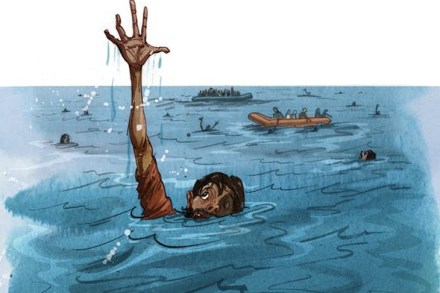
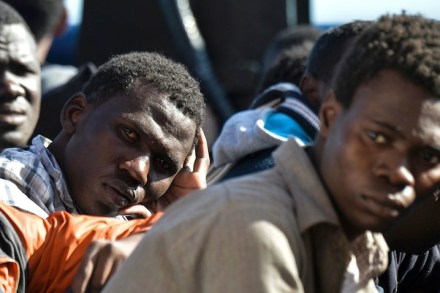
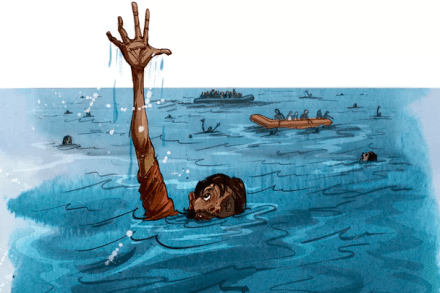
The photographs of children in cages at US migration centres, apparently separated from the parents with whom they illegally entered the country, do not reflect well on the Trump administration. Talking tough on migration helped the President to win the election but there is a difference between building a wall and carrying out a policy which appears to use cruelty as a shock tactic. Yet there is a policy towards migrants that is ultimately far crueller, and which is being pursued beneath our noses in Europe. That is to tempt migrants into unseaworthy boats to cross the Mediterranean. Last year, according to the International Organisation for Migration, 3,116 people died attempting to reach European countries from North Africa by sea, in addition to 5,143 deaths in 2016.

The only people feeling the consequences of the Syrian conflict are the refugees

From our UK edition

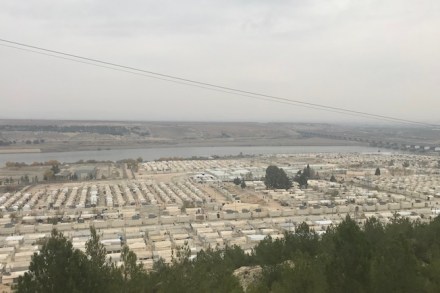
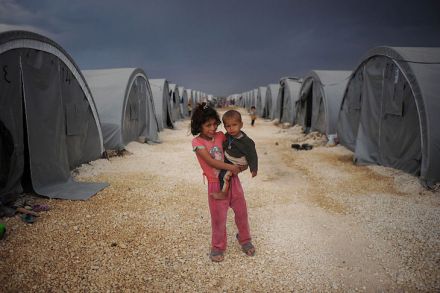
What will the consequences be for the latest chemical weapons attack in Syria? Currently everyone is accusing everyone else, but doing very little. The United States says Russia is covering for President Assad. Turkey is accusing the United States of 'calculations against' Turkey, Iran and maybe Russia too. So a war of words, but no consequences for Assad, once again. The lack of consequences are all too clear for the refugees still crammed into camps in the countries surrounding their war-torn home. I visited one housing 9,500 Syrians by the Euphrates in Turkey in December, and the most striking thing was not so much the size of the camp, but how permanent everything felt.

The Norway model: a new approach to immigration and asylum

From our UK edition

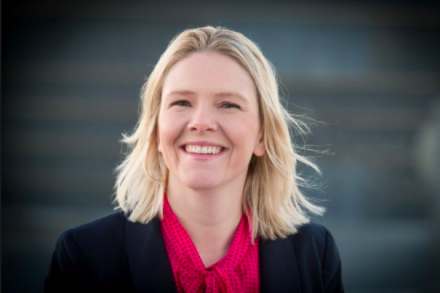
Germany is this weekend seeing whether or not Angela Merkel will be able to form a government as she deals with the political fallout from her immigration policy. Quite a contrast from Norway, whose Conservative-led coalition recently entered its second term after taking a very different approach to refugees. Last week I met Sylvi Listhaug, who holds a recently-created position: Norway's Minister for Immigration & Integration. She’s with the Progress Party, the junior partner in coalition. You often read about her being 'outspoken' or 'controversial' and I was interested to see what kind of radical views she holds. At the end of the interview, I was left wondering if her take on refugee policy is actually further-sighted and more morally defensible than the Merkel approach.

The Spectator Podcast: Merkel’s crack-up

From our UK edition

On this week’s episode, we look at the situation in Germany, and whether Angela Merkel can hold things together. We also speak to Norway’s immigration minister, and discuss the dying art of cottaging. After 12 years as Germany’s chancellor, Angela Merkel is this week facing the worst crisis of her premiership. Coalition talks collapsed after the Free Democrats walked away from negotiations with Merkel’s Christian Democrats. So where does this leave Germany? In the magazine this week, William Cook calls the situation ‘uniquely damaging’, whilst James Forsyth outlines the implications for Brexit. James joined the podcast, along with Thomas Kielinger, London correspondent for Die Welt.

Paradise lost | 2 November 2017

From our UK edition

Anybody who wants to maintain a strong and untroubled stance against mass migration to Europe should probably avoid BBC2’s Exodus: Our Journey Continues. In theory, the case for limiting the numbers may be more or less unanswerable — but this is a joltingly uncomfortable reminder of what it can mean in practice. Any viewers suspicious of the BBC’s pinko tendencies will presumably have noticed that all the refugees we’ve met so far are completely lovely. Yet, faced with Thursday’s episode, even they might have found it tricky to preserve a steely primacy of head over heart. Or not to notice that these are people very much like us — only a lot unluckier in where and when they were born.

The Spectator Podcast: Corbyn’s big chance

From our UK edition

On this week’s episode, we turn our attention to Brighton where Jeremy Corbyn, potentially our next Prime Minister, has been holding court at Labour conference. We also look at how child refugees are managed by the home office, and wonder which whiskeys to lay down for the future. First, before the Conservatives head to Manchester this weekend for their annual conference, it was the turn of the Labour masses to congregate by the sea in Brighton. Buoyed by unexpected inroads made back in June, Corbyn is now the bookies' favourite to be our next Prime Minister. Can the Tories respond to this, asks James Forsyth in this week's magazine cover piece, or will we see Mr Corbyn in No.10? James joins the podcast along with Isabel Hardman, reporting from Brighton.

Seeing the light | 21 September 2017

From our UK edition

‘You can’t lie… on radio,’ says Liza Tarbuck. The Radio 2 DJ was being interviewed for the network’s birthday portrait, celebrating 50 years since it morphed from the Light Programme into its present status as the UK’s best-loved radio station — with almost 15 million listeners each week. ‘The intimacy of radio dictates you can’t lie because people can hear it.’ She’s absolutely right. As she went on to explain, when you’re driving and it’s just the radio and you, no distraction, ‘You can hear things in my voice that I don’t even know I’m giving away.

Poor old Ron and Pen, just trying to help

From our UK edition

Here’s the problem. An Asian bloke gets on to the Tube holding a bulging Lidl bag with wires sticking out of it. I don’t know if it had the words ‘large bomb’ written in Magic Marker on the side of the bag. Anyway, a little later, it blows up, and lots of people are injured. Later again, surprise is expressed that he had been able to get through with his primitive bag of tricks. We are continually exhorted to be vigilant on public transport, so why wasn’t he apprehended? Did nobody think it looked a bit suspicious? I have the feeling we know the answer to that. Just think of the howl-round, the furore, if the man had been pulled over and it hadn’t been a bomb.

The new age of the refugee

From our UK edition

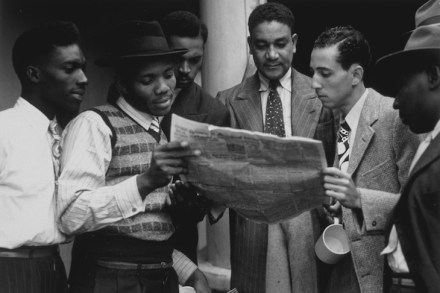
After years of estrangement in a foreign land, what can immigrants expect to find on their return home? The remembered warmth and blazing beauty of Jamaica have remained with some British West Indians for over half a century of exile. Yet 100 changes will have occurred since they left. Long brooding over the loss of one’s homeland can exaggerate its charm and sweetness. The first mass immigration to British shores occurred in the late 19th century, when Ashkenazim arrived by the thousand after escaping the pogroms in Tsarist Russia. Many changed their names and even their accents. The trappings of orthodoxy — beards, sidelocks — left them vulnerable to anti-Semitic abuse as they settled in cramped London streets north of Whitechapel Road.

Flee or die

From our UK edition

Every nation has the right to control its borders, but we in the West are getting a bit too comfortable dehumanising other humans for failing to fill out forms in triplicate before fleeing the carpet-bombing of their cities. In recent months, Theresa May has rejected Calais’s child refugees; Donald Trump has seemingly tried (unsuccessfully, twice) to ban Muslims; and Australia has gone full ‘Dickensian judge’ and chucked its refugees on a prison island.

Yvette Cooper fails to practise what she preaches

From our UK edition

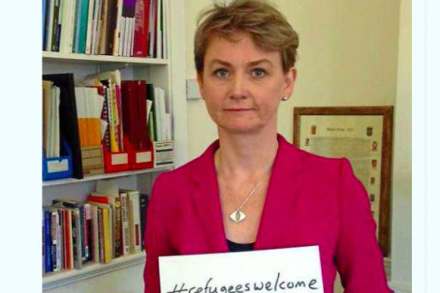
Yvette Cooper was the surprise star of PMQs today after she made the Prime Minister squirm with a stinging question about Theresa May's election U-turn: ‘The Prime Minister yesterday said she was calling a general election because Parliament was blocking Brexit. But three quarters of MPs and two thirds of the Lords voted for Article 50 – so that’s not true, is it. A month ago she told her official spokesman to rule out an early general election, and that wasn’t true either, was it. She wants us to believe she is a woman of her word. Isn’t the truth that we cannot believe a single word she says?’ While her words appeared to do the trick in the Chamber, Mr S can't help but wonder: is Cooper herself a woman of her word?

Letters | 6 April 2017

From our UK edition

All-round education Sir: While much of Ross Clark’s analysis of the direction that independent education has taken is spot on (‘A hard lesson is coming’, 1 April), he could not be more wrong on one issue. Many (or even most) parents who choose a private education for their children do not do so simply to achieve top academic outcomes: one look at the results league tables would disabuse him of this notion. What the average independent school does deliver is a rounded education (drama, sport, singing, D of E, CCF, debating and so on) with an emphasis on self-reliance, character and values, and competitive reward systems which acknowledge success rather than mediocrity.

In defence of aid

From our UK edition

Paul Collier is right to say that the refugee crisis will not be solved with tents and food alone. But context is everything, and aid remains vital. In middle-income countries such as Jordan and Lebanon, getting refugees into jobs is essential. Businesses are part of the jigsaw. So is government legislation to ensure, for example, that refugees get work permits or can register as self-employed. So too are labour market interventions that generate incentives to get refugees working. However, in fragile and impoverished states that lack functioning markets and governments, different forms of aid are required.

Letters | 30 March 2017

From our UK edition

No blanket solution Sir: Paul Collier is right to say that the refugee crisis will not be solved with tents and food alone (‘The camps don’t work’, 25 March). But context is everything, and aid remains vital. In middle-income countries such as Jordan and Lebanon, getting refugees into jobs is essential. Businesses are part of the jigsaw. So is government legislation to ensure, for example, that refugees get work permits or can register as self-employed. So too are labour market interventions that generate incentives to get refugees working. However, in fragile and impoverished states that lack functioning markets and governments, different forms of aid are required.

The rescue racket

From our UK edition

What is happening in the 300-mile stretch of sea between Sicily and Libya, day in and day out — in other words, what ‘we’ are doing there — is beyond reasonable doubt insane. A sane person would assume that the 181,436 migrants (a new record) who made it by sea to Italy last year had done so under their own steam in flimsy fishing boats and dinghies at least some of the way across the Mediterranean. This, after all, is the message aid agencies and governments put out. In fact, every one of those 181,436 was picked up by EU and non-government aid-agency vessels off the Libyan coast just outside the 12-mile territorial limit, then ferried across to Europe.

Saving the children

From our UK edition

When a humanitarian tragedy disappears from our newspapers, there are two possibilities: that the crisis is over and life for survivors is gradually returning to normal — or that the human toll has become so routine as to no longer be considered newsworthy. Sadly, the deaths of migrants from North Africa and the Middle East as they attempt to cross the Mediterranean to seek a new life in Europe fall into the latter category. Eighteen months after the photographs of little Alan Kurdi’s body on a Turkish beach generated a huge swell of public emotion, entire families are still dying on a regular basis. In the first ten weeks of this year, some 525 people were lost crossing the Mediterranean. Europe is still no closer to ending this outrage.

The camps don’t work

From our UK edition

The civil war in Syria, and the resulting displacement of half the population, has been the tragedy of our times. We cannot turn our backs on the ten million people who have been forced to flee their homes. Every decent society knows this and knows that it’s our moral duty to come up with a workable way of helping the refugees. But while the scale of the displacement is substantial, it is not unmanageable. The 21st century should be capable of dealing with such catastrophes and we must prepare ourselves actually to do so. To rise to the challenge, we need to combine the instinctive compassion that mass suffering arouses with the dispassionate analysis necessary to craft an effective response. We need the heart supported by the head.

Going underground

From our UK edition

When Wireless Nights hit the Radio 4 airwaves in the spring of 2012, I was not at all sure about Jarvis Cocker’s particular, not to say eccentric, manner of presentation, butting in, making his presence felt, never letting us forget that it’s his programme, he’s in charge. His coy comments were too self-conscious for my taste. He didn’t sound natural; his after-dark meanderings felt too contrived. Now I realise I had completely missed the point. Cocker’s deliberate mannerisms, his upside-down way of looking at things, his curiosity and desire to share with us his thoughts are all very much part of who he is, and once you get used to his style of delivery it all becomes very beguiling.