Refugees

Descent into hell

From our UK edition

In my work as a reviewer, a small, steady proportion of all the books publishers send me concern the Holocaust. With middle age has come a curious foreshortening of my perspective on modern history so that, paradoxically, the Nazis’ inhumanity has begun to seem less distant in time and, therefore, more horrible still. Fortunately I can reassure myself that, objectively, it happened long ago and that even the atrocities of eastern Europe and Rwanda are now a couple of decades safely in the past. Such consolations vanish when confronted by The Raqqa Diaries, which is shockingly of the present. It is a terrible reminder that we are unwise to impute any kind of teleology to history.
Frontier territory

From our UK edition

In Ali’s Café, just inside Turkey on the Bulgarian border, Iraqi and Syrian refugees spend their days drinking tea. Now and then, someone goes into the back room to give bundles of money to smugglers who have promised to get him into the European Union. Only when piano chords strike up on the radio does Kapka Kassabova realise what Ali’s reminds her of: Rick’s Bar in the movie Casablanca, a transit realm ‘where the homeless of the day come in search of passage’. The Syrian refugees literally walked into Kassabova’s book.

More matter with less art

From our UK edition

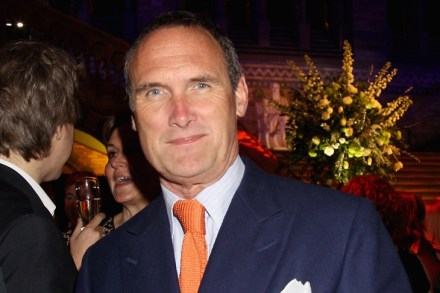
When A.A. Gill died last December, there was wailing and gnashing of teeth across the nation. I must admit this came as a surprise to me, but then I hadn’t read him for many years, having developed a ferocious dislike for the Sunday Times too long ago now to remember quite why. My memories of him were of an outrageous show pony, a wordsmith of great talent but surprisingly little taste, who essentially wrote about himself and his wonderful life (in the guise of restaurant and television reviews) in a needy, look-at-me, sub-Clarkson kind of way. He seemed to me to encapsulate everything that was wrong with the paper he wrote for, whatever that turns out to have been. But people were genuinely upset when he died, and not just because he was by all accounts a good egg.

United nations

From our UK edition

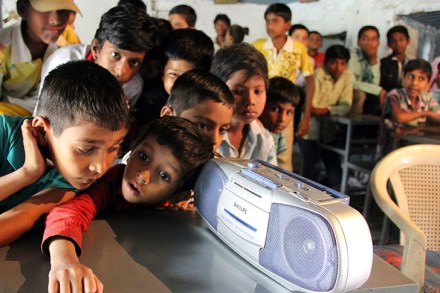
The Indian Prime Minister has twigged something that President Trump has yet to understand. On Monday, celebrated as World Radio Day, Narendra Modi tweeted his congratulations to ‘all radio lovers and those who work for the radio industry and keep the medium active and vibrant’. Modi uses radio to reach out to those in his country who live in its most remote and inaccessible corners, giving a monthly address to the nation known as ‘Mann Ki Baat’ (or ‘To mind’). He says it’s his way of ‘sharing his thoughts’ with his citizens, and a useful way of extending the tentacles of government into those areas where television sets are uncommon, let alone computer screens or smartphones.

Trump’s 2020 campaign has kicked off – and Starbucks seem to be running it

From our UK edition

I am no fan of Donald Trump, but I can stand far enough back from his presidency to see that many of his critics are inadvertently already doing his re-election campaign for him. Today, Starbucks has reacted to Trump’s US travel ban on citizens of seven Middle Eastern and African countries by defiantly saying that it will go out and hire 10,000 refugees. Can the coffee chain not see that this is exactly the sort of thing which attracts America’s white poor to Donald Trump: the suspicion that they are being overlooked in favour of cheap labour from abroad? In Starbucks’ case it isn’t just a suspicion – it has effectively confirmed that it wants to discriminate against American workers.

Algerian winter

From our UK edition

It is more than possible that before any Brexit deal is discussed, let alone concluded, the EU will have effectively collapsed. And the key factor could be the demise of Algeria’s leader of 17 years. President Abdelaziz Bouteflika is 79 and has needed a wheelchair since having a stroke in 2013. ‘His mind is even more infirm than his body,’ one observer tells me. Bouteflika returned home recently after a week’s stay at a private clinic in France. His prognosis isn’t good. Officially, Bouteflika underwent standard ‘periodic medical tests’ in Grenoble. But no one believes this. Among people who know Algeria well, there is little doubt that he is severely incapacitated and does not have much time left.

Christianity is at the heart of the secular left’s response to refugees

From our UK edition

Say what you want about Owen Jones - and I might well agree with you - but he is admirably big-picture. He dares to link current affairs to the largest moral questions. In a piece about refugees on Friday he supplied a sketch of his form of humanist idealism. Empathy, he explains, is a natural human faculty. We naturally desire the good of all our fellow humans - unless some nasty form of politics interferes with this and teaches us to view some group as less than fully human. This is what colonialism did, and what Nazism did, and what Balkan nationalism did, and what Islamic fanaticism is still doing. And it is what the right-wing press is doing, when it promotes a heartless attitude towards refugees.

The Calais Jungle ‘child refugee’ conundrum

From our UK edition

You just have to look at the faces of the migrant 'children' who have begun to arrive in Britain over the past couple of days from the Jungle in Calais to realise that many are not children. Just as I did when I visited the illegal shanty-town a couple of weeks ago and met a man from Afghanistan who said he was a boy. I found him inside a remarkably solid timber shack which had the words  'Welcome Restaurant' painted above the door. He was one of a dozen or so men, sitting about on divans and chairs, watching a cricket match between Pakistan and the West Indies on a large flat-screen television which was powered by a generator.

The new reality on immigration

From our UK edition

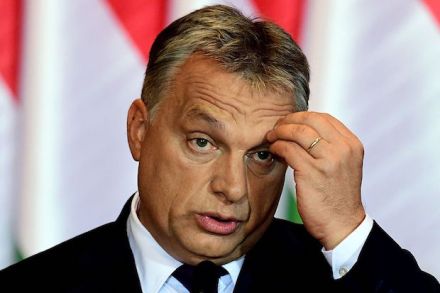
The good people of Hungary went to the polls on Sunday and voted by more than 98 per cent against accepting even a few hundred migrants, as per the European Union’s insistence. That poll result must have been gravid with nostalgia for Magyars over the age of about 35. They will remember that sort of election result being de rigueur, rather than astonishing. Indeed, in 1985 the Hungarian Socialist Workers Party succeeded in capturing 98.8 per cent of the popular vote — and even this was a bit of a disappointment, because in 1980 it had pulled in 99.3 per cent. On both occasions the ruling party was aided, of course, by the lack of an alternative on the ballot paper.

Who comes after Merkel?

From our UK edition

A year from now, 60 million Germans go to the polls in the most important general election in mainland Europe for a generation. The result will define German — and European — politics for the next four years. There are huge questions to be resolved, from the refugee crisis to the financial crisis, but right now the question in Germany is: will Mutti run again? Angela Merkel’s nickname, Mutti (Mummy) is a memento of happier times. A year ago, her position as matriarch of the Bundesrepublik seemed unassailable. And then, last September, she opened Germany’s borders to hundreds of thousands of fleeing Syrians. Over a million refugees arrived last year. The reaction of native Germans could be measured at the polling booths.

Borderline sanity

From our UK edition

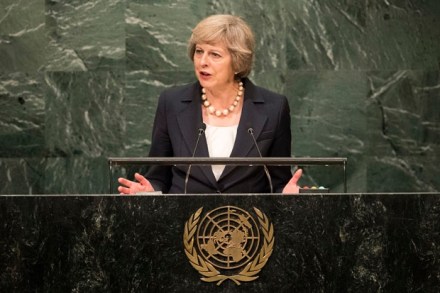
Only now does Angela Merkel concede that her admitting a million refugees last year was a mistake. It was obvious to most people in Europe at the time that her warm-hearted gesture would lead to catastrophic results. In declaring that all Syrian refugees would be welcome if they made it to Germany, she doubled the fortunes of the human trafficking industry. The asylum seekers came from Syria and North Africa through Austria and Hungary, having landed on the shores of Italy and Greece. Thousands died on the way. When Theresa May addressed the United Nations this week in New York, she was able to point to a British way of handling the crisis.

Sweden’s refugee crisis

From our UK edition

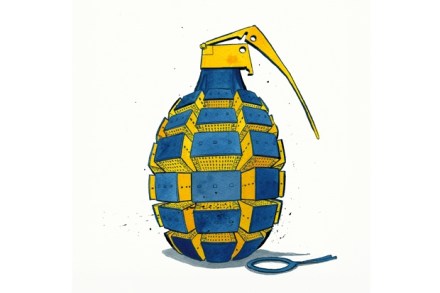
 Stockholm For a British boy to be killed by a grenade attack anywhere is appalling, but for it to happen in a suburb of Gothenburg should shatter a few illusions about Sweden. Last week’s murder of eight-year-old Yuusuf Warsame fits a pattern that Swedes have come slowly to recognise over the years. He was from Birmingham, visiting relatives, and was caught up in what Swedish police believe is a gang war within the Somali community. Last year, a four-year-old girl was killed by a car bomb outside Gothenburg, another apparent victim of gang violence.

It’s been a year, Nicola Sturgeon. Where are your refugees?

From our UK edition

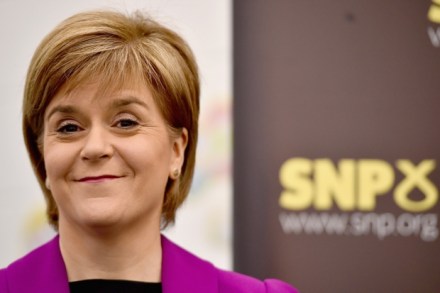
This time last year, as images of refugees fleeing Syria dominated the news, a host of charitable figures offered to do their bit and take refugees into their home. Exasperated that David Cameron was not allowing enough refugees into Britain, Sir Bob Geldof, Yvette Cooper and Nicola Sturgeon were among those who publicly vowed to lead by example. Since then, things appear to have hit a few stumbling blocks. For one, Yvette Cooper claimed -- in an interview with Nick Ferrari -- that we should listen to the Tory government as they have said that 'they don’t want people to take them into their home'. Happily times may now be a'changing.

Italy’s migrant purgatory

From our UK edition

 Ravenna At a car park a short walk from Dante’s tomb, one of the gang of illegal immigrants who tell motorists where to park and hound them for cash agreed to talk to me for €20. His name was Billy, he said, and he was 22. He was from Senegal and a Muslim. He had come to Italy by fishing boat 14 months ago from Libya, where he had arrived via Mali and Algeria. He paid €200 for the trip (the going rate is said to be at least €1,000) and his boat landed at Lampedusa, 160 nautical miles from Tripoli. ‘Why did you come?’ I asked. ‘In Senegal, no jobs,’ he replied. No war either, I pointed out: ‘You’re not refugees.’ ‘Yes, we are,’ Billy insisted. ‘Tribes are fighting in Senegal.

Letters | 11 August 2016

From our UK edition

The hate is real Sir: It is clearly an exaggeration to call Britain a bigoted country (‘We are not a hateful nation’, 6 August), but downplaying the recent wave of xenophobic and racist incidents across the UK as ‘somebody shouting something nasty on a bus’ is equally wrong. Verbal abuse in itself is worthy of condemnation, yet the character of recorded harassment is actually much more serious. In the past few weeks, Poles in this country were shocked by vulgar graffiti (West London; Hertfordshire; Portsmouth) and hurtful leaflets (Cambridgeshire) urging them to ‘go home’ in most offensive ways possible, while a family in Plymouth fell victim to an arson attack.

Madeleine moments

From our UK edition

I’d just heard (on catch-up) Jenny Abramsky (a former director of BBC radio) telling Gillian Reynolds (the esteemed radio critic of the Telegraph) why radio is so special to her: ‘It takes place in my head. It paints pictures in my mind. It talks to me as an individual. It surprises me. It stretches me.’ Then I popped down to the kitchen to make some soup for lunch, reached for the radio button and was hooked instantly as Jeremy Vine talked to a man who had lost his wife in a road accident when their child was just two. (Vine’s Radio 2 lunchtime programme on Monday was focusing on child bereavement following the tragic death of Jo Cox, mother to two young children.) It was just as Abramsky had described. One of those moments.

Portrait of the week | 22 June 2016

From our UK edition

Home One week before the United Kingdom voted in a referendum on membership of the European Union, Jo Cox, a Labour MP and married mother of two, aged 41, died after being shot and stabbed at Birstall, West Yorkshire, on her way to a constituency surgery. A passer-by, Bernard Kenny, a retired miner aged 77, tried to protect her and was wounded. A constituent, Thomas Mair, aged 52, was charged with her murder and, on being asked his name in a magistrates’ court, said: ‘Death to traitors. Freedom for Britain.’ Parliament was recalled the following Monday so that tributes could be made.

Barometer | 19 May 2016

From our UK edition

Name check 306 business people signed a letter to the Daily Telegraph saying that Britain would be better off outside the EU. Some notable collections of signatures: — 364 economists signed a Times letter about the dangers of monetarism in 1981. — 5,154 physicists signed a paper in Physical Review Letters last year reporting a more accurate recording of the mass of the Higgs boson particle. — 75,000 people signed a petition protesting against the government’s leaflet on why we should vote to stay in the EU. — 540,000 signed a petition demanding a stay of execution for Beau, a Missouri dog accused of killing a duck. — 1m Spaniards signed a petition in 2013 demanding that their government resign. — 2.

Ministers have lost the political argument on child refugees

From our UK edition

Why is the government preparing for a U-turn on accepting more unaccompanied child refugees? George Osborne was speaking this morning on television about the ‘discussions’ that the government is having on this matter, which underlined that ministers are indeed going to announce concessions before MPs force them into accepting the Lord Dubs amendment to the Immigration Bill. He said: ‘Britain has always been a home to the vulnerable and we’ve always done what we need to do to help people who are fleeing persecution.

Written on the body

From our UK edition

Sue Armstrong’s programme on Radio 4 All in the Womb (produced by Ruth Evans) should be required listening for anyone dealing directly with the refugee crisis, with those who have fled from intense fear and terrible violence in their home countries. Armstrong has been investigating recent developments in our understanding of the impact of severe trauma, how it affects not just the mind but also the body, creating physical changes that also need to be addressed. Those who lived through the Holocaust, for example, who were in prison camps or were forced to hide in dark, cramped, inhuman conditions, perpetually afraid that at any moment they might be discovered, have been found to have low levels of cortisol.