Refugees

Norway syndrome: a new condition for Western victims of rape

From our UK edition

Here is a story that needs little extrapolation. A male left-wing politician in Norway – Karsten Nordal Hauken – has spoken out about his rape, a few years ago, at the hands of a Somali refugee.  The self-professed feminist and ‘anti-racist’ was subjected to a brutal anal attack in his own home. The culprit was subsequently caught and sentenced to more than four years in prison, though he is now free and due to be deported back to his native Somalia. All of which has occasioned Hauken to speak out about how guilty he himself feels.  Guilty because he says that he is ‘responsible’ for the Somali rapist being returned to Somalia. He explains that ‘[I] had a strong feeling of guilt and responsibility.
Hostage to misfortune

From our UK edition

Nordic noir is passé. Now we have Israeli noir. Waking Lions is a mordant thriller written by a clinical psychologist who knows how the mind is tortured by deception, infidelity, obfuscation, suspicion and sex. Eitan Green is a neurosurgeon who, exhilaratedly driving his SUV at speed on the desert tracks outside Beersheba, runs down an Eritrean refugee. As he looks at the body with its cracked skull, he thinks that since ‘he can’t save this man, at least he’d try to save himself’. From that point, Ayelet Gundar-Goshen’s omniscient narrator involves us in a web of lies, guilt, evasion, seduction and moral equivocation. The incident is registered officially as a hit-and-run case. Eitan’s wife, Liat, happens to be a senior police officer.

Welcome to Luvvie Island: a haven for virtue-signalling celebrities

From our UK edition

It was six months ago this week when Nicola Sturgeon heroically admitted she’d be 'happy' to have a refugee move into her detached Glasgow home. That same rousing week last September, we were treated to the vision of Yvette Cooper 'bravely' holding up a piece of A4 paper with #refugeeswelcome scrawled on it. As he’s wont to do, Bob Geldof went one further, offering to put up three families in his pile in Kent and another in his London flat. Yet, to date, it seems that not a single refugee has been welcomed through the Chunnel and made it to Nicola’s nest, Casa Cooper or either of Geldoff’s gaffs. One wonders, why not?

Driven to extremes

From our UK edition

Imagine if Nigel Farage declared that police should be ready to shoot migrants trying to make it from Calais to Britain; saying: ‘I don’t want to do this, but the use of armed force is there as a last resort.’ And imagine that in spite of this — or perhaps because of it — Ukip were to overtake the Labour party in a national poll to become the most popular opposition party. This, in effect, is what is happening in Germany. The words above were spoken by Frauke Petry, leader of Alternative für Deutschland (AfD), the insurgent party which is threatening to make large gains in state elections in three key German regions next month.

Portrait of the week | 11 February 2016

From our UK edition

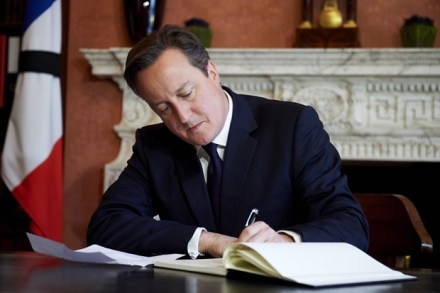
Home David Cameron, the Prime Minister, said that if Britain left the European Union, France could stop allowing British officials to make immigration checks on the French side of the border, and, his spokesman predicted: ‘You have potentially thousands of asylum seekers camped out in northern France who could be here almost overnight.’ Mr Cameron denounced the way prisons are being run by his administration: ‘Current levels of prison violence, drug-taking and self-harm should shame us all.’ Junior doctors went on strike again for 24 hours. Twelve men of Pakistani heritage were jailed for up to 20 years for the rape and sexual abuse of a girl when she was aged 13 and 14, over a period of two years, in Keighley, West Yorkshire.

Turkey can’t cope. Can we?

From our UK edition

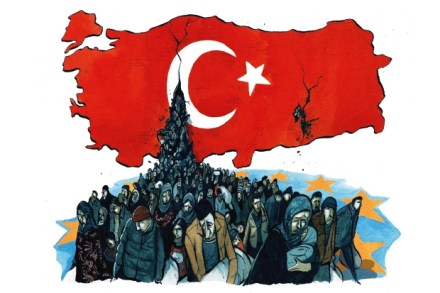
[audioplayer src="http://rss.acast.com/viewfrom22/thenextrefugeecrisis/media.mp3" title="Laura Pitel and Migration Watch's Alanna Thomas discuss the second migrant crisis"] Listen [/audioplayer]In Istanbul, signs of the Syrian influx are everywhere. Syrian mothers sit on pavements clutching babies wrapped in blankets; children from Homs, Syria’s most completely devastated city, push their way through packed tram carriages begging for coins. Arabic adverts offer rooms for rent. It’s almost inconceivable how many Syrians Turkey has taken in as refugees — around 2.5 million of them so far. That’s almost three times the number who have sought refuge in Europe. And while the Turks are hospitable, Turkey has more than any country should bear.

Ai Weiwei’s Aylan Kurdi image is crude, thoughtless and egotistical

From our UK edition

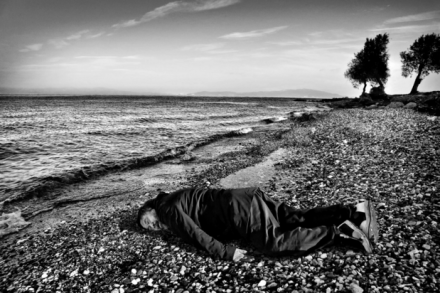
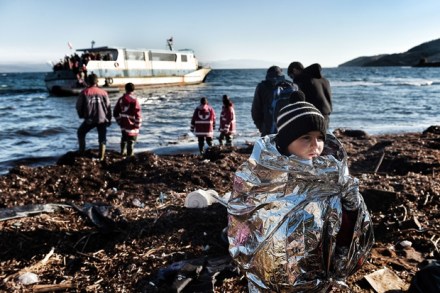
Last September a photograph of three-year-old Aylan Kurdi’s lifeless body washed up on a beach near Bodrum made headlines around the world. The image had a significant effect on shifting public perception to the Syrian refugee crisis as well as sparking a debate around the ethics of the circulation of such images. Academics at the University of Sheffield have estimated that 53,000 tweets were sent per hour at the height of the image’s circulation reaching 20 million people around the world in 12 hours. Last week, over four months after the image appeared, the Chinese artist Ai Weiwei made his own contribution to the debate in a photograph which depicts the artist posing as Kurdi.

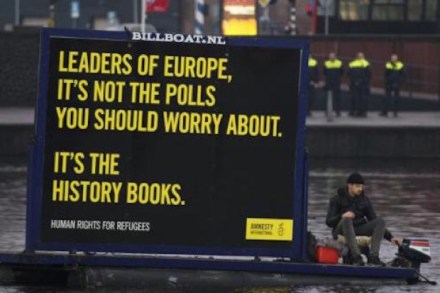
Our leaders should read history books – but not just ones about the Nazis

From our UK edition

If I was in charge of the Home Office I’d employ someone whose sole area of expertise was Hitler’s Germany and whose only job was to keep an eye out for any vague echoes of Nazism, however fatuous, in the working practices of the government or its contractors. This would have avoided Monday’s controversy over asylum seekers being made to wear red wristbands in order to receive free meals, because being asked to wear ID to qualify for things is exactly like being a Jew in Hitler’s Germany. A chilling echo, as many people commented.

Afghanistan’s new agony

From our UK edition

Amid all the chaos in the Middle East, the breakdown of borders and states, a new threat is fast emerging. The key strategic bulwark to stabilise the region is a strong Afghanistan. But after 15 years of occupation by western troops and a trillion dollars spent, it now appears to be going the way of the Levant. A weak government in Kabul has proved unable to forge a political consensus. The Taleban is resurgent, while other similar groups control much of the Afghan country-side. And this — with the potential spread factor of Isis — means that Afghanistan is probably worse off today than when foreign forces intervened in 2001.

Radio is flowering because it’s so much more potent than TV

From our UK edition

Who would have thought in this visually obsessed age of YouTube, selfies and Instagram that radio, pure audio, no images attached, nothing to hold on to but a voice, a tune, a blast of birdsong, could not only survive the arrival of the new image-making and digital technologies but experience an extraordinary flowering of talent and expression. Thousands of radio stations are popping up right across the globe, ready for you to tap into via your smartphone or tablet, taking you straight from SW9 or NE69 to Chicago, Cape Town, Lviv or Marrakech. The quality of the sound produced by these stations is less important than an ability to draw in the listener, to tell a story, create a narrative, to use audio and nothing else to paint images in the mind.

How can we defend our liberal heritage by abandoning its values?

From our UK edition

Yusuf, when I last saw him, was still smiling, a middle-aged man with the greying pony-tail of a rock roadie. He described himself as a feminist: he met his wife through work, where, he told me proudly, she was a better computer engineer than he. Yusuf had the stoop of a tall man who’d spent most of his life under ceilings too low for him, and the corrugated iron hut his family now called home was no exception. So we sat cross-legged on the floor, while I asked him about religious tensions in a southern Turkish refugee camp. 'If you want to know, I’m an atheist. I mean, in Damascus, my friends all were - it’s not like you’re living in a village, your grandfather checking you’re in mosque. I don’t believe in any of it. But I never shouted about it.

A better way

From our UK edition

To say that the Paris attacks could have happened in Britain is not enough. Such attacks are being attempted here with terrifying regularity —seven have been thwarted so far this year alone. MI5’s official assessment is that a terrorist attack on British soil is ‘highly likely’. Our security services have so far been very good at keeping us safe. But as the IRA famously put it, spies have to be lucky all of the time, terrorists have to be lucky only once. So it is impossible for Britain to view events on the continent with any sense of complacency. Still, the Prime Minister was justified in pointing out last week that the more we learn about what happened in Paris, the more it justifies the policies that Britain has pursued.

The shocking rise of anti-refugee attacks in Sweden

From our UK edition

Sweden, perhaps the most open country in the world, is on course to take almost 200,000 asylum seekers this year. Adjust for population size and that's like the UK taking a refugee city the size of Birmingham. It can't cope. Yet political refusal to admit this is incubating concern - sending voters towards the anti-immigrant Sweden Democrat parties. But most shockingly, a trend is emerging of attacks on immigrants. I look at this in my Daily Telegraph column today. [datawrapper chart="http://static.spectator.co.uk/qjCco/index.html"] Sweden's government and opposition parties both dislike talking about immigration; they are too quick to dismiss concerns as xenophobia.

How Lebanon is coping with more than a million Syrian refugees

From our UK edition

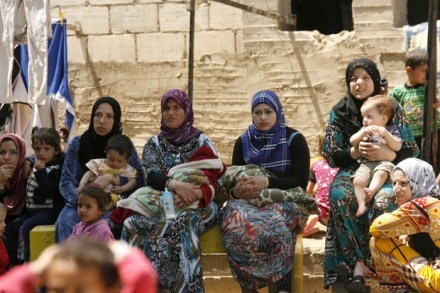
Beirut If any of the Syrian refugees who have made it to the relative safety of Europe have been watching the smash-hit TV show Homeland (season five), they would be baffled by its warped depiction of their compatriots’ plight in Lebanon. Unlike the vast majority of Homeland’s viewers ,they would know there are no government-sanctioned camps guarded by nervy UN soldiers and run from the inside by menacing Hezbollah operatives. This is out-and-out nonsense and insulting to the Lebanese, who have arguably done more than any country to absorb this unfolding human tragedy. For the record, Lebanon, a country a tad bigger than Wales, plays host to around 1.5 million Syrians, a number equivalent to a third of its population.

The Australian example

From our UK edition

For many years, Australia has been turning away boats filled with migrants. From a remove, this looks cold--hearted — a nation built by immigrants showing no compassion for others who want a better life. But it is precisely because Australia is an immigrant nation that it understands the situation: if you let the boats land, more people come. People traffickers will be encouraged, migrants will be swindled, and their bodies will wash up on your shores. Any country serious about immigration needs a more effective and robust approach. Tony Abbott, the former Prime Minister of Australia, made that point clearly this week on a trip to London.

Hitler’s émigrés

From our UK edition

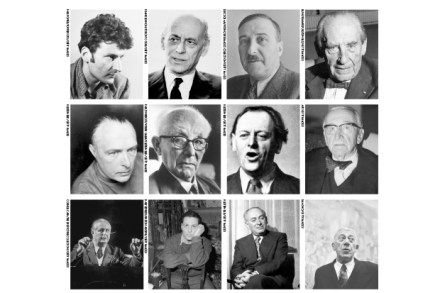
Next week Frank Auerbach will be honoured by the British art establishment with a one-man show at Tate Britain. It’s a fitting tribute for an artist who’s widely (and quite rightly) regarded as Britain’s greatest living painter. Yet although Auerbach has spent almost all his life in Britain, what’s striking about his paintings is how Germanic they seem. Born in Berlin in 1931, Auerbach was only seven when he came to England (his parents subsequently perished in the Holocaust). By rights, he should stand alongside British artists such as Peter Blake and David Hockney, yet his work feels far closer to German painters like Georg Baselitz or Anselm Kiefer. Auerbach is a one-off, a unique painter with a unique vision.

The library in the Jungle

From our UK edition

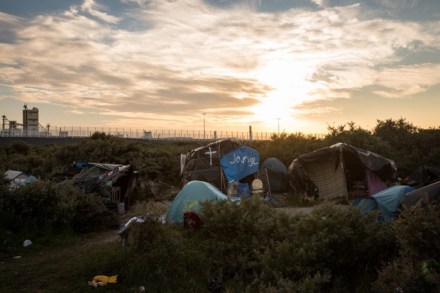
Sikander and I are sitting at a small table in a small shed. The shed is filled floor-to-ceiling with books: chick lit, thrillers and a neat set of Agatha Christies line the shelves, alongside a large atlas, a few dictionaries and grammars, and the thin green spines of children’s learning-to-read books. More books spill out of boxes stacked in the corner, and pens, notepads, bags of clothes, a globe, a guitar and a game of Battleships are useful flotsam. We are in Jungle Books, a library which British volunteer Mary Jones set up a few weeks ago in the Calais migrant camp known as ‘The Jungle’. Sikander, a lean Afghan, tells me that the last book he took out was about starting a small business.

Letters | 10 September 2015

From our UK edition

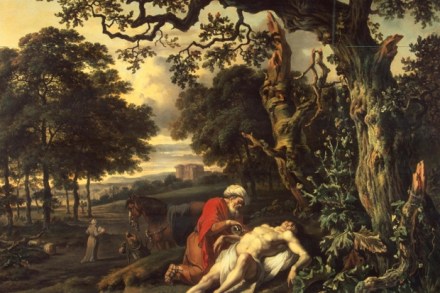
Biblical suggestions Sir: I wish to offer a couple of comments on Matthew Parris’s observation that although his ‘Christian atheism’ provides him with a moral framework, he feels the urge to help people in need, yet feels let down because Jesus offers no guidance about who to help and to what degree (‘Christianity is silent on my great moral dilemma’, 5 September). Jesus wants us to use our minds and our experiences, rather than simply applying set rules, and here is an example of how this works. Take the golden rule of ‘Do unto others’, add to it the Good Samaritan, and stir in the parable of the sheep and the goats, and there’s a fighting chance that the Syrian refugees will not be left to drown.

Barometer | 10 September 2015

From our UK edition

Old bags The government announced details of a compulsory 5p charge for single-use plastic bags in shops. Plastic bags have only been around since 1960, when they were first produced by the Swedish firm Akerlund and Rausing, later to give the world the Tetrapak. The first store to use them was Strom, a shoe-shop chain whose owner had complained paper bags were too weak. The first plastic bags had cord handles; a design with integral handle was patented in 1965 by the Swedish company Celloplast, which went on to enjoy a decade of monopoly. Places of refuge David Cameron said that Britain would take 20,000 more Syrian refugees over the next five years. According to UN High Commissioner for Refugees, the UK had a population of 126,055 in 2013, the 25th highest in the world. Who had the most?

The Spectator’s notes | 10 September 2015

From our UK edition

Presumably Britain has some sort of policy on immigration, asylum and refugees, but instead of struggling to understand it, you can save time by following its media presentation, since that is what seems to concern the government most. Essentially, the line is that Labour lets them all in and the Tories don’t and won’t (‘No ifs, no buts’). When, as at the last election, it turns out that net immigration has been rising under David Cameron, he apologises shyly and sounds tough again. He was sounding very tough until last week, when the photograph of the dead boy on the Turkish beach suddenly turned him all soft.