Refugees

Gove is clearing up Patel’s mess

From our UK edition

Michael Gove has a reputation as a minister for clearing up colleagues' messes – often the secretary of state he has replaced in a department – in a polite but very conspicuous fashion. Today it was Home Secretary Priti Patel's turn to see what it was like to get a visit from Gove and his dustpan and brush. As Levelling Up, Housing and Communities Secretary, Gove is responsible for one of the routes by which Ukrainian refugees can come to Britain, and he announced the details of the 'Homes for Ukraine' scheme in the Commons this afternoon. This has largely been passed to him because the Home Office is in such chaos over visa applications (and other matters).
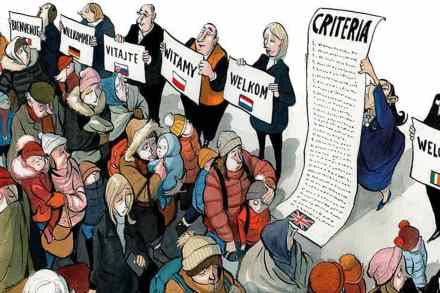
Boris Johnson rejects Europe’s open approach to Ukrainian refugees

From our UK edition

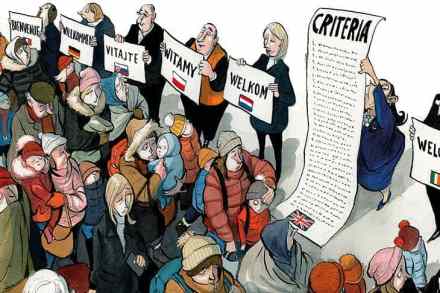
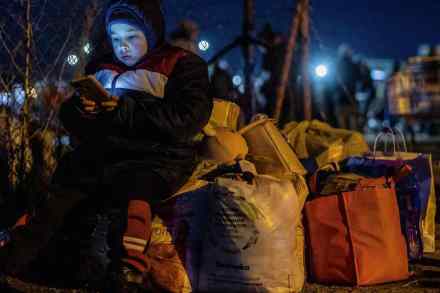
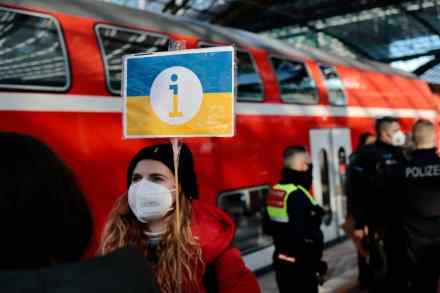
One of the most extraordinary (and moving) videos to have emerged since the invasion of Ukraine shows scenes at Berlin Central Station where refugees are paired upon arrival with locals offering accommodation. An unprecedented crisis has been met with an unprecedented public response – some 350,000 beds have been offered in Germany now. Over a million in Poland. People’s generosity has risen to the challenge – without government getting in the way to slow things down. Could it happen here? https://www.youtube.com/watch?v=7DHi92_xBLs We risk ending up doing more than any European country to arm the Ukrainians but less than any other to help refugees Michael Gove is set to launch a British equivalent – but with a difference.

Border farce: Britain is failing Ukraine’s refugees

From our UK edition

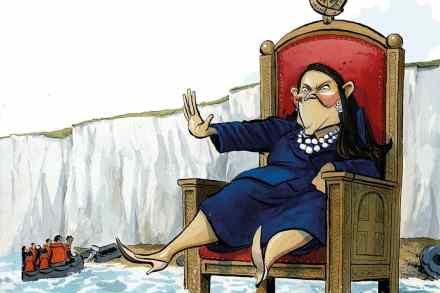
 Calais, France ‘The British government is not turning anybody around,’ Priti Patel told her French counterpart last weekend. ‘Ukrainian refugees are welcome in the UK.’ She doubled down on her claims in the House of Commons on Monday: ‘It is wrong to say that we are just turning people back; we are absolutely not.’ You don’t have to spend long in Calais to disprove the Home Secretary’s claims. As we checked into our hotel at 1.30 a.m. on Tuesday, we saw seven Ukrainian refugees resting on the couches in the lobby. There was nothing eye-catching about the group, apart from their obvious weariness and the pile of Ukrainian passports and documents on the table in front of them.

Why is Britain so useless at helping Ukrainian refugees?

From our UK edition

Some MPs were in tears yesterday when President Volodymyr Zelensky addressed the House of Commons, and understandably so, given the soaring rhetoric and bravery of a man who knows his days on earth could be numbered.  One kind interpretation is that the caseworkers at the Home Office haven't been trained sufficiently for them to use the initiative But across Westminster over the past few days, MPs and their constituency teams have also been crying tears of frustration at the Home Office's handling of the visa application process. Not only has there been intense confusion between the different arms of government about how many routes there are for refugees – with Home Secretary Priti Patel claiming she was creating a third one, only for No.

The myopic focus on racism at the Polish-Ukrainian border

From our UK edition

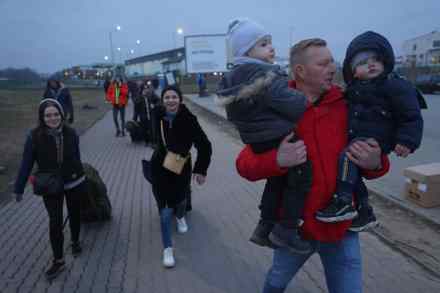
There are already a hell of a lot of foreign correspondents and human-rights workers at the Ukrainian-Polish border – an immigration problem all by themselves, perhaps. Quite a few of these reporters seem to be desperately seeking ‘racism’ stories, since that is increasingly the only news which the English-speaking media seems able to process. The heart-warming scenes of Ukrainian women and children being given shelter isn’t the story. Because those refugees are white. At the border at Medyka on Thursday the Poles put out barbecued sausages, fruit juice and water for the incoming women and children. There were boxes of toys to cheer the traumatised little ones. At the train station in Przemyśl, the scene was busy but orderly.

Britain must give Ukrainians an unconditional right to asylum

From our UK edition

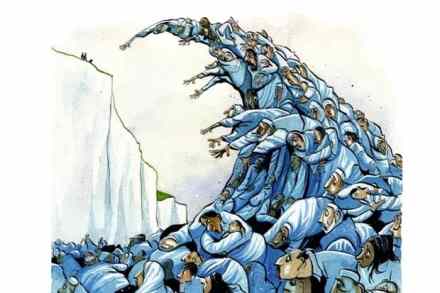
During the Cold War, any citizen of a Soviet bloc country who made it to Britain and claimed asylum was welcomed with open arms. The fact people wished to take great risks to move westwards for safety and shelter, while hardly anyone wanted to move in the opposite direction, settled the question of which system was better. Besides, the numbers who made it out were tiny – the brutality of border guards patrolling the Iron Curtain saw to that. In recent years, the concept of asylum has been complicated by the debate on how to handle the much larger flow of migrants who are prepared to risk their lives fleeing poverty. One of Boris Johnson’s biggest headaches before the Ukraine crisis was his inability to stop the new wave of small-boat crossings to the UK.

Are Poles really against immigrants?

From our UK edition

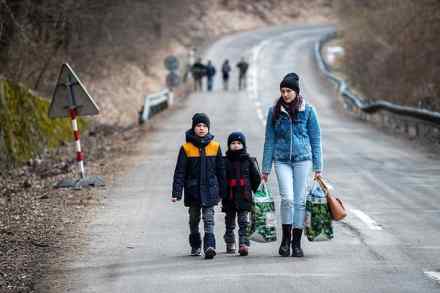
Krakow The invasion of Ukraine is being felt across Europe. Already hundreds of thousands of displaced Ukrainians are spilling out west in an attempt to flee Russian hostility. Polish society and the conservative government have, on the whole, supported refugees from their troubled eastern neighbour. A recent poll shows that 53 per cent of Poles are in favour of taking in Ukrainian war refugees, compared to just 22 per cent against. In Germany, attitudes are more divided, with 41 per cent supporting the settlement of Ukrainian refugees compared to 38 per cent against. More than half of the supporters of the radical right nationalist Confederation party, whose detractors have long accused it of being pro-Putin, are in favour of bringing Ukrainian refugees to Poland.

Why the Channel migrant crisis is spooking Boris

From our UK edition

The Tory position in the polls is weakening. Partly this is because of the vaccine bounce wearing off and a fortnight or so of sleaze stories. But, as I write in the Times today, ministers thinks that there’s another issue harming the government: small boats. ‘The sleaze is bad, but the issue that causes me most trouble with my constituents is the boats,’ says one cabinet member. Johnson himself has long been concerned about this problem. He worries about the sense of disorder that the small boats convey: he thinks they make a mockery of ‘taking back control’ of the borders. A long-serving No. 10 aide says that ‘other than Covid, no issue has taken up more of the PM’s time’.

How Turkey is fuelling the Belarus-Poland migrant crisis

From our UK edition

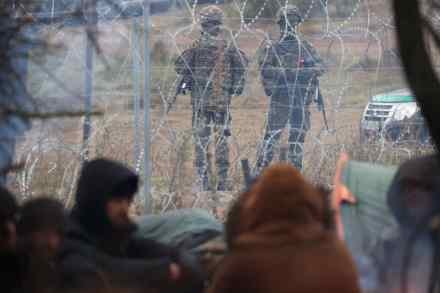
In the cold, damp forest lining the border between Poland and Belarus, thousands of refugees flown over from the Middle East have waiting to cross into the EU for days. Belarusian riot police are shoving them away from their gates and towards Poland, where only more forces await. The Belarusian dictator Alexander Lukashenko has recently been in conflict with the EU, which has imposed sanctions on his regime after last year’s contested elections which many believe to have been rigged. Lukashenko is pushing refugees towards Poland to be pawns in a fight, with the backing of Putin. The refugees find themselves between a rock and a hard place: in front of them, a Polish government who looks good appearing tough against migration and Lukashenko.

How the ancients handled refugees

From our UK edition

Hardly a day goes by without headlines about immigrants, asylum-seekers and refugees. In the ancient world, movements of people were also very common (state boundaries did not exist), often because war, famine or exile left them with no option. So how did refugees try to win acceptance? In Homer’s world of heroes (c. 700 bc), a man indicated he was harmless by kneeling before his (proposed) helper, perhaps touching the knee, and appealing for aid in the name of Zeus, god of suppliants. He expected a welcome into the household as a guest, and becoming part of that household, or being helped on his way. When Athens was a democratic city state (c.

Ken Cuccinelli: Afghans flown to US ‘not being vetted’

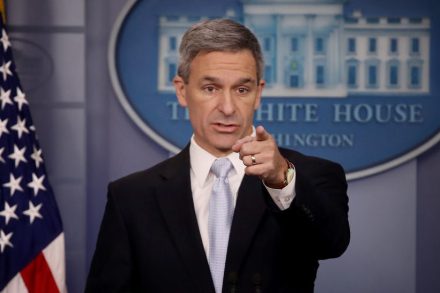
Former deputy secretary of Homeland Security Ken Cuccinelli said Thursday that the United States has flown in thousands of Afghan nationals that have not been properly vetted in the aftermath of the military withdrawal of Afghanistan. According to data published by the Washington Post, 23,876 'at risk' Afghans have already arrived in the US out of the more than 120,000 individuals that were evacuated from the Kabul airport. Cuccinelli explained during an interview on WMAL's O'Connor & Company that these individuals are being 'paroled in' to the US because there has not been enough time to conduct a thorough security screening and confer them legal status. 'They're not being vetted. They're being what's called "paroled" in,' Cuccinelli said.

ken cuccinelli

Stephen Miller: here comes the Afghan refugee crisis

The rapid takeover of Afghanistan by the Taliban has potentially dire consequences for Afghan women and children. The Islamist group was able to commandeer sophisticated US weaponry and other military equipment during our poorly-planned troop withdrawal. And so Americans have been primed to cheer the arrival of planes carrying thousands of Afghan refugees, who we are told would otherwise be executed by the Taliban, into the United States. But what are the long-term consequences of rapid refugee resettlement? Could this present a risk to national security? How will this effect Americans economically or culturally?

Former White House Senior Advisor Stephen Miller (Getty Images)

The ‘alpha migrants’ are here – why don’t we let them work?

From our UK edition

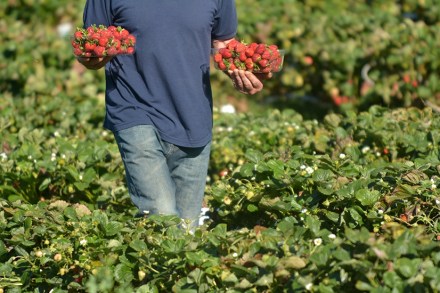
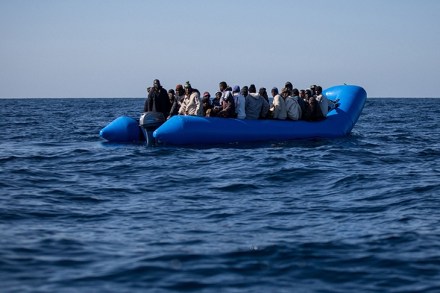
We’re all slowly becoming aware that there’s a new migrant crisis. Last week Jon Donnison of the BBC, cruising the English Channel looking for asylum-seekers heading to the UK, found four young men, paddling by hand their tiny rubber dinghy. They’d come from Sudan via France, and for the last leg of their journey they’d dodged the oil tankers and container ships ploughing the world’s busiest shipping lane; only one of the young men even wore a life jacket. These were the latest of more than 9,000 people who have risked their lives to arrive by sea this year. The other story of the summer is the shortage of labour. Desperate farmers are being forced to leave vegetables rotting in fields for want of pickers and packers.

On the run from the Nazis: a Polish family’s protracted ordeal

From our UK edition

Writers of memoirs are often praised for their honesty — but how do we know? I found I did believe Frances Stonor Saunders for readily admitting her ambivalence towards her father, who died in 1997 of Alzheimer’s. She is ‘secretly furious’ with him for ‘not telling his story’. But when his suitcase — almost certainly containing revealing documents — is handed to her in a church car park in 2011, she baulks at opening it and puts it first in her mother’s attic (her parents divorced when she was eight), then in her uncle Peter’s, where it stays for the next ten years. Her mother had warned: ‘If you open that suitcase you’ll never close it again.’ This is an intense, sometimes sad book.

Actors will be in trouble if the Bridge Theatre’s latest experiment catches on

From our UK edition

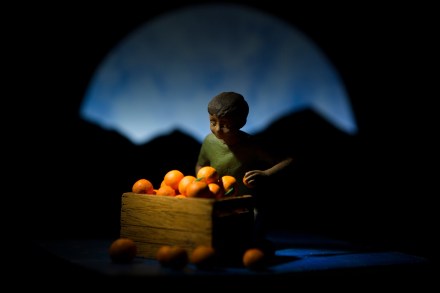
Flight has been hailed as a new form of dramatic presentation — prefab theatre. It’s great to look at. A set of model boxes containing stick figures and colourful landscapes slides past the seated viewer while a voiceover reads the narrative. No thesps are required, which may be a relief to producers and directors but the acting profession will be in trouble if this experiment catches on. The story, adapted from Hinterland by Caroline Brothers, follows two Afghan teenagers, Kabir and Aryan, who decide to walk to Europe in search of a better life. All they have is $2,000 in cash and a spare pair of trainers each. Along the way, they keep up their spirits by chanting the somewhat roundabout route they plan to take once they’ve left the Asian landmass.

The plight of the migrant: Crossed Lines, by Marie Darrieussecq, reviewed

From our UK edition

‘We should be living in a brave country and on a brave planet that bravely distributes its occupants,’ thinks Rose Goyenetche, a middle-class, middle-aged Parisian child psychologist and the heroine of Marie Darrieussecq’s Crossed Lines. As their hands touch, Rose feels a familiar electric ping, and their futures become linked The story unfolds on a Mediterranean cruise ship, where Rose is holidaying in a deluxe cabin (‘that is, economy class’) on an all-inclusive-without-alcohol-without-wifi package sponsored by her mother as a chance for Rose to get some perspective on her life.

Pita Shack flashback

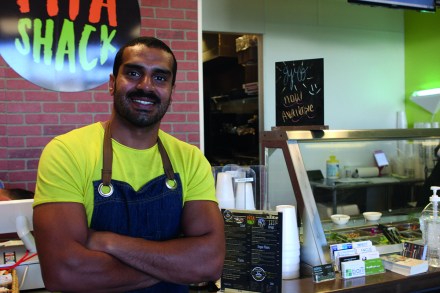
Friday afternoon in the Pita Shack diner in the northern suburbs of Austin, Texas and I was surrounded by Iraqis. There was even a picture of a sweet-looking Marsh Arab girl in her papyrus boat hanging on the wall. It was all unexpected but strangely familiar, stirring memories of Delta-30’s turret-scanning the junction of Red 11 in downtown Al Amarah back in 2004. During the first Gulf War in 1991, the Maysan province around Al Amarah was the site of local uprisings against Saddam Hussein. In retaliation he drained the region’s marshes to deprive the local Marsh Arabs of the waters on which their livelihoods and 6,000-year-old culture depended.

pita shack

Moving stories

From our UK edition

Two words may pique the reader’s interest on the cover of this timely, panoramic history of Europe by the distinguished writer on human migration Peter Gatrell: ‘unsettling’ and ‘1945’. Why unsettling, and why choose the end of the second world war as a turning point? By the close of dramatic Part I (‘Violent Peacetime, Cold War Rivalry, Rebuilding Europe 1945–1956’), we have gained detailed insight into just how demographically, economically, politically and psychologically shattered — and geographically unsettled — Europeans were in the decade after 1945.

Between the devil and the deep blue sea

From our UK edition

Death by water haunts the stories of Africans in Europe that flow through this fourth novel by Helon Habila. From the drowning of Milton’s swain Lycidas (a sort of tidal refrain for the book) to the capsized boat in the closing pages that offers victims in their hundreds to the ‘enraged leviathan’ of the sea, the imperious waves help wash these personal histories in an aura of myth. Whether privileged or penniless, the migrants whose journeys fill this episodic fresco of a work all crave the stories ‘traded as a currency among homeless, rootless people’. They hunger for narratives because ‘the water they all crossed to come here has dissolved the past’.

Acts of settlement

From our UK edition

‘Put yourself in their shoes,’ says Zahra Mackaoui, a British-Lebanese journalist who has been following the stories of refugees from Syria for five years, catching up with them as they move on restlessly, searching for a place to settle. ‘Ask yourself, what would I have done?’ That question echoed through her series of documentaries for the World Service as we heard from those who have been exiled by a war in which they have played no part except as victims. What would I have done? In Beyond Borders (produced by Craig Templeton Smith), the open, frank honesty of Hani, Ayesha, Doaa Al Zamel and Fewaz gave us an opportunity to see deeper into their experiences. All of them have lost everything: the future they had once envisaged; the past, too, best forgotten.