Recycling

Plastic-free paradise

“Welcome to Wayanad. From here, all plastic is banned.” Prasanth was on a mission, belly pressed to the carpet of his car, legs sticking out on the roadside. He emerged triumphant, brandishing a forgotten Coca-Cola bottle and carrier bag before starting the ignition. Crossing into the high-altitude, hilly state of Kerala, he pulled up at a designated recycling spot.  Ephemera rained out of my upturned tote bag upon strict instruction to hand over any plastics. At Wayanad’s border, two impassive security guards eyed my friend and me as we instinctively sank back in our seats. A regular driver for tourists, Prasanth shrugged off the routine check, pointing to a sign as we were waved on.  “1,000 rupees fine! See?

india

Hands off my empty plastic bottles!

From our UK edition

‘Where are my empty plastic bottles?’ I ran around the house screaming, after discovering my stash had disappeared. The government in Ireland has done something with the recycling laws that has made people into wild-eyed scavengers. It has introduced a scheme whereby you can feed all your empty bottles and cans into a machine in the supermarket that crushes them down and spits out a voucher – by which I mean about 20 small plastic water bottles, for example, makes you two or three euros, which is enough for a coffee, a sandwich or some money off your shopping bill.

Biden declares war on… plastic

Hurricane Debby is barreling through Florida, America's economy is crashing, US troops were injured in Iraq Monday and conflict in the Middle East is on the brink of a dangerous escalation — sounds like the perfect time to ban the use of plastic cutlery, right?!  Instead of addressing the multiple crises the nation is currently grappling with, the Biden administration decided it was time federal government workers stopped using plastic forks. The Biden administration announced it is launching a plan to "phase out" the "procurement of single-use plastics from food service operations, events and packaging by 2027, and from all federal operations by 2035," according to the White House.

plastic

You are what you don’t eat

From our UK edition

If asked to think about food preservation for a moment you might picture an aproned woman boiling oranges for marmalade in a large copper maslin pan; or vegetable scraps being turned into stock; or those recipes from wartime rationing using root veg in place of sugar; or even, with an eye to the modern, you might imagine a trendy chef preparing offal in a gleaming chrome kitchen to ensure the nose-to-tail credentials of his restaurant. Some of the attempts in the past to spin out the life of fresh produce sound positively disgusting But there is more to the history of preservation than preserves, and the obvious enemy, when we talk about preservation, is waste – the two engaged in a constant battle.

Letters: We can’t build our way out of the housing crisis

From our UK edition

Excess demand Sir: Liam Halligan (‘The house mafia’, 26 June) treats us to an exposé of the shoddy products of the mass housebuilders. In the course of his article, however, he accepts as given that the solution to the housing crisis is to build more houses. The problem, however, is not one of deficient supply; it is a problem of excess demand, driven by ultra-low interest rates, kept so low for so long that the result has been an out-of-control housing boom. The young are being prevented from buying a house, not because housebuilders hoard land and refuse to build, but because buyers with access to eye-watering amounts of borrowed money have forced prices so high that they are now out of reach of most.

The fraudulent business of recycling

From our UK edition

I am a litter picker. No, not one of those high-minded volunteers who have proliferated of late with litter-picking sticks and black bags, but a professional: I am paid to empty the bins and collect the debris left by the public in a small park in Middle England. And I’m angry, not with the great British public who leave the stuff but with the real litter louts who are the root cause of the problem. As summer approaches and people who have been stuck indoors crowd into the beauty spots and on to the beaches, litter becomes a hot topic and it is important to be clear where the blame lies. When I became a bin man, I thought I was contributing to a cleaner, healthier planet.

What Greenpeace’s ‘Wasteminster’ stunt won’t tell you

From our UK edition

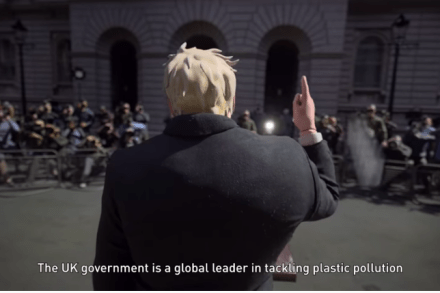
Greenpeace has been responsible for many a fatuous stunt over the years, but its latest video has a point. It shows an animated Boris Johnson making a speech outside 10 Downing Street, boasting about his government’s environmental achievements, like banning plastic straws. Meanwhile, plastic waste starts to rain out of the sky, engulfing the Prime Minister as well as all of Downing Street, the Cabinet Office and much of the Foreign Office, too. This immense pile, we are told, is the quantity of plastic waste which we are dumping daily on developing countries. I’ll take Greenpeace’s word for it that the size of the pile is accurate.

One man’s rubbish is another man’s treasure

From our UK edition

All it takes to turn a cast-off into a prized possession can be a bit of imagination. To a passerby, a bookcase left on the pavement might be perfect for that impossible-to-furnish alcove. An empty bottle, once the waves have worn it smooth, could become a precious jewel for a beachcomber. In an instant a bored child will fish a piece of cardboard from the bin and transform it into a rocket, raft or portal to another dimension. One man’s rubbish, as we know, is another man’s treasure. The subject is explored in Rag and Bone by the photographer Lisa Woollett, who has a personal connection with discards. Her grandfather was a dustman and her great-grandfather a professional scavenger on the Thames foreshore.

Barometer: Is climate change making the weather more windy?

From our UK edition

Heathrow’s nine runways When was a third runway for Heathrow first proposed? Heathrow was always planned to have multiple runways. On 10 April 1946, before the airport was even open, the Minister for Civil Aviation, Lord Winster, announced that the then London Airport was to have nine runways. Six would be in a Star of David pattern on the present site of Heathrow; the other three would form a triangle to the north of Bath Road, where the current proposal for a third runway is based. This was supposed to allow 160 aircraft movements per hour in good weather and 120 in bad weather. When Winster made his speech, three runways were already under construction. The third was later taken out of use, although part of it is still used as a taxiway.

Eco-friendly is not female-friendly

From our UK edition

Forgive me, Greta, for I have sinned. It has been five days since my last Waitrose order. I meant to be good and green. To go from Whole Foods to farmers’ market with my canvas bag and eco-conscience. But it was cold and dark and the boys from the supermarket come right to the door. So I filled the bin with plastic wrappers and turtle-trappers and laid waste to my good intentions. I try, I really do. I wash every yoghurt pot, rinse every tin. I carry a KeepCup, a water flask, a folded tote. I trudge to the Edgware Road with empty bottles for shampoo, conditioner and laundry soap and fill them up, one splurting pump at a time. I take off my make-up with washable pads. I reuse envelopes, salvage rags, turn the bed sheets sides-to-middle.

How tech is trying to solve America’s trash pile-up

Households in America produce 254 tons of trash annually and only 34 percent is recycled. Every person creates 1,316 pounds of trash destined the landfill, about the weight of a grizzly bear. America represents 4 percent of the world’s population yet produces 12 percent of the world’s waste and Germany recycles around twice as much as the US. The statistics tell one story. A different tale is that recycling programs across the country are failing as companies struggle to make money and the amount of waste that ends up as landfill is growing every year. It’s a depressing story of failed ambition confronted by market realities that has left the mountains of trash growing as a monument to American excess and unchecked environmental pollution.

trash