Recipe

Curry can be guilt-free (if you know how to make it)

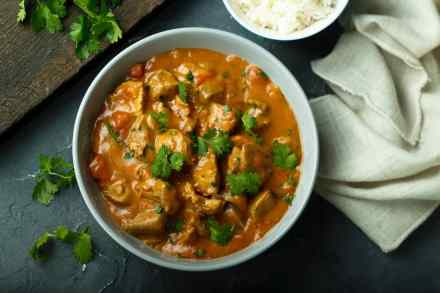
Two of the misconceptions surrounding curry that it consistently struggles to shrug off are one, that it is unhealthy, and two, that it is difficult to make at home. I’ve always found both perplexing. Turks and Persians must be similarly bemused given the reputation of their archetypal food, the kebab. Yes the late night version, carved from a rotating trunk of greasy lamb with a mini chainsaw and then covered in garlic mayo, is a calorific car crash. But kebab as it was meant to be – meat simply grilled over charcoal and served with rice and salad – is perfectly healthy every day food. And yes a curry house korma is fattening, even before you add in the three poppadoms and pints.

Jamón Croquetas: an oozing Spanish entrée

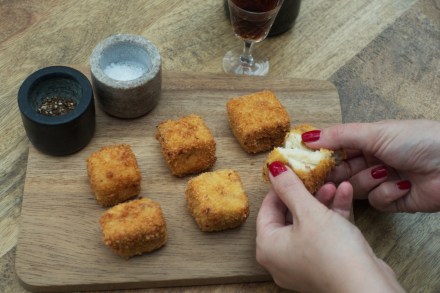
Being deeply unchic and uncosmopolitan, for a long time I assumed that croquetas were the same as the croquettes of my childhood: potato-based, probably a bit bland, and almost certainly coming from a bag that lives in the freezer. We’d often have them served with roast ham and cider sauce and green beans, as part of a main meal. To be fair to me and my culinary shortsightedness, the two bear strong similarities: both are breadcrumbed and fried or baked, soft within, and similarly shaped and sized. But, to my mind, croquetas are several levels above the French/English potato variant. Of course, Spanish croquetas don’t contain potato at all. The filling is made from a thick, thick bechamel sauce: a flour and butter roux cooked with milk to form a sauce.

Tres leches cake: a soaked pudding straight from Latin America

I confess, the idea of a tres leches cake did not initially appeal to me. A dry sponge soaked in a variety of tinned milks sounds, at best, like bland nursery food and, at worst, tooth-achingly saccharine. ‘Milky’ has never been one of the words that I hope to see in connection with anything other than ‘coffee’ or ‘Way’. But I saw it likened to trifle and curiosity got the better of me – and I’m so glad it did. Actually, a tres leches cake is not terribly like a trifle at all, although I can see where the comparison came from. Soaked puddings are nothing new, and that’s really what a tres leches cake is.

Watercress soup: the lunch that keeps on giving

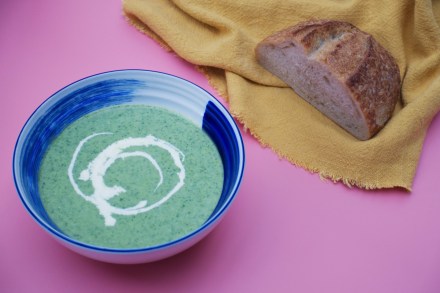
I’m normally averse to leftovers: it’s not a trait I like in myself. I’d far rather be able to eat the same thing for days on end, especially when it’s seasonal veg, or an enormous, hearty stew that I’ve spent ages making. It’s a sensible way of cooking: healthy, seasonal, cheap, time-saving. But I’m easily bored, and the best laid plans of mice and men the night before, clingfilmed or tupperwared up, no longer appeal the following lunchtime. I end up parcelling those thoughtful, carefully prepared dishes onto my husband and plumping instead for so-called novelty in the form of toast, or a sandwich. For some reason, soup is the one dish that doesn’t suffer this fate.

How to spice up your summer barbecue

Summer barbecues open up a wealth of opportunity for culinary exploration. Here are four tips for taking your barbecuing to the next level, followed by three of my recipes to try for yourself: lamb cutlets with asparagus, garlicky prawns and the delightfully colourful Pepper Piedmontese. Each of these dishes have been paired with wine chosen by Andrew Peace so that you can bring out the very best of those barbecue flavours.  Choose your charcoal wisely Food cooked over an open fire has a different flavour altogether than food cooked on the stove or in the oven. For the best flavour use sustainably sourced British charcoal which burns longer so you’ll use less and isn’t packed with chemicals like mass-produced charcoal.

Al fresco dishes to serve outside

We have all become rather used to socialising outside. Thanks to the pandemic, for perhaps the first time in our national history, al fresco dining has become the norm well outside of the summer months. We shivered under wraps for the last nine months only to finally be allowed to socialise indoors once more just at the moment when we’re all keen to light up the barbecue and enjoy the warmth outdoors. Nothing compares to the pleasure of a lunch or dinner en plein air in the summer months. It sharpens the appetite and provides happy opportunities for people or garden watching when the conversation bores. Sometimes you can even get away with taking off your shoes. The appeal lies above all in its novelty.

Madeleines: the miniature French cake that majors on flavour

In one sense, a madeleine is simply a small cake. In fact, it’s an extremely classic cake, made with the genoise method. But there’s more to a madeleine than that: the proportions of madeleines, their miniature nature and scalloped shape, mean that they have a perfect contrast between their slightly sticky, almost crisp outside, and impossibly light and soft interior. Traditionally they are made with browned butter, which does what browned butter does best, bringing depth and complexity to a straightforward sponge. The dark muscovado and honey in the recipe elevate these little sponges from a miniature cake into something really special. The holy grail when madeleine making are those characteristic bumps in the centre of the cake, sitting like pregnant tummies.

Quick, crowd-pleasing snacks for the big game

Until this week I don’t think my mother had ever in her life watched a football game. Wednesday changed that, marking the start of her new-found frenzy and puns about England’s 'Sterling effort!' (to squeals of laughter from her female friends gang). Now they’re in a state of hysterical excitement and are busy planning their match day. Football really is coming home. With nobody – including mum – minded to spend all day slaving away in the kitchen, food for Sunday’s game needs to be quick, easy and ideally unhealthy. Here are some ideas. Baked cheese A baked brie or camembert – or even better a British cheese like Baron Bigod or Tunworth – is one of the very easiest and most satisfying things you can make.

Gala pie: a dish that deserves an audience

Some dishes are just meant to be shared. I’m not talking about those items you buy on a hangover from the corner shop that sanctimoniously declare ‘meant for sharing’ or ‘share size’ on their passive aggressive packaging (I’ll be the judge of that, cheese and onion crisps and chocolate fingers). I mean something that you’ve invested energy and love into, something which demands to be passed around, praised and enjoyed; something impressive and delicious. A homemade cassoulet. A perfect chocolate cake. A batch of scones. A gala pie. The moment of cutting into a gala pie, and revealing the perfect row of eggs suspended in meat minced by your own fair hands is one of serious culinary pride.

Vichyssoise: a cool soup for balmy days

I have never been a huge fan of cold soup. It has always seemed to me to be contrary to everything good about soup: soup is inherently warming and cheering. It demands large portions and an accompanying doorstep of bread. Who on earth would want to chill it down and serve it in tiny portions – and without bread and butter? Madness! Historically, I have made an exception for gazpacho and salmorejo on the basis that they hail from hot countries, and that they aren’t thickened with dairy. But I drew the line at what I thought of as hot soups served cold. Vichyssoise was doubtless the worst of them: give me a vat of hot leek and potato, but spare me the cold stuff. Sometimes, we don’t get what we want, we get what we need.

Coconut ice: a no-bake treat made for the heat

I don’t know about you, but I find that many of the things I enjoy eating most in the summer, those things I crave when the weather is blazing hot or just plain muggy, still require some level of cooking. Those chilled soups, or sticky ribs, or even ice creams still mean standing over a hob or a barbecue or turning on the oven. Mostly, I embrace it: a hot means to a greedy end. As someone who finds relaxation in baking and cooking, I’m not big into no-bake dishes. I’m willing to turn the oven on if it means soft, baked fruit that I can chill and serve with swoops of cool softly-whipped cream, or to light my barbecue if it means beautiful, charred fish alongside a sharp, zingy dressing.

Swedish meatballs: a taste of Ikea at home

It’s thought that meatballs were brought to Sweden by King Charles XII. After a disastrous attempt to invade Russia in 1709, he fled in exile to the Ottoman empire. There he fell for a dish very similar to the Swedish meatballs we now know and, when he returned from exile five years later, he took those meatballs back with him. The meatballs grew in popularity and eventually became so closely associated with the country, that they took on the ‘Swedish’ name. But it would be disingenuous to write about Swedish meatballs and not mention that bastion of storage, that flatpack palace: Ikea. It’s no exaggeration to say that Ikea brought the Swedish love for meatballs to the rest of the world.

Petits pois à la Française: a sumptuous twist on summer greens

Early summer crops have been delayed in many places this year, thanks to the brutal rain and cold that preceded the recent heat wave, but finally, we’re starting to see tiny tomatoes, baby figs, and the first perfectly formed pea pods bursting into life. Of course, when it comes to seasonal eating, you can argue that it’s best to keep it simple, to allow the produce to ‘speak for itself’ – but, there is little that butter, shallots, and little cubes of smokey, fatty bacon can’t make even better. And that’s where petits pois à la Française comes into its own. The name rather gives it away: it’s a classic French dish, showcasing the best of the season’s first peas.

Bourbon biscuits are better home-made

I am a big fan of a tea break. I don’t mean afternoon tea or high tea (although I’m never going to say no to a finger sandwich or a tiny cake), and I don’t mean a mug of tea at my desk or standing up in the kitchen while I do something else. I believe passionately in the restorative powers of just sitting down for fifteen minutes with a mug of something hot and a plate of biscuits. Tea and biscuits have always held an important place in my days. When I was very little, I had a Spot the Dog tea set that, every morning, my mother would fill with warm milk when she made her own morning brew. At college, our librarian insisted on tea breaks in her office to carve up the days of studying – or, in my case, procrastination while waiting for the bar to open.

The secret to making mint chocolate chip ice cream

It used to drive me mad that, whenever my husband and I would go out for dinner, no matter how fancy or lowbrow the place, he would always ignore the puddings on offer in favour of a single scoop of ice cream. He can overlook crème brûlées, lemon meringue tarts, sticky toffee puddings – even eschew a cheese plate – if ice cream is a possibility. It just always seemed quite a boring choice to me – you can keep a tub of ice cream in your own freezer, or maybe get a cone on the beach. Why would you plump for something so simple (so boring!) when there were so many more exciting options? Of course, as is so often the case, I was wrong.

Potatoes Dauphinoise: a rich dish made for sharing

There’s no getting away from the fact that potatoes dauphinoises is a rich dish. It’s a celebration of richness, of creaminess, and of carbs. If you recoil from richness, or are the first person at the table to bring up calorie counts, potatoes dauphinoises is probably not the dish for you – and frankly, any attempts to lighten it, or slim it down are misguided. But if you can resist bronzed slabs of thin, tender, perfectly cooked potato, with a garlic-infused creamy sauce bubbling up around the edges, you’re made of sterner stuff than I am. Dauphinoises hails from the historical Dauphiné region in South-East France; the region dissolved in 1789 but its potato namesake has lived on.

The art of arancini

As I write this, I am wearing a thick jumper and sitting under a blanket, having just put the heating on. Earlier, rain fell on our skylight so heavily, the dog jumped up as if we were being invaded. I changed my schedule this morning so I could bake, just to take advantage of the oven’s warmth. It certainly doesn’t feel like sunny days are in our near future. I’ve read that the last year has felt warped time-wise, that it’s been hard to form memories that stick in the usual way, because we don’t have the events, the change in daily routine, the hooks onto which we peg our days, our weeks, our minds.

How to mix up your spring salad

Almost anything can constitute a salad. Yes dictionaries variously describe salad as cold, consisting of raw vegetables, and featuring a dressing, and often these things are true – but not always. For there are warm salads, salads with grains or seafood, and salads where the pairing of ingredients is so precise and perfect – think pear and Roquefort – that not even a dressing is required. For me what is essential about a salad is freshness and piquancy; it must be vibrant and sprightly. If you need a rule of thumb though, to use when constructing your salads, think in terms of leaf, grain, protein, and dressing.

Rum baba: a boozy, make-ahead pudding

The rum baba sits somewhere between a cake and a pudding: made from an enriched, yeasted dough, full of butter, called savarin, which is like a very dry brioche. It isn’t quite as enriched as brioche and, after baking, it can be left to stale, and dry out further, which means that when it’s soaked in the sweet boozy syrup, it will drink up even more. Savarin dough can be used to make enormous bundt cakes, often decorated with fresh cream and fruit, but I have a soft spot for the individual baba. Once soaked, they are squidgy and extremely alcoholic – put it this way, I wouldn’t want to drive after eating one.

Cinnamon buns: a true treat for the breakfast table

Cinnamon rolls never used to grace my breakfast table. First of all, they struck me as the sweetness equivalent of drinking a triple espresso first thing: it might seem like a good idea at the time, but the crash that accompanies it is surely inevitable. And secondly, I was certain that to be the sort of person who can put cinnamon rolls on the table at breakfast time, you must be immensely practical, organised and competent – and tied to the kitchen. And that’s simply not me. Happily, neither of these things are true. While cinnamon rolls are sweet – if you don’t have at least a little bit of a sweet tooth, I’d probably stick to marmite on toast – they’re not the one-note sweetness I had assumed they were.