Rape

After the party: One of Us, by Elizabeth Day, reviewed

From our UK edition

This is the sixth novel and tenth book overall by the highly successful journalist and podcaster Elizabeth Day. She hit her stride as an author with her third novel Paradise City (2015), which was leaps and bounds ahead of her first two in terms of narrative propulsion. Her next was what might be considered her breakout book, The Party (2017), after which came Magpie (2021).  One of Us returns to the characters and story of The Party, but it can easily be read as a standalone. Day has said that the earlier novel was partly inspired by reading The Great Gatsby at the age of 12; and while she has conceded that no one can write like F.

The Diddy documentary is required viewing

There are relatively few Netflix documentaries – even in this increasingly sensationalized and prurient age – that have made anything like the splash that the new show about the artist formerly known as P. Diddy has caused. Sean Combs: The Reckoning isn’t just hard to watch, but positively mind-blowing in its account of the imprisoned mogul’s actions and predilections. Although he was acquitted of the most serious charges that he was on trial for this year, Combs will not be released from jail until May 2028. Given the number of allegations and civil suits pending against him, any comeback for the disgraced musician looks impossible – even in an era when Kanye West is, apparently, given second chance after second chance.

Songs of murder, rape and desertion

From our UK edition

A century ago, the Orkney poet George Mackay Brown was settling into his first term at Stromness Academy. His schooldays were to prove a dismal grind, but English lessons brought moments of magic. He was especially intrigued by poems – ballads, mostly – signed simply ‘Anon’. The name of the poet was lost – and perhaps there hadn’t been just one but a host of craftsmen in the making of each of these wonders. They were the creation of a tribe, the inheritance of a community, songs ‘seraphically free/ Of taint of personality’. Today, as publishers bust themselves to promote the cult of individual authors, it’s a thrilling, liberating notion.

The evasions of smalltown Alabama: The Land of Sweet Forever, by Harper Lee, reviewed

From our UK edition

Harper Lee’s writing career was brief, but her single novel became one of the most famous in American history. To Kill a Mockingbird (1960) won the Pulitzer Prize, sold tens of millions of copies and remains a fixture of classrooms and popular memory. She published almost nothing else until Go Set a Watchman – an earlier draft of Mockingbird – appeared in 2015, just before her death and perhaps without her meaningful consent. The Land of Sweet Forever gathers apprentice stories written before Mockingbird, along with a few later magazine pieces. Most are slight and the volume is more commercial than literary.

Pride and Prejudice retold in a thousand different ways

From our UK edition

‘It is a truth universally acknowledged that any essay about Jane Austen... must be in want of a poorly rendered paraphrasing of her most famous opening lines,’ writes Ella Risbridger in this sharp, gleefully obsessive field guide to romantic fiction. For her, Austen is the genre’s ‘mother’, and she crisply notes that while George Eliot disparaged ‘silly novels by lady novelists’, ‘she does appear to have read a lot of them’. Risbridger is the author of two cook books, including the award-winning Midnight Chicken (and Other Recipes Worth Living For); a children’s novel, The Secret Detectives; and the editor of anthologies of poetry and food writing. She has read a lot of romance novels, too.

The powder keg of 1980s New York

From our UK edition

The Bonfire of the Vanities, Tom Wolfe’s romp through the status and racial anxieties of 1980s New York, begins with an unnamed mayor being Mau-Maued by Harlem activists. As he soaks up the abuse, he fantasises about the confrontation spreading: Come down from your swell co-ops, you general partners and merger lawyers! It’s the Third World down there!... Staten Island! Do you Saturday do-it-yourselfers really think you’re snug in your little rug? You don’t think the future knows how to cross a bridge? This fictional world, a collision of riches and poverty and criminal justice and electoral politics, maps neatly on to the period described in Jonathan Mahler’s new book.

Pity the censor: Moderation, by Elaine Castillo, reviewed

From our UK edition

After her America is Not the Heart was published in 2018, Elaine Castillo was named by the Financial Times one of ‘the planet’s 30 most exciting young people’, alongside Billie Eilish and Alexandria Ocasio-Cortez. That debut novel told the story of three generations of women torn between the Philippines and the United States. In Moderation, thirtysomething Filipina-American Girlie Delmundo (not her real name) works as a content moderator, removing the most hideous material to be found on the internet. The author doesn’t pull her punches. In an early scene, Girlie has to moderate a video of child sexual abuse as part of her final assessment to get the job.

No place is safe: The Brittle Age, by Donatella di Pietrantonio, reviewed

From our UK edition

This slim, unsettling novel opens with Lucia trying to navigate the ‘mess’ of her daughter Amanda’s return home to their apartment near Pescara, in Italy’s Abruzzo. Pieces of torn bread, a heaped-up blanket and other strange ‘traces’ are indications of Amanda’s emotional disarray after hastily leaving Milan on the eve of lockdown. But she’d already abandoned her university studies by the time she’d been violently mugged. Lucia attempts to achieve the difficult balance of caring for, but not suffocating, her daughter, resigning herself to Amanda’s ‘unpredictable comings and goings’ while leaving her ‘something nourishing in the fridge in case she skips breakfast’. But she has already spectacularly misjudged this.

The horror of Hungary in the second world war

From our UK edition

I suspect Adam LeBor and his publishers must have struggled to come up with the title The Last Days of Budapest: Spies, Nazis, Rescuers and Resistance, 1940-1945. The book certainly does what it says on the cover, but its pages contain other Magyar-themed subjects. We are offered a wide-ranging reflection on Hungary in the first half of the 20th century, from the harsh measures of the 1920 Trianon treaty to the devastating arrival of the Soviet army in Budapest in 1944. LeBor switches between an Olympian view of European geopolitics, trawling diplomatic archives and political memoirs and focusing on individuals – Hungarian aristocrats, Zionists and nightclub singers – to show how history felt on the ground. He is particularly concerned with the fate of Hungarian Jewry.

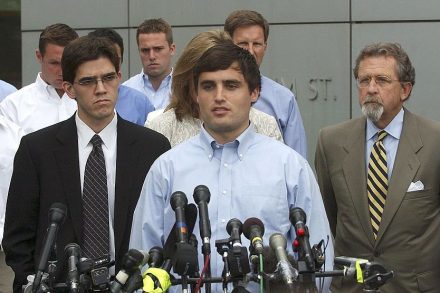
The Duke lacrosse case should have been a warning about #MeToo

Almost two decades after claiming she was raped at a party thrown by members of the Duke University lacrosse team, former stripper Crystal Mangum admitted Thursday that she lied. It is curious that she finally decided to state the obvious after years of standing by her rape accusation. Mangum, who is currently serving time in prison for the second-degree murder of her boyfriend in 2013, gave an interview that suggested her moment of truth might be tied to a conversion to Christianity. “They trusted me that I wouldn’t betray their trust, and I testified falsely against them by saying that they raped me when they didn’t, and that was wrong,” Mangum said. “I made up a story that wasn’t true because I wanted validation from people and not from God.

Duke lacrosse player David Evans (C), 23-years-old, proclaims his innocence after being indicted on sexual assault charges on May 15, 2006 (Photo by Sara D. Davis/Getty Images)

Not for the faint-hearted: She’s Always Hungry, by Eliza Clark, reviewed

From our UK edition

Eliza Clark’s first novel, Boy Parts, centred on a self-destructive woman taking explicit photographs of men. Her second, Penance, was about a journalist constructing a ‘definitive account’ of a seaside murder. Last year she was named one of Granta’s best young novelists; but she has now produced a sadly uneven short story collection. These 11 tales do not hang together thematically, aside from a broad emphasis on the corporeal. The good ones are full of brio: ‘The Shadow Over Little Chitaly’ is composed entirely of hilarious reviews of a takeway that offers Chinese food alongside pizza. The feedback is bizarre from the start: the first mentions that the restaurant is 125 miles away and the customer complains that they rang 117 times for a refund.

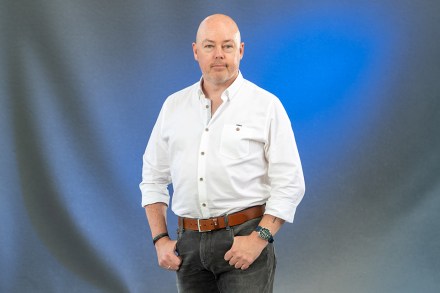
A quest for retribution: Fire, by John Boyne, reviewed

From our UK edition

At the end of John Boyne’s novel Earth, Evan Keogh, a conscience-stricken young footballer, hands evidence of his connivance in a rape to the police. Two years earlier, he and his teammate Robbie had been found innocent of the charge by a jury, whose foreperson was Dr Freya Petrus. Freya, a consultant in a hospital burns unit, becomes the protagonist of Fire, the third of Boyne’s Elements quartet. Like its predecessors, the novel is dominated by issues of aberrant sexuality. As a 12-year-old girl on a summer holiday in Cornwall, Freya was first raped and then buried alive in a sadistic ritual by 14-year-old twins, Arthur and Pascoe.

Mounting suspicion: The Fate of Mary Rose, by Caroline Blackwood, reviewed

From our UK edition

‘She was dead even before I became aware of her existence.’ The menacing opening line of this gripping novel is not about the title’s Mary Rose but about another six-year-old girl, Margaret Sutton, who has been abducted, raped and murdered in the Kent woods. The story is told from the perspective of Mary Rose’s father, Rowan Anderson, who spends most of his time in London, writing a biography of the scientist Hertha Ayrton and feuding with his possessive girlfriend, Gloria. He periodically visits his daughter and his wife, Cressida, in their country cottage.

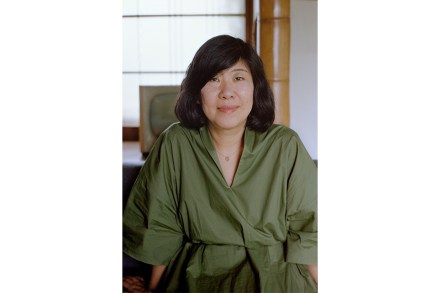
Small mercies: Dead-End Memories, by Banana Yoshimoto, reviewed

From our UK edition

Tasty meals and epiphanies: that’s what Banana Yoshimoto mostly deals in. It’s no accident that her most famous book is entitled Kitchen. Sometimes the epiphanies come by way of the tasty meals; at other times they are triggered by effects of light playing over rivers, trees, landscapes, as if we had suddenly found ourselves inside a print by Hiroshige. And loneliness. She’s the supreme poet of solitude, and how it can grip even in the middle of one of the world’s busiest cities; even alongside a loving partner. And sudden death. But that’s making Yoshimoto’s graceful work sound far too depressing. There are always the epiphanies, and cake, and chicken with rice, but most of all the tiny kindnesses from other human beings that make life worth persevering with.

The rape of Ukraine continues while the world’s sympathies move on

From our UK edition

‘Write and record’ was the dying instruction of the historian Simon Dubnow – shot by Nazis in the Riga ghetto – and two books recently emerging from Ukraine embody this spirit in spades. Now that the world’s anger and sympathies have largely moved on to the Middle East, they may do something to rekindle that earlier sense of outrage and remind the ‘caring’ classes of atrocities closer to home. ‘My hatred flows from thesmall things to the big things. Every fibre is filled with it’ The first, Our Daily War, comes from Andrey Kurkov, the celebrated Russo-Ukrainian novelist and author of 2022’s Invasion Diary, a detailed on-the-ground account of Putin’s attack on his country.

The hell of the antebellum South: Let Us Descend, by Jesmyn Ward, reviewed

From our UK edition

Jesmyn Ward, America’s only female two-time National Book Award winner, has had more than her share of hellish experiences to fuel her literary life. Her Mississippi-based family endured Hurricane Katrina. Salvage the Bones (2011), set during the catastrophe, was Ward’s response. Her memoir, Men We Reaped (2013), tackled her grief at losing five men close to her, including her brother, who was killed, aged 19, by a drunk driver. In January 2020, Ward’s husband died of acute respiratory distress syndrome. Ward recreates the hell of the antebellum South for the ‘stolen’ people forced into chattel slavery Hell is very much the context for her fourth novel, Let Us Descend.

Should we judge a work by the character of its creator?

From our UK edition

‘Most of my heroes are monsters, unfortunately,’ Joni Mitchell once said, ‘and they are men.’ The singer-songwriter was able to detach the maker from the made. Should we do the same? Is it ethical? Even possible? These are the questions Claire Dederer deftly considers in Monsters, which puzzles through the problem of what we ought to do about great art by bad men. Ideally, nothing. Early on in her quest, Dederer longs for someone to invent an online calculator: The user would enter the name of an artist, whereupon the calculator would assess the heinousness of the crime versus the greatness of the art and spit out a verdict: you could or could not consume the work of this artist. Alas, said calculator has yet to be programmed, so it’s down to her to do the maths.

Constance Marten: a very British scandal

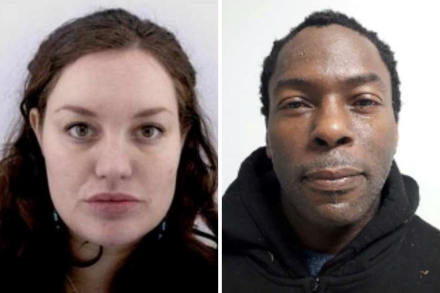
A British aristocrat and a Florida rapist are hardly a likely pairing; which is why the missing person case of Constance Marten and Mark Gordon enthralled the public this week. In early January, Marten and Gordon went missing with their newborn baby, who was born in the back of their car just two days prior. They set the car on fire with all their belongings inside on the hard shoulder of the M61 motorway in northwest England and ran. First they traveled to Liverpool, then to Harwich in Essex, to Colchester and on to East Ham station in east London. The police were constantly about two days behind them, before the trail went cold completely. Today, police confirmed the couple has been found and arrested — but the search for the baby continues.

constance marten

Why are Democrats so obsessed with the abortion 1 percent?

Amid 40-year-high inflation, dwindling investment portfolios, and 20-year high mortgage rates, the Democratic Party appears most concerned with protecting the abortion rights of rape and incest victims. I live in Florida, and almost every day in recent weeks, I've gotten at least one flyer warning me that one Republican candidate or another wants to “imprison victims of rape.” Last week, I got three different flyers about “extremist Audrey Henson,” a young Republican candidate for the Florida House of Representatives, all concerning her alleged support for criminalizing abortion, even in cases of rape and incest. One featured an image of a book supposedly written by Ms. Henson with the title, “Why I am Pro-Life as a Millennial Woman.

So much for #MeToo

Five years have passed since Jodi Kantor, Megan Twohey and Ronan Farrow’s Pulitzer-winning reporting on sexual misconduct in Hollywood and beyond. Harvey Weinstein, #MeToo’s Perv Patient Zero, is in prison. Bill Cosby spent three years there as well. Woody Allen — Farrow’s estranged father, one-time accused child molester and husband of his ex-partner’s adult daughter — still walks free (not having actually been charged with anything), but a bunch of A-list actors won’t work with him, and you now have to preface every mention of Annie Hall with a handwringing disclaimer. Donald Trump, well, he wasn’t reelected, which has to count for something. The world, we were assured, would never be the same.

#MeToo