Rambling

Around Britain with a theodolite: a celebration of the Ordnance Survey maps

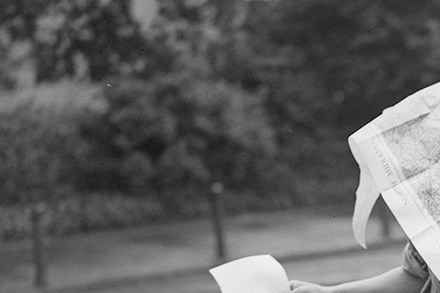
It took six years, starting in the summer of 1784, for the Board of Ordnance to establish the baseline of its triangulation of Great Britain. First they used wooden poles, then glass tubes. After much clearing of furze bushes and ant hills, the baseline ran for more than five miles from Hounslow Heath to Hampton Poor House. The maps of England and Wales were complete by 1870. Scotland had to wait until 1887. The delay was rumoured to have been caused by the superintendent’s concern that surveyors would get in the way of the late summer deer stalking. As a wing of the military, the Ordnance Survey had extraordinary powers. The Surveyors’ Act of 1841 allowed it to trudge, clamber, squelch, measure and interrogate wherever necessary.
Everything in me wanted to dislike it – but it’s lovely: BBC Radio 3’s Sound Walk reviewed

It’s a sweet, green, glowing dawn in north-west Scotland. All around us are empty hillsides of rock and heather. The cold air smells of moss. To the south, far mountain peaks resolve into high banks of mist and cloud, while up ahead stands the crumpled rock face of Ben Nevis, its broad shoulders beginning to fill the patchy, blueing sky as we walk towards it. It’s very beautiful. Look. A heron. Why are we here? To take the long view, because two million years of intermittent glaciers have frozen, thawed and hewn the mountain into its present-day shape. More immediately, because of the Norwegian public service broadcaster. In the 2000s, it decided to televise, in real time, the railway journey from Bergen to Oslo.

In praise of fly-tipping

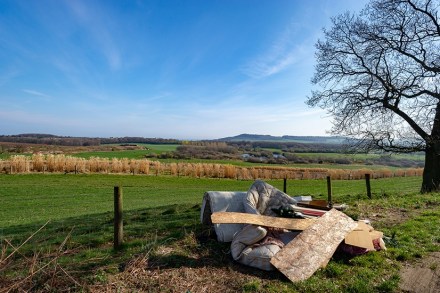
The pile of fly-tipping was dumped in the night as usual, right against the five bar gate. I arrived to feed the horses and found seven fridges and a pile of mattresses blocking the entrance to the field. I raised my eyes to heaven and said: ‘Thank you, God!’ The rotting mattresses and busted, filthy fridges, lying with their doors open, blocked almost the entire pull-in, the field gate and the stile. I believe Nicholas van Hoogstraten once piled up a load of old fridges to block walkers from looking into his garden from a footpath. Well, maybe I know how he felt. No rambler, no matter how many National Trust stickers he has in his car window, can park up to ramble around my horses and cause havoc with seven fridges piled against the gate.

This was not your usual entitled Surrey trespasser

The Volkswagen Passat was parked next to my field gate, sticking out into the lane, blocking larger vehicles from getting round. The farrier was due in an hour. I looked around and saw a lady picking blackberries a little way down the lane. ‘Excuse me? Hello!’ I called, walking up to her thinking: here we go again; more lockdown torment. I geared myself up for conflict with another bad-mannered Surrey rambler. This one was slumped against a bush, reaching upwards, almost swallowed by branches, apparently not hearing me but no doubt pretending, as they do, that I didn’t exist. ‘Excuse me?’ I insisted. As she pulled herself out of the bush, I could see that she was in her sixties and casually dressed in pale blue crumpled trousers and shapeless sweater.