Putin

What does Putin’s fascination with Eton tell us about him?

From our UK edition

How does Vladimir Putin think about the world? It becomes dangerously important to know. I still have not seen a revealing speech by or discussion with him. I have found out a bit more, however, about the two-hour private interview conducted with him by several young Etonians last summer. One reason they got into the room, it seems, is that Mr Putin wanted to know about Eton and why it produced 19 prime ministers. The boys explained that one of the school’s great advantages was its societies — Political, Literary, Cheese etc. — largely organised by them, not by masters. They said these brought them into contact with a wide range of visiting speakers, broadening their minds.

The good, the bad and the ugly

From our UK edition

Vladimir Putin notoriously declared the collapse of the Soviet Union in 1989 to be one of the greatest disasters of the 20th century. However, as Revolution: Russian Art 1917–32 — an ambitious exhibition at the Royal Academy — helps to make clear, the true catastrophe had occurred 82 years earlier, in 1917. Like many of the tragedies of human history, the Russian revolution was accompanied, at least in the early stages, by energy, hope and creativity as well as by murderous cruelty and messianic delusion.

The Spectator’s Notes | 16 February 2017

From our UK edition

How does Vladimir Putin think about the world? It becomes dangerously important to know. I still have not seen a revealing speech by or discussion with him. I have found out a bit more, however, about the two-hour private interview conducted with him by several young Etonians last summer. One reason they got into the room, it seems, is that Mr Putin wanted to know about Eton and why it produced 19 prime ministers. The boys explained that one of the school’s great advantages was its societies — Political, Literary, Cheese etc. — largely organised by them, not by masters. They said these brought them into contact with a wide range of visiting speakers, broadening their minds.

Are Donald Trump and Vladimir Putin fast becoming enemies?

From our UK edition

It's been said a lot that, for all the supposed closeness between Russia and the new US administration, the Trump-Putin axis could soon turn into dangerous enmity. Strange friendships make fast feuds. And if Trump is a proper nationalist, if he is the thin-skinned narcissist that everybody says he is, he will react strongly against the widely held idea that he is some orange Kremlin patsy. What then should we make of the departure of Michael Flynn, Trump's national security adviser? Flynn has resigned amid allegations that he misled Vice President Mike Pence as to the nature of some telephone calls in December with the Russian ambassador to the US. Flynn had assured Pence that these conversations had not touched on the sensitive matter of American sanctions against Russia.

Trump’s performance will have delighted Putin

From our UK edition

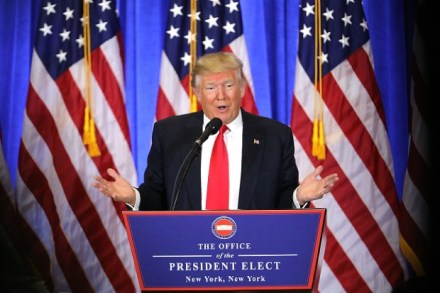
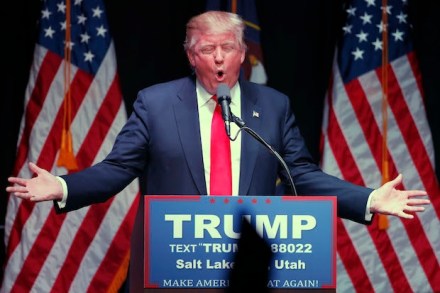
After 167 days without a press conference, Donald Trump’s performance in Trump Tower didn’t disappoint. He abused journalists, denounced a string of media organisations and compared his own intelligence services with those of Nazi Germany. Some of us wondered whether the latest scandal – allegations that Russian intelligence operatives had gathered compromising material or Kompromat on the President-elect  – would force Trump to tread carefully, or even cancel his scheduled appointment with the assembled press corps at Trump Tower. Of course that’s not his style.

Red faces

From our UK edition

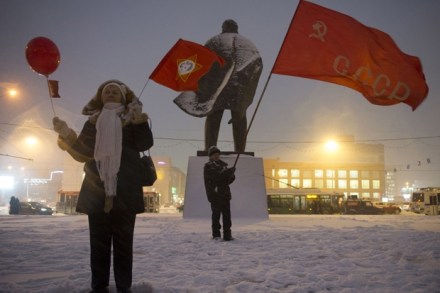
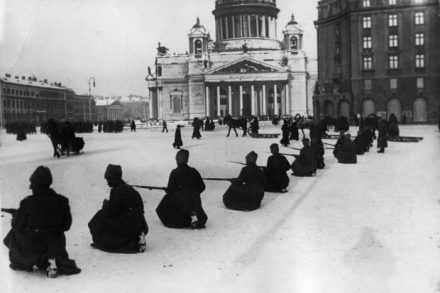
How to celebrate the centenary of the Russian revolutions of 1917? Modern Russians are deeply divided over the legacy of that tumultuous year. Russia’s few remaining liberals remember that the overthrow of the tsar in February 1917 ushered in a flowering of the artistic avant-garde, a brief period of feminism, liberal values and democracy. Putin supporters, on the other hand, have been convinced by years of state television propaganda that popular revolutions are by definition dangerous and anarchic, and usually orchestrated by dark outside forces. Whether in Maidan Square in Kiev in 2013, Tahrir Square in Cairo in 2011 or Palace Square in Petrograd in 1917, the very idea of the people taking power into their hands is anathema to the Kremlin’s ideologues.

Will disgruntlement prevail again in 2017? Who knows, but at least 2016 was quite fun

From our UK edition

Most of my predictions for 2016 were wrong; so let’s not revisit them. But I was right, in January, to identify as a theme of the coming year an evident gulf between ‘the reinvigorated and the demoralised’. In small business sectors and provincial towns, as well as in the attitudes of millions of citizen voters here and abroad, the divergence between optimism and disgruntlement grew as the year went on. And when it came to elections and referendums, it was the downbeat that prevailed. So here we are, fearful of the craziness of Trump, the disintegration of Italy, the triumph of Marine Le Pen and the non-resolution of the Brexit muddle. My top prediction for 2017? We won’t feel any more prosperous at the end of the year than we do at the beginning.

The brutal legacy of the Russian Revolution must never be forgotten

From our UK edition

Few 20th-century historians doubted that the 1917 Russian revolution was one of the most influential events of their time, indeed of all time. As the centenary commemoration approaches, however, it seems remarkable how far and how fast the ideology that inspired Lenin and millions of his worldwide followers has receded in significance. Many are the imperfections of capitalism, but almost nobody outside Jeremy Corbyn’s office any longer supposes that communism, least of all the old Soviet brand, offers a credible alternative. This would amaze our grandparents’ generation on both sides of the struggle. The novels of C.P. Snow are indifferent fiction but intriguing middle-class social history.

Ambassador Karlov’s killing leaves Turkey’s relations with Russia hanging in the balance once again

From our UK edition

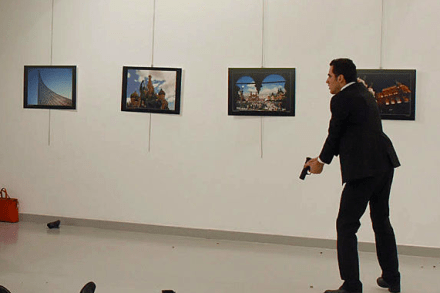
They say a picture is worth a thousands words. The one of an off-duty police officer standing triumphantly over the body of Russia’s ambassador to Turkey in Ankara, says so much more. On what was due to be an ordinary evening in the Turkish capital, Andrei Karlov attended a photo exhibition to make a few remarks at the opening of a collection entitled 'Russia as seen by Turks'. They turned out to be his last. As he addressed the small crowd, nothing seemed out of the ordinary. The 62 year-old was, as you’d expect of a man of his status, flanked by men in suits. Little did anyone expect that one of the suits would open fire and kill him. Captured on camera, the gun fire can be heard before ambassador Karlov falls to the ground.

Regrets on Russia, Syria, or Iran? Obama Has None

From our UK edition

The Electoral College will cast their votes for president of the United States tomorrow without any last-minute intel on alleged Russian cyber-meddling, according to a statement from the Office of the Director of National Intelligence. A group of electors had called for a briefing before the December 19 vote, though it’s unclear what they’d hoped to discover that everyone didn’t already know on November 8. President Obama acknowledged as much on Friday in a year-end press conference. ‘The truth of the matter is, is that everybody had the information. It was out there,’ he said, swatting away the suggestion that he should have made more of the Russian intrusions before the election.

Murdered Christians are 2016’s least fashionable minority

From our UK edition

The murderers and persecutors of Christians have had a good year. With one exception – the killing of Fr Jacques Hamel in July as he celebrated Mass in a church in Normandy – the world has continued to look away as Islamists and other fanatics have slaughtered followers of Jesus Christ. I don't mean that we consciously look away – we simply don't know about most of these atrocities. There are no celebs out there 'raising awareness'; they're too busy weeping over Brexit and Trump. In one attack last June, 460 Christians died. Can you tell me where it happened? I couldn't have, until yesterday, when I did a Google search in preparation for today's Holy Smoke podcast.

Why Putin keeps winning the ideological war

From our UK edition

I have no idea whether Russia successfully interfered in the US election; I imagine it's one of those situations where everyone is lying but the Russians are lying twice as much. But there are a couple of questions that no one seems to be asking, which makes me curious. Firstly, how could America have got to a stage where an outside, not very friendly power could influence the course of an election? Would this have been possible in the 1950s or 1980s, for example? It seems extremely unlikely. America's founding fathers were quite vehement on the subject of foreign influence in US politics, which they thought would lead to corruption - and with good reason.

The SpeccieLeaks take on Trump’s first encounter with Putin

From our UK edition

SpeccieLeaks presents: Transcript of private meeting between President Trump and President Putin, 14 February 2017, Andreyevsky Hall, Grand Kremlin Palace PUTIN: So how are you liking Russia? TRUMP: Fabulous. Amazing. And this room — incredible. You have beautiful taste, my friend. Beautiful. PUTIN: You like gold? TRUMP: Very much. We used a tremendous amount of gold in the Trump Tower. PUTIN: Yes, it’s something. Truly. I have seen it on television. TRUMP: Those chandeliers there. How much were those? PUTIN: Well, I don’t know. But I will have this information provided to you. TRUMP: That would be great. We just opened a new hotel in DC, right next to the White House? It’s got these high ceilings? A couple of these babies would look amazing.

When the Donald met the Vlad

From our UK edition

SpeccieLeaks presents: Transcript of private meeting between President Trump and President Putin, 14 February 2017, Andreyevsky Hall, Grand Kremlin Palace   PUTIN: So how are you liking Russia? TRUMP: Fabulous. Amazing. And this room — incredible. You have beautiful taste, my friend. Beautiful. PUTIN: You like gold? TRUMP: Very much. We used a tremendous amount of gold in the Trump Tower. PUTIN: Yes, it’s something. Truly. I have seen it on television. TRUMP: Those chandeliers there. How much were those? PUTIN: Well, I don’t know. But I will have this information provided to you. TRUMP: That would be great. We just opened a new hotel in DC, right next to the White House? It’s got these high ceilings? A couple of these babies would look amazing.

Portrait of the week | 1 December 2016

From our UK edition

Home Paul Nuttall, aged 39, was elected leader of the UK Independence Party. He said: ‘I want to replace the Labour party and make Ukip the patriotic voice of working people.’ Theresa May, the Prime Minister, was rebuffed by Angela Merkel, the Chancellor of Germany, and by Donald Tusk, the President of the European Commission, when she proposed settling the status of British and EU expatriates even before Article 50 was invoked. She made another attempt in talks with Beata Szydlo, the Prime Minister of Poland. There was some interest in a note photographed on papers being carried after a meeting in Downing Street by Julia Dockerill, an aide to Mark Field, a Conservative MP, that said: ‘What’s the model? Have your cake and eat it.

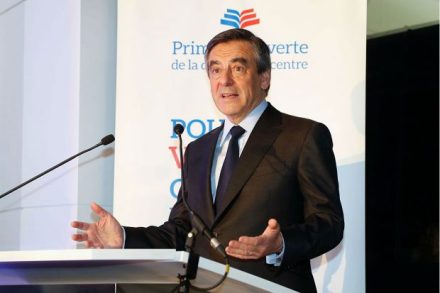
Trump and Fillon mean that Britain matters far more to Eastern Europe

From our UK edition

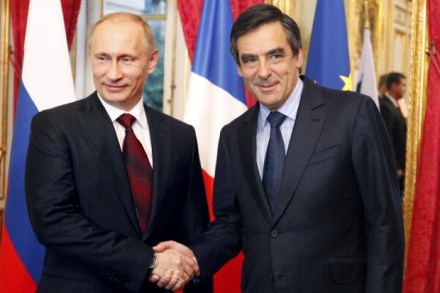
By next summer, Britain could be the only one of the three major Western military powers unequivocally opposed to the idea of Russian domination of its near neighbours. For François Fillon, the Republican candidate for the French Presidency and the favourite to win, has -- as UK security sources point out -- pretty much the same view of Russia as Donald Trump does. Fillon favours allying with Russia in Syria and seeking Vladimir Putin’s help to defeat both Islamic State and the broader Islamist terrorist threat. Fillon also wants EU sanctions on Russia, imposed because of its annexation of Crimea and broader interference in Ukraine, lifted. This shift in world affairs has profound implications for Britain.

Like Donald Trump, Francois Fillon is a Russian realist

From our UK edition

One of the bonuses of a Trump presidency – of which there will be many negatives – is the prospect of a distinct lowering of temperature in relations between Russia and the West. Now, it seems that Vladimir Putin is destined to have a friend in Western Europe, too. The new favourite for next year’s French presidential election, Francois Fillon, is just as keen on forging relations with the Russian president. Asked recently whether he worried about Trump’s closeness to Putin he replied: 'I don’t only not worry about it, I wish for it.' He went on to demand that Russia be treated as 'a great nation' and not made a pariah over its annexation of the Crimea. Putin has returned the compliment, calling Fillon an ‘upstanding person’.

Moscow rules

From our UK edition

 Moscow To the Union Jack pub on Potapovsky Lane for a US election night party. The jolly Muscovite Trump supporters who organised the event had gone to the effort of providing girls with tight--fitting Trump-Pence T-shirts and Make America Great Again baseball caps. In pride of place beside the bar hung a specially commissioned triptych of oil paintings — heroic Soviet-style portraits of Russia’s new heroes: Vladimir Putin, Donald Trump and Marine Le Pen. Among the guests were a group of young men from Tsargrad TV, Russia’s popular new Orthodox nationalist channel. Sporting neatly trimmed beards and sharp suits, they were a Russian version of Republican evangelicals.

The English right’s Trump temptation

From our UK edition

Labour’s election then re-election of Jeremy Corbyn was the equivalent of a suicidal man who, when the noose snaps and gives him a second chance, decides to throw himself off a cliff instead. The Liberal Democrats are too small to get a hearing. The Scottish nationalists will speak only for Scotland. The only arguments that matter in England now are the arguments within the right. But what is the right today? What does it mean to say you are right-wing? You only have to look at the triumph of Donald Trump to guess the answer. He not only beat Hillary Clinton but the old Republican party, which looks like it is close to disappearing now. The same battles are being fought and victories won across Europe.

Britain should be grateful for its new aircraft carriers. They do still make waves

From our UK edition

As the Russian aircraft carrier Admiral Kuznetsov finally nears the eastern Mediterranean, with a trail of ugly black smoke belching from its funnels, it’s a fitting moment to acknowledge some credit where it’s due. For the waves created by President Putin’s flagship as it passed our shores – before steaming into further controversy in Spain – more than endorse the Cameron government's brave decision to press on with Britain’s new £3 billion aircraft carrier, the HMS Queen Elizabeth, in the aftermath of the 2008 financial crisis.