Psychology

How half-baked ideas infiltrated psychology

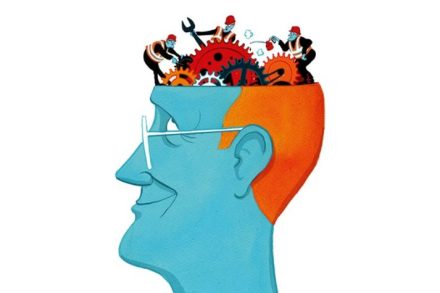
If you’re the sort of person who buys and reads books about human behavior, then it is likely you have recently encountered an exciting, counterintuitive new psychological idea that seems as if it could help solve a pressing societal problem like educational inequality, race relations, or misogyny. Maybe you came across it in a TED Talk. Or, if not there, in an op-ed or blog post or book. It is, after all, a golden age for popular behavioral science.

fad psychology

How Prince Harry became celebrity frontman for a very questionable industry

From our UK edition

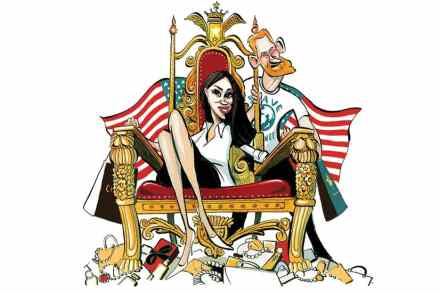
Prince Harry is now chief impact officer for BetterUp, a Californian corporate consultancy whose ‘mission’ is to sell online life coaching with — in his words, — ‘innovation, impact and integrity’. Harry may not realise it, but he is the latest celebrity frontman for the rapidly growing, broadly unregulated and frequently dubious corporate ‘coaching’ industry. And you might not realise it, but Harry, Duke of Malibu is your future, because California’s today is America’s tomorrow and Britain’s next week. BetterUp is one of a group of Californian companies on the growing, corporate edge of life coaching.

Prince Harry is here to help

Nothing duller for those of us not in therapy than listening to people who are in therapy talking about it, something they seem to like to do incessantly, at every opportunity. For this reason, my heart sank during the Oprah interview — which I’d been looking forward to tremendously — when early into his appearance, Prince Harry made an unsmiling reference to the ‘many years’ he had spent ‘doing the work — and doing my own learning’. Here we go, I thought. Sure enough, not long later he was telling the ludicrously softball interviewer of his family, his father, particularly: ‘they only know what they know. I’ve tried to educate them, through the process that I’ve been educated.’ Difficult to imagine how much the Windsors must have enjoyed that.

harry therapy

The art of the public information ad

From our UK edition

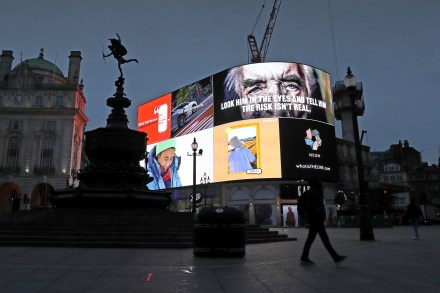
Bring back the Tufty Club. Bring back the Green Cross Code. Bring back ‘Charley says’. Bring back ‘Only a fool breaks the two-second rule’. Bring back Vinnie Jones and ‘Stayin’ Alive’. Bring back the Country Code and ‘Always take your litter home’. Bring back public information films. Bring back the Central Office of Information. For younger readers, I probably need to explain what the hell I am talking about. Tufty was created for the Royal Society for the Prevention of Accidents, and was an implausibly sensible young squirrel whose behaviour (in contrast to the foolish antics of the louche Willy Weasel) gave lessons to children on road sense. At its height, the Tufty Club had two million members.

The power of cold showers

From our UK edition

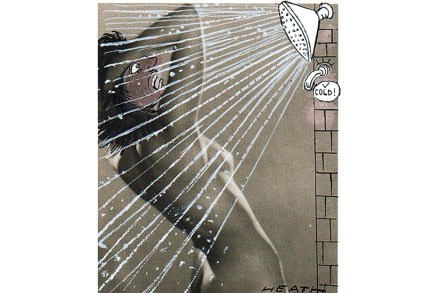
Hippocrates prescribed it to allay lassitude, James Bond favoured it as a token of his manliness, and in less indulgent times Gordonstoun school insisted on it: the cold shower. And now it’s having a moment with the wellness brigade. (The very word ‘wellness’ used to send me screaming from the room: a Californian import, I was sure. Then someone pointed out that the word has been in the English lexicon since the 17th century, so that told me.) The proven physical benefits of exposure to cold water are impressive. A boost to the immune system, improved circulation, and a wake-up call to the body’s brown fat, which is apparently A Very Good Thing.

The problem with pop psychology

From our UK edition

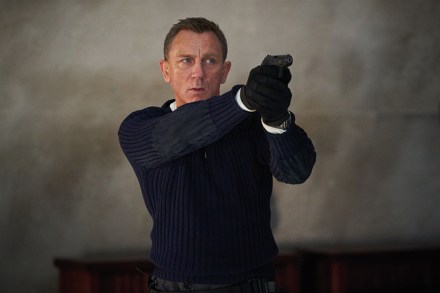
James Bond is not what he used to be. His motivations were once so simple: MI6 had told him to do it. Of late, though, he has been propelled about the screen by his inner demons, shooting people he’s not supposed to shoot, revisiting his childhood, collecting traumas, developing a mother-complex with Judi Dench. What makes Bond, Bond? Once, it didn’t matter, now it does. The next film, Bond girl Léa Seydoux has said, will be ‘even more psychological’. The screen reflects the culture. Psychology, it seems, is what we want now. The stuff is simply everywhere. Imposter syndrome, projection, narcissism, Stockholm syndrome, triggering, boundaries, personality type, self-care — these terms now pepper the discourse.

There’s more to The Queen’s Gambit than chess

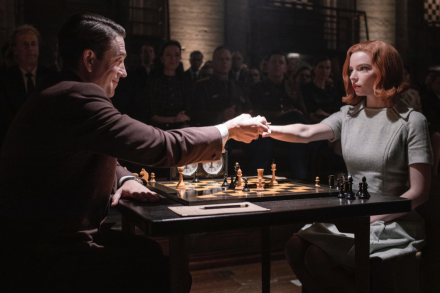
If this Christmas you hear the distant rumble of dusty games’ compendia being brought down out of attics, it’s safe to say you can blame Netflix’s latest smash hit series The Queen’s Gambit, which seems to be convincing everyone that chess can be cool. App stores are reporting a surge of searches for a game first brought to England 10 centuries ago by Vikings. Set in the 1950s, The Queen’s Gambit tells the story of Beth Harmon (played brilliantly by Isla Johnstone and Anya Taylor-Joy). Aged eight, she survives a fatal car crash only to end up in an orphanage.

The Queen’s Gambit

The Trumpian mirror

Trump hatred has been with us since he announced his candidacy five years ago. But we can all feel the escalating fever pitch of fury that has marked the weeks leading up to the election. In social settings, friends of otherwise sound temperament seem uncharacteristically uncontrolled in their visceral rage when referring to the President. Just mention his name and you'll be interrupted with 'Oh I hate him, he's a sociopath' or the requisite 'If he wins, I swear I'm moving out of the country!'The question, I always wonder, is why this intense level of revulsion? It is so deep, so impervious to reasoned discussion. Policy differences can’t account for this level of skin crawling. The conversation is really never about SALT deductions or fracking. Even abortion is of secondary concern.

mirror

The dangers of unconscious bias training

From our UK edition

To read the press releases, you would think we’ve found the panacea to racism in the form of unconscious bias training. Numerous organisations, including the Labour party, have announced they would be putting their staff through such programmes. This follows in the footsteps of the civil service, which has required all civil servants to undertake unconscious bias training since 2018, magistrates, for whom the training is compulsory, and the Met police, where it forms part of ongoing officer training. Google, Facebook, the FTSE 100, government departments — including the Ministry of Defence and Ministry of Justice — and non-profits proudly advertise the programmes they put their staff through.

Donald Trump isn’t mad

It is alarming how psychiatric diagnoses have crept into the political commentary. Donald Trump, we’ve been told, has narcissistic personality disorder, malignant narcissism, narcissistic alexithymia, bipolar disorder, hypomanic temperament, delusional disorder, paranoia, senile dementia, extreme hedonism, histrionic personality disorder, impulse disorder, attention deficit/ hyperactivity disorder (ADHD) and dyslexia. He’s also been called a sociopath and psychopath. Even normality has, in Trump’s hands, been transmogrified — pathologized — as ‘malignant normality’. Many psychiatric professionals have attempted to make such diagnoses, but they are wrong. President Trump does not demonstrate any diagnosable mental illness.

mad sanity

How kind is humankind?

From our UK edition

Augustine had it that ‘no one is free from sin, not even an infant’. Machiavelli deemed that humans are ‘ungrateful, fickle hypocrites’, and even the founding father John Adams, the paragon of American democracy, was sure that all men would be tyrants if they could. Thucydides, Luther, Calvin, Burke, Bentham, Nietzsche, Freud — all were wrong about our natures. So was William Golding, creator of Lord of the Flies, himself a child-beater* and a drunk. For a treatise on human kindness, Rutger Bregman’s new book Humankind has surprisingly many villains. Here’s ‘a radical idea… a mind-bending drug... denied by religions and ideologies’, we’re told. Humans are not evil. Deep down, at least most of us are pretty decent.

For Tom Cutler, being diagnosed autistic was the happiest day of his life

From our UK edition

It’s easy to forget that until the late 1980s the notion of an autistic person being able to write a compelling autobiography was dismissed by the psychiatric establishment as highly unlikely. Though the term ‘autism’ was originally derived from the Greek word for self, autos, people with ‘self-ism’ — who were routinely described by non-autistic experts as being ‘trapped in their own world’ — were ironically thought to be incapable of the kind of introspection and self-reflection necessary to produce trustworthy documentation of their own experience.

Does this make your brain tingle? The rapid rise of ASMR

From our UK edition

I once had a flatmate called Tom, who behaved very oddly when our cleaner came round. On mornings when she was due he’d become strangely excited, like a man waiting for a date, though Madge (70) seemed an unlikely target. I would leave the flat so that Madge could get on with it, but Tom would insist on staying. He’d settle himself into an armchair, close his eyes and sit there, still as a toad, as she hoovered and dusted around him. Eventually I asked him about it, and he confessed. Listening to Madge, he said, ‘makes my brain feel nice’. As he explained it, the sounds of cleaning, sweeping and busying about sent delicious shivers running across his scalp. ‘It’s blissful — like a tingling feeling.

Is the judiciary really so bad at judging character?

From our UK edition

When I had a cough last week, my son Joe,  who has autism, shouted at me and covered his ears. I didn’t mean to cough but, to Joe, so what? His autism means he doesn’t get other people’s intentions. People like him are sometimes said to lack a ‘theory of mind’ — lacking the idea that Dad or anyone else even has a mind, possessed of its own thoughts and intentions. This complicates his life infinitely. And that alerts us to a commonplace miracle: the contrast with the rest of us. Often we can see inside other people’s heads. We’re prolific theorisers about what they’re thinking.

A mental health professional diagnoses cable news anchors

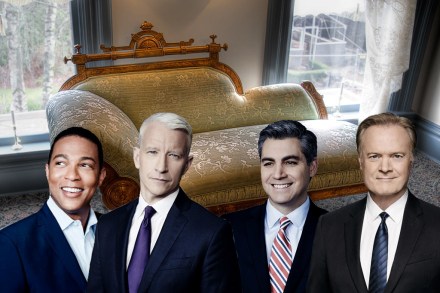
The 'Goldwater rule' is the informal name of the American Psychiatric Association’s guideline that it is unethical for psychiatrists to give ‘a professional opinion about public figures whom they have not examined in person, and from whom they have not obtained consent to discuss their mental health in public statements.’ It’s named after 1964 Republican presidential candidate Barry Goldwater, who sued a magazine and won after it published a story claiming over a thousand mental health experts said he was unfit for office. ‘Fuck that,’ reflected psychologist and Yale professor Bandy X. Lee when she looked at the Goldwater rule in 2017.

cable news mental health

Sport and mind games

From our UK edition

Years ago, a friend persuaded me that a reviewer should almost never give a book a bad review. Most books, he argued, are written with honest effort. Writers often devote years of their lives, whereas reviewers put in hours. Even a mediocre book that hardly anyone will ever read generally contains something worth passing on in a review. Savage reviews are usually just attempts to show off. Ed Hawkins, a respected investigative sports journalist, worked hard on The Men on Magic Carpets. But I struggle to find anything good to say about it. He starts from an interesting premise: during the Cold War, both the Soviet Union and the United States employed psychics to win sports matches and, potentially, wars.

The personality test that conned the world

The other day in the Guardian’s Blind Date column, two participants, or victims, finished off an account of their frightful encounter by dismissing any chance of a future relationship: ‘I’m sure two ENFPs might wear each other out.’ The acronym is perhaps not familiar to everyone, but that, coming from a couple of young people steeped in human resources gibberish, would have been the point. The woman involved was showing off her Myers-Briggs personality type. Myers-Briggs is an American analysis of personality first used in the 1940s, which gained huge success in the 1950s. It was a decade in which, as Merve Emre poetically says, ‘the stench of political paranoia was accented by cheap gasoline and apple pie’.

myers-briggs

The couple who conned the world

The other day in the Guardian’s Blind Date column, two participants, or victims, finished off an account of their frightful encounter by dismissing any chance of a future relationship: ‘I’m sure two ENFPs might wear each other out.’ The acronym is perhaps not familiar to everyone, but that, coming from a couple of young people steeped in human resources gibberish, would have been the point. The woman involved was showing off her Myers-Briggs personality type. Myers-Briggs is an American analysis of personality first used in the 1940s, which gained huge success in the 1950s. It was a decade in which, as Merve Emre poetically says, ‘the stench of political paranoia was accented by cheap gasoline and apple pie’.

Books Podcast: Steven Pinker

From our UK edition

This week’s books podcast was recorded live at a special Spectator subscriber event in London, where I was talking to the Harvard scientist and leading public intellectual Steven Pinker about his new book Enlightenment Now. Steven argues that - despite what the news tells us by every measure human well-being now is greater than at any previous point in history. And he attributes this to the values of the Enlightenment. I asked him: which Enlightenment? Can morality really be based on reason alone? And what’s a professor of cognitive science and linguistics doing in this subject area anyway? You can hear his answers below. And if you enjoyed that, please do subscribe on iTunes.

A girl with green eyes

From our UK edition

I loved a man. But our affair was nasty, brutish and short. Copious weeping was my un-tart retort. All that’s left of him is a stained T-shirt. I must rid my mind of him now. That’s long overdue. But how? These three books seem to present three answers. I’ve been wonkily underlining whole paragraphs and brooding over what to do. Nowadays, if you admit to being heartbroken after the fact you’re treated as a malingerer. So I very much appreciated Giulia Sissa’s Jealousy: A Forbidden Passion — a scholarly defence of indulging your violent fury. In the age of Tinder, your next paramour is but a thumb-swipe away, so the attitude is: ‘They don’t love you. Why would you care? It’s all in your head. It’s all in your past.