Psychology

How to buy a house that isn’t on the market

From our UK edition

There are many, mutually reinforcing causes of the property crisis: it is too easy to borrow; there are too many people; there aren’t enough houses; what houses do exist are in the wrong place; and many houses have the wrong people living in them. Solutions exist to all of these, some of which involve building and some of which don’t. In south-east England it is not uncommon to find people living in£1 million homes who are skint Today we are going to focus on the fifth problem. Too many people are living in houses which are too big for them. In south-east England it is not uncommon to find people living in £1 million homes who are otherwise skint. I know someone who lives on a long road of four-bedroom houses where they are the only household of more than two. This is daft.

Reliving the terror of the Bataclan massacre

From our UK edition

On Friday 13 November 2015 France suffered the deadliest terrorist attack in its history. In quick succession, gunmen and suicide bombers struck the outer concourse of Paris’s Stade de France; then the pretty canal-side cafés and restaurants of the tenth arrondissement; then, most notoriously, the Bataclan theatre, where the doors were blocked and, over the course of an hour, 90 people massacred. The subsequent trial was not just a gargantuan administrative undertaking (20 defendants faced around 2,000 plaintiffs, and the proceedings occupied the purpose-built courtroom for the best part of a year); it was a cultural phenomenon.

Is protest counterproductive?

From our UK edition

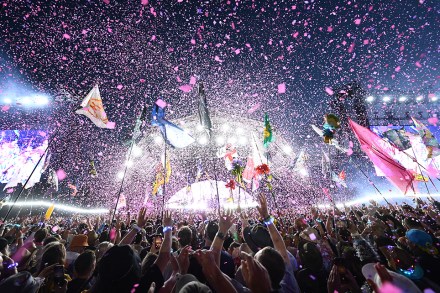
If I had my life again and was asked to choose a superpower, I’d like to come back as one of those people who can enjoy crowds. As superpowers go, I acknowledge this isn’t all that rare, given the bizarre popularity of events such as Glastonbury, or the widespread compulsion to buy Oasis tickets. But what qualifies it as a superpower for me is that I cannot imagine myself enjoying being in a crowd any more than I can envisage having the power of telekinesis or levitation. I don’t really understand why people pay huge amounts of money to watch live sporting events when you can watch them on television for free. I’d choose staying at home stabbing my hand with a fork over joining a demonstration Is this a genetic thing?

Where do we go when we dream?

From our UK edition

Should we pay more attention to our dreams? Are they signs from our subconscious, guiding and pointing us in certain directions? Perhaps that would explain why we often feel the need to describe them to others: to help make sense of them. Since being pregnant my dreams have got wilder. They are vivid and often haunting. I was told that you can’t dream about a face you’ve never seen, but strangers regularly pitch up in mine. Some people say it’s boring when others talk about their dreams. I disagree. I think it’s fascinating to hear where minds go at night; our parallel lives. Whether they cover frightening or familiar territory, dreams are stories.

The myth of collective wisdom

From our UK edition

After 250 years of American independence, a nation home to many of the smartest and most talented people in the world may have to choose as its leader one of two people, each of whom is in many ways worse than His late Majesty George III, the man whose role the entire system was designed to replace. It is dangerous to assume that the more people who are involved in a decision, the better the outcome will be The absurdity emerges from the nature of the system – which, like many such systems, works very well right up to the point where it suddenly doesn’t. Faced with an unexpected combination of events, even good systems can produce an outcome far sillier than any sane individual would choose when acting alone.

There’s much to be said for nostalgia

From our UK edition

Michel Barnier, the chief negotiator for the EU Commission, called Brexit an expression of ‘hope for a return to a powerful global Britain, nostalgia for the past’ – a mood that ‘serves no purpose in politics’. Popular historians have echoed his view of nostalgia as a syndrome which affects declining societies such as Great Britain. The yearning for a happier past got Donald Trump elected and may re-elect him; it breeds xenophobia and locks societies into a doom loop of reruns, remakes and Facebook feeds of photographs from olden times. Or does it? Two new histories of nostalgia are sceptical about how pervasive or dangerous it really is. Agnes Arnold-Forster’s shrewd, digressive book is the more accessible of the two.

Why today’s youth is so anxious and judgmental

From our UK edition

What’s not to like about a world in which youths are involved in fewer car accidents, drink less and wrestle with fewer unplanned pregnancies? Well, think about it. Those kids might not be wiser; they might simply be afraid of everything. And what has got them so afraid? A little glass rectangle, ‘a portal in their pockets’, that entices them into a world that’s ‘exciting, addictive, unstable and... unsuitable for children’. So far, so paranoid – and there’s a delicious tang of the documentary maker Adam Curtis about the social psychologist Jonathan Haidt’s extraordinarily outspoken and well-evidenced diatribe against the creators of smartphone culture.

Have we all become more paranoid since the pandemic?

From our UK edition

As anyone who has ever been lucky enough to spend time in a psychiatric hospital knows, you don’t have to be completely mad to be there. A lot of us end up in the care of mental health professionals and jacked up on all sorts of crazy-person meds because something’s just not right: you know it, I know it, the dog in the street knows it. Those people are looking at us funny; those voices just won’t quieten down; it really isn’t safe out on the streets, so it must be better to draw the curtains, triple-lock the door and sit quietly in the dark eating only tinned fruit and bottled water.

The beauty of mid-range products

From our UK edition

Once or twice, when on a crowded overnight flight, I have taken a sneaky stroll through the different cabins for the purpose of comparison. My reaction on first peering into each cabin goes like this. First class: ‘Gosh, this is fabulous. It’s like a restaurant in the air.’ Business class: ‘Ooh, this is nice; they get flat beds and everything.’ Premium economy: ‘Well this is OK; the seats seem comfy and it’s all pretty civilised.’ Economy: ‘It’s the “Raft of the Medusa”.’ Now here’s the thing. In terms of comfort, the biggest gap between two adjacent flight classes is between economy and premium economy.

Why modern life doesn’t make us happy

From our UK edition

The greatest delusion ever sold to us by modern advertising is not that we need to buy water in bottles or that rocks make good pets. It’s the delusion that we should expect to be happy all the time. This idea certainly would have been news to our ancient ancestors. Over millions of years, they became the dominant hominid on the planet because their brains evolved to be survival machines, not happiness generators. The first peals of laughter around those early campfires were not because everyone was having a good time; laughter evolved as a social bonding signal to communicate to the rest of the tribe: ‘Phew, we’re safe now. Looks like we’ve seen off that saber-toothed tiger.

The bored teenagers who can disrupt the world

From our UK edition

Most of us live a strange double life when it comes to hacking. We read headlines saying that our toaster might spy on us, that Russia is trying to hack into our social media, and that society as a whole could be under threat. At the same time, we install smart speakers in every room of our house, post more than ever to social media, and the worst we see of hacking attempts is the occasional email from a Nigerian ‘prince’. Trying to calibrate whether we should be terrified or unconcerned is a difficult task, so it’s refreshing when Scott Shapiro – a Yale law professor who also serves as the director of the university’s cybersecurity lab – says early in his book that neither is the correct approach.

Sports fans are rarely shamed for being overzealous

From our UK edition

Have you ever loved someone and got nothing back? Next question: was it really so bad? We all feel things for people who don’t even know we exist, and the experience is often enriching. For me, David Bowie’s life held meaning. If the Thin White Duke did not rate as your personal companion, then our late Queen almost certainly did; or, if not her, then what about Walter White, from the TV drama Breaking Bad, since we love fictional characters too? Walt saw me through my divorce; and we enjoy these relationships in private. Sometimes we meet fellow fans, and then, as the cheery Michael Bond points out, ‘one of the incentives for being part of a fandom is that you get to do things with others’. Bond sketches the psychology of belonging very lightly in his book.

Mean streets: the psychology of neighbour disputes

From our UK edition

Eunice Day’s breaking point came when her neighbours asked if she would move her car from a communal grass verge in their cul-de-sac so that it could be mowed. After several weeks of polite hostilities, Day stormed a neighbour’s home in the Dorset town of Ferndown, a row ensued, and the resulting scuffle left the 81-year-old in court charged with assault. In Bedminster, Bristol, fed-up locals have taken a more passive-aggressive approach to ‘outsiders’ parking on their streets. Suburban vigilantes have been creeping out and sellotaping notes to windscreens urging their owners to park outside their own homes instead.

What Prince Harry gets wrong about therapy

From our UK edition

Prince Harry’s endorsement of therapy will likely turn some of us off ever seeking it out. Insisting that therapy has changed him for the better, he is urging his family to partake so that they too can ‘speak his language’ of simultaneously loaded and empty terms – such as ‘authenticity’. ‘If I didn’t know myself, how could members of my family know the real me?’ he said. This non-sequitur subverts the conventional wisdom that sometimes others can know you better than you know yourself. Yet tiring as all the Prince’s interventions are, a peremptory dismissal of psychoanalytic practice would be a mistake. In fact, psychoanalysts would probably refuse to accept the Prince is speaking their language anyway.

Social-justice shrinks: how identity politics infected therapy

In winter 2019, Leslie Elliott enrolled as a graduate student in Antioch University’s Mental Health Counseling program. At first, she found it to be a stimulating master’s program — informative and clinically relevant. Then she took a required course in “multicultural counseling.” “We were taught that race should be the dominant lens through which clients were to be understood and therapy conducted,” says Elliott, a mother of four who’d majored in psychology. Elliott’s professors taught her, for example, that if clients were white, she was supposed to help them see how they unwittingly perpetuate white supremacy. “We were encouraged to regard white clients as ‘reservoirs of racism and oppression.

therapy sessions therapist

Why rejection is the secret of success

From our UK edition

The letter was polite but to the point. The PR firm where I’d applied for a job thanked me for my time but told me I hadn’t been successful. The position was going to someone else. Ouch. This wasn’t the first time I’d been rejected, of course – and it certainly wasn’t the last. I’ve been dumped, ditched by friends and overlooked for work more times than I can remember. Who hasn’t? Not even the most successful among us is immune, as Sir Ian Rankin, 62, who has sold more than 20 million books, admitted last month. ‘I have had all kinds of projects turned down,’ he told the Write-Off with Francesca Steele podcast. ‘The rejections are abrupt. They are not at all apologetic, the buggers.

Lumberjacks know the secret of happiness

From our UK edition

The results are in and nature (i.e. God) wins again. A Bureau of Labour Statistics survey in the US has found that lumberjacks and farmers are the happiest, least stressed and most fulfilled workers, further proving that everything we need to be joyful and satisfied in this life is not man-made. Nor does it have much, if anything, in common with the prevailing culture. A Washington Post analysis of the survey noted that 'The most meaningful and happiness-inducing activities were religious and spiritual, followed by 'the second-happiest activity – sports, exercise and recreation'. I am fond of harping about how a godless society is a miserable one.

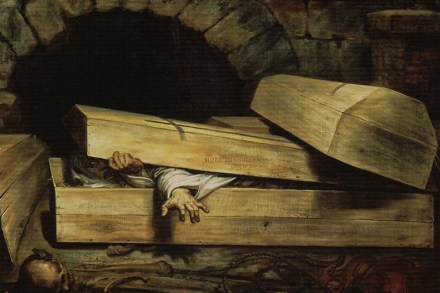
If buttons, balloons or premature burial terrify you, rest assured you’re not alone

From our UK edition

Every summer, during our holiday in Orkney, there is a moment of panic. We’re standing on a dizzying cliff – looking across a sleeve of sea at the Old Man of Hoy, maybe – and I’m consumed with a longing to fling myself over. It’s not suicidal. I just yearn to feel the wild rush of air against my cheeks: I want to fly. I’ve never met anyone who shares this compulsion, but The Book of Phobias and Manias assures me it’s quite common. Indeed, it has a name: acrophobia. Kate Summerscale understands it perfectly: ‘The whirl of vertigo,’ she says, can ‘seem like the giddiness of yearning.’ A new book from Summerscale is always a treat.

Members’ clubs are having a moment

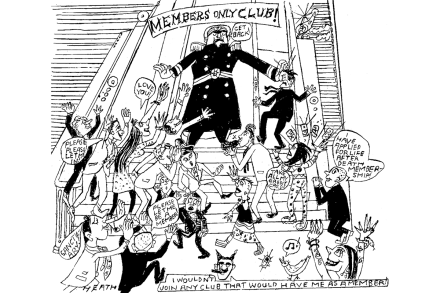
One lunchtime in May, the sixth floor of a restored warehouse on Manhattan’s Ninth Avenue buzzed with the sound of lingering lunch dates, pandemic-postponed reunions and the erratic clatter of computer keyboards beneath the inspired fingertips of creatives and those moonlighting as such. Just beyond the reception desk a gaggle of bespectacled, chino-clad men congregated. In suede sneakers and made-to-look-worn corduroy jackets, they clutched Scandi-chic satchels and laptop bags, poised to pounce on the next available artfully upholstered chair. Even one of the sumptuous velvet sofas would do. Next door, in the dining area, waiters weaved in and among patrons like figure skaters, determined not to risk their precious tips by spilling a drop of Bloody Mary or chai latte.

clubs

Has Carole the tarantula cured my arachnophobia?

From our UK edition

I’ve been an arachnophobe my whole life. I can’t remember a time when videos of spiders, or even photos or drawings, didn’t give me palpitations. As a kid Charlotte’s Web read as sinister propaganda. Even as an adult, just hearing the word ‘tarantula’ would make me feel like one was crawling on me (kind friends and colleagues took to calling it ‘the t-word’). I wish I could blame someone for these fears, but no one else in my immediate family screamed uncontrollably when a house spider scuttled across the floor. A fear of spiders is the third most common phobia in the UK, so I know I haven’t been alone. But I’d grown increasingly frustrated by my arachnophobia over the years.