Psychology

The cult of sensitivity

From our UK edition

I was extra pleased to have swerved the modern curse that is Wordle when I read that ‘sensitive’ words have been removed from it. A spokesman proclaimed: ‘In an effort to make the puzzle more accessible, we are reviewing the solutions and removing obscure or potentially insensitive words over time. HARRY is an example of an obscure word.’ Other more obviously ‘insensitive’ words had already been removed, such as ‘sluts,’ ‘bitch’ and ‘whore’, and though I’m the most rad of femmes, I do wish they’d stayed. Removing ribaldry makes the language increasingly bland. ‘Sensitivity’ is one of those words that’s changed its meaning. It was once used mostly to refer to sore teeth and gums.

Children’s lives depend on parents’ rights

Yaeli Galdamez was a “girly girl,” her mother Abigail Martinez said in a recent interview. As a child growing up in El Salvador and California, she dressed in princess costumes and later had crushes on boys. But after she was bullied for her appearance in middle school, Yaeli began developing symptoms of depression. In eighth grade, she attempted suicide by overdosing on pills. Her mother was desperate to get her the help she needed. So as a sophomore Yaeli began regularly seeing the psychologist at her local high school. But the family says that her counseling for depression was accompanied by a focus Abigail knew nothing about: the school psychologist spent two years encouraging Yaeli in a male identity, Andy (sometimes Andrew).

parental rights

End the mask mandate mania now

This is a public service announcement from Cockburn: the mask mandates have got to go — for everyone’s health. Even America’s most progressive cities have lifted their face mask restrictions after the cresting of the first Omicron wave — but some of their denizens are hooked on the taste of government boot, and are going mad at the prospect of being weaned off it. Cockburn was sent a video by his nephew earlier this week showcasing this phenomenon: a masked Washington local cussing out unmasked teens at a DC Metro station. Masks are, for some unscientific reason, still required on public transport in the nation’s capital — despite not being needed in schools, gyms, stores, bars, restaurants…you get the picture.

mask

Power couple

By now we know that there are creeps and abusers in pretty much any industry that exists today. In the world of podcasts, the question appears to be: are we really going to create an investigatory series detailing the horrors lurking within every single one? Yes — of course — seems like the resounding answer. New York magazine has launched a new podcast, Cover Story: Power Trip, and its first season is devoted to rooting out the predators and boundary-crossers of one extremely minor occupational field: the psychedelic therapeutic community.

power

Don’t make war in Ukraine about Putin’s mental health

From our UK edition

There was a time when supposedly serious commentators on world affairs used to at least feign historical knowledge. They might quote Bismarck or Castlereagh. Now, international relations punditry, like almost everything else, has succumbed to the language of pop psychology. Vladimir Putin is ‘gaslighting’ the Russian people, we are told, motivated by his ‘hypermasculinity’. His invasion of Ukraine is, according to one commentator on Radio 4 this morning, ‘unforgivable abuse’. I thought abuse meant kicking a dog or being cruel to a partner. Now it means starting a war. It’s almost as though we’re unable to think of Putin as anything other than a nasty contestant on reality TV.

The myth of the typical Brexit voter

From our UK edition

In Jake’s Thing, Kingsley Amis gave it a name: he called it ‘the inverted pyramid of piss’: ‘One of [Geoffrey Mabbott’s] specialities was the inverted pyramid of piss, a great parcel of attitudes, rules and catchwords resting on one tiny (if you looked long and hard enough) point. Thus it was established beyond any real doubt that his settled antipathy to all things Indian, from books and films about the Raj, to Mrs Gandhi… was rooted in Alcestis’s second husband’s mild fondness for curries.’ It’s high time this phrase was revived, because piss pyramids are everywhere. We assumed more data would help humanity settle its differences: in reality it often exacerbates them.

Good things can come from guilt

From our UK edition

I do not know anyone in the Sackler family. I wouldn’t even have heard of them were it not for recent reports of their return to the large-scale philanthropy with which their name was once associated. These reports have led to criticism of institutions that accepted Sackler charity: the well-worn argument being that the family’s businesses made a fortune from aggressively promoting the use of opioids in America, and opioids have caused serious addiction problems for millions of Americans. Sam Leith wrote thoughtfully about the controversy on the Spectator website last week (‘We should be thankful for the Sackler family’s philanthropy’).

Why must younger generations constantly ‘work on themselves’?

From our UK edition

If I could lift one thing from younger generations, unpeel one idea from their anxious minds, it would be the notion they have to ‘work on themselves’, and that the point of life is to do this ‘work’ until they feel able to have a relationship, at which point they must grimly set about working on that. I’m not suggesting that it’s not useful to have treatment or therapy for a particular problem, but it’s as if everyone born after 1990 thinks of themselves the way 1950s man thought of his car — as something to be worked on in every spare moment, tinkered with and polished, but rarely taken out for a spin, for fear of dents. You can tell an era by its aphorisms.

I tempted fate – and got Covid

From our UK edition

Well, I did warn you. As I typed my column last week on the imminent end of Covid I said I knew that I was tempting fate. The main fear I had in mind was that the moment the magazine hit the newsstands some wild new strain of the virus would break out, wipe out half of humanity and lead to quite a cross letters page the following week. Fate had a more minimalist plan. Having dodged Covid for two years, it took me writing a column predicting the end of the virus for the fates to eye me up and snicker: ‘Now we’ve got him.’ The day after I filed, I developed a sore throat and a blocked nose. By the time the magazine was on the stands, I was wondering whether Betty White had chosen to strike me down from beyond the grave.

America is in a state of mass formation paralysis

Unless you happen to live under a rock, this week you became aware of Dr. Robert Malone. He’s a virologist and immunologist who has become a lightning rod of controversy — and for good reason. Alongside laying claim to the invention of mRNA vaccines, Dr. Malone has spoken about a hysteria that has swept the United States, something he refers to as mass formation psychosis. Although I agree with many points Dr. Malone has made, and I believe that many of the pieces written about him have been needlessly vicious, the idea of mass formation psychosis is plain wrong. Let me explain why. Psychosis, an abnormal condition of the mind, renders a person unable to differentiate between the real and the imaginary.

mass formation paralysis woke war words english

How to wrongfoot an anti-vaxxer

From our UK edition

The headline looked promising: ‘How to argue with a Covid anti-vaxxer.’ And, yes, a Times colleague had put together a good, informative feature assessing some of the bogus arguments flying around in this pandemic. But it was not what I was looking for. Since undergraduate days I’ve been fascinated by the category of mental imbalance we call paranoia, believing its milder manifestations to be present to some degree in all of us. Mass paranoia is plainly a strand in the anti-vax movement, and I’ve been listening to a powerful BBC Radio 4 and podcast series researched and presented by Jon Ronson, Things Fell Apart.

Ghislaine Maxwell’s defense and the war on memory

The Ghislaine Maxwell trial resumed today with the defense’s presentation of its case, beginning with a procedural loss for the Maxwell team. The judge rejected the defense’s unusual request to allow some of their witnesses to testify anonymously. Maxwell’s attorneys claimed three witnesses feared they “might get a lot of unwanted attention.” Judge Alison J. Nathan ruled that because the defense did not claim the witnesses were victims or sexual assault survivors, no special exemptions applied to the general rule that witnesses in federal court must be publicly identified.

ghislaine maxwell memory

Sense and sensibility: Steven Pinker and Rory Sutherland on reason vs instinct

From our UK edition

Steven Pinker’s latest book is called Rationality. Rory Sutherland is The Spectator’s Wiki Man. We arranged for them to meet at the Cucumber restaurant, where they discussed the logic of monarchy, gender-bending, and why academics are unreasonably obsessed with wine. Steven Pinker: Part of the reason I wrote Rationality was to ask, how there can be so much irrationality in an era that has the resources for unprecedented rationality. We invented a vaccine for Covid in less than a year. So why do people today believe in conspiracies like QAnon? Rory Sutherland: Conspiracy theories aren’t always irrational, and instinctive responses can serve you well. An instinctive person with no knowledge of virology wouldn’t go into a cave full of bats.

How men’s wardrobes prove constraints can be good for us

From our UK edition

One thing that surprised every-one during lockdown was how many people derived unexpected pleasure from living under imposed restrictions. Can people become happier when temporarily prevented from doing things they would normally do? Almost certainly. Sometimes such circumstances force us to try something new which we subsequently prefer; at other times we enjoy having an external excuse not to do things we don’t want to do at all. There is an episode of Curb Your Enthusiasm where Larry gleefully realises that his mother’s death provides him with a reason to cancel all his upcoming engagements.

Why trigger warnings don’t work

The science is in, but don’t expect that to change anything. According to at least 17 recent studies, trigger warnings — those advisories posted ahead of content some readers may find distressing — not only fail to alleviate suffering in the emotionally disturbed but may actually induce greater trauma in those individuals. There are, to date, no studies that indicate trigger warnings work to their intended purpose. They were dreamed up in the 1970s after psychologists began to diagnose a new condition, post-traumatic stress disorder, in Vietnam War vets. But trigger warnings only reached popular consciousness in the 2010s, when feminist blogs used them ahead of content about sexual violence.

trigger

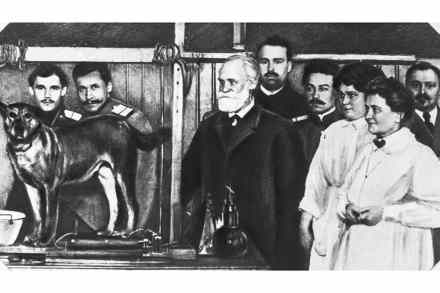
From salivating dogs to mass indoctrination: Pavlov’s sinister legacy

From our UK edition

When two post-Soviet supermodels committed suicide in the noughties, both throwing themselves off high buildings in New York and Kiev, the trail into what made them so depressed led to a ‘personality development’ organisation in Moscow that offered ‘trainings’ that would help ‘find your truer self’. The moment you entered the dark Stalinist gothic theatre, filled with dozens of other ‘students’, you were under the control of the ‘life coach’. Drawing confusing pictures on a whiteboard, he would talk quickly and loudly about ‘transformation’. Then came days of non-stop psychiatric-style exercises. People went on stage and were instructed to recite their most traumatic past experiences.

How do we calculate the value of a painting?

From our UK edition

There’s an intriguing conversation on YouTube between Mark Carney, former governor of the Bank of England, and the artist Damien Hirst. It will be easy to find on Google, since these are not names normally found on the same page. Ten minutes in, Hirst makes an engaging observation about the value we attach to art. He explains that art collectors will pay anything for a painting, even though the raw materials cost almost nothing. It’s a hundred quid’s worth of canvas, wood and paint, but you can sell it for millions. ‘The problem happens when you make something like a diamond skull.

Champagne, sex or the Tories: what could you live without?

From our UK edition

In idle chatter the other evening, somebody pooh-poohed champagne. He was a brave soul because in certain circles — and this was among them — one is presumed to think the presence of champagne a mark of opulence, extravagance, a special occasion, a treat. In even more exalted circles, of course, a display is made of not thinking it a treat but a staple, and babbling in a familiar manner about ‘Bolly’ as though one had proceeded straight from the breast to the bubbly without passing through lemonade on the way. ‘To be honest,’ said my friend, ‘if Fate were to touch my shoulder and whisper that I would never drink champagne again, would I be bothered? It’s perfectly -pleasant of course, but not something I’d miss much.

Why are young women writing homosexual erotica about men?

In the 2010s, fanfiction had a serious moment in the United States. After nearly 30 years of hiding — first in handmade snail-mail fanzines, then in closed-off fan communities online, then on websites like LiveJournal, Fanfiction and AO3 (An Archive of Our Own) — ‘geek culture’ broke into the mainstream. For a moment, fanfiction was everywhere. Finally, it wasn’t just the diehard fans who wanted to participate: it was everyone or, at least, what felt like everyone. Reporters took notice. Vulture published ‘It’s a Fan-Made World: The Fan Culture Revolution’. VICE commented on the ubiquity of fanfiction about the boy band One Direction and the impact of Fifty Shades, among other things. Jezebel and BuzzFeed both marveled at the Omegaverse, not once, but twice each.

slashfiction fanfiction

What do oven chips have to do with virtue signalling?

From our UK edition

Why does virtue-signalling matter? It’s a fair question. After all, if people display virtuous behaviour, need we care about their motivation? I understand why some are irritated by the term; deployed unsparingly, it can be used to denigrate any act of decency. Yet, if the phrase is relatively new, the concept isn’t. Several of the best-known passages of the New Testament (The Widow’s Mite; the Sermon on the Mount) deal with the contrast between sincere acts of virtue and those driven by self-advertisement. No chant from a football crowd has ever converted anyone in the opposition stands Why is this distinction important? For one thing, cheap displays of virtue may crowd out more concrete actions.