Psychology

When does a drama become a psychodrama?

When Labour blocked Andy Burnham from standing as its candidate last time around, Douglas Alexander, the Scottish Secretary, rejoiced at avoiding "three months of psychodrama – who’s up, who’s down, who’s getting on with who…" But as Gareth Roberts remarked in The Spectator’s Coffee House, "I’m not quite sure what the difference is between psychodrama and good old-fashioned plain original-flavor drama." Indeed, Mr. Alexander’s characterization of psychodrama sounds like the essential lineaments of pure politics: "Who loses and who wins; who’s in, who’s out," as King Lear puts it. King Lear itself might be a classic psychodrama, if madness is the defining feature.
psychodrama

Does a propensity for crime depend on one’s DNA?

From our UK edition

This book begins strangely. Kathryn Paige Harden and her man Travis go off into the Texas desert to take some LSD in the hope that it will provide a ‘hard serotonergic reboot’. They have not so far had sex, but Travis has plans. ‘You’ll come back with your third eye,’ he says, ‘and then we’ll fuck. You’ll be glad we waited.’ At this point you may be tempted to hurl the book across the room. The self-centredness is oppressive. But persist. It rapidly becomes a very powerful read. Harden is a psychologist and behavioural geneticist, and the primary theme of Original Sin is the way in which science raises questions about morality and the law. For example, is a psychotic man who murders his wife less guilty than a sane man who does so with a clear head?

Self-betterment through contemplation of the Seven Deadly Sins

From our UK edition

What mistake did Narcissus make when he looked into the water? To fall in love with his own ravishing self, we might think. But to the medieval mind, that wasn’t his problem at all. In John Gower’s 14th-century poem ‘Confessio Amantis’, Narcissus falls in love all right – but with someone else entirely. His fault isn’t that he loves himself; it’s that he doesn’t even recognise himself. Then, as now, as Peter Jones argues in this revelatory exploration of late medieval psychology, the path to self-betterment went through self-knowledge. Like our own, it was ‘a civilisation geared towards understanding the human mind’.

Carl Jung, the man behind the psychobabble

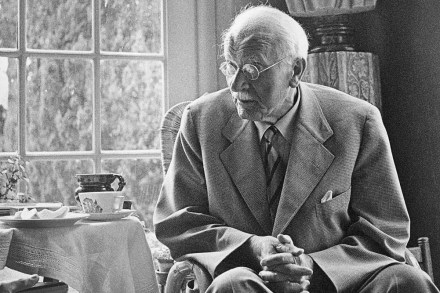
A surefire way to alienate people is to talk about the dream you had last night. In polite society, we’re generally told nobody cares about the goings-on of our subconscious and that it’s probably best to keep quiet. Nothing, then, quite prepares one for the oneiric delights to be found in Jung’s Life and Work, a new edition of the collected interviews between Professor Carl Gustav Jung, the renowned Swiss psychiatrist and founder of modern analytic psychology, and his former student, Aniela Jaffé. The tone is set in the very first interview, where Jung recalls a childhood dream involving a gigantic “erect phallus” reaching “almost to the ceiling” equipped with an all-seeing eye and seated on a plush golden throne.

carl jung

What Freud would say about Andrew Mountbatten-Windsor’s teddy bears

It is widely known that when a Duke of York is down, he is down, and the recent hit-piece in Heat – "'Pathetic' Andrew’s tantrums over prized teddy bears" – found a new way of kicking Andrew Mountbatten-Windsor. Its royal source said that "being forced to move [out of Royal Lodge] has sent him into a full-on meltdown because he keeps telling people the bears won’t cope with the change… as he says, it’s their home too." When it was reported last month that Andrew’s teddy bear collection was being sent to a south London storage facility, I was on the verge of feeling sorry for him; until I realized I was actually feeling sorry for the bears. There are no wonderful games to play in a lock-up. Of course I anthropomorphize teddy bears: that is what they are for.

Where are you on the tightwad scale?

From our UK edition

I once stood in a queue behind a Scotsman checking out of a hotel in Germany. After he had finished scrutinising his bill in agonising detail, he demanded that it be reprinted, this time removing the €1 discretionary charge which had been added in support of the local homeless. More recently some friends of my daughter’s met a Yorkshire-born Spectator writer at a local fête. They mentioned the connection, expecting some mild pleasantries. Not so. ‘’Appen that reminds me: he still owes me for a taxi.’ When I heard this, I was bemused. Then I remembered I had indeed shared a taxi with the Yorkshireman in question, requesting a minor diversion to drop me off at Cannon Street. This, granted, would have added two quid to the overall fare. Point taken.

The joy of the little things

From our UK edition

Whenever I hear the phrase ‘holiday of a lifetime’, I cringe. Same with ‘dream job’. You know they’re both going to disappoint. How can they not? Expectations have been allowed to build and build, way beyond the ability of reality to deliver. And even if your new job does make you happy for a while, it’ll soon go wrong. The job will change, or you will change, or both, and returns will diminish. No, forget the big stuff – you need to find your joy in little things. One of mine is letting the steering wheel slide through my hands. Every time I straighten out from a corner, and catch the wheel at just the right moment as it spins back round, I make a point of enjoying the moment. OK, it’s not a massive thrill – but that’s the point.

The mind-body conundrum

From our UK edition

I’m committed this winter to too many expensive building projects at once. As the balloon of my bank balance drifts ever lower towards the waves, and the crests of red ink lick the wicker of my basket, I’ve realised something has to be thrown out. Thus it was that last week I found myself in London’s Hatton Garden. Tucked into my little knapsack was my passport and a couple of one-ounce mini bars of gold I had bought after the last banking crisis, and stored in an old kettle. It was late afternoon, and dark.

The curious cult of solitude

From our UK edition

The thing that really fascinates me about solitude is the need to talk about it. The contradiction seems lost on people. ‘I must tell you about the silent retreat I’ve just been on.’  ‘It was so nice to just sit with my thoughts for a bit.’ Solitude is the new wild swimming: if you don’t talk about it, did it even happen?   And I fear this habit is about to get a whole lot more irritating because the benefits of solitude – all fairly predictable – are increasingly being ‘studied’ and presented in quasi-scientific jargon. ‘It creates spiritual sustenance,’ writes entrepreneur and author Ari Weinzweig.

The folly of psychology

From our UK edition

A young Chinese girl, at school in an English-speaking country, approached me after I gave a talk at a conference and asked for my advice about what she should study. I knew nothing of her, except that she was pretty, with beautiful dark eyes, and was almost certainly of high intelligence. I was touched by her naive assumption that I would answer benevolently and in her best interests. It suggested that she had not yet encountered much of human malignity. ‘What are you interested in?’ I asked. ‘I was thinking of history and psychology.’ ‘Ah,’ I said, ‘definitely not psychology, at all costs not psychology.’ My answer emerged spontaneously, without any reflection – too spontaneously, in fact.

The customer isn’t always far-right

From our UK edition

One of Dominic Cummings’s many insights in the run-up to the Brexit referendum was that ‘most people were both more right-wing and more left-wing than politicians ever realise’. Political obsessives naturally frame all questions – indeed shape their own identities – along a left-right spectrum, and so assume everyone else sees the world in similarly clear-cut terms. They really don’t. Indeed one of the most dangerous habits of journalists is their readiness to brand as ‘far-right’ opinions which are held by fairly large swaths of the population, many of whom might be otherwise left-wing in other contexts. What is risky about this is that it may achieve nothing other than promoting greater self-identification around the very causes it is attempting to disparage.

Adrift in the world: My Sister and Other Lovers, by Esther Freud, reviewed

From our UK edition

Some people spend years squirming on a leather chaise longue before they come to understand, as Philip Larkin so pithily observed: ‘They fuck you up, your mum and dad.’ Few go on to make peace with the sagacity delivered in his next line: ‘They may not mean to, but they do.’ In My Sister and Other Lovers, Esther Freud’s sequel to her autobiographical novel Hideous Kinky, sisters Lucy and Bea – who spent their early childhood trailing after their hippy mother through 1960s Morocco – slowly edge towards such catharsis. Before that, however, comes a lot more turbulence, and Freud – whose great-grandfather pioneered the couch method – is acutely attentive to its psychological effects.

Magic and the art of lying

From our UK edition

Talking to a former politician about lying felt very appropriate. It was during one of my ‘Magical Thinking’ sessions, a corporate team-building event I run in which I perform close-up magic tricks and the participants try to work out how they’re being done. Among those at this session was Anne-Marie Trevelyan, who had initially been baffled by a particular mentalism effect. She thought of a day of the week, then a month of the year and finally a playing card, and my guesses on all three proved correct. Every possible route by which I could have cheated seemed blocked off – but Anne-Marie was brilliant at responding to my hints (part of the process, of course), and gradually she led the team towards the solution. The moment it dawned on her how the trick worked was wonderful.

Why is America so unhappy?

According to the annual World Happiness Report (WHR), America has dropped to 24th in the rankings, down from 11th in 2011. The study found that Americans are not just disgruntled, we’re not very nice to one another, either. “The impact of caring and sharing on people’s happiness” was the theme of this year’s report, and researchers concluded that following “the golden rule” of doing unto others as you would have them do unto you brings contentment. “Like ‘mercy’ in Shakespeare’s Merchant of Venice,” the WHR authors write in their executive summary, “caring is ‘twice-blessed’ – it blesses those who give and those who receive.

America

The case for a daily limit on social media posts

From our UK edition

A few years ago, my old school magazine featured a pupil’s brief account of a geography field trip. Before the magazine was mailed out, someone had noticed a jokey reference to a minibus being driven erratically after the teacher had visited the local pub, and worried that this might be libellous. The school could have reprinted the magazine, or else thought ‘publish and be damned’. Alas they did neither: they stuck a white sticker over the offending paragraph in every copy. This led to the piece receiving perhaps 1,000 times more attention than it would otherwise have done, the attempt at censorship spotlighting a harmless joke that most people wouldn’t have noticed anyway.

Wrestling with Jordan Peterson

Jordan Peterson is one of those curious figures who has, thanks to the mysterious operations of the internet, been thrust into the limelight, willingly or not. While he has become a locus of hatred for certain left-wingers, thanks to his implacable attitude toward “woke” phenomena, in reality his supposedly controversial advice amounts to little more than that young people should work hard and take responsibility for their actions. Even the bolshiest socialist couldn’t really disagree. His 12 Rules for Life is a bestseller on both sides of the Atlantic, and he has a large and adoring fanbase.

Peterson

The science of a happier 2025

From our UK edition

As 2025 gets under way, I’m going to guess that one of your hopes for the coming year is ‘to be happy’. I’m also going to take a punt that you’re likely to spend a considerable amount of time, effort and money doing things you hope will make you feel that way. But considering that happiness is the number one goal of most people living in the western world, here lies the unspoken paradox at the heart of this tireless quest. Most of us can reel off a list of things that we believe will make us feel good – a great holiday, a delicious dinner, a promotion at work, fabulous sex. Yet many still don’t have a clue about how the feeling of pleasure is made in our brains in the first place. And knowing would be an incredibly useful way to work out how get more of it in 2025.

The nightmare of ‘maladaptive daydreaming’

From our UK edition

At the beginning of the spring term of my second year at university, a French boy called Xavier looked up from where he was sitting, on the floor of my friend’s flat, and announced that his new year’s resolution was to give up fantasising. Xav was deep in unrequited love with my friend so we assumed at first that he was simply through with pining, but that was not quite what he meant. He wasn’t taking a break from romantic fantasies, Xav said, so much as all the pointless wallowing in imaginary scenarios in which he came out top. Wishful thinking, you might call it. He was spending too much time doing it and he would from now on resist the temptation.

Seeking forgiveness for gluttony, sloth and other deadly sins

From our UK edition

Professor Guy Leschziner writes that he was raised in a secular household that was ‘entirely irreligious’ yet with ‘a strong sense of morality, of right and wrong’. As an eminent neurologist and a rational atheist, it’s striking that his study of the extremes of human behaviour should reach for such Biblical terms. Is there an element of ghoulishness here? Seven Deadly Sins has a structure of which David Fincher, director of the gruesome film Seven, might approve.  To zero in on the sins is undoubtedly a darkly entertaining approach, if not for the squeamish. Having been a consultant at Guy’s hospital for more than 25 years, Leschziner has seen ‘the full spectrum of human morality’: inexplicable altruism, generosity, kindness, love.

The Book Club: Josh Cohen

From our UK edition

38 min listen

My guest in this week’s Book Club podcast is the psychoanalyst and writer Josh Cohen. With anger seemingly the default condition of our time, Josh’s new book All The Rage: Why Anger Drives the World seeks to unpick where anger comes from, what it does to us, and how it might function in the human psyche as a dark twin of the impulses we think of as love.