Provence

Low life | 22 March 2018

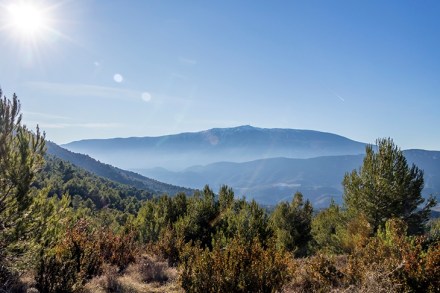
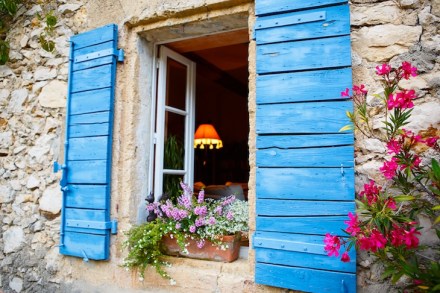
During the past three years I have spent quite a bit of time in a rented house in Provence. Volets Bleus is a rectangular breeze-block bungalow perched on the side of a hill. In front of it is a tiled south-facing terrace resting on concrete pillars. The terrace looks over the tops of the trees that grow out of the valley floor, and further out over a commercial vineyard, and then to a distant line of oak-forested hills. Our nearest neighbours are a Dutch couple who live in a pretty old property a quarter of a mile away and high above us, currently on the market for €1.2 million. Kukor and Ezzard refer to our breeze-block shack as ‘the ugliest house in the Var’.

Low life | 17 August 2017

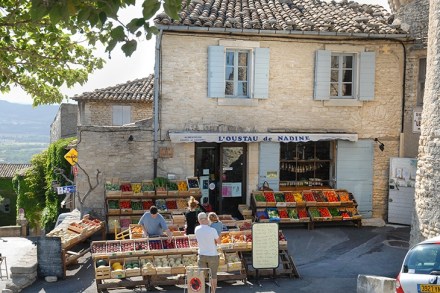
On Sunday morning we went, Oscar and I, to a vide grenier in the ancient, picturesque Provençal village. Vide grenier means ‘open attic sale’ — which is the French equivalent of our car boot sale. Oscar had €20 with which to buy homecoming gifts for his Mum and her partner, and his three half-siblings. The stalls were set out under the shade trees of the village boulodrome. Ex-dustman Grandad loves browsing in skips and charity shops and at car boot sales and he was in seventh heaven. At the first stall, I was very drawn to an old hand-tinted framed print of two peasants standing in a furrowed field. The sun was setting, their shadows were long. The man had his hat in his hand and was thanking God for their harvest, a pathetic basket of potatoes.

Low life | 10 August 2017

My grandson and I are reprising the 1968 film The Swimmer. Burt Lancaster is an advertising executive at a pool party who attempts to swim eight miles home via his affluent Connecticut neighbourhood’s outdoor swimming pools. We don’t have a pool, but our friends are generous with offers to use theirs. Our aim is to take advantage of these offers by swimming in a different pool every day and working our way through the expat society of this remote part of the Provence. It’s Oscar’s first trip abroad; he is staying for a fortnight. Today was day four. The effect of the contrast in his plastic mind between a flat above a hairdressers in Newton Abbot in Devon and a daily succession of private pools in a 42°C heatwave in the hills of Provence must be very great.

Low life | 19 January 2017

Our friend Anthony was reportedly dying and a party of four drove over to the nursing home to say cheerio. The journey across deepest Provence was an hour and a half each way and we went in my old Mercedes. I fixed my attention on the badge and the twisting road beyond it, rhythmically chewing one square after another of 4mg fruit-flavoured nicotine gum. My morning dose of 75mg Venlafaxine filtered out extraneous thought, self-criticism and fantasy, leaving me feeling unusually self-possessed. The mental picture I keep of Anthony is just the eyes, which are a startling shade of light blue. I’ve never got used to them. Since I have known him he has usually worn a jacket of faded blue cotton that matches their colour exactly and doubles their disconcerting effect.

Low life | 13 October 2016

Six months ago Sally was living in a third floor flat in Glasgow. Then she was thrown into the back of a car, drugged, and driven down to Provence. Since then I had watched with interest how she has adapted herself from life in a Scottish city to the heat, light and alien smells of deepest Provence. Sally is a small to medium sized chocolate brown mongrel with the grey hairs of old age showing on her muzzle. Her brown eyes are calm and intelligent. What she is comprised of is hard to say. Her head, jaw and teeth are from some sort of terrier; her deep chest suggests that she has some whippet in her. She is a compact, evenly proportioned dog, and sprightly for her age, which is 11. Her nature is unobtrusive, quiet and polite. Modest, you might say. She never asks for food.

A toast to Provence

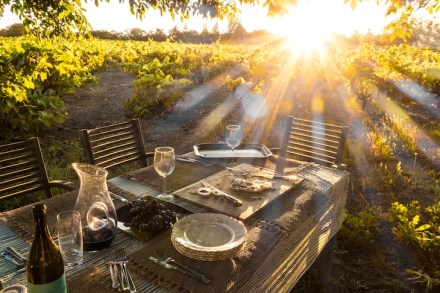
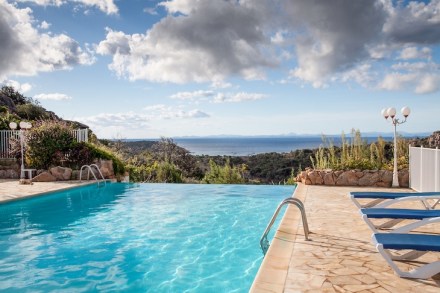
Friends have a house in Provence, near the foot of Mont Ventoux. Even in a region so full of charm and grace, it is an exceptional spot. Although nothing visible dates from earlier than the 18th century, the house is in the midst of olive groves and there has been a farm dwelling for centuries. I suspect that one would find medieval masonry in the foundations. Beginning life as a simple farmhouse, it has been bashed about, added to and poshed up. On the western side, the exterior has pretensions to grandeur. The other elevation is more feminine; you expect to find Fragonard painting a girl on a swing. At this season, the parasols act as the drawing room. There is a pool, and there were expeditions to Nîmes, Orange and Avignon.

Low life | 28 July 2016

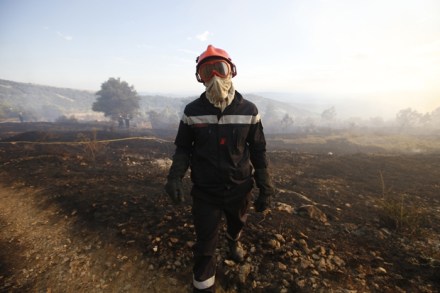
We returned to the house early the next morning, on the way pleading special permission to pass through the police roadblocks. A strip of blackened hillside about one kilometre away showed the extent of the blaze before it was extinguished. The online local newspaper said that 500 firemen had tackled a blaze that had destroyed 400 hectares of forest — roughly speaking the two round Provençal hills between the house and the nearest village. It seemed a small result for so much smoke. And I wondered why the French state should have gone to so much trouble and expense to protect perhaps a dozen properties, including our breezeblock shack. (A French friend reassured me that in this green-minded age, the state is as anxious to protect forest as it is private property.

Low life | 16 June 2016

Michel is one of those Frenchmen one encounters now and again whose shining saintliness is beyond rational understanding. This great bear of a man, with heavy silver rings on his fingers and thumbs, is always cheerful, always kind, always puts others before himself. Whenever he speaks with me, it is always under the pathetic delusion that he might learn something from me that he did not already know. The only thing that makes him in any way contemptuous is my pointing out his goodness to him. Michel was a teacher. For many years, he taught English at a private school in Somerset. Now retired to his native Provence, he has grown corpulent — or ‘bloody fat’, as he puts it.

Low life | 4 February 2016

Denis was my guide to and from the new out-of-town Lidl superstore at Salernes in Provence. I drove. The road was a smooth ribbon of asphalt newly laid through an ancient forest of dwarf oaks. The in-car conversation with Denis was, as usual, easy and undogmatic and wide-ranging, which is the only sort of conversation I am capable of, for I can never remember what my opinions are, let alone which set of beliefs gave rise to them. In this uncommitted way we drifted aimlessly on a gentle swell until we bumped up against the subject of ghosts. I had never seen or heard or felt a ghost, I said. Neither had I met anyone who had. So no, I didn’t believe in them. Denis had and did, however, claiming to have frequented two houses that were quite definitely haunted.

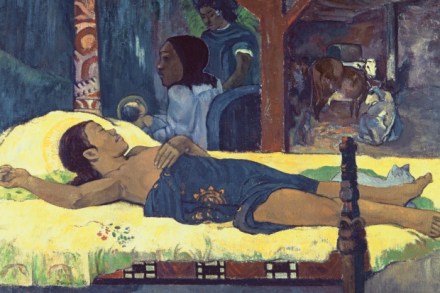
Why would a dissolute rebel like Paul Gauguin paint a nativity?

A young Polynesian woman lies outstretched on sheets of a soft lemon yellow. She is wrapped in deep blue cloth, decorated with a golden star. Beside her bed sits a hooded figure, apparently an older woman, holding a baby. In the background is a huddle of resting cows, suggesting that the setting is a barn or stable. There is something familiar about the set-up — baby, young mother, farm animals — but it may take a while to notice certain details. The head of the woman on the bed is encircled by an area of darker yellow, which forms a sort of halo, and the baby’s head is similarly ringed with green. A subsidiary figure standing in the shadows has an odd protuberance, which looks a little like a wing.

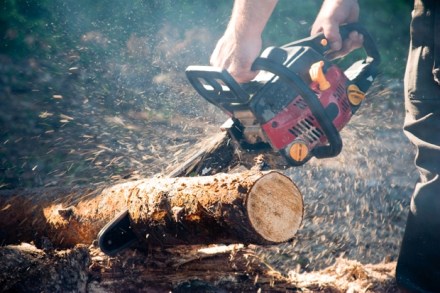
Happiness is a chainsaw and a maul in the rain and the mud

It rained all day long last Friday in Provence, and it rained all night, and on Saturday morning it was still raining. The rain fell out of a lowering, field-grey blanket of a sky. After breakfast and a wash, we assembled in the living room wondering what to do with ourselves on a day such as this. There were four of us: a couple en route for England who arrived in a Land Rover packed to the roof with possessions; our hostess; and me. The ugly breeze-block house with a large tiled terrace was perched on the side of a hill. Fountains sprayed in unlikely directions from leaking joints in the rain gutters. The rain came down faster than the drains could take it away from the terrace, flooding it. The unmade road below the house was a torrent.

Jeremy Clarke: The day I walked into a postcard

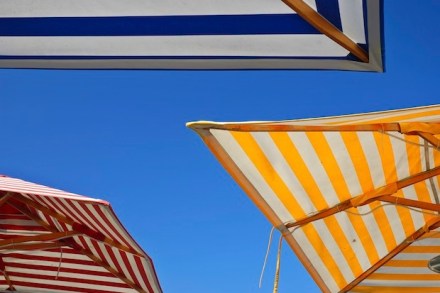
This time last year the postman delivered a picture postcard depicting a village square in Provence. The photograph on the front of that postcard was contemporary, but the colours were digitally manipulated to invest the image with a nostalgic, hand-tinted, vintage air. The square was eerily deserted. No customers were seated at the tables under the gay sunshades set out under the trees. Time stood still. I’d never been there. I hadn’t even heard of the place. And yet the square and its forsaken tables seemed oddly familiar. The photograph transmitted a nostalgic sweetness which was almost sinister. An invitation was implied. ‘Come!’ the picture seemed to be saying. ‘Life! You belong!