Proust

‘I secreted a venom which spurted out indiscriminately’ – Muriel Spark

From our UK edition

In 1995, Dame Muriel Spark, then one of Britain’s most distinguished living writers, was interviewed for a BBC documentary. During filming, the show’s editor commented that ‘her biographer must be the most depressed man in England’. Three years earlier, Spark had personally anointed Martin Stannard as the writer of what she intended to be the authorised version of her life, presenting him with the vast archive of documentation – spanning 50 years and 50 metres – gathered at her home in Arezzo. ‘Treat me as if I were dead,’ she instructed him. Stannard understood this to mean that he should proceed as a traditional historian; by the time his hag-ridden book was published 17 years later he had learned his mistake.
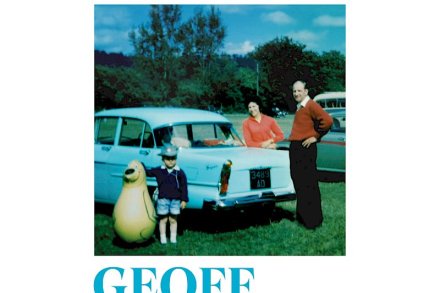
Geoff Dyer – the Proust of prog rock and Airfix

From our UK edition

39 min listen

My guest in this week’s Book Club podcast is Geoff Dyer, who’s talking about his memoir Homework, in which he describes growing up as an only child in suburban Cheltenham, and how the eleven-plus and the postwar settlement irrevocably changed his life – propelling him away from the timid and unfulfilled world of his working-class parents. Geoff, in this new book, bids fair to be the Proust of Airfix models and prog rock.

Reading the classics should be a joy, not a duty

From our UK edition

Writing the history of the novel, even covering a limited period, is a challenge. No one could possibly read every novel that has been published. Even if you read 100 a year you would scarcely scratch the surface. It isn’t like writing a history of most other subjects, where the important matters select themselves. You wouldn’t guess from this book how hilarious Lolita is, or some of the best passages of Ulysses No one could say with certainty that the most noteworthy novels are those which once made, or now make, the most impact. Indeed, a history that included many of the bestsellers of the day would be unusual – one, for instance, that took in G.W.M.

Feeding frenzy: memories of a gourmand in Paris

From our UK edition

‘Bald, overweight and gluttonous’ is how the American journalist and food writer A.J. Liebling described himself. Born in Manhattan in 1904, he wrote extensively about boxing and horse racing and was a war correspondent during the second world war, taking part in the Normandy landings in that capacity. He also recounted his gastronomic adventures in Paris before the war in Between Meals, a collection of essays largely derived from a four-part series, ‘Memoirs of a Feeder in France’, which ran in the New Yorker in 1959.

The sleepless lives of great writers

From our UK edition

To sleep or not to sleep – that is the question the French writer Marie Darrieussecq asks in her latest book, which explores the insomnia that has haunted her for 20 years since the birth of her first child. From that date, she writes, it ‘has attached itself to me like a small ghost’. Darrieussecq is best known for her surreal novel Pig Tales (1996), but Sleepless is an account of her search for a cure to insomnia and the solace she finds in discovering writers such as Franz Kafka (‘the patron saint of insomnia’), Marcel Proust, Georges Perec, Sylvia Plath, Susan Sontag, Fyodor Dostoevsky, Mahmoud Darwish, Haruki Murakami, Aimé Césaire, Jorge Luis Borges and Tchicaya U Tam’si have all suffered from sans sommeil.

Charlie Rose, comeback king

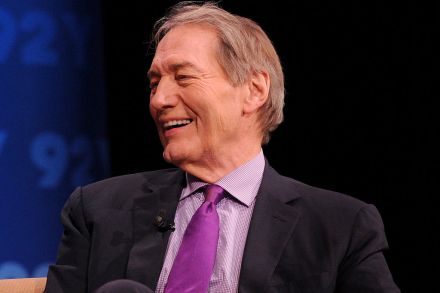
For some of us, Charlie Rose serves the same function as Proust’s madeleine. His eponymous public television interview program, which began airing in 1991, was a fixture of the pre-millennium media landscape, a halcyon age in which newspapers carried the news, Amazon was a mere purveyor of books, and “woke” referred to a state of wakefulness rather than political correctness. Such nostalgia augurs well for the carefully managed reemergence of the disgraced broadcaster, who has ended his exile with new conversations thrown up on his website, charlierose.com. But we’re getting ahead of ourselves. Five years ago, Rose — by then, also the co-host of CBS This Morning — first became the subject of sexual misconduct allegations.

Searching for the American summer novel

I am convinced that the sweet-smelling tycoons that run candle-making companies must have read too much Proust when they were younger. With scents like “Inspire,” “Bohemia,” and “Sunny Daydream,” they cannot be aiming for something as cheap and transitory as mere tawdry olfactory pleasure. They must have become all but obsessed by À la Recherche du Temps Perdu, and be aiming for something akin to his narrator’s nostalgic odyssey upon tasting a madeleine: “and at once the vicissitudes of life had become indifferent to me, its disasters innocuous, its brevity illusory.” Rather pretentious, oui — but what other excuse can there be for a candle that proclaims it can smell like a cool library at midnight, or the depths of some dreamy reverie?

Getting the jokes in Proust

Did you read Proust in lockdown? Lockdown, it seemed, offered the eons of vacancy apparently required to finally get around to À La Recherche Du Temps Perdu, aka “The Big One”: a book to be attempted only by the pretentious one percent in the discharge of their services to intellectual snobbery. I did. I read it twice. I read it because it’s always a pleasure and a novelty, and because I want to get it made as a long-form television series. Proust is perfect for TV: better than anything else, the format can show the passage of time. This is the sine qua non of any Proust reckoning, and it has defeated all attempts so far to make the book into a feature film. We are doing well.

proust

Celebrating Konstantin Paustovsky — hailed as ‘the Russian Proust’

From our UK edition

When is a life worth telling? The Soviet writer Konstantin Paustovsky’s six-volume autobiography The Story of a Life combines high drama with heroic misadventure in a comico-lyrical amalgam of history and domestic detail that enchants from start to finish. Why Paustovsky is not better known outside his native Moscow is a mystery. In the mid-1960s he was nominated for the Nobel prize. (He was pipped to the post by Mikhail Sholokhov, the author of the obediently propagandist And Quiet Flows the Don.) Denounced as a ‘counter-revolutionary’ by the Soviet Writers’ Union, Paustovsky belonged to that select band of writers who inspire true fandom.

Lydia Davis masters the art of translating without a dictionary

From our UK edition

‘Read slowly, word by word, if you wish to understand what I am saying.’ Despite appearing in Essays Two, the latest non-fiction collection from Lydia Davis, this exhortation is by the Norwegian author Dag Solstad; yet the approach is apt for Davis’s work. This is not because Davis, a feted translator and writer who won the Man Booker International Prize in 2013, is incomprehensible but because her work is often so short — a couple of lines or a couple of pages. It demands to be savoured slowly.

Must all history programming be ‘relevant’?

From our UK edition

When it comes to history programming, television’s loss is increasingly audio’s gain. People moan to me most weeks over the lack of really good, rigorous, eye-opening documentaries on the screen, and I can only nod along in agreement. Oh for a Kenneth Clark-style lecture! More Michael Wood! There’s an especially strong appetite for the adventurous commissions of the 1990s and 2000s. It’s principally podcasts, now, that are pouring into this void. Stephen Fry’s Edwardian Secrets, a 12-episode sequel to his previous series on the Victorians, even sounds like an extended BBC4 documentary, replete with talking heads, choral background music and just a dash of Horrible Histories.

William Boyd on the miraculous snaps of boy genius Jacques Henri Lartigue

From our UK edition

What must it be like for an artist to achieve success only at the end of a long, relatively ignored career? The word ‘bittersweet’ seems particularly apt. Yet, late recognition is better, I suppose, than dying in oblivion like Vincent van Gogh, Franz Kafka or John Kennedy Toole. One of my favourite photographers, Jacques Henri Lartigue (1894–1986), did manage to savour the sweet smell of success in his old age. Lartigue’s late flowering was down to New York’s Museum of Modern Art and its then director of photography, John Szarkowski. There’s a very good argument to be made that during Szarkowski’s tenure at MoMA (1962–91) his shows transformed 20th-century photography.

Do Jews think differently?

From our UK edition

Sixteen years into a stop-go production saga, I got a call from the director of The Song of Names with a suggested script change. What, said François Girard, if one of the two protagonists was perhaps, er, not Jewish? My reply cannot be repeated. I was, for a minute or so, completely speechless. My novel, winner of a 2002 Whitbread Award, is the story of two boys bonding in wartime London. One is a refugee violinist from Poland, the other a middle-class kid of average abilities. ‘I am genius,’ says Dovidl to Martin. ‘You are — a bit everything.’ Beyond bomb sites, their friendship is rooted in a common heritage. The bond is savagely betrayed when Dovidl vanishes. Martin spends the rest of his life obsessively in pursuit.

Impish secrets

From our UK edition

Long ago, I interviewed Edmund White and found that the photographer assigned to the job was the incomparable Jane Bown — a bit like having Matisse turn up to decorate your kitchen. After we talked, Jane shot. She managed to convert a tiny hotel courtyard into a sort of antique Grecian glade. In her pictures, White peeped through the foliage with the smile of some demonic faun come to spread ribald chaos in the service of the great god Pan. I remembered that look when, in this patchwork of pieces about his life as a reader, he discloses that a heart attack followed by surgery in 2014 had one weird outcome. Temporarily, he felt ‘no desire to read’.

Life in reverse

From our UK edition

The publication of César Aira’s The Lime Tree in Chris Andrews’s assured translation is a reminder that much of the Argentinian writer’s massive literary output — now more than 70 books — remains inaccessible in English. In this novella, which teases readers with suggestions of the autobiographical, Aira has one eye on his country’s past and the social effects of Juan Perón’s regime, and the other on the literary legacies of Proust. For Aira’s unnamed narrator, it is not the taste of lime blossom tea that spurs his fluid reminiscences, but a particular tree itself, ‘grown to an enormous size’ and central to the small-town landscape of his childhood in Coronel Pringles, where Aira himself was born.

Muddled in minutiae

From our UK edition

‘Publitical’ is a neologism worth avoiding. Bill Goldstein uses it to describe T.S. Eliot’s activities when launching and promoting his quarterly review of literature, the Criterion, which had its first issue in October 1922. Eliot wanted an eminent French author as a contributor: ‘the only name worth getting is Proust’, he told Ezra Pound. As the founding editor of the New York Times books website, Goldstein is attuned to cultural fashions, publicity drives and the politicking of literary factions. And so he makes a painfully reductive explanation of Eliot’s remark: ‘The importance of Proust was publitical above all.’ 1922 was the publication year of P.G.

Dark night of the soul

From our UK edition

As bombs fall everywhere in Syria and IS fighters destroy Palmyra, a musicologist in Vienna lies awake all night thinking of the Baron Hotel in Aleppo, where he stayed in 1996, following in the footsteps of Lawrence of Arabia, Agatha Christie and King Faisal. He remembers the hotel’s Ottoman ogival windows and its monumental staircase, with its old, worn-out rugs and shabby rooms where there were still useless bakelite telephones and metal clawfoot bathtubs whose pipes sounded like a heavy machine gun whenever you turned on the tap, in the midst of faded wallpaper and rust-stained bedspreads. In 1996 Franz Ritter was travelling with a fellow student, Sarah, a beautiful French woman, studying for her PhD in Orientalism.

According to Luke

From our UK edition

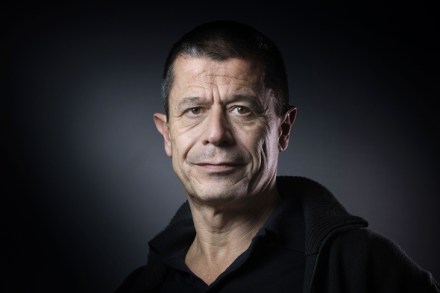
This is an odd one, not least because it claims to be a novel, which it isn’t. Emmanuel Carrère, writer and film-maker, looks back on an earlier self when, as a young man, he had a phase of being a devout Catholic, going to Mass daily, making his confession, the whole caboodle. He decides to marry his girlfriend, who is called Anne. We do not hear much about her. He later marries Hélène Devynck. Like the ‘real’ Carrère, the narrator has a house on the island of Patmos, where much of this book was written — appropriately, since it is a (sort of) commentary on the New Testament.

Old, unhappy, far off things

From our UK edition

August Geiger led an unremarkable life. Born in 1926, the third of ten children of a Catholic farming family in western Austria, the most unusual thing about him was his unwillingness ever to leave Wolfurt, the village where he had grown up. He built a house there, for his schoolteacher wife and their children, and refused ever to go on holiday. His wife had suggested that they go on a walk and call it their honeymoon, but August rejected even this slight change in his routine. It was, therefore, particularly poignant that when he developed Alzheimer’s disease, August’s dominant obsession became his desire to go home. Nothing could convince him that he was already there.

Grubby, funny shaggy dog story

From our UK edition

The Mexican author Juan Pablo Villa-lobos’s first short novel, Down the Rabbit Hole (Fiesta en la madriguera), was published in English in 2011. It was narrated by the young son of a drug baron living in a luxurious, if heavily guarded palace, whose everyday familiarity with hitmen, prostitutes and assorted methods of disposing of unwanted corpses was both hilarious and unsettling. The novella was the first work of translated fiction to be shortlisted for the (now sadly defunct) Guardian First Book Award and was described admiringly by the writer Ali Smith as ‘funny, convincing, appalling’. Villalobos’s new novel, his third, has again been translated by Rosalind Harvey, whose work on Down the Rabbit Hole was nominated for the PEN translation prize.