Protestants

The power and the glory that was Belfast

What should we make of present-day Belfast and its compelling, fractious backstory? English visitors have long found the city invigorating, confusing or exasperating – often all three – but undeniably characterful. Philip Larkin, who lived there for five years in the 1950s, noted its ‘draughty streets, end-on to hills, the faint/Archaic smell of dockland’ and found himself enjoying the ambiance: ‘the salt rebuff of speech/ insisting so on difference, made me welcome’. Not so Sir Reginald Maudling, on his first visit as home secretary amid the escalating sectarian insanity of 1970. He boarded the plane back to London with the words: ‘For God’s sake, bring me a large Scotch. What a bloody awful country!

How Catholics became the new WASPs

From our US edition

Close to a century ago, in 1928, Alfred E. Smith, the governor of New York, became the first Catholic nominee of a major political party. A predominantly Protestant America was suspicious of Smith, who, among other things, opposed Prohibition. New York lawyer and Episcopalian Charles C. Marshall published a letter questioning Smith’s fitness for office. Among other criticisms, Marshall quoted papal encyclicals that denied the legitimacy of religious freedom as popularly understood by most Americans. “What the hell is an encyclical?” Smith is reported to have responded. Concerns about the irreconcilability of American republican government and Catholicism were nothing new.

The age of de-enlightenment

Depictions of Thomas Carlyle and David Hume in the Scottish Portrait Gallery will be altered to make it clear they were horrible racist bastards, apparently. All of the Scottish Enlightenment thinkers are under review, including Adam Smith, who thought that people living beyond Europe were largely savage. I am not sure how they will alter the bust of Carlyle — perhaps chisel a swastika on his forehead? Carlyle was certainly rightish on many issues: you don’t get Friedrich Nietzsche in your fan club if you’re woke. But when I started reading the chap, back in the late 1970s, it was for the witty and sharp Sartor Resartus that I loved him, and his essays on heroes and hero worship.

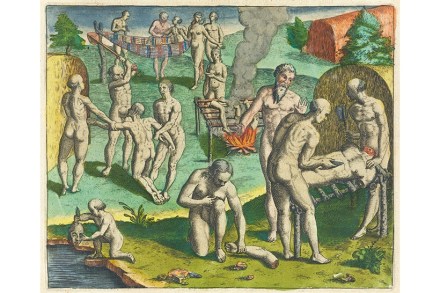
Europe’s eye-popping first glimpse of the Americas

Coronavirus has cast a dampener over this year’s Mayflower 400 celebrations due to a hidden enemy with which the Pilgrim Fathers were all too familiar: within months of their arrival in America more than half of them had died of a disease whose principal symptom was violent coughing. There was no official artist on the Mayflower. Its ragtag party of Separatist Puritans had only been granted a charter on condition that their religious affiliation, banned in England, was not formally recognised.