Privacy

Never sue!

From our UK edition

Don’t ever sue anyone! That’s what I would have told Prince Harry, Elton John and their fellow claimants, on the hook for a £34.4 million bill after losing their disastrous privacy case against the Daily Mail and Mail on Sunday. I trained as a libel barrister in 5 Raymond Buildings, the same chambers as Sir Matthew Nicklin, the judge in the case, and David ‘Orange Sherbet’ Sherborne, Prince Harry’s lawyer. In every libel case I saw as a pupil barrister, I thought it was crazy to sue. Clients risked fortunes for the possibility of minor moral victories. The barristers were certainly affable and bright. Sherborne got a First in Classics from New College, Oxford; Nicklin a First in Law from Newcastle. But, still, it isn’t worth risking millions to avenge an insult.
Whatever happened to Caroline Lane? A Margate mystery

From our UK edition

Should you search for someone who has disappeared seemingly of their own volition? David Whitehouse, the author of novels that scooped the Betty Trask and Jerwood prizes and were shortlisted for the Gordon Burn and CWA Golden Dagger awards, happened upon a real-life mystery. Having his hair cut in Margate, he was told about a woman who had lived in the neighbourhood and vanished. The story came from a resident of the same block as the missing Caroline Lane. Whitehouse’s interest was piqued. This is the background to Saltwater Mansions, the name of the apartment block from which Lane, a feisty (even grumpy) middle-aged woman had seemingly evaporated with no explanation.

Owen Matthews, Bijan Omrani, Andrew Hankinson, Laurie Penny & Andrew Watts

From our UK edition

29 min listen

On this week’s Spectator Out Loud: Owen Matthews says that Venice’s residents never stop complaining (1:11); Bijan Omrani reads his church notebook (7:33); Andrew Hankinson reviews Tiffany Jenkins’s Strangers and Intimates: The Rise and Fall of Private Life (13:54); as 28 Years Later is released, Laurie Penny explains the politics behind Alex Garland’s film franchise (18:25); and, Andrew Watts provides his notes on Angel Delight (25:09). Produced and presented by Patrick Gibbons.

Is nothing private any more?

From our UK edition

How did the UK become a place where young people think it’s permissible to record a relative at home and make that recording public? Why has privacy been so easily discarded, and why have people welcomed its demise so they can control the behaviour of others? A few years ago, when I taught at university, a student who lived with their parents told me they had argued with their mother about what they described as ‘queer identity’. The student had secretly recorded the argument and wondered what I thought about them using it for a piece of writing. I think their assumption was that because I’m a journalist I would embrace the idea. I did not.

Has your local shop blacklisted you?

From our UK edition

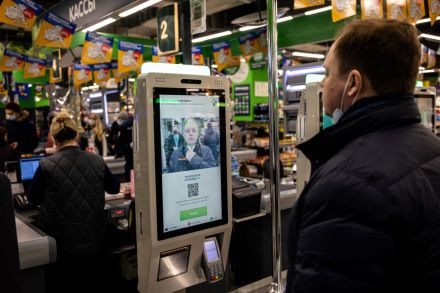
Britain’s obsession with surveillance is reaching new heights. Several of the UK’s largest retailers have quietly installed facial recognition checkpoints on their doorways and inside their shops. It means that automated identity checks are taking place on our high streets without customers even being aware of it. You won’t be informed if your photo is taken and added to a watchlist, and no police report is required The cameras look like any other CCTV cameras, except they take a biometric scan of every customer’s face, like at a passport e-gate. The facial recognition scans are then compared against a private database run by the software company Facewatch.

Azealia Banks loves Ron DeSantis

Azealia Banks is taking a break from digging up her dead cat and returning to music after signing with major label Parlophone. In a recent interview with the Guardian, Banks spilled the beans on her very public breakdowns, Kanye West and, weirdly enough, Ron DeSantis. (Naturally, she used rather colorful language in doing so: Cockburn urges the faint-hearted to skip over the following quotes.) Banks, the New York rapper and singer who first gained popularity eleven years ago with her hit "212," claimed that she felt safer after her move from Los Angeles to Florida. She said that people “mind their fuckin’ business” and claimed that the media lies about the Republican haven. Part of that, she said, is down to the governor, Ron DeSantis. “He’s focused on the basic shit.

azealia banks

Chinese tyranny? American surveillance is scary too

The New York Times recently ran an article on the dangers of surveillance tech in China. One wishes they would do the same for the US. According to the Times, Chinese authorities implement facial recognition tech everywhere they can, the police seek to connect electronic activity (making a call) to a physical location, biometric information such as fingerprints and DNA is collected on a mass scale, and the government wants to tie together all of this data to build comprehensive profiles on troublesome citizens. The latter is the Holy Grail of surveillance, a single source to know all there is known about a person.

The authoritarianism of British Transport Police

From our UK edition

When our freedoms are being taken away we are like the proverbial frog boiled alive in water where the temperature is slowly brought to boiling point. Who batted an eyelid in June when it was reported that rail companies are drawing up plans to abolish paper rail tickets and have us all travel with e-tickets instead? Who picked up on today’s story that explains one of the reasons why the police are so keen to switch us to e-ticketing? Lucy D’Orsi, chief constable of the British Transport Police, says her force wants access to data from passengers’ mobile phones and bank cards so that it can track us around the network. At the moment, you can get on a train from Wolverhampton to London with a paper ticket and leave little trace.

The creeping authoritarianism of facial recognition

In an effort to lower crime rates, American law enforcement is pushing to combine facial recognition with expanded video surveillance. Politicians worried about their re-election chances due to a perceived crime wave see the expansion as necessary. It’s a sharp swing from 2019 and 2020, when cities like San Francisco and New Orleans were banning or at least enacting limits on facial recognition technology due to privacy concerns. Now, New Orleans plans to roll back its facial recognition prohibition. The Virginia State Senate gave law enforcement a late Valentine’s Day gift by passing a facial recognition expansion bill on February 15 — the Democrats who unanimously approved a ban on facial recognition last year suddenly changed their minds, as did five Republicans.

Urban Meyer and our DIY surveillance state

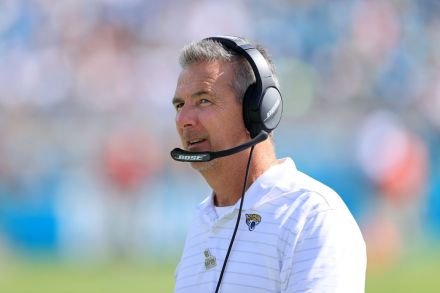
Imagine having a bad week by Jacksonville Jaguars standards. Such is the fate that has befallen Urban Meyer, the head coach of that star-crossed NFL franchise. Meyer was recently caught on video grind-dancing at an Ohio bar with a woman who was very much not his wife. This prompted sighs of relief from us '90s kids who were worried the term 'grind-dancing' had gone out of vogue forever. It's difficult to understate just what a mess Meyer's Jaguars are. The team is one of only four NFL franchises to have never made it to a Super Bowl. They've struggled for years with mediocre quarterbacks (who among us hasn't been walking down a sidewalk only to accidentally intercept a ball from Blake Bortles?). Meyer, along with rookie hotshot QB Trevor Lawrence, were supposed to turn all that around.

meyer

The DMV shows that COVID restrictions will never go away

Two weeks to flatten the curve became 18 months of mandates with no end in sight. Government seized new powers from the people to regulate their lives. Rules that make no sense dominate us, experiments in compliance not science. How do COVID restrictions end? They likely never will. I learned all that at the Department of Motor Vehicles . My reeducation started when I was told to prove as an American citizen in an American state that I am 'resident' here, not simply being an American in America. I'm a good sport and wanted to comply, just like I try to keep up with the latest rules and Purell my terrestrial hands 600 times a day against an airborne virus. Threats aren't inherently political, right? And you just can't be too careful.

Is Elon Musk right to use Signal over WhatsApp?

From our UK edition

https://twitter.com/elonmusk/status/1347165127036977153?ref_src=twsrc%5Etfw Elon Musk has a habit of sparking fires on Twitter. His latest suggestion to ‘Use Signal’ might have confused a few people – what is it, and why should I 'use' it? Signal is, in short, a messaging app for people who are concerned about privacy: once-upon-a-time a concern of small group of techies, but now something that most people have good grounds to start taking seriously. Signal is one of the first messaging apps that claims to hold absolutely zero data about you Whenever you interact with anything – or anyone – online, some data is being passed round the internet; and some of that data can be personally identifiable to you.

The death of the private citizen

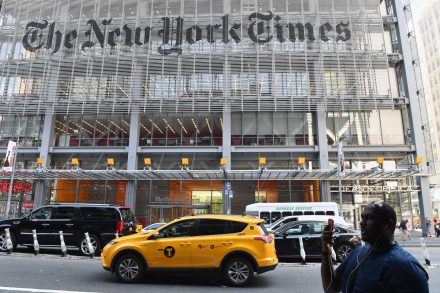
The internet is not a private place, but news outlets have decided that it's up to them to determine when someone loses their right to anonymity. Quite often, the media gets this calculation wrong and destroys lives in the process. Scott Alexander, the pseudonymous blogger behind 'Slate Star Codex', deleted all of the content on his popular website after the New York Times revealed it was going to publish his true identity. In a long post explaining the debacle, Scott Alexander said that he was talking to a Times reporter last week who was planning on writing an article about his blog. The Times reporter apparently discovered Scott Alexander's identity in the course of reporting and cited a 'New York Times policy' requiring him to publish his full name.

The New York Times private

How to disappear completely

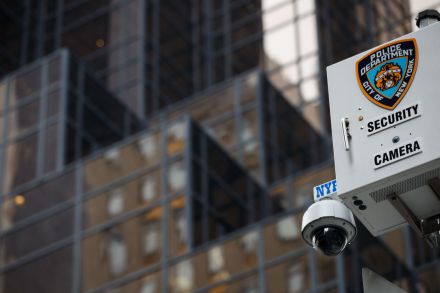
Coming soon to as neighborhood near you: cameras everywhere. On every traffic light, intersection, telephone pole and storefront, with tracking software that uses facial, gesture and heartbeat recognition. That identity data is combined with web search history, conversations with Alexa and Siri, Amazon purchases and Twitter. A complete individual profile, with a score measuring social reliability, can be constructed and shared with law enforcement and intelligence agencies.This might sound too dystopian to be true.

disappear completely privacy