Prince charles

Anthony Holden is nostalgic for journalism’s good old bad old days

From our UK edition

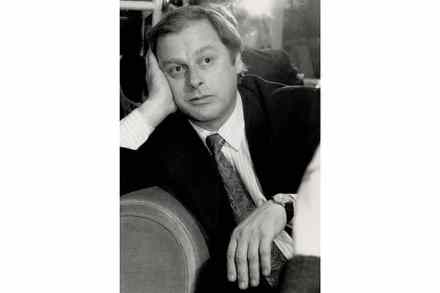
After a career spanning 50 years, 40 books and about a million parties, Anthony Holden has written a memoir. Based on a True Story is bookended by touching accounts of his childhood and old age. Born in 1947, Holden grew up in Southport. His adored grandfather, Ivan Sharpe, played football for England, winning gold at the 1912 Olympics. In later life he was a sports writer, and would take the young Holden to the press box at Liverpool or Everton, tasking him with noting down the game’s statistics. Holden dates his journalistic ambitions to the early thrill of ‘seeing my numbers in print in the very next day’s edition of the Sunday Times’. In 2017, Holden suffered a stroke that left him wheelchair-bound.
The paradoxical integrity of our dodgy honours system

From our UK edition

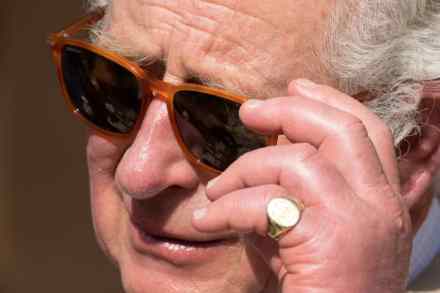
We are told that the Prince of Wales had no idea at the time that his underlings were offering to sell honours to random zillionaires. That’s lucky. Instead of being tarred by the sticky brush of corruption, then, he emerges from this minor scandal as a benign old nitwit, shovelled from one place to another by his suited aides, shaking hands and offering tea to this Russian biznizman, that Chinese philanthropist, that Saudi moneybags ('Mahfouz bin Mahfouz, Sir. Very important chap. Great benefactor.' 'Yes, jolly good. Have you come far, Mr Mahfouz?') I’m inclined to take the denial that he knew what was going on pretty much at face value.

Spencer gives us a haunted and one-note Princess Di

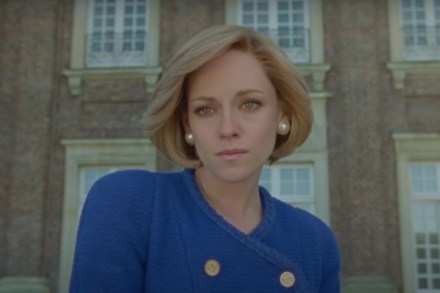
Director Pablo Larrain, who delved into the emotional discontent of Jacqueline Kennedy following the assassination of her husband in Jackie (2016), has tackled another famous icon’s turmoil triggered by powerful outside forces, in this case, the British monarchy. Natch we’re talking about Princess Diana, played here by Kristen Stewart. Stewart gamely steps into big shoes, but overall, her portrait of the adored princess comes off as loaded and a bit one-note. Di, on the eve of her separation from Prince Charles and royal life, is imprisoned and harassed by the paparazzi and monarchy and at a breaking point. Like Jackie, the setting and time of Spencer is micro-focused. It’s Christmas Eve 1991 as Lady Di arrives late to the Queen's Sandringham Estate.

spencer

Is the life of Jimmy Savile a suitable subject for drama?

From our UK edition

One day in 1975 the Israeli cabinet found themselves being lectured on the most intractable political problem of our age — how to bring peace to the Middle East — by a peculiar white-haired British entertainer wearing a pink suit with short sleeves. His name? Jimmy Savile. That’s how he told it anyway. Remarkably, witnesses back up the generality if not the specifics of the anecdote. Savile indeed visited the Holy Land in 1975. And he did talk to the Israeli president Ephraim Katzir, saying (so he claimed): ‘I’m very disappointed because you’ve all forgotten how to be Jewish and that’s why everyone is taking you to the cleaners.

Harry, Charles and the airing of dirty royal laundry

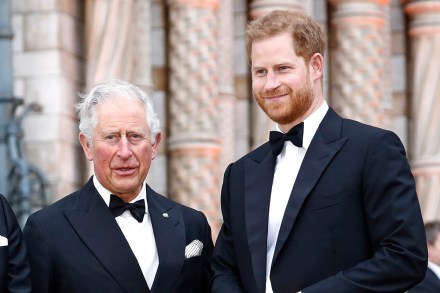
‘Man passes misery on to man,’ wrote Philip Larkin. ‘It deepens like a coastal shelf.’ The coastal shelf in Montecito, California is not only deepening, it’s practically sinking into the earth’s core, as the former Sussexes continue to blight the world with an ongoing campaign of soft-focus sadness and sorrow. This time Harry’s flying solo, with last week’s clodhopping broadside spread to the world via a podcast hosted by Dax Shepard, a B-list Hollywood chum of Markle’s, that has raised weary hackles in Buckingham Palace yet again and begged the question: why? I really do wonder when the Sussexes will realize their strategy of vulgar, self-serving public soul-baring can only end in (more) tears, hurt and recrimination.

charles

Most-read 2020: Warring Windsors – the real royal conflict

From our UK edition

We're closing 2020 by republishing our ten most-read articles of the year. Here's No. 4: Camilla Tominey on the Prince of Wales Three years ago, Sir Christopher Geidt departed as the Queen’s private secretary. For years, he had done much to hold The Firm together, but his influence was resented by Prince Charles. The festering acrimony between Buckingham Palace and Clarence House came to a head in 2017 when Geidt, a Cambridge-educated former Scots Guard, convened a meeting of staff to announce Prince Philip’s retirement without first consulting Charles’s aides. Geidt ended up being forced out after a decade of unwavering service.

Did any of this actually happen? The Crown, season four, reviewed

From our UK edition

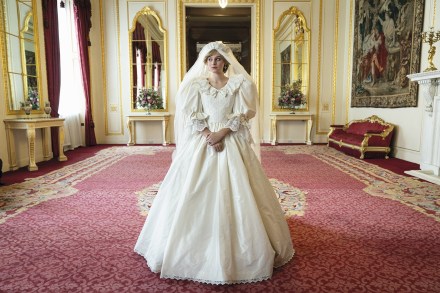
‘We have to stop it now!’ says Princess Margaret (Helena Bonham Carter), smoking another cigarette, obviously. She’s talking about the impending royal wedding between her nephew Charles and a pretty but gauche young thing called Lady Diana Spencer. Spoiler alert: none of the family will listen. Yes, The Crown is back on Netflix for its fourth season, and naturally I skipped straight to the episode that will be of most interest to everyone: the royal engagement and its aftermath. Why is this subject so grimly, pruriently, enduringly fascinating?

Has Spitting Image ever been funny?

From our UK edition

Thank you, Spitting Image, for the nostalgia trip! Your new series on BritBox has rekindled with almost Proustian fidelity those feelings I used to get every single time I watched the show back in my lost 1980s youth: the bathos; the disappointment; the frustration; the despair; the perpetual astonishment that puppet caricatures full of such satirical promise should so unfailingly and relentlessly be let down by such a leaden, insight-free script. Yes, we all remember the puppets: Margaret Thatcher in her chalk-stripe business suit; Norman Tebbit in his leathers; the hacks represented by wolves. But can anyone recall a single line from any episode that made them laugh, ever? I can’t.

Prince Charles tests positive for coronavirus

From our UK edition

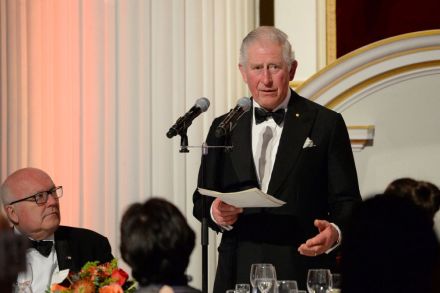
In the clearest sign yet that the coronavirus does not care about status, wealth or class, Prince Charles announced today that he has tested positive for the disease. According to a statement released by Clarence House, the heir apparent felt ‘mild symptoms’ on Sunday night, but ‘otherwise remains in good health’. Charles was tested on Monday by NHS Aberdeenshire. He and Camilla (who tested negative for coronavirus) are now self-isolating separately in Scotland, while the Queen continues to self-isolate in Windsor castle. Charles’s last public event was a dinner in aid of the Australian bushfire relief, on 12 March at Mansion House. It has been reported that he last came into contact with the Queen on the same day.

What Prince Harry can learn from Charles on dealing with Trump

From our UK edition

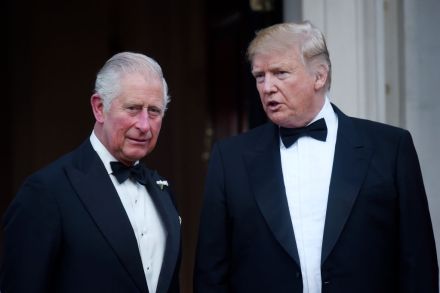
Donald Trump said in his interview with Good Morning Britain this morning that he ‘totally listened’ to Prince Charles’s views on climate change. It's quite a feat for the future king to curry favour with the president and bend his ear on the issues most dear to him. But to anyone watching Trump’s State Visit unfold over the last few days, it is not at all surprising. Amid a background of protests, Prince Charles has been nothing but cordial and hospitable towards Trump, rising above the political fray and, in doing so, seems to have won his trust. The contrast between Charles’s treatment of the president and the purported behaviour of his son Prince Harry could not be more stark.

A romp through royal hits and misses

From our UK edition

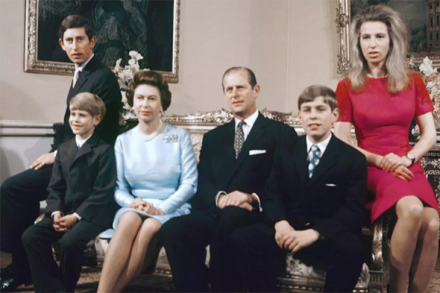
You might well expect a royal documentary on Channel 5 to be unashamedly gossipy. You might also expect it to go for the simultaneous possession and eating of cake — lamenting the endless scrutiny the poor Windsors are subject to, while adding a fair amount of its own. What you mightn’t expect, however, is for the presenter to be Jeremy Paxman. But in Paxman On The Queen’s Children all three things are true. Stranger still, the result is undeniably enjoyable, thanks largely to Paxo himself, who comes across rather as Robert De Niro did in films like Meet the Fockers: as a man who, after decades of the serious stuff, is visibly having fun slumming it for a while.

The Spectator Podcast: Bluffers and Royals

From our UK edition

We often complain that our politicians are all bluffers who know very little about a lot. But is the very structure of our political institutions at fault? And speaking of bluffers, Theresa May is so far successfully fudging her way through the Brexit negotiations, but can she survive after March 2019? And last, maybe all this politics has made you long for the good old days of monarchy. With Prince Charles’s art collection on exhibit, we talk about how it reflects Charles’s One Nation Toryism. PPE – that notorious Oxford degree that ostensibly teaches its students Philosophy, Politics, and Economics – and apparently, how to govern a country. Or at least, how to sound like you’re governing.

The truth about Charles, Prince of Wales – and Larry Kudlow

At dinner the other night a friend wondered what came first, social climbing or name-dropping? It’s obviously a very silly question, and we all had a laugh about it. ‘As Achilles told me in his tent the other evening, Helen always fancied him and Menelaus didn’t like it a bit.’ Or, ‘I’m rather tired of listening to Claudius complaining that Agrippina doesn’t hold a candle to Messalina in the sack.’ We played that game for a while and then I dropped the name of Highgrove, and the first time the Queen was seen in public with Camilla. I began to describe the outdoor lunch and my guests started to drift off. No, it’s true, I was there, I told them.

High life | 28 March 2018

Gstaad At dinner the other night a friend wondered what came first, social climbing or name-dropping? It’s obviously a very silly question, and we all had a laugh about it. ‘As Achilles told me in his tent the other evening, Helen always fancied him and Menelaus didn’t like it a bit.’ Or, ‘I’m rather tired of listening to Claudius complaining that Agrippina doesn’t hold a candle to Messalina in the sack.’ We played that game for a while and then I dropped the name of Highgrove, and the first time the Queen was seen in public with Camilla. I began to describe the outdoor lunch and my guests started to drift off. No, it’s true, I was there, I told them.

The clown prince

From our UK edition

It has long been my belief that whereas the quality of gentiles drawn to Judaism is very high (Marilyn Monroe, Elizabeth Taylor, myself), the dregs are drawn to Islam. And leaving aside the dozy broads who gravitate to it for kinky reasons after watching one too many Turkish Delight ads (Vanessa Redgrave, Lauren Booth), there is something about this religion which attracts the very weakest of Western men. We think of those often half-witted types who learn to build a bomb online. Then there are the imam-huggers of the left who never met a wife-beating mad mullah they didn’t like. A lot of the reason left-wing men seem to have so much time for Islamism is to do with suppressed feelings of resentment towards the march of feminism, which they could never in a million years admit to.

The old ways

From our UK edition

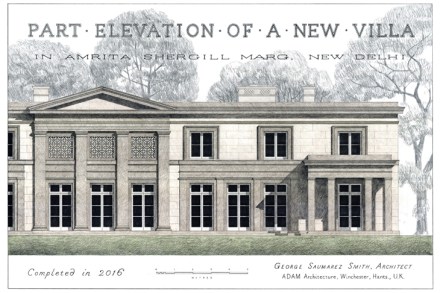
I’m sitting across a café table from a young man with a sheaf of drawings that have an archive look to them but are in fact brand new. His Jacob Rees-Mogg attire — well-cut chalk-stripe suit and immaculate tie — sets him apart from the others in the room, who are mostly architects and architectural fellow travellers like me. We don’t dress like that. But George Saumarez Smith is indeed an architect, a very good one. He just happens to be a trad. A traditionalist, mostly a classicist. And now is very much the time of the architectural trads. They have crept up on us. There’s a revival going on, and I’m very happy about that.

The Protestant passions of Queen Victoria: her biographer A.N. Wilson reveals all

From our UK edition

Our guest on today's Holy Smoke podcast is A.N. Wilson, author of a hugely admired biography of Queen Victoria and – as you'll hear – the most mischievous intellectual in the land. Cristina Odone and I started out by asking about Victoria's vigorous (and possibly whisky-fuelled) persecution of Anglo-Catholics in the Church of England: the Queen lobbied hard for the legislation that sent several of them to jail for popish "ritualism". But that was the just the beginning of Wilson's hilarious whistlestop tour of the passions and prejudices of Queen Victoria.

Diana the diva

From our UK edition

Twenty years in August since Diana died. The anniversary is sad for me on many levels — she was definitely the final famous person I’ll have a pash on, and it reminds me that I haven’t yet earned back the whopping advance I was given for my book about her. To be fair, the book was an absolute stinker, written through a haze of gin, tears and avarice, containing such clodhopping clangers as ‘with blue skies in her eyes and the future in her smile’ and ‘affection swooshed out of her like a firework from a bottle’. Nurse, the screens! But there was good stuff in it, too. Namely, the way I served it to the Prince’s Party who continue to curdle Diana’s memory much as they tried to ruin her reputation during her lifetime.

The next financial crisis is coming ‘with a vengeance’, says the expert. But when?

From our UK edition

There’s a passage in Philip Larkin’s All What Jazz, the collection of his writings as the Daily Telegraph’s jazz critic, that imagines his typical readers. Husbands of ‘ageing and bitter wives they first seduced to Artie Shaw’s “Begin the Beguine”’ who take comfort from collections of ‘scratched coverless 78s in the attic’, they are ‘men whose first coronary is coming like Christmas’. The same sense of gloomy inevitability often pervades the so-called ‘dismal science’ of economic commentary, amplified by political uncertainty and traumatic events: the one thing we know for certain is that economic life is cyclical and that any run of benign signals can only ever be temporary.

Prince Philip, the timeless rebel

From our UK edition

The Duke of Edinburgh is finally to retire in the autumn, after more than 70 years of public service, just after his 96th birthday. Philip – a former first lieutenant in the Navy – is one of the last prominent figures in British life to have served in the second world war; he’s also possibly the only one worshipped as a living god, as far as I know. Yet this man at the very heart of the British Establishment has come to be known as a sort of arch-reactionary, an English colonel figure who goes around insulting foreigners ­­– either to our amusement or utter horror. He was once, in the distance of time, the royal family's most progressive reformer; the newcomer from impoverished Greek-German nobility (though his first language is French).