Press

The ‘polite protests’ from Buckingham Palace over Leveson

From our UK edition

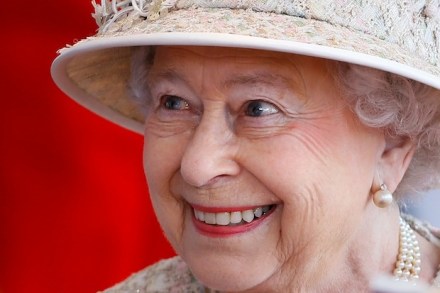
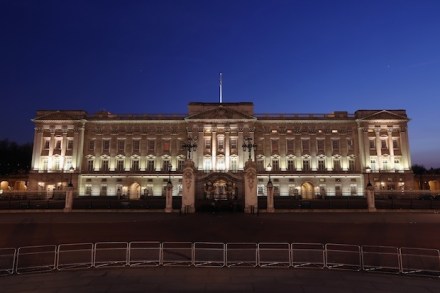
As the whole Leveson wrangle approaches its climax (or anti-climax), one collateral, innocent victim of it all is the Queen. The government ruse to make its proposed system of statutory regulation seem less objectionable was to burble on about a Royal Charter and the Privy Council. By doing so, it hoped to put the matter beyond politics. But the implication that the enterprise is sanctioned by monarchical neutrality is a) untrue and b) embarrassing for the monarch. Untrue because in royal charters, as in legislation, the Sovereign acts solely on the advice of her ministers, making no personal contribution; embarrassing because, by seeking royal cover for its actions, the government drops the monarch into a very tricky issue, giving her no means to defend herself.
Why does the Guardian only get worked up about the press’s freedom to leak?

From our UK edition

Alan Rusbridger, the editor of the Guardian, has been busy tweeting comments from Jill Abramson, the new executive editor of the New York Times, basically in support of his newspaper’s Snowden disclosures. For some reason, he does not seem as interested in her comments about press freedom given on Newsnight last night. Perhaps this is became New York Times has given the reaction that the Guardian should have: that any involvement of politicians in the regulation of the press is appalling and should be rejected. As Abramson put i:- 'I think that the press in Britain has more restrictions on it than we do. The framers of our country, in the US, had a big fear of too much power put in the central government.

The Spectator’s two-letter response to politicians’ plans for licensing the press

From our UK edition

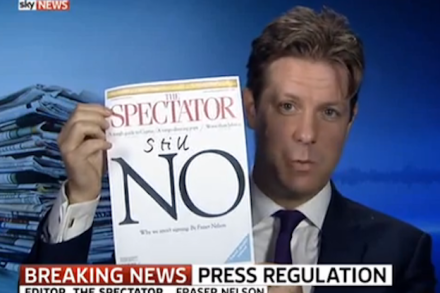
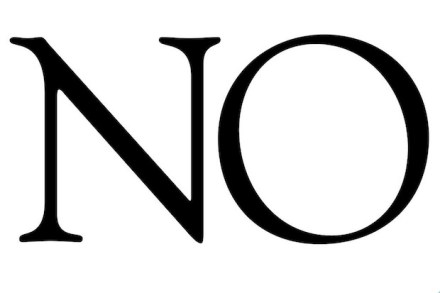
What part of ‘no’ don’t they understand? Our politicians have proudly unveiled their new plan to license the press, as if this was is in their power to do so. In fact, the press in Britain has been free from political interference for generations. The British government simply does not have the power to regulate the press, so it’s not clear why ministers have wasted their time acting as if this is their problem to solve. The mechanics of the new charter released today are not the issue. What the politicians propose is a near-duplication of the regulation which the press has already  to set up: the £1 million fines, the toughest system in the Western world.

Revised Royal Charter channels Charles I’s Royal Prerogative

From our UK edition

Here is the revised Royal Charter on press regulation agreed by the three parties. It replaces the draft published in March this year. It begins: NOW KNOW YE that We by Our Prerogative Royal and of Our especial grace It seems that Parliament would bring down 300 years of free expression using a principle that parliamentarians like Pym, Hampden, Haselrige, Holles, Strode and the rest fought a civil war to eradicate. And in case you didn't know: they won that war. Thank Heavens we English like irony! One can only hope that Her Majesty refuses to sign this document.

Billy Bragg’s diary: The right does not own freedom

From our UK edition

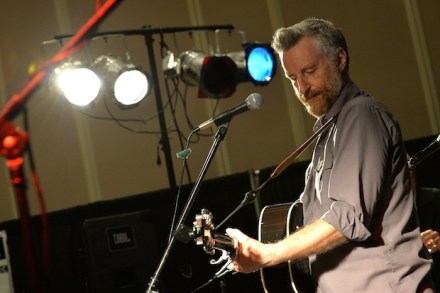
A great night to be in Pittsburgh. The local baseball team, the Pirates, were attempting to reach their first play-offs in 21 years. Meanwhile in Washington DC, a Republican party rejected at the polls last year was seeking to increase its popularity by bringing the government to a halt. On the Strip, a bustling street along the banks of the Allegheny River, it seemed everyone was wearing a shirt declaring his or her allegiance to the Pirates. In the pizza joint where we’d gone before I played my first Pittsburgh gig in nearly two decades, the TV above the bar reported on the stalemate in Washington. But it didn’t feel much like a shutdown. No one in the place seemed to care that the Republicans might be in a hole, nor willing to suggest that they stop digging.

Leveson: press regulation is ‘your problem, not mine’

From our UK edition

Brian Leveson has no opinions on press regulation, apparently. It just took him three hours to repeat this to MPs, over and over again, peppering his increasingly exasperated answers with 'with respect', when he appeared before the Culture, Media and Sport Select Committee this morning. Leveson did his upmost to get through the whole session without tilting one way or another on his inquiry, report or recommendations. But there were a few hints of what he actually thinks. Firstly, Leveson is keen for some progress, particularly from the newspapers themselves. 'I would be sorry if my recommendations were lost', he said, adding: 'I have said... in discussions I had with editors and others: This is your problem, not mine – it’s got to work for you.

Pizzas banned as politicians get set for crunch press talks

From our UK edition

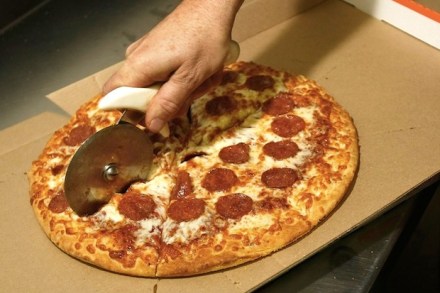
It's funny that the pizzas that ministers, advisers and lobbyists munched as they thrashed out a deal on press regulation in March have become a symbol of all that was wrong with those late-night negotiations. Today when Maria Miller decided to distance herself from the talks in Ed Miliband's office, a source close to the Culture Secretary explained that this included 'the Miliband office, the pizza, it was the presence of Hacked Off'. Obviously the presence of Hacked Off was more menacing than a few boxes of ham and pineapple pizza, but both have been banned from the three days of talks that the parties will now go into, ahead of a final decision on Friday.

Sorry, Maria Miller. We still won’t sign

From our UK edition

The very fact that a Cabinet member has stood up in the House of Commons to make a statement on the future of newspapers suggests there's something going rather wrong in our democracy. For three centuries, newspapers have not been toys in the political train set. Britain has operated on an unspoken principle of liberty, so firmly embedded in the national DNA that the separation between government and the press did not need spelt out in a constitution. Today, a medieval group known as the Privy Council (in fact, an octet of politicians) has decided to reject the newspaper industry’s plans for self-regulation in favour of politicians' plans for press regulation.

Letters: David Aaronovitch defends Daniel Finkelstein, Godfrey Bloom defends himself

From our UK edition

Oborne’s ideas of ethics Sir: Your edition of 28 September included a 1,500-word demand from the journalist Peter Oborne to the effect that the Times, the newspaper that I work for, should sack its columnist Danny Finkelstein. The reason given by Oborne for this view is that Finkelstein is too parti pris and close to people in power to be a ‘proper’ journalist. He is wrong in his argument and also, I believe, deficient in his journalism. Oborne deploys the veteran cliché about true journalists ‘speaking truth unto power’. Yet the history of British newspapers is full of ‘political’ journalists such as Finkelstein. At the Telegraph there were great figures such as Bill Deedes and T.E.

Welcome back, TSB: your founder’s spirit is alive and well and living in Airdrie

From our UK edition

A big hello to the revived Trustee Savings Bank — the spin-off of 631 Lloyds branches that were going to be sold to the Co-operative Bank to fulfil EU conditions for the bailout of Lloyds after its catastrophic takeover of HBOS. The new entity starts life with 4.6 million personal and small-business customers, a clean balance sheet, no investment banking arm and no foreign skeletons in its cupboard. That all sounds promising, but those of us who have long argued for a break-up of mega-banks and a return to relationship-driven high-street finance will watch closely to see whether the new TSB’s slogan, ‘Welcome back to local banking’, turns out to be just that, or a real mantra for change.

Joan Collins’s notebook: Fighting libel and rude houseguests

From our UK edition

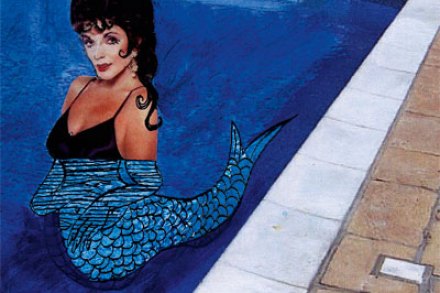
I recently had to spend a great deal of time attempting to clear my name from a ludicrous assertion in an actress’s memoir that I and my then husband Anthony Newley had invited her and her then husband to strip off and watch some porn together.  She continued that I had very kindly presented the couple with chicken, steak and fish for dinner, all of which, due to the convenient absence of my maid for the evening, I had single-handedly concocted. I’m no Nigella in the kitchen and allergic to seafood, so I wouldn’t know how to cook a fish if it stood up on its fins and issued instructions. Now, my culinary talents were the least of my concerns with the offending mention, and I’m pleased to report my name was immediately removed from the story.

Conrad Black’s farewell to the British press

From our UK edition

The astonishing level of enthusiasm over the birth of the new prince goes far beyond the pleasure that people naturally feel for an attractive young couple who have had a healthy child. If there is any truth at all to these estimates in the North American media that trinkets and other bric-a-brac, and even increased numbers of tourists, will produce hundreds of millions of pounds for the British economy, the answer lies not just in normal goodwill and the effusions of the most strenuous monarchists. If my memory is accurate,  the last time there was so much public interest in a royal event, albeit of the exactly opposite nature, was at the death of the newborn prince’s paternal grandmother, Diana.

Why partisan columnists (like me) are doomed

From our UK edition

An email exchange with a Conservative-leaning friend this week left me feeling sheepish. But if shameful my behaviour be, I’m not alone in the shame. I thought it worth sharing the conversation. We were corresponding about Ed Miliband’s stand-off with the Unite trade union. In a message to my friend, I remarked: ‘It’s reaching the point where (paradoxically) EM’s tendency to take the line of least resistance may actually push him into confronting Unite.’ And that’s true: worms turn and it’s not always good politics to corner people. But it is the next part of the message that I’m hard-put to defend.

Why you shouldn’t believe the green attacks on Ben Fogle

From our UK edition

Just because the environmentalists have been proved so epically wrong about global warming doesn’t mean they’re right about everything else. Ocean acidification, overpopulation, species loss… you’re going to hear a lot about dire and urgent threats like these in the coming months as the greenies establish a fallback position after the collapse of their climate change scam. But it’s the same old toxic mix of misanthropy, religious dogma, control freakery and anti-capitalism, repackaged with different labels. Let me give you another example.

Timothy Birdsall – the greatest cartoonist you’ve never heard of

From our UK edition

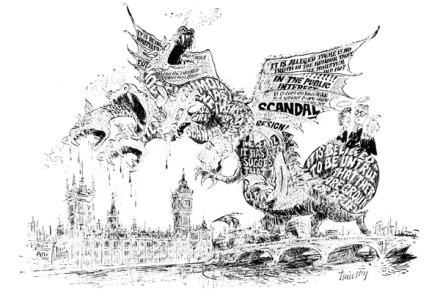
Few people under the age of 65 will have heard of the cartoonist Timothy Birdsall, who died 50 years ago on 10 June 1963, having produced his finest work in the last months of his life here in The Spectator and  in Private Eye. But had his career not been cut cruelly short by leukaemia at the age of only 27, he would today be revered as one of the outstanding cartoonists of our time. Tim was part of that talented late-1950s Cambridge generation, along with a galaxy of others later to become famous, from Peter Cook to Ian McKellen. On coming down in 1960 he was employed to do pocket cartoons for the Sunday Times, in the tradition that has led from Osbert Lancaster to Matt.

Susan Hill’s diary: The joy of fountain pens, the frustration of GP appointments

From our UK edition

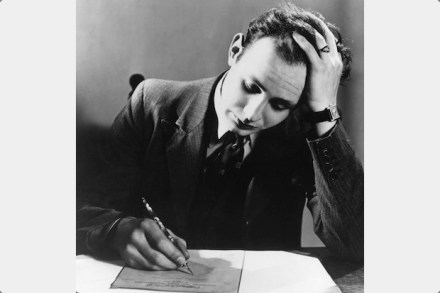
I bet you remember your first fountain pen. Mine was a Conway Stewart with marbled barrel, I had it for starting Big School and I used to polish it. That trusty pen lasted until A-levels finally broke its back and after that I slipped down the primrose ballpoint path to slovenly writing. I never used a typewriter — too noisy, so I hand-wrote my books until the almost-silent laptop seduced me down another slithery slope. But I still hand-write when I need to take my time — books can be divided, like Americans, into fast ones and slow ones. Recently, a friend told me he had gone back to a fountain pen and was finding it a joy when writing up his notes — he is not a novelist but an engineer, and appreciates good tools.

Ministers made a poor use of Parliament on press regulation

From our UK edition

The government's decision to delay signing off the Royal Charter for press regulation was initially heralded as a dramatic change of heart, before being re-sold by those involved in the process as just a box-ticking exercise to avoid legal action. Either way, there is a growing noise not just about the rival charters now on offer, but also about the way the government's deal was brought before parliament. Shami Chakrabarti's disquiet over the proposals was widely picked up at the weekend. But there is also a growing unease in the Conservative party about the way Parliament voted on the legislative aspects of the new plan at such short notice. 'We were bounced into it,' one MP told me recently. 'If we'd had time to think about it, there would have been uproar.

The Regulated?

From our UK edition

With plummeting sales and the damage caused by the Johann Hari scandal, Chris Blackhurst had his work cut out when he took over as Editor of the Independent in 2011. Perhaps he saw the Leveson Inquiry as a chance to make a name for himself, because he became a frequent figure on the airwaves and signed his paper up to the government's Royal Charter on the very day it was announced. But he's cutting an increasingly isolated figure on Fleet Street these days. As the Times (£) puts it this afternoon when reporting news of a rival Royal Charter agreed by newspaper publishers: 'The Guardian has not declared support for the new charter and The Independent was not consulted about it prior to its publication today.

Maria Miller and Oliver Letwin’s perfect press regulation

From our UK edition

There was a curious meeting of the Culture, Media and Sport Select Committee this morning. The MPs took evidence from Oliver Letwin and Maria Miller, and then from Harriet Harman, on press regulation. An evidence session with Oliver Letwin is curious enough anyway, as the Minister for Government Policy does tend to speak as though he's reading from a will, complete with codicils. But what was really rum was that everyone in the room seemed to be talking about quite different systems of press regulation. Miller and Letwin were eerily cheery, repeatedly telling committee chair John Whittingdale that they were 'the optimist in this case', and that their plans were not statutory regulation. Miller even objected to the idea that the industry might not be keen.

The Spectator’s Notes | 11 April 2013

From our UK edition

It is strange how we are never ready for events which are, in principle, certain. The media have prepared for Margaret Thatcher’s death for years, and yet there was a rushed, improvised quality to much of the coverage when she actually did die. We have a curious habit of all saying the same thing, and feeling comforted by that, when really it is our job to say as many different things as possible. The BBC, which Mrs Thatcher, and even more Denis, detested, has been straining itself to be fair, but fairly bursting with frustration in the attempt. The way for it to express its subliminal opposition to her is by using the word ‘divisive’ all the time. By day two, this had become its dominant theme.