Press

Why the Tories don’t think the Leveson deal is statutory underpinning

From our UK edition

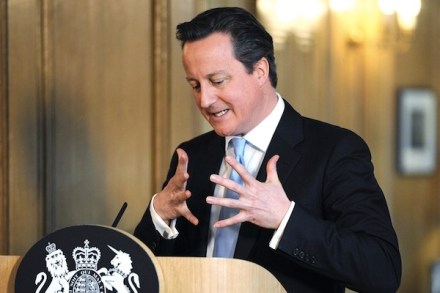
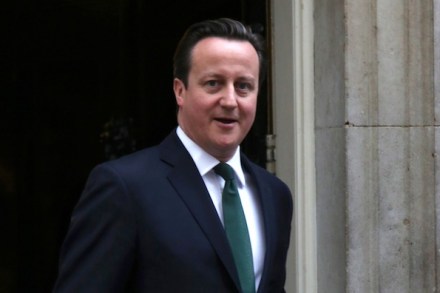
David Cameron has just met Tory MPs to explain the deal he's struck on Leveson. One of the things many of them were anxious to learn was whether the result does really mean the government has accepted the need for statutory underpinning. Hopefully the PM employed a better turn of phrase than his spokesman,  who told hacks this morning that this 'enshrines a non-legislative approach'. The Tories in Number 10 are insisting that this really is the case, that it's not statute at all and that the PM's feet aren't wet from any crossing of the Rubicon. Their argument is firstly that the amendment to the Enterprise and Regulatory Reform Bill is aimed at all Royal Charters, and protects them from further interference.
Press regulation: Ceci n’est pas une statute

From our UK edition

The party leaders should finish their discussions on Leveson - by phone - in the next hour or so. We'll then get a statement in the Commons on the outcome of those talks, and it's highly likely that all three leaders will speak as part of that statement. But the big debate now is whether what they have signed up to already constitutes the statutory underpinning that David Cameron was so very keen to avoid. There are two amendments to two different pieces of legislation relevant to press regulation: one on the Crime and Courts Bill on exemplary damages, and one to the Enterprise and Regulatory Reform Bill which prevents politicians meddling with the Royal Charter.

Harriet Harman and Maria Miller both claim victory in Leveson talks

From our UK edition

Who has won in the late-night Leveson talks? Both Harriet Harman and Maria Miller seem to think their own party's Royal Charter has come out tops. And one says they've secured statutory underpinning, while the other says there isn't any underpinning. And again, one says the deal is done, while the other says the parties are 'close' to a deal. This is what Harman had to say on the Today programme: 'There is an amendment going forward into the Enterprise and Regulatory Reform Bill which says that where a Charter says in that Charter it can't be dissolved or amended without a two-thirds majority in both Houses then that should have the force of law.' She added: 'The framework is set up in a Royal Charter, not by statute but in a Royal Charter.

Late night Leveson talks bring parties close to deal

From our UK edition

So it looks as though a deal has been struck on Leveson after late night talks. Oliver Letwin, Nick Clegg, Ed Miliband and Harriet Harman were holed up in Miliband's office until 2.30 this morning, and Labour is now confident that it is close not just to an agreement on press regulation, but an agreement on its own proposals for a Royal Charter, rather than the government's draft. As Coffee House reported on Friday, David Cameron was facing a rebellion of around 20 Tory MPs and a defeat in the House of Commons on his Conservative amendment which introduced the Royal Charter. That threat appears to have concentrated the mind rather.

20 Tories could rebel on Royal Charter plan

From our UK edition

Conservative MPs who have previously supported statutory underpinning of press regulation are meeting on Monday morning to discuss how they will vote. There is a list of 75 Tories who have backed the idea, but I understand that if an agreement isn't reached on Monday between the main parties, there are around 20 MPs who would be minded to vote against the Conservative three-line whip and support Labour's amendments. The Conservative part of the government has just published its Royal Charter, and Labour and the Lib Dems are also tabling more amendments today. Once all the information is available, pro-statute Tory MPs will make up their mind on whether to back their own party, or the others.

Parties prepare for Leveson showdown

From our UK edition

The Conservative amendments to the Crime and Courts Bill which introduce their Royal Charter for press regulation proposal are now out, although Labour and the Lib Dems are yet to table all their formal amendments.

Leveson talks failure is bad omen for 2015 coalition negotiations

From our UK edition

David Cameron’s decision to go it alone and call a vote on a press Royal Charter on Monday is a reminder both of how fundamental the differences between the coalition partners are on press regulation and that the next election is less than 25 months away. Cameron’s statement that if he loses next week and statutory regulation passes, then a majority Conservative government would repeal it shows that he’s prepared to make this an election issue. The coalition won’t fall over Monday’s vote. But it will be a moment of high parliamentary drama.

David Cameron brings Leveson debate to a head over bill hijack fears

From our UK edition

Those involved in the Leveson talks from the Labour and Lib Dem side say they had no idea the Prime Minister was going to pull the plug on the cross-party discussions this morning until a conference call shortly before David Cameron's hastily-arranged press conference. An angry Lib Dem source tells me: 'It was completely out of the blue to be honest. Over the last few days the talks have been making gal progress and we were moving towards a deal. We thought a solution was possible. There were other things we war pushing for, such as some form of statutory underpinning to protect the Royal Charter from future political interference.

Memo for Prince Alwaweed bin Talal – here’s how you handle Forbes

From our UK edition

I feel a twinge of pity for Prince Alwaleed bin Talal — and it’s not often you can say that about a billionaire Saudi businessman. According to Forbes, he’s worth $20 billion, making him the 26th richest man in the world. But is he? The prince has disputed this estimate of his net worth, claiming the true figure is $29.6 billion. That would place him in the world’s top ten. The reason I feel sorry for him is not because his wealth may have been underestimated, obviously. Rather, it’s because Forbes has made him the subject of a pitiless hatchet job in the current issue, ridiculing him for trying to persuade the magazine to rank him higher in its annual list of the world’s richest people.

Bloomberg will buy the Financial Times — but only if it jettisons The Economist

From our UK edition

How much would you stump up for the Economist? Most of us would draw the line at a fiver, but I’m told that Mike Bloomberg, mayor of New York, is drawing the line at £300 million. Bloomberg is busy relocating to London and he’s poised to snap up the Financial Times later this year. But the Pink ’Un comes with a 50 per cent share in the Economist. And the small print conceals a pesky restrictive covenant that prevents the owner from replacing the editor. This is proving a drag for Bloomberg, who admires the Economist’s boss, John Micklethwait, but who sees little sense in buying a ship if he can’t appoint the captain. Enter minority shareholder Lynn Forester, Lady de Rothschild.

‘Lord Horror: Reverbstorm’, by David Britton and John Coulthart – review

From our UK edition

As the son of the last British artist to be successfully prosecuted for displaying obscene paintings, I have some empathy with David Britton, the last person successfully prosecuted in Britain for publishing obscene literature. Unlike my father, who accidentally strayed into the purview of the police, Britton’s prosecution in 1992 was almost inevitable. His publisher, Manchester-based Savoy Books, was raided by the police with vindictive regularity between 1976 and 1997. Ironically, Savoy has often been reviled as much by the left for its lack of political correctness as by the right for attacking the shibboleths of authority. It embodies a longstanding tradition of non-conformist and essentially anarchist thinking in Britain that also underpins Reverbstorm.

In praise of self-appointed detectives

From our UK edition

So Nick Clegg is annoyed with those 'self-appointed detectives' who are 'trying to piece together events that happened many years ago' on the Lord Rennard allegations. It's not a surprise, really, that the Lib Dem leader is annoyed with journalists at the moment: after all, if it hadn't been for Cathy Newman's report last week, the Lib Dems wouldn't be in this awkward position of having to piece the allegations together themselves through an inquiry. Which says something interesting about the party's attitude towards the allegations themselves, does it not, given the women involved, irritated by the party's response to the complaints they say they tried to make, decided that only a journalist, not an HR officer or a party colleague, could improve the situation.

Lib Dems and Labour concerned by Tory Leveson Royal Charter plans

From our UK edition

Does the Royal Charter, published by the Conservative party this afternoon, take politicians any further away from meddling with press regulation? The charter is the Tory answer to the statutory underpinning recommended by Lord Leveson, and the party is keen to stress that it 'does not require statute and enables the principles of Leveson to be fulfilled without legislation'. But is this plan any better? Well, the charter, which you can read here, can only be unpicked or changed if the leaders of all three parties confirm they agree with this and if the change gets the support of at least two thirds of MPs. It also needs the support of all those involved in the cross-party talks. So what do they think?

Cross-party consensus on Leveson tested with Royal Charter plan

From our UK edition

The Conservatives publish their plans for a Royal Charter to underpin regulation of the press today. Although the cross-party talks have been more successful than most imagined, with no rows or public posturing, today is the day when that consensus is tested. There's also another test on the way for the three parties, which is the return of the Defamation Bill to the Commons towards the end of February or start of March. This Bill was amended last week by peers - including Tories - to include low-cost arbitration for members of a press regulator, overseen by a 'recognition commission' and a statutory requirement for pre-notification.

‘Impossible’ Leveson Bill published

From our UK edition

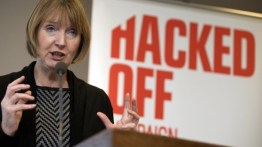
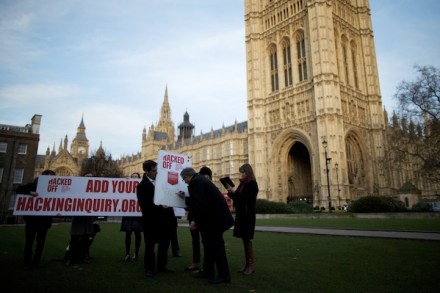
Even though the Leveson talks are, by all accounts, progressing rather smoothly at present, there are still a few spanners stuck in the works here and there. Hacked Off has just published a consultation on all the bits of draft legislation on press regulation that are knocking about, and it includes the bill drafted by the government. Though it had been shared with those involved in the talks about Leveson, this is the first time the legislation has made its way into the public domain, and you can read it in full here. It was drafted by the government to prove that statutory underpinning of press regulation would, in practice, be impossible.

Leveson Royal Charter plan remains uncharted territory

From our UK edition

Strong words in the Lords today about the media and the government's stance on Leveson, but what are the discussions like between the three parties behind the scenes? Though they started off with some similarly stern words, the cross-party talks on the response to the Leveson report have, all sides agree, been progressing well. Far from the communication breakdown that some envisaged, there has been a relatively pleasant atmosphere. The Lib Dems and Labour, though they disagree with the Conservative line, are both keen to praise Oliver Letwin in particular for the way he is conducting the discussions, and for going away and working on the details discussed in each session.

Lessons from the Lords on Leveson

From our UK edition

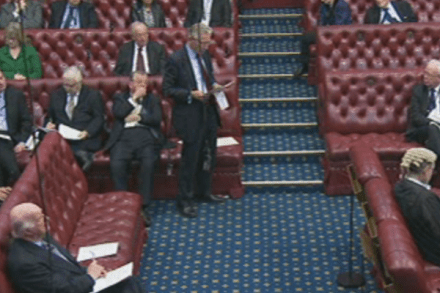
Peers are spending today debating the Leveson report. They've been at it for an hour and a half, and will continue debating until 5pm, but the first few speeches have yielded some interesting points to chew on. Labour's Baroness Jones of Whitchurch devoted a great deal of her speech to the damage that the 'dark arts' of the media had done both to private individuals and to celebrities. She described the distress of the victims going through the inquiry, and contrasted it with the response of the government in rejecting calls for statutory underpinning. The terrible treatment of those experiencing terrible bereavement was the reason the Inquiry was set up, and those in favour of statute now say the victims have been betrayed.

The press needs a regulator that outlives the memory of the last scandal

From our UK edition

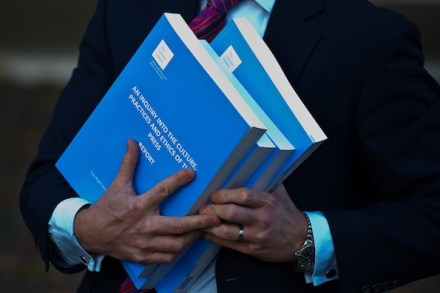
Ahead of a major Spectator debate on the implications of the Leveson report, Conservative MP Nadhim Zahawi explains why he supports a statute-backed system of press regulation. Yesterday's mid-term review included the statement 'We will continue to work on a cross-party basis towards the implementation of the Leveson Report on press regulation'. A welcome reminder that the question of what to do about press regulation has not been forgotten over the Christmas break. But what we should do is still very much up for debate. We now have two Bills, Labour's 'Press Freedom and Trust Bill' and Hacked Off's 'Leveson Bill', and of course the Government will be coming forward with its own Bill in due course.

Hacked Off produces its own ‘clean’ Leveson legislation

From our UK edition

It is no great surprise that Hacked Off director Brian Cathcart believes the government can't be trusted to implement Leveson: the Prime Minister made very clear on the day of the report's publication that he didn't believe governments could be trusted to regulate the press via statute. But what is interesting about the draft bill that the media reform pressure group has published this morning is that it claims to be the most faithful implementation of the Leveson recommendations: more faithful, even, than that proposed by the Labour party.

Will 2013 bring an end to unpaid internships?

From our UK edition

It’s a bit early for predictions for 2013. But my feeling is that it could be the year of the unpaid intern, or rather, the year of the paid intern if the campaign to pay people a fair day’s pay for a fair day’s work continues to gather pace. Hazel Blears did well to secure cross-party support for a 10-minute-rule bill to outlaw the advertising of unpaid internships. It does seem odd that employers are obliged to pay the national minimum wage but can advertise that they are breaking the law. Campaigners Intern Aware has been pushing this particular cause for some time and should be congratulated for its work on the bill. The fact that HMRC is doing so little to enforce such breaches suggests it is perhaps not up to the job.